Asset performance management is not a new concept. Investors have always cared about how their assets perform. What has changed is how actively that performance needs to be managed to produce consistent results in the current environment.
For most of the past decade, a rising market did a significant amount of the work. Occupancy stayed healthy, rents moved up, and the gap between a well-managed asset and a poorly managed one was real but not always visible in the numbers. That environment is gone.
According to the National Apartment Association's Income/Expense IQ report, the 2024 same-store financial results point to a market that is no longer driven by momentum but by management, with financial performance shaped less by rent growth and more by cost structure, pricing strategy, and how efficiently properties are being run. In that environment, the difference between monitoring asset performance and actively managing it is showing up directly in returns.
This article is an orientation guide for asset managers who want a clear picture of what asset performance management actually means, how it differs from property management, what the core components look like in practice, and what good looks like for a multifamily portfolio.
Related:
- Best Asset Management Reporting Software for Multifamily
- Multifamily Asset Performance: Complete Guide
What Is Asset Performance Management?
Asset performance management is the discipline of continuously evaluating how a portfolio of assets is performing against defined goals and coordinating operational response when performance begins to drift. It is not just tracking occupancy and finances. It is understanding what is driving the numbers, where performance is heading, and where action is needed before conditions have already shifted.
The shift from static asset monitoring to active performance management reflects a broader change in what multifamily investing requires. Monitoring tells you what happened. Asset performance management asks whether what happened is moving the asset toward its objectives, and coordinates the response when the answer is no.
In practice, asset performance management sits between portfolio strategy and property-level execution. The portfolio strategy defines the goals for each asset, target returns, occupancy ranges, and hold period objectives. Property execution delivers the day-to-day operational activity. Asset performance management is the ongoing evaluation of whether the execution is actually producing the results the strategy requires, and the coordination function that adjusts course when it is not.
Example: A stabilized 200-unit asset has an occupancy target of 95%. Current occupancy is 94%, which is not precarious on paper. But leasing velocity has been slowing for three weeks, renewal conversion on two-bedrooms has softened, and a concentration of expirations is building in the next 45 days. An asset manager practicing active performance management catches that combination of signals before occupancy moves. One who is only monitoring the current occupancy number misses it until it is already a problem.
Asset Performance Management vs. Property Management
Property management and asset performance management are closely related but serve fundamentally different functions. Understanding the distinction is what allows both to work well together.
Property management focuses on execution. Leasing apartments, managing resident experience, overseeing maintenance, controlling day-to-day expenses, and operating the property. It is the operational layer that keeps the asset running.
Asset performance management focuses on evaluation. It looks across occupancy, leasing velocity, renewals, revenue, exposure, expenses, and asset goals to understand how performance is trending and where adjustments may be needed. It is not doing the leasing. It is evaluating whether the leasing is producing the right outcomes given what the asset strategy requires.
The distinction matters because the two functions answer different questions. Property management answers: is the property being operated well? Asset performance management answers: is the property performing toward its goals, and what needs to change if it is not?
In a well-run operation, the two functions are connected. Property management provides the execution. Asset performance management provides the evaluation and coordination layer that ensures execution is aligned with strategy. When they operate in isolation, the gap between what is happening at the property level and what the asset strategy requires can widen quietly before anyone notices.
Read Also:
- Multifamily Asset Management: A Complete Guide for Asset Managers
- Best Leasing Solutions for Managing Multiple Multifamily Assets
The Core Components of Asset Performance Management in Multifamily
1. Setting Clear Performance Targets at the Property Level
Every asset needs a defined baseline for what good performance looks like, occupancy targets, leasing velocity expectations, renewal conversion goals, and expense benchmarks that reflect the specific strategy and stage of that asset. Without clearly defined targets, there is no basis for identifying when performance is drifting or how far it has moved from where it should be.
These targets are not static. A lease-up asset has different parameters than a stabilized one. A value-add property mid-renovation operates under different constraints than a fully stabilized asset in the same submarket. Setting targets that reflect each asset's actual strategy and stage is what makes performance evaluation meaningful rather than generic.
2. Identifying Drift Before It Shows Up in Financials
Performance drift rarely announces itself. It builds quietly through a leasing slowdown here, a renewal conversion dip there, an increase in future exposure, or changing publicmarket conditions that gradually influence demand. The asset can appear healthy in a monthly report while the conditions that will shape next month's results are already developing.
Active asset performance management is the discipline of identifying these signals early enough to respond before they materially affect occupancy, revenue, or NOI. Rather than focusing exclusively on historical results, asset managers monitor the leading indicators that help explain where performance may be heading and whether the asset remains on track to achieve its objectives.
The value is not simply knowing that performance has changed. It is having enough visibility and lead time to evaluate options before the impact becomes visible in the financials. A projected softening in occupancy identified months in advance creates room for planning and coordination. The same issue identified after occupancy has already declined often leaves fewer and more reactive options.
3. Coordinating Decisions Across Leasing, Pricing, Renewals, and Operations
Asset performance management is a coordination function as much as an analytical one. When leasing, pricing, renewals, and operations are each managed separately with different data on different timelines, the gaps between them create misalignment that compounds into performance problems. A pricing adjustment made without visibility into the renewal strategy. A leasing focus that does not account for forward exposure. Each decision managed in isolation creates a gap with the decision next to it.
Shared visibility across teams is what makes coordination possible. When leasing managers, revenue managers, and asset managers are working from the same signals at the same time, the response to a performance shift is coordinated rather than sequential, and the lag between a signal appearing and the right people acting on it disappears.
4. Continuously Adjusting Strategy Based on Current Conditions
Asset performance management is not a quarterly exercise. It is a continuous process of evaluating whether current conditions still support the strategy in place and adjusting when they do not. A pricing strategy that was right three months ago may be misaligned with current leasing velocity.
The discipline of continuous adjustment is what prevents small misalignments from compounding into larger performance gaps. It requires both the visibility to see current conditions clearly and the infrastructure to act on what the data is showing before conditions have already shifted.
Related:
- Top 7 Benefits of Asset Performance Management
- The Role of Business Intelligence in Property Management
How Rentana Supports Asset Performance Management in Multifamily
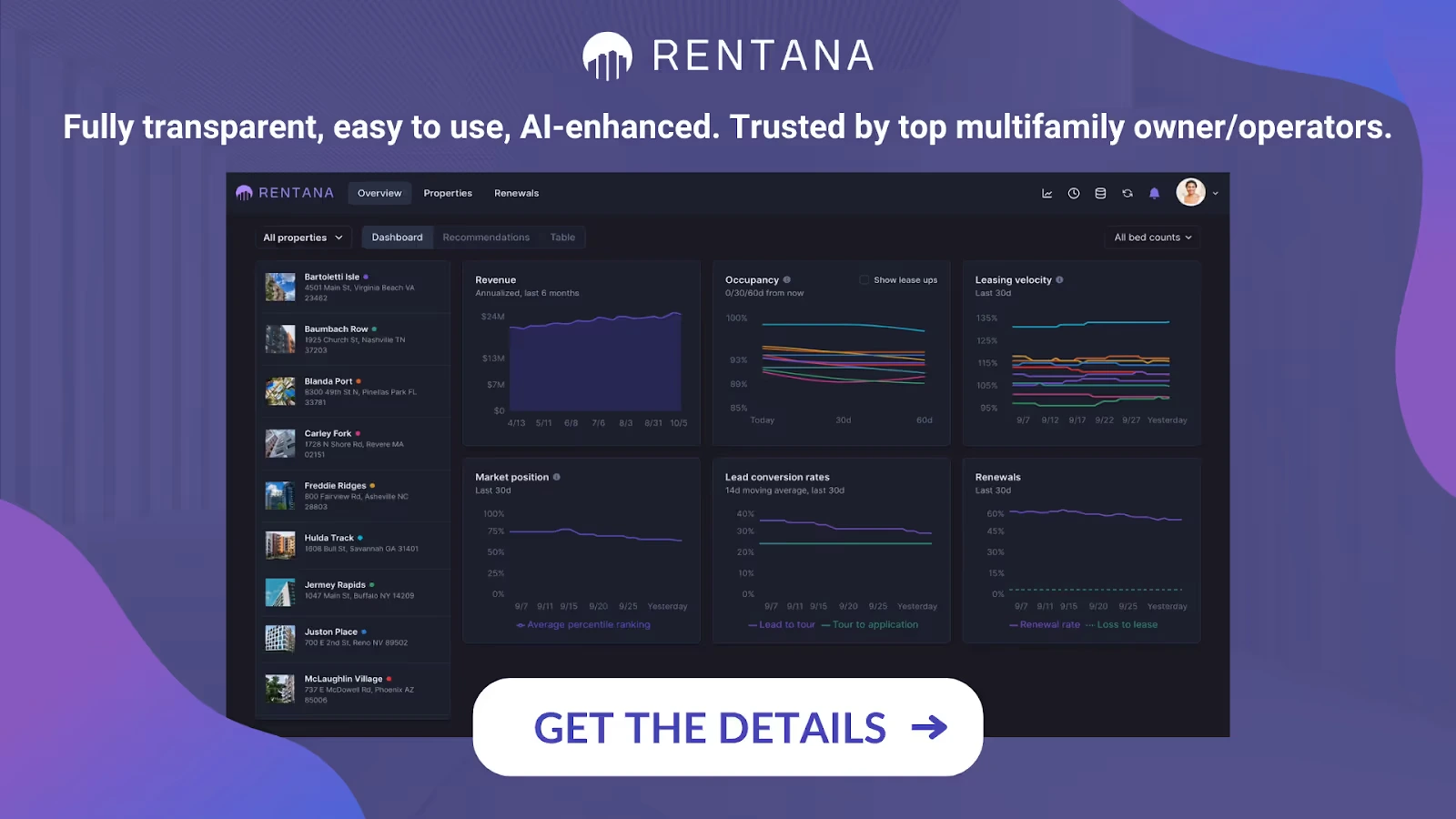
Rentana is built around the visibility, coordination, and forward-looking signals that active asset performance management requires. Rather than relying solely on historical reporting, asset managers can evaluate current conditions, identify emerging performance shifts, and understand how those changes may influence future results.
Earlier Visibility Into Performance Changes
- Color-coded portfolio dashboards help asset managers quickly identify which assets are performing as expected and which may require additional review. Users can move from portfolio-level trends into property-level and unit-group detail, creating a fast path from visibility to investigation.
- AI-generated property insights help surface changing conditions by summarizing what is happening at an asset, why it matters operationally, and the factors contributing to the shift. Rather than requiring teams to review dozens of metrics individually, insights help focus attention on the performance changes most likely to influence occupancy, revenue, and asset performance.
Forward-Looking Performance Signals
- Predicted occupancy connects current leasing activity, renewal trends, and future availability to provide forward visibility into where occupancy is heading.
- Exposure forecasting surfaces where lease expiration concentration is building, by unit type and time window, before it creates operational pressure.
- Together, these signals help asset managers evaluate performance through a forward-looking lens rather than relying solely on historical reporting.
Connected Operational Visibility
- Leasing velocity visibility helps teams understand whether current leasing performance is supporting asset objectives, while funnel conversion visibility helps distinguish between a traffic problem and a conversion problem.
- Renewal conversion trends provide additional context around resident retention and future occupancy conditions, helping teams evaluate retention performance alongside future availability.
- Shared visibility across leasing, revenue management, and asset management helps ensure teams are working from the same information at the same time. When performance conditions begin to change, conversations start from a common understanding of what is happening rather than a reconciliation of reports from different systems.
- A comprehensive reporting library provides deeper operational analysis when additional investigation is needed.
Don’t Miss:
Conclusion
Asset performance management is what separates operators who identify changing conditions early from those who explain the results after the fact. The discipline itself is straightforward: establish clear objectives, monitor the leading indicators that influence performance, maintain shared visibility across teams, and evaluate progress continuously rather than periodically.
What has changed is the importance of doing it well. In a more management-driven market, performance is influenced less by momentum and more by the quality and speed of operational decision-making. The difference between monitoring performance and actively managing it increasingly shows up in occupancy, NOI, and long-term asset value.
The asset managers who are closest to their portfolios today are not necessarily doing more work. They are working from better visibility, earlier signals, and a more connected understanding of how leasing activity, renewals, exposure, and occupancy conditions are influencing performance. That visibility creates the opportunity to evaluate changes earlier, coordinate response more effectively, and keep assets aligned with their objectives as conditions evolve.