Multifamily pricing decisions happen constantly: daily pricing reviews, layout-level adjustments, renewal offers, concession decisions, and exposure management. Each decision is only as reliable as the operational data informing it.
The challenge for revenue managers is not a lack of data. It is determining which signals matter, whether those signals are current enough to support action, and how they should influence a pricing decision.
A PMS occupancy report may describe where the asset stood at the end of the last reporting period. A leasing velocity summary may reflect the last time someone manually pulled the data. A comp review may show what was available when the survey was completed, rather than the competitive environment the team is managing today.
For revenue managers, the advantage does not come from having more reports. It comes from having the right operational signals connected and current enough to answer the questions that drive pricing decisions: Is this layout absorbing at the pace we need? Is upcoming exposure creating risk? Are renewal trends changing the demand picture? Is the recommended price aligned with where occupancy is heading?
This article explores the data inputs that make multifamily pricing more precise and how revenue teams can build a more connected workflow for evaluating pricing decisions.
Related:
- PMS Integration for Multifamily: What is it & How it Works?
- Multifamily Rental Market Trends so Far
Why Complete and Current Data Matters for Multifamily Pricing
A pricing recommendation is only as precise as the inputs behind it.
The challenge is not that multifamily teams lack data. Revenue teams have occupancy reports, rent rolls, leasing activity, renewal information, availability reports, and competitive data. The challenge is whether those inputs are current, connected, and evaluated together when the pricing decision is being made.
The Lag Problem
Traditional pricing workflows often combine inputs that reflect different points in time.
An occupancy report may reflect the end of the last reporting period. A leasing velocity report may reflect the last manual export. A comp review may reflect market conditions from when availability was captured.
Individually, each data source may be accurate. The problem is that pricing decisions are being made from a collection of snapshots that may not represent the same operating environment.
When the data behind the decision is delayed, the team is often responding to conditions that have already changed.
The Completeness Problem
Timely data is only valuable if it includes the signals that actually influence pricing outcomes.
A property-level occupancy number does not show whether one layout is outperforming another. A rent roll average does not show whether a specific layout is gaining or losing pricing power. A current availability count does not explain whether upcoming exposure is manageable given leasing velocity and renewal conversion.
Revenue managers need the complete operating picture:
- How quickly is each layout absorbing?
- What availability is coming back to market?
- Are renewals reducing future exposure?
- Is current demand strong enough to support the recommended price?
The goal is not more data. The goal is the right data, connected and current, organized around the questions the pricing decision needs to answer.
What Changes When the Data Is Connected and Current
The value of connected data is not having more information. It is having the right operational signals evaluated together at the moment a pricing decision is being made.
A revenue manager evaluating a pricing recommendation needs more than current occupancy. The decision depends on how quickly each layout is leasing, what availability is coming back, whether renewals are absorbing expected exposure, and whether the asset’s strategy supports the pricing objective.
When these inputs are connected, pricing decisions move from reactive adjustments based on historical snapshots to more informed decisions based on current operating conditions and the forward outlook.
The result is not simply faster access to data. It is better context for answering the questions that matter:
- Is this layout absorbing at the pace required?
- Is upcoming exposure creating risk?
- Is demand strong enough to support the current pricing position?
- Does the recommended price align with the occupancy outcome the asset needs?
Connected data gives revenue teams the context to evaluate not just where the asset is today, but where it is likely heading if current conditions continue.
Read Also:
- How to Use AI for Multifamily Analytics
- How to Track Multifamily KPIs
The Data Inputs That Multifamily Pricing Decisions Require
A pricing recommendation is only as strong as the operational signals behind it.
Revenue managers do not need more dashboards or more disconnected reports. They need the inputs that answer the questions behind each pricing decision: Is this layout absorbing at the pace required? Is upcoming availability creating pressure? Is demand strong enough to support the current pricing position?
The most effective pricing workflows connect these signals together rather than evaluating each one independently.
1. Leasing Velocity by Layout
Property-level leasing velocity can hide the differences that matter most for pricing decisions.
A property may appear to be leasing at a healthy pace overall while specific layouts are absorbing slower than expected. A two-bedroom layout with upcoming availability requires a different pricing conversation than a layout with limited exposure and consistent demand.
Leasing velocity is most useful when evaluated by layout and in the context of forward availability. A pace that looks strong in isolation may not be sufficient if the amount of inventory returning to market exceeds the demand the property is generating.
The question is not simply, “How many units are leasing?”
The question is:
“Is this layout leasing at the pace required given the availability the asset needs to absorb?”
2. Forward Availability and Exposure Concentration
Pricing decisions should not be based only on where occupancy stands today. They should consider what inventory is expected to return to market and whether demand is strong enough to absorb it.
A property with 95% occupancy today may have very different pricing considerations depending on what is coming in the next 30, 60, or 90 days. A layout with limited upcoming exposure and strong leasing velocity may support a different pricing strategy than a layout with a concentration of expirations and softening demand.
Forward availability provides the context needed to evaluate whether current pricing is aligned with the occupancy outcome the asset needs to achieve.
The most complete exposure picture includes more than scheduled lease expirations. It should consider:
- Upcoming lease expirations
- Notices to vacate
- Month-to-month lease behavior
- Early terminations
- Renewal conversion trends
- Current leasing velocity for the affected layouts
The question is not simply:
“How much availability do we have today?”
The better question is:
“Given what is expected to return to market, is current demand and pricing positioning strong enough to absorb that exposure?”
Forward visibility allows revenue teams to make pricing decisions before exposure becomes an occupancy problem, rather than reacting after availability has already increased.
3. Renewal Conversion Trends
Renewal conversion is one of the most important forward-looking inputs in multifamily pricing because it directly influences how much inventory will return to market.
A pricing decision made without renewal visibility is missing a critical part of the supply picture. A layout with strong renewal conversion may have significantly less exposure than the expiration schedule alone suggests. A layout with declining renewal conversion may require stronger leasing activity because more units will return as available inventory.
According to CBRE’s U.S. Real Estate Market Outlook 2026: Multifamily, renewals represent a significant share of multifamily leasing activity, and blended rent growth can provide a more complete view of performance than asking rent growth alone because it incorporates both renewal and new lease activity.
Renewal trends influence pricing decisions in two ways:
- They shape future availability: Renewal conversion determines how much inventory will need to be absorbed through new leasing activity.
- They provide context for pricing strategy: A layout experiencing weaker renewal performance may require a different approach than one where residents are consistently choosing to stay.
The most effective pricing decisions evaluate renewal conversion alongside leasing velocity and forward availability.
The question is not simply:
“What is our renewal rate?”
The better question is:
“How much future exposure will this layout actually create, and is current demand strong enough to absorb it?”
When renewal trends are connected with availability and leasing activity, revenue teams can make pricing decisions based on the occupancy outcome they are managing toward rather than only the inventory available today.
Recommended:
- Multifamily Proptech Explained: Building the Right Stack
- Unit-Level Pricing Strategy in Multifamily
4. Public Market Data as Context
Public market data is an important input in pricing decisions, but it should provide context rather than determine the recommendation.
Market data helps revenue teams understand the broader environment: where rents are moving, how supply is changing, how competitors are positioning, and whether the asset is aligned with current market conditions.
However, external market data does not explain what is happening inside the property.
A market may show positive rent growth while a specific layout is absorbing below pace. A competitive set may be lowering rents while an asset with limited exposure and strong demand may still have pricing opportunity.
The most effective use of public market data is as a validation point alongside internal operating signals:
- Leasing velocity by layout
- Forward availability and exposure
- Renewal conversion trends
- Occupancy targets
- Asset strategy
The question is not:
“What are competitors charging?”
The better question is:
“Does our pricing position make sense given our internal demand signals and the broader market environment?”
Public market data provides the context. Property-level performance determines the action.
5. Asset Strategy Configuration
Every pricing decision needs to be evaluated in the context of the asset’s strategy and current operating objectives.
The same leasing velocity, occupancy level, or pricing recommendation can mean something very different depending on the asset’s stage and goals.
A lease-up community may intentionally prioritize absorption and occupancy growth while establishing pricing position. A stabilized asset may prioritize maintaining occupancy while maximizing revenue. A value-add community may need pricing to reflect renovation strategy, unit availability, and the expected impact of completed improvements.
Without asset strategy context, pricing decisions can become disconnected from the outcome the property is actually trying to achieve.
Revenue teams should consider:
- Asset stage: Is the property in lease-up, stabilization, or a repositioning phase?
- Occupancy objective: Is the priority increasing occupancy, protecting occupancy, or maximizing revenue within the target range?
- Unit strategy: Are specific layouts, renovations, or features being prioritized?
- Public Market position: Is the asset competing through pricing, product differentiation, concessions, or another strategy?
The question is not simply:
“What is the market-supported price?”
The better question is:
“What pricing strategy best supports the asset’s current business objectives given demand, availability, and operational goals?”
Connected data improves pricing precision, but strategy determines how that information should be interpreted.
Related:
- How to Build a Multifamily Revenue Forecast for Budget Season
- Exposure Forecasting in Multifamily Real Estate
How to Build a More Connected Pricing Data Workflow
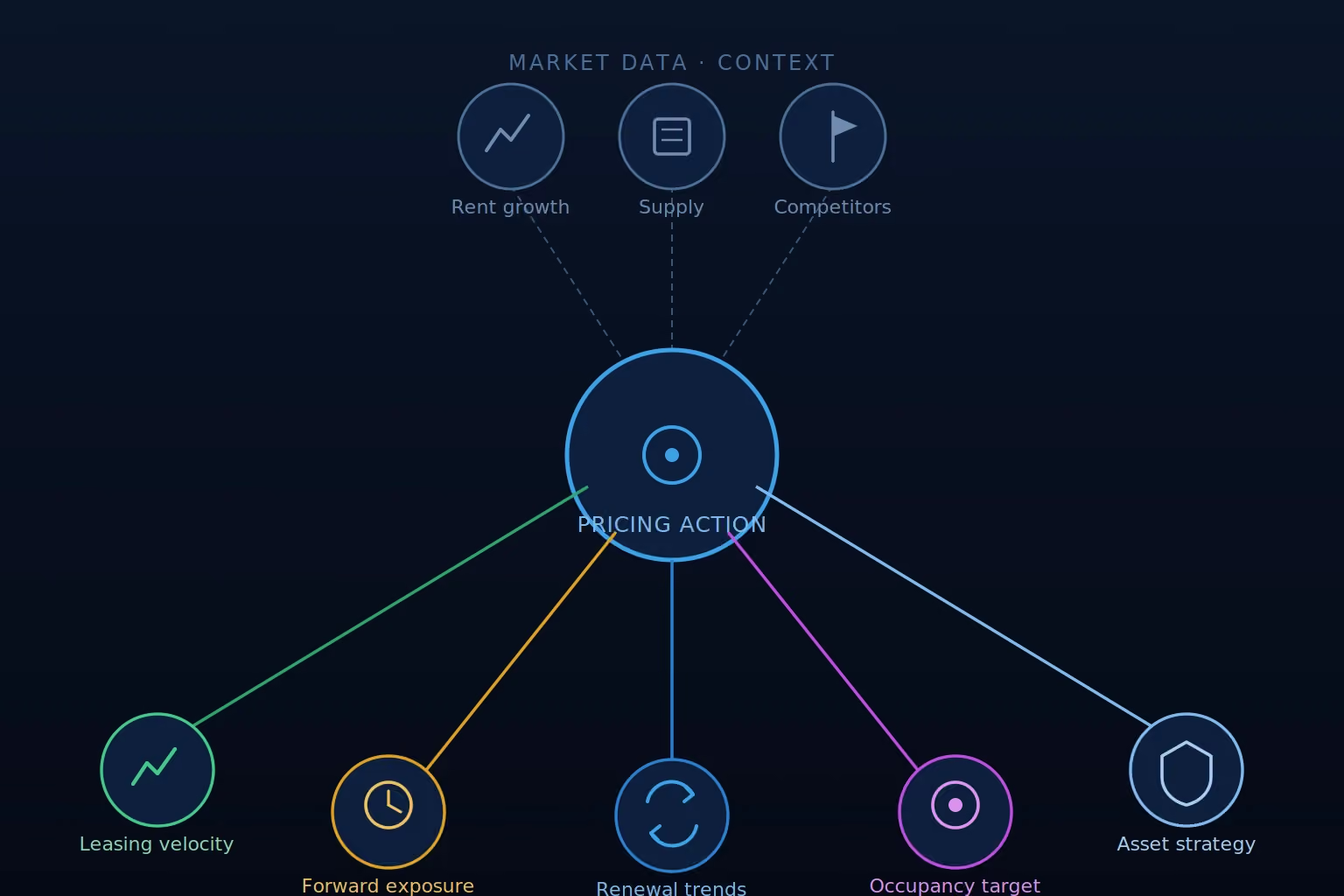
The difference between a reactive pricing process and a proactive one is not the amount of data available. It is whether the right signals are connected, current, and organized around the decision the revenue team needs to make.
Traditional pricing workflows often require teams to assemble information before a review can begin. Leasing velocity may come from one report, availability from another, renewal trends from a separate workflow, and publicmarket context from a manual comp review.
By the time those inputs are combined, the operating conditions may have already changed.
A connected pricing workflow brings those signals together before the pricing conversation begins. Revenue teams can evaluate current demand, future exposure, renewal trends, and asset strategy together rather than making adjustments based on isolated snapshots.
The goal is not more data. The goal is better decision context.
1. Move From Periodic Assembly to Connected Data
The goal of connected data is not simply faster reporting. It is better decision context.
When leasing activity, availability, renewal trends, and pricing inputs are reviewed together, revenue teams can identify risks earlier and understand the reason behind a pricing recommendation before making a change.
2. Review at the Right Cadence for the Right Layouts
Not every layout requires the same level of attention.
A layout with limited availability, strong leasing velocity, and stable renewals may not require the same review frequency as a layout with increasing exposure and slowing demand.
A connected workflow helps teams focus attention where pricing decisions have the greatest potential impact.
How Rentana Supports Connected Pricing Decisions
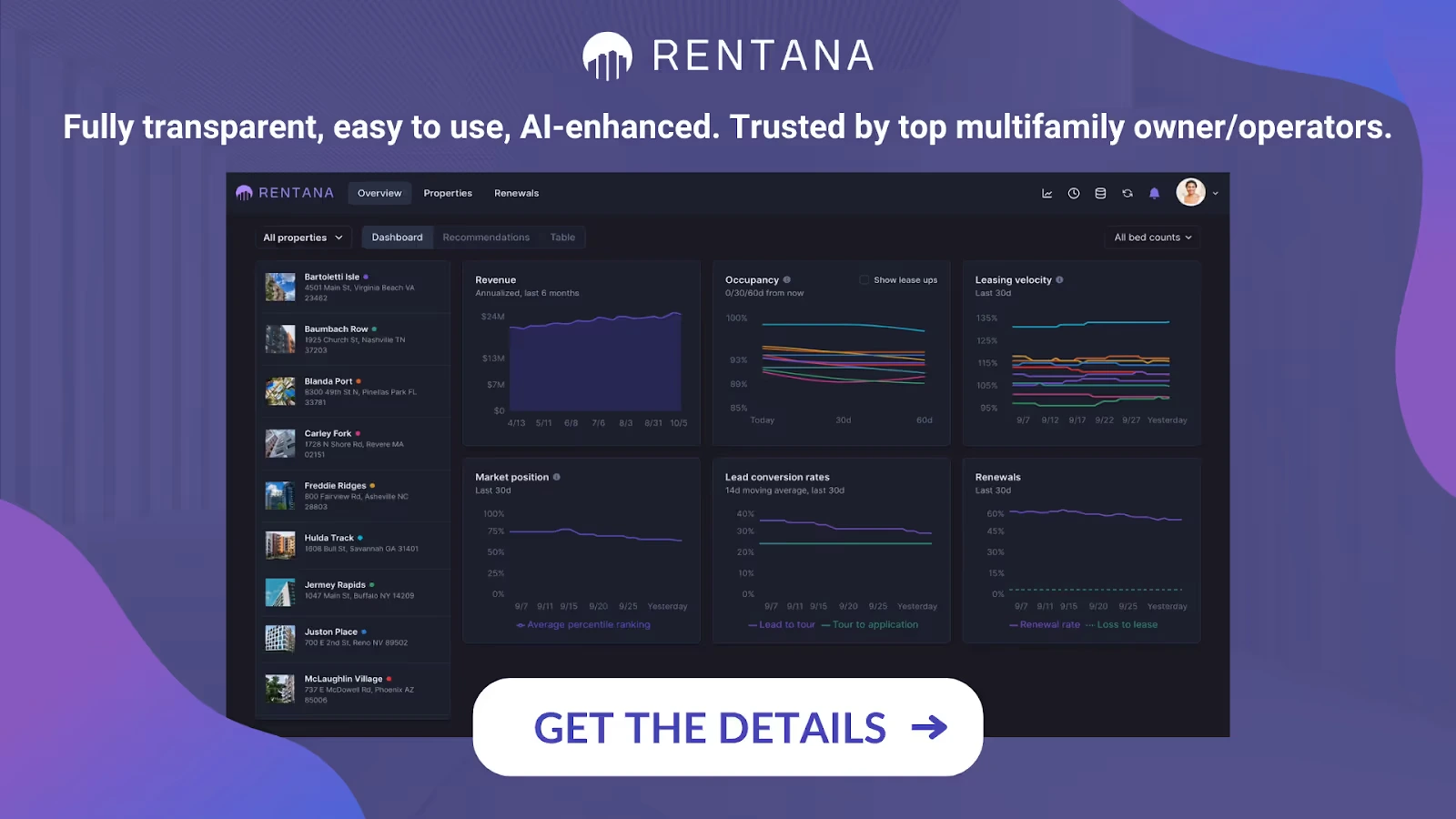
Rentana brings together the operational signals revenue teams need to evaluate pricing decisions in context.
Rather than reviewing leasing velocity, occupancy, renewal trends, exposure, and pricing inputs separately across multiple reports, Rentana connects those signals into a single operating view so teams can evaluate how current conditions may influence the recommended pricing strategy.
Rentana pricing recommendations are generated at the bedroom or custom unit group level and include the reasoning behind the recommendation, allowing revenue teams to understand which conditions are influencing the suggested price before deciding whether to approve, modify, or decline the recommendation.
Additional forward-looking signals provide context around the recommendation:
- Predicted Occupancy connects current leasing activity, renewal trends, and future availability to show what occupancy is anticipated to look like under current conditions.
- Exposure Forecasting highlights where future availability pressure may be building by incorporating lease expirations, notices to vacate, month-to-month lease behavior, and early terminations.
- Leasing Velocity helps teams evaluate whether layouts are absorbing at the pace required based on upcoming availability.
- Asset Strategy Configuration ensures recommendations are evaluated against the specific goals of the property, whether the asset is in lease-up, stabilization, or a different operating phase.
The value is not simply having more data available during a pricing review. The value is having the relevant operational signals organized around the decision the revenue team is trying to make:
Is this pricing strategy likely to produce the leasing pace and occupancy outcome the asset needs given current conditions and upcoming exposure?
Rentana helps revenue teams spend less time assembling the inputs and more time evaluating the strategy behind the pricing decision.
Don’t Miss:
- Best Investor Relations Tools for Multifamily Real Estate
- Best AI Tools for Multifamily Property Management
Conclusion on Multifamily Real Time Insights
Multifamily pricing decisions are only as strong as the operational context behind them.
The challenge for revenue teams is not access to data. It is understanding which signals matter, how those signals interact, and whether they reflect the conditions the asset is managing today and the exposure it will face tomorrow.
Leasing velocity shows whether demand is materializing. Forward availability shows what inventory is coming. Renewal trends show how much exposure will actually return. Public market data provides context. Asset strategy determines how those signals should be interpreted.
When those inputs are evaluated together, pricing decisions become more proactive and more precise. Revenue teams can move beyond reacting to occupancy changes after they occur and instead evaluate whether current pricing is likely to produce the leasing pace and occupancy outcome the asset needs.
The goal is not more reports. The goal is better decisions.