In multifamily real estate, some of the most important revenue decisions happen before a unit ever becomes vacant.
When a resident’s lease approaches expiration, operators face a series of choices: what renewal price to offer, when to begin outreach, how to manage upcoming lease expirations, and how those decisions might affect occupancy across the property or portfolio. These choices often determine whether a resident stays, when a unit becomes available, and how stable future revenue will be.
Because of this, lease renewals play a much larger role in property performance than many reports initially suggest. Renewal outcomes influence occupancy continuity, exposure risk, and pricing strategy across an asset. A portfolio with strong renewal conversion tends to maintain more stable occupancy and fewer sudden vacancy spikes. When renewals decline or cluster in the same time period, availability and pricing pressure can increase quickly.
Managing this process manually becomes difficult as portfolios grow. Asset managers and operators must track lease expirations, evaluate renewal pricing, monitor conversion trends, and understand how renewal decisions affect future availability.
Lease renewal software helps organize these signals into a clearer structure for managing renewal strategy across multifamily portfolios. Instead of reacting to expirations as they occur, operators can evaluate renewal pipelines, pricing strategies, and retention performance across their properties.
The sections below explain why renewals are one of the most important drivers of multifamily revenue stability, what renewal management platforms actually manage, and which tools help operators manage renewal strategy more effectively across their portfolios.
Related: How Companies Keep Track of Lease Expiration Dates
How Lease Renewal Software Help Drive NOI Stability

Lease renewals are one of the few points in multifamily operations where revenue, occupancy, and pricing strategy intersect at the same time. Each renewal decision affects not only whether a unit stays occupied, but also how future availability and pricing flexibility evolve across the property.
When residents renew their leases, operators avoid the costs and uncertainty associated with turnover. A new lease-up often involves vacancy loss, unit preparation, marketing activity, and leasing time. Even in strong markets, a short vacancy period can reduce monthly revenue and introduce variability into property performance. Higher renewal conversion reduces those disruptions and helps maintain more predictable income.
Renewals also influence how exposure develops over time. If too many leases expire within the same period, a property may face a sudden increase in available units. This can create leasing pressure, particularly if market demand softens or competing supply enters the submarket. Managing renewals strategically helps distribute lease expirations more evenly, which stabilizes occupancy and reduces the likelihood of concentrated vacancy risk.
Pricing power is another factor tied closely to renewal performance. When renewal conversion remains strong, operators have greater flexibility to adjust rents in response to current pricing and property conditions while maintaining occupancy continuity. When renewal rates decline, pricing decisions become more sensitive because each renewal outcome has a greater impact on near-term availability.
For asset managers overseeing multiple properties, renewal performance becomes an important signal of overall portfolio stability. Tracking renewal conversion, expiration timing, and renewal pricing outcomes provides insight into how well properties are maintaining occupancy and protecting revenue over time.
Read Also: AI Leasing Assistants: 9 Use Cases & Benefits
What Lease Renewal Software Actually Manages
Lease renewal software helps operators organize and manage the full renewal lifecycle rather than treating renewals as a one-time event. Instead of reacting to lease expirations as they occur, these platforms structure the renewal process so teams can track upcoming renewals, evaluate pricing strategy, and monitor retention performance across properties.
1. Renewal Pipeline
The renewal pipeline shows which leases are approaching expiration and where each resident sits in the renewal process. Operators can see upcoming renewals weeks or months in advance, allowing teams to plan outreach, evaluate pricing decisions, and prioritize properties with large numbers of pending renewals.
Viewing renewals as a pipeline also helps operators understand how upcoming decisions may influence future occupancy.
2. Expiration Tracking
Expiration tracking organizes lease expirations across future time periods so teams can see how exposure is distributed across months or quarters. If many leases expire at the same time, a lease renewal software highlights potential concentration risk.
This visibility allows operators to smooth expiration schedules and avoid sudden spikes in availability that could put pressure on leasing activity.
3. Renewal Pricing Recommendations
Renewal pricing is one of the most sensitive decisions in multifamily operations because it must balance retention with market conditions.
Renewal software helps teams evaluate renewal offers alongside historical lease terms, current property pricing, exposure, and property performance.This aligns operators to align renewal pricing with broader portfolio strategy rather than relying on static percentage increases.
4. Conversion Monitoring
Conversion monitoring tracks how many residents accept renewal offers versus those who choose to move out. By monitoring renewal conversion across properties, operators can identify where retention performance is strong and where additional attention may be needed.
Changes in conversion rates can also signal shifts in pricing sensitivity or market conditions.
5. Lease Terms and Renewal Options
Lease renewal software also manages the structure of renewal offers, including lease term options and timing. Operators may offer different lease durations depending on market conditions or exposure needs.
By adjusting lease term options, operators can influence when future expirations occur, encouraging renewals that shift lease expirations toward stronger demand periods and reduce clustering in slower leasing seasons.
Managing these options in one system helps ensure renewal offers align with broader portfolio strategy while maintaining consistent communication with residents.
Top Pick: The Best Rent Analysis Tool for Multifamily Pricing Strategy
Key Features of Modern Lease Renewal Software

Modern renewal platforms help operators move from simply tracking expirations to actively managing renewal strategy across the portfolio.
Renewal Pipeline Visibility
Operators can view upcoming renewals weeks or months in advance and track where each lease sits within the renewal process. This helps teams plan outreach and understand how renewal decisions may influence future occupancy.
Expiration Exposure Analysis
Lease renewal software visualizes expiration schedules across future months or quarters so teams can identify clusters of expirations early. By spotting concentration risk in advance, operators can adjust pricing or lease term strategy to smooth exposure over time.
Renewal Pricing Strategy
Renewal pricing tools help teams evaluate renewal offers relative to current property pricing, leasing performance, exposure, and portfolio strategy. This helps operators balance resident retention with revenue goals while maintaining occupancy continuity.
Related:
- How AI Improves Multifamily Pricing Strategy
Renewal Conversion Analytics
Tracking renewal acceptance rates across properties provides insight into retention performance. Changes in conversion trends may signal shifts in pricing sensitivity or competitive conditions within the market.
Renewal Batch Management
Instead of generating renewal offers individually, operators can review upcoming expirations and apply pricing logic across multiple units at once. This improves efficiency and helps maintain consistent pricing strategy across the portfolio.
Portfolio Renewal Dashboards
Asset managers can evaluate renewal pipelines, expiration exposure, and conversion trends across multiple properties from a single portfolio view.
Read Also: Real Estate Predictive Analytics Software: Best Tools & Use cases
Types of Lease Renewal Tools
Lease renewal management can be handled through several different types of software platforms. Each category supports the renewal process in different ways, depending on how deeply the system analyzes pricing, retention performance, and portfolio exposure.
1. Property Management Systems (PMS)
Property management systems typically provide the foundational tools for managing leases and tracking expiration dates. Most PMS platforms allow operators to generate renewal offers, track lease terms, and monitor basic renewal activity within a property.
While these systems are essential for day-to-day operations, their renewal functionality is usually focused on record keeping and administrative management rather than deeper analysis of renewal performance or pricing strategy.
2. Customer Relationship Management Systems (CRM)
CRM platforms are often used to manage communication with residents throughout the leasing lifecycle, including renewal outreach. These systems help track resident interactions, automate renewal reminders, and support communication workflows between leasing teams and residents.
However, CRM systems typically focus on engagement and communication rather than analyzing renewal pricing or exposure risk across the portfolio.
3. Revenue Intelligence Platforms
Revenue intelligence platforms analyze leasing performance, pricing trends, renewal activity, and exposure to help operators make more informed renewal decisions. These systems bring property-level performance signals together to provide greater context for renewal pricing and portfolio strategy.
Rather than simply tracking renewals, revenue intelligence platforms help operators understand how renewal decisions influence occupancy stability and revenue across the portfolio.
4. Renewal Workflow Systems
Renewal workflow systems are designed to structure the operational process around renewals. These tools help teams manage the timing of renewal offers, coordinate approval workflows, and track the status of renewal conversations across properties.
They ensure that renewal outreach happens consistently and that upcoming expirations are handled in an organized and timely manner, helping operators manage the renewal pipeline more efficiently.
How Operators Use Lease Renewal Software Like Rentana in Practice
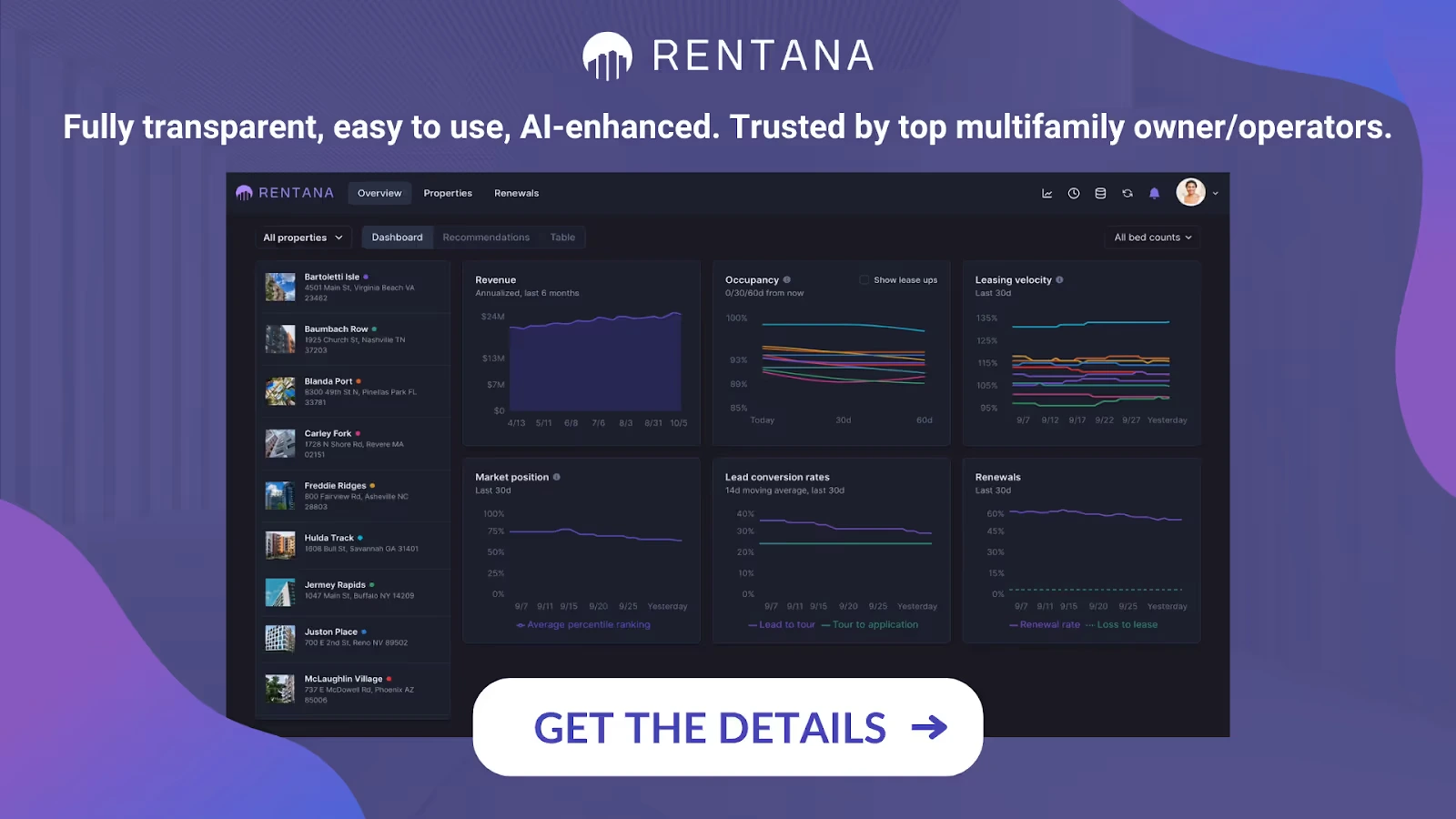
Lease renewal software become most valuable when they help operators move from simply tracking expirations to actively managing renewal strategy across properties. Instead of reacting to leases as they expire, these systems allow teams to identify patterns early, evaluate pricing decisions, and understand how renewals affect portfolio exposure.
Below are several ways operators apply lease renewal software in real-world portfolio management.
1. Identifying Renewal Clusters Early
One of the first challenges in renewal management is understanding when large numbers of leases are set to expire within the same time period. When expirations cluster in the same month or quarter, a property may face sudden exposure if renewal offers are not accepted.
Renewal software helps visualize expiration timelines across properties so teams can identify these clusters in advance. Rentana supports this through expiration visualization by month or unit type, allowing asset managers to quickly see where renewal activity is concentrated.
This visibility helps operators adjust renewal outreach, pricing, or lease term options to prevent large waves of future vacancy.
2. Aligning Renewal Pricing With Market Conditions
Renewal pricing decisions require balancing resident retention, current property pricing, exposure, and revenue goals.
Rentana supports this process through configurable renewal settings established by the company to align recommendations with its desired asset strategy. These settings can define how renewal offers relate to current property pricing by bedroom count or layout, helping teams apply renewal strategy consistently across the portfolio.
This gives operators a structured framework for evaluating renewal offers while maintaining alignment with occupancy, retention, and revenue goals.
This is important because it accurately says the company establishes the strategy; Rentana isn’t independently deciding what the renewal strategy should be.
3. Smoothing Expiration Exposure Over Time
Expiration exposure can influence how stable occupancy remains throughout the year. If too many leases expire within a narrow window, operators may experience sudden increases in availability.
Renewal management software helps distribute exposure more evenly by varying lease term pricing and visualizing expiration timelines and allowing teams to adjust renewal pricing and lease term options when needed. By encouraging certain renewal terms, operators can smooth expiration clusters and maintain more stable availability across the calendar.
Related: Which Multifamily Software Has the Best AI Features?
4. Evaluating Renewal Conversion Performance Across the Portfolio
Renewal conversion rates provide insight into how well properties retain residents and maintain stable occupancy.
Instead of reviewing this information property by property, renewal platforms allow asset managers to monitor conversion trends across the entire portfolio. Rentana provides portfolio-level renewal conversion tracking, giving asset managers visibility into which properties are retaining residents effectively and where conversion performance may be weakening.
Operators can review pending batches through Offer Analysis to compare renewal offers with current property pricing, exposure, and performance and ensure renewal pricing remains aligned with asset strategy.
By monitoring conversion trends and reviewing renewal offers in batches, operators can maintain alignment between renewal pricing, property performance, exposure, and portfolio strategy without manually reviewing each renewal individually.
5. Managing Renewal Offers in Batches
In many multifamily properties, leases tend to expire in groups. A building may have dozens of units renewing within the same month, especially if leases were originally signed during the same leasing season.
Handling these renewals individually can become time-consuming for leasing teams and difficult for asset managers to monitor at scale.
Renewal management software allows operators to generate, review, and approve renewal offers in batches. Instead of creating offers one unit at a time, teams can evaluate a group of expiring leases together and apply consistent pricing logic across the batch and refine at a more granular level as needed.
This structured approach helps operators manage large renewal cycles more efficiently while maintaining consistency across properties.
Don’t Miss:
- Why Investors Are Using AI-Assisted Real Estate Advice
- The Best AI Tools for Real Estate Investors
Conclusion: Renewal Management Is Where Portfolio Strategy Shows Up
Lease renewals sit at the intersection of occupancy planning, lease exposure, and rent setting. Yet at many portfolios, renewals are still handled as a task rather than a strategy.
That approach creates blind spots.
If operators cannot see renewal clusters early, they lose control over lease exposure. If renewal offers are created one unit at a time, pricing decisions drift away from the broader asset strategy. And if conversion performance is not tracked across the portfolio, it becomes difficult to understand how retention is actually performing.
Renewal management works best when it is treated as part of a broader revenue intelligence process.
Operators need visibility into upcoming expirations, tools to generate renewal offers in batches, and clear insight into how renewal decisions affect occupancy, lease exposure, and pricing trends across the portfolio.
That is where Rentana fits into the workflow.
Rentana gives operators a clear view of expiration exposure by month, unit type, and property. Teams can generate renewal offers, review recommendations based on company-configured settings aligned with asset strategy, and track renewal conversion performance across the portfolio. The system connects these decisions back to the broader operating picture so asset managers and property teams can see how renewal activity affects portfolio health.
When renewal management is supported by the right data and tools, it stops being a reactive process.
It becomes a structured way to guide lease timing, maintain occupancy stability, and make consistent pricing decisions across an entire portfolio.
And in multifamily operations, portfolios that manage renewals strategically tend to maintain more stable occupancy, smoother exposure patterns, and stronger revenue performance over time.