Not long ago, revenue management in real estate followed a familiar routine. Rents were reviewed on a schedule, pricing changes were debated in meetings, and decisions were often based on last month’s reports or gut instinct.
By the time adjustments were made leasing and pricing conditions had already changed, often faster than teams could respond. Today, that approach is quietly breaking down. Demand shifts faster, leasing conditions change quickly, and renters compare options instantly.
A single pricing delay or missed signal can ripple across an entire portfolio and cost far more than it appears on paper. This is where AI has changed the game.
In fact, a recent McKinsey survey found that 64 % of companies say AI helps drive innovation in business functions tied to revenue outcomes, underscoring how much the technology has shifted pricing and planning from slow manual cycles to real-time optimization
AI is no longer just speeding up revenue management. It is redefining it. From surfacing demand trends to supporting pricing and renewal analysis, AI is helping operators move from reactive guesswork to real-time revenue intelligence. In this article, we explore the key ways AI is transforming revenue management in real estate and why the operators who embrace it are pulling ahead.
Related: How to Choose a PropTech Software: A Guide for investors
Top 7 Ways AI Is Changing Revenue Management in Real Estate
- Real-time Pricing and Performance Visibility
- Forward-Looking Demand and Occupancy Visibility
- Unit-Level Pricing and Performance Analysis
- Early detection of vacancy and revenue risk
- Portfolio-wide performance and health monitoring
- Smarter lease renewal timing and pricing
- Transparent, explainable revenue recommendations
1. From Static Pricing to Real-Time Revenue Intelligence
Static pricing assumes the market will behave the same way next month as it did last month. In reality, unit demand is constantly shifting. Interest rises and falls, leasing velocity changes, and small shifts in demand can have an outsized impact on leasing outcomes.
Technology can improve pricing decisions by helping teams identify these shifts as they happen. Instead of relying only on fixed rules or scheduled reviews, revenue management platforms can evaluate signals such as leasing velocity, availability, occupancy, and performance by layout. Pricing can evolve with changing property conditions rather than lagging behind performance.
Platforms like Rentana apply this approach by turning ongoing demand and performance data into pricing guidance at the unit level. Rentana analyzes current property performance, leasing activity, occupancy, and exposure to generate pricing recommendations.Rather than waiting for a periodic review or reacting after occupancy drops, operators can make informed pricing decisions as conditions change.
Operators can see where pricing is supported, where it may be holding units back, and where adjustments make sense. This allows teams to respond confidently to changing conditions without waiting for reports or relying on instinct.
2. Forward-Looking Demand and Occupancy Visibility
Demand and occupancy rarely change without warning. Long before units sit empty, there are small signals showing that interest is rising or slowing. Forward-looking analysis uses current leasing activity, renewal trends, expirations, and anticipated availability to surface changes early so operators can move from reactive pricing to proactive strategy.
Instead of guessing next month’s occupancy and revenue performance, Teams can evaluate trends such as lead volume, tours, conversions, lease expirations, renewals, and historical performance. This creates a forward-looking view of demand and availability, helping teams determine which levers to pull to achieve their occupancy and revenue goals.
In practice, this means operators can prepare for upcoming vacancies, adjust pricing ahead of time, and time renewals more effectively. Rentana supports this through forward-looking occupancy and availability visibility, helping teams understand how current leasing activity, renewals, expirations, and anticipated availability may affect future performance.
Related: How to Use AI to Generate Property Performance Reports, in Minutes
3. Unit-Level Pricing and Performance Analysis
By combining pricing, leasing, occupancy, and exposure signals, Rentana helps operators fine-tune pricing, prioritize underperforming units, and avoid missed revenue opportunities where demand is strong.
Not all units perform the same, even inside the same building. Two apartments with similar layouts can lease at different speeds, attract different renters, or respond differently to pricing changes. When pricing decisions are made only at the property or bedroom level, these differences get overlooked.
More granular revenue analysis shifts the focus beyond property-level averages. Teams can evaluate how each layout or custom unit group is performing based on demand, days vacant and leasing speed. This makes it possible to price more precisely, instead of applying broad increases or discounts that do not fit every unit. This level of detail allows teams to assess whether specific features are accelerating or slowing leasing velocity, and adjust premium values accordingly rather than applying broad discounts that fail to reflect true performance.
Rentana provides detailed performance visibility across units, layouts, and custom unit groups, enabling teams to compare unit-type occupancy performance against feature-level outcomes through custom metric analysis. By combining pricing, leasing, occupancy, and exposure signals, Rentana helps operators evaluate pricing, identify underperforming units, and surface potential revenue opportunities where leasing performance is strong.
4. Early Detection of Vacancy and Revenue Risk
Vacancy and revenue loss rarely happen all at once. They usually build quietly through small changes, like fewer inquiries, slower leasing, or specific units sitting longer than they should. By the time these issues show up in traditional reports, if they are specified at all, the damage is often already done.
AI-powered Insights can help surface these risks earlier by identifying meaningful changes in leasing and performance data, days vacant, conversion rates, and leasing velocity. When patterns start to shift in the wrong direction, AI surfaces those signals so operators can take action before vacancies grow or revenue slips.
How Rentana Helps: With Rentana, these early warning signs are visible from the unit to the property level. Operators can see where leasing is slowing, where availability or exposure is building, and which assets may need attention. This allows teams to adjust pricing, marketing, or renewal strategy early, reducing lost revenue and keeping performance on track.
5. Portfolio-Wide Performance and Health Monitoring
As portfolios grow, it becomes harder to spot developing issues that emerge in small property level signals but are easily missed at a macro level. . Individual assets may appear healthy in isolation , while subtle performance gaps quietly compound across markets and regions. Portfolio-wide visibility, supported by AI-generated Insights, can bring clarity to that complexity.
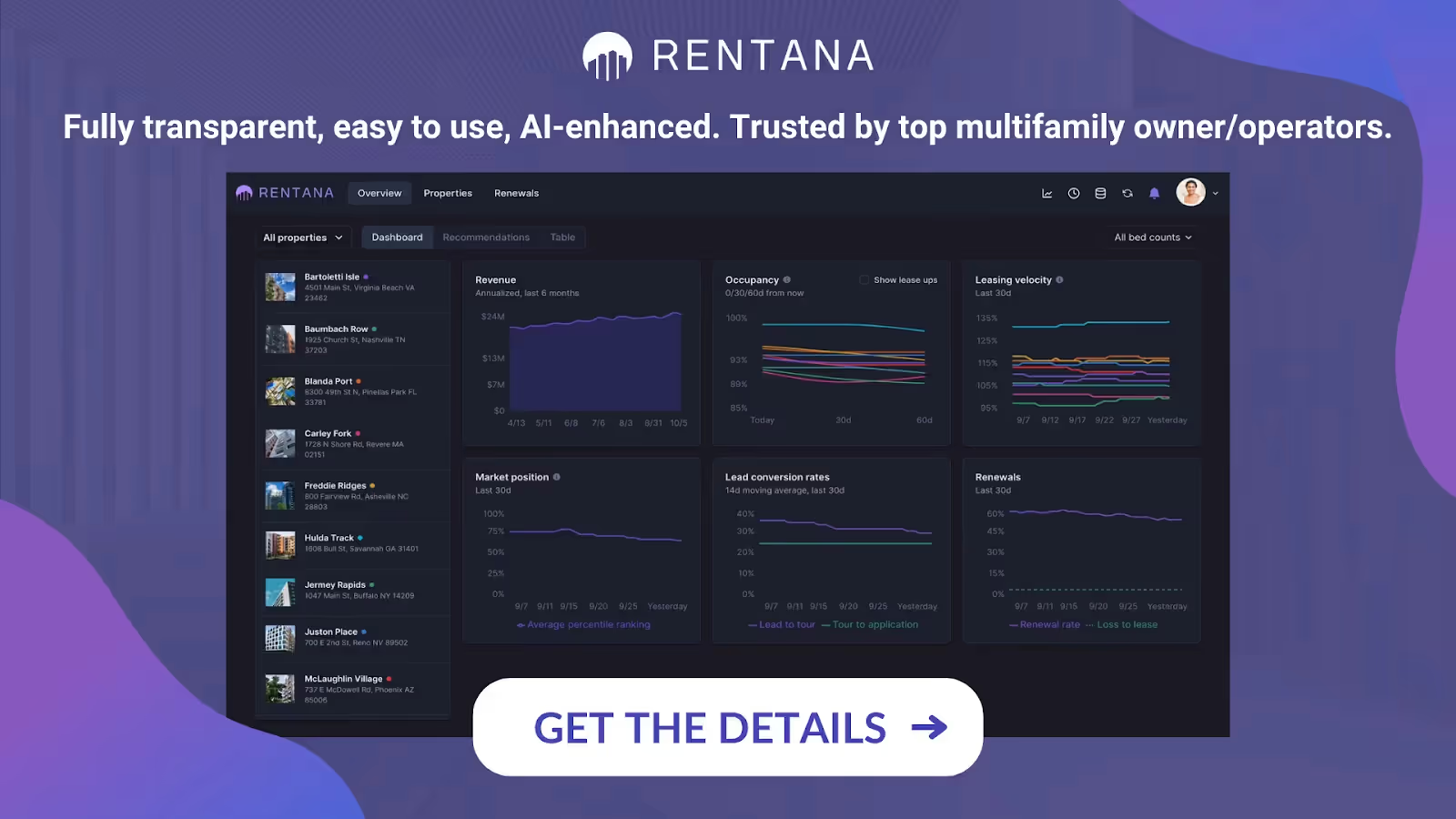
Portfolio analytics bring together occupancy, pricing, leasing, renewal, and exposure trends across assets, while AI-generated Insights can help surface notable changes and areas requiring attention.This side-by-side view makes it easier to spot which properties are outperforming, which are beginning to slip, and where emerging risks require attention.
Rentana supports this approach by providing operators with a high-level view of portfolio health while maintaining the ability to drill down into individual properties, unit types, and units. Instead of digging through disconnected reports, teams are presented with clear visual metrics and AI-generated insight summaries, allowing them to quickly identify risk areas, prioritize actions, and manage performance more strategically across the entire portfolio.
6. Smarter Lease Renewal Timing and Pricing
Lease renewals are one of the most important moments for protecting revenue, yet they are often handled with fixed increases or rushed decisions tied to distribution deadlines. When renewal strategy is not aligned with asset goals, operators can miss retention opportunities, create unnecessary exposure, or weaken future occupancy performance.
Rentana helps companies implement a more consistent renewal strategy through configurable settings designed to align renewal recommendations with the desired asset strategy. Teams can establish parameters for renewal offers while maintaining visibility into current pricing, upcoming expirations, exposure, anticipated availability, and property performance.
This gives operators greater context as they review renewal recommendations and determine the appropriate timing, pricing, and lease-term strategy. Rather than approaching each renewal as an isolated decision, teams can apply a consistent framework while balancing retention, occupancy, exposure, and revenue goals.
Read Also: 8+ Ways to Apply Predictive Analytics in Real Estate
7. Transparent, Explainable Revenue Recommendations
For years, revenue management tools relied on black-box models that offered recommendations without context. Operators were told what to do, but not why. This lack of transparency made it hard to trust the output or explain decisions to ownership teams.
Modern revenue management platforms are improving transparency by making pricing recommendations more explainable. Instead of just suggesting a price change, modern systems can show the property-level factors contributing to recommendations, such as leasing velocity, occupancy, exposure, pricing performance, and historical trends.This clarity helps teams understand the reasoning and act with confidence.
How Rentana Helps: Rentana pricing recommendations include clear reasoning and supporting property-level data, helping operators understand the factors behind each recommendation.Transparent revenue guidance builds trust, improves adoption across teams, and ensures decisions are grounded in current property performance rather than assumptions.
How to Ensure Revenue Growth Without Over-Discounting
Discounting is often the fastest reaction when leasing slows, but it is rarely the smartest one. Blanket concessions can quickly erode revenue and make it harder to recover pricing later. Revenue analytics can help operators evaluate when concessions may be warranted and when they are not.
By analyzing leasing trends, unit performance, occupancy, and exposure, teams can identify the specific units or time periods where a pricing adjustment or concession will have the greatest impact. This allows operators to act selectively instead of applying broad discounts across an entire property.
Rentana helps teams identify where leasing and occupancy performance may support holding pricing and where targeted concessions may warrant consideration. This supports more informed revenue decisions rather than reactive discounting.
Don’t Miss: The Best AI Tools for Real Estate Investors
Conclusion on AI in Revenue Management
AI is not changing revenue management by replacing people, but by sharpening how decisions are made. The days of relying on static pricing rules, delayed reports, and reactive discounts are fading fast. In their place is a more dynamic, informed approach that reflects how property performance changes over time.
The operators who succeed going forward will be the ones who use AI to surface important performance changes earlier while relying on purpose-built revenue management tools and human judgment to guide pricing and strategy.Tools like Rentana show what this looks like in practice by turning complex property performance data into clear, explainable insights and pricing guidance that supports smarter decisions every day.
As real estate revenue management continues to evolve, the question is no longer whether AI will be part of the process, but how effectively it will be used to support faster, more informed revenue decisions.