A resident who renews is a unit that does not need to be re-leased.
That simple idea has major operational implications. Every preventable move-out creates vacancy loss, make-ready cost, marketing spend, leasing effort, and renewal risk that could have been avoided if the resident had a stronger reason to stay.
According to the National Apartment Association's Income/Expense IQ report, leasing expenses increased 4.6% in 2024 to $292 per unit, largely driven by a 17.5% year-over-year increase in turnover costs. That increase reflects the cumulative cost of resident departures, make-ready activity, marketing spend, and re-leasing effort across multifamily operations.
Resident experience is the upstream variable behind many of those downstream costs. Maintenance responsiveness, communication quality, move-in experience, amenity reliability, and renewal conversations all influence whether a resident feels valued enough to renew when the lease term ends.
This guide covers seven practical ways multifamily operators can improve resident experience and connect those improvements to stronger renewal conversion, more stable occupancy, and lower turnover-related expense.
Related:
- 9 Tenant Retention Strategies that Improve Multifamily NOI
- The Multifamily Leasing Funnel Explained
What Is Resident Experience?
Resident experience is the sum of every interaction a resident has with the property, the management team, and the physical environment from the moment they sign a lease through the day they move out.
It includes how quickly maintenance requests are resolved, how clearly the team communicates, how the move-in process feels, whether amenities work as expected, and how renewal conversations are handled.
Resident experience is not a single event or a satisfaction score. It is the cumulative impression a resident forms over the lease term. A resident who has had twelve months of responsive, professional, and consistent interactions enters the renewal conversation differently than one who has spent the year chasing unresolved maintenance requests or receiving generic communication.
That makes resident experience operationally significant. It influences renewal decisions, renewal decisions influence occupancy stability, and occupancy stability supports more predictable revenue performance.
Why Resident Experience Drives Multifamily Performance
The connection between resident experience and financial performance is direct. When residents leave because of preventable issues, the property absorbs more than a move-out. It absorbs vacancy loss, make-ready cost, marketing spend, leasing effort, and the risk of re-leasing the home at a less favorable effective rent.
1. Preventable Turnover Creates Avoidable Cost
A preventable departure is expensive because the cost is layered. The vacant period reduces revenue. The make-ready comes off the bottom line. Marketing spend increases. The leasing team has to replace a resident who may have stayed if the experience had been stronger.
At portfolio scale, those costs compound into higher operating pressure and lower revenue stability. What may look like ordinary turnover is often the financial consequence of resident experience issues that were not addressed early enough.
2. Renewal Conversion Is an Experience Metric
Resident experience shows up most clearly in renewal conversion.
A resident who feels well-served by the management team, receives timely maintenance support, and trusts the property’s communication is more likely to approach the renewal conversation with a reason to stay. A resident who has spent the lease term feeling ignored, inconvenienced, or undervalued is more likely to compare alternatives.
According to CBRE's U.S. Real Estate Market Outlook 2026, renewals now represent 57% of all leasing activity, up from 51% in 2015 and 48% in 2005, with renewal rates expected to increase further in 2026 as barriers to homeownership keep residents in the rental market longer.
That makes resident experience one of the most important operational variables in renewal performance. If more leasing activity is coming from residents choosing whether to stay, the experience that shaped that decision matters.
Related:
3. Retention Compounds Over Time
A resident who renews once may renew again. Each additional renewal cycle avoids another vacancy period, make-ready, marketing spend, and re-leasing effort.
At portfolio scale, the difference between average and strong renewal conversion is not just a retention statistic. It is a different occupancy stability picture, a different expense profile, and a different revenue trajectory over the hold period.
7 Best Ways to Improve Resident Experience
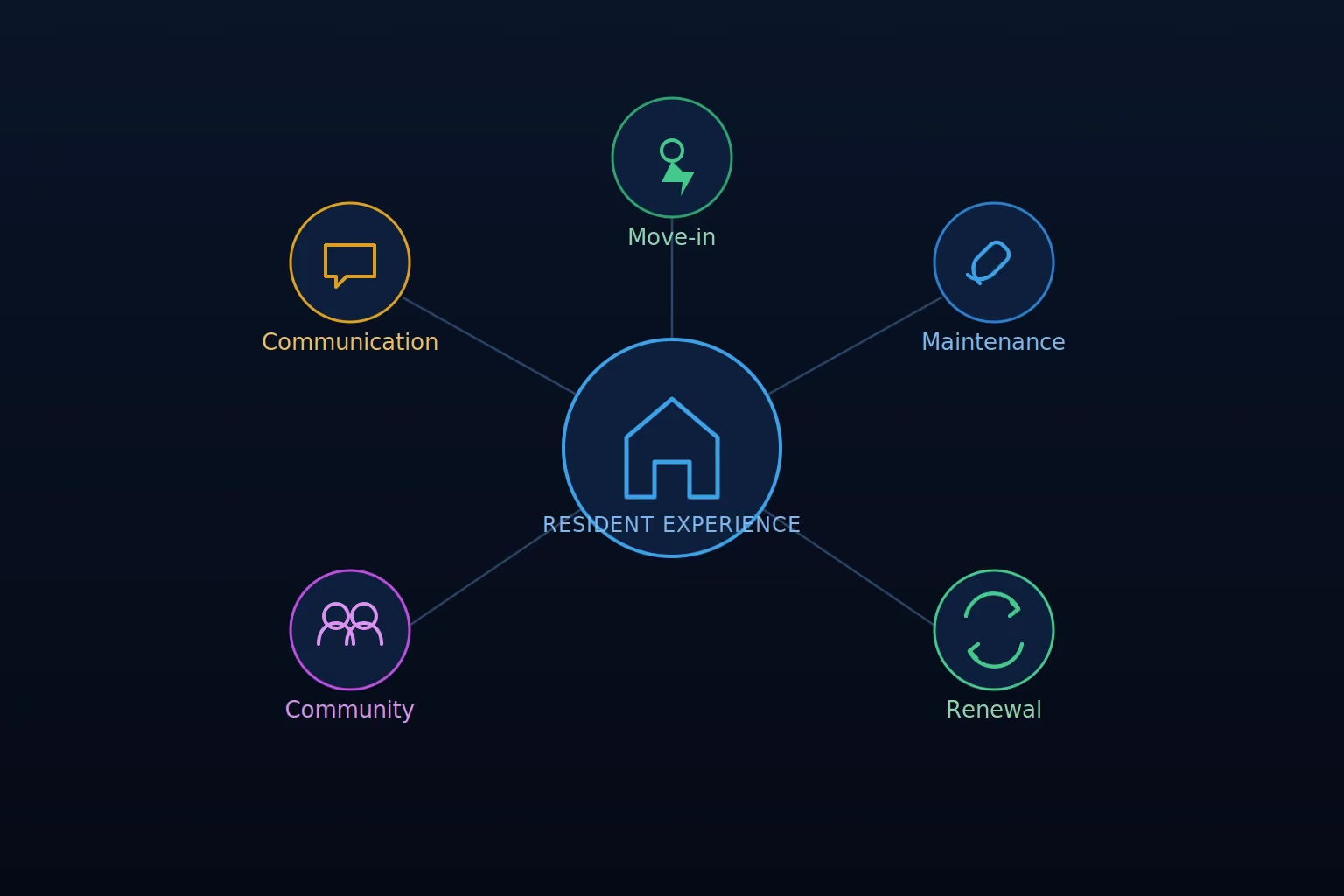
- Improve Move-In Experience
- Prioritize Maintenance Responsiveness
- Communication Consistency
- Maintain Amenity Reliability
- Build Community Engagement
- Communicate Clearly About Changes That Affect Residents
- Improve Renewal Conversations
1. Improve the Move-In Experience
The move-in experience sets the tone for the entire residency.
A resident who arrives at a clean, functional, and accurately represented unit starts the relationship with confidence in the property team. A resident who arrives to unresolved maintenance issues, missing amenities, or a disorganized handoff starts with a trust deficit that can take months to repair.
Move-in is also one of the most controllable moments in the resident journey. A checklist-driven process, a personal welcome, clear move-in instructions, and a follow-up within the first week can have a disproportionate impact on how the resident experiences the rest of the lease term.
The goal is simple: the resident should feel that the property is organized, responsive, and prepared for them before they ever need to ask for help.
2. Prioritize Maintenance Responsiveness
Maintenance responsiveness is one of the most visible drivers of resident satisfaction.
A resident who submits a work order and hears nothing for several days has already formed an opinion about how the property values their comfort. Even when the repair is eventually completed, the silence around the request can do as much damage as the issue itself.
The standard should be more than fast resolution. Residents need to know that their request was received, when it is expected to be addressed, and when it has been completed. Clear communication throughout the process helps prevent a routine maintenance issue from becoming a larger resident experience problem.
Strong maintenance responsiveness shows residents that the property team is paying attention. Over time, that consistency becomes one of the reasons residents choose to stay.
3. Communication Consistency
Inconsistent communication is one of the most preventable sources of resident dissatisfaction.
Late announcements, unclear policy updates, delayed maintenance responses, or renewal offers sent without context can make residents feel like communication is an afterthought. Even when the underlying decision is reasonable, poor communication can create frustration and mistrust.
Consistent communication means using a predictable cadence, clear channels, and a professional tone. Residents should know where to find information, how urgent updates will be shared, and what to expect when something affects their home or community.
AI-assisted communication tools can help teams maintain consistency at scale, but resident-facing communication still needs human review for accuracy, tone, and appropriateness.
Recommended:
- What Are Property Management Systems?
- PMS Integration for Multifamily: What is it & How it Works?
4. Maintain Amenity Reliability
An amenity that does not work can create more frustration than no amenity at all.
A fitness center with broken equipment, a pool that closes without clear updates, a package locker system that fails during peak delivery season, or a coworking space that is not maintained all create a gap between what was promised during leasing and what the resident actually experiences.
Amenity reliability requires proactive management. Scheduled inspections, preventive maintenance, documented service cadences, and fast response to reported issues help protect the value residents associate with those amenities.
When an amenity does go offline, communication matters. Residents are more likely to tolerate temporary disruption when they understand what happened, what is being done, and when they can expect the amenity to be available again.
5. Build Community Engagement
Residents are more likely to renew when they feel connected to the community around them.
Community engagement does not need to be expensive or overly programmed. Small, consistent touchpoints can make residents feel seen and valued: resident appreciation moments, seasonal events, welcome notes, community updates, responsive social channels, or simple recognition of resident milestones.
The goal is not to create activity for its own sake. The goal is to give residents a reason to feel that the property is more than a place they rent.
Properties that do this well are not always the ones with the most amenities or largest event budgets. They are the ones where residents feel recognized as people, not just occupants.
6. Communicate Clearly About Changes That Affect Residents
Residents do not need to be involved in every financial, operational, or business decision at the property. But they do need clear communication when a decision affects their daily experience at home.
A parking policy change, construction project, amenity closure, access issue, staffing change, or renewal increase can create frustration when residents feel surprised by it. Even when the decision is reasonable, a lack of context can make residents feel blindsided in the place they live.
Clear communication means explaining what is changing, why it affects residents, when it will happen, and what they should expect next. The goal is not to over-share internal business reasoning. The goal is to help residents feel informed, respected, and prepared for changes that impact their home or community.
Residents may not agree with every decision, but they are more likely to trust the property team when communication is timely, direct, and grounded in how the change affects their day-to-day living experience.
7. Improve Renewal Conversations
A renewal offer delivered as a letter with a number and a deadline is not a renewal conversation. It is a transaction.
Residents who receive renewal offers without context, personal contact, or acknowledgment of their residency may have little reason to feel valued by the process. That matters because the renewal decision is where the full resident experience becomes a financial outcome.
Stronger renewal conversations start earlier. They give residents enough context to understand the offer, create room for questions, and reinforce that the property values continued residency.
A consistent, thoughtful renewal process helps residents feel informed and respected while giving the team a better opportunity to retain occupancy. The conversation is a small investment compared with the cost of preventable turnover.
Don’t Miss:
- Best Rent Recommendation Tools: What Operators Should Evaluate
- Multifamily Rental Market Trends So Far
How Resident Experience Connects to Operational Performance
Resident experience improvements show up most clearly through renewal conversion, occupancy stability, and turnover-related expenses.
The challenge is that resident experience issues often become visible only after the resident has already decided to leave. A maintenance issue went unresolved for too long. A renewal conversation happened too late. A communication breakdown built frustration over several months. By the time the notice is received, the cost is already in motion.
That is why operators need to evaluate resident experience alongside the operating signals that show where retention risk may be building.
Rentana supports that visibility through renewal conversion tracking, portfolio dashboards, and forward-looking occupancy signals. If renewal conversion softens for a specific property, bedroom type, or custom unit group, teams can review whether timing, pricing, communication, maintenance, amenity reliability, or other property-level experience factors may be contributing to the pattern.
Resident experience is the upstream discipline. Renewal conversion, occupancy stability, and turnover cost are the downstream outcomes. Teams that review those signals early have a better opportunity to address issues before they become move-outs.
Conclusion on How to Improve Resident Experience
Resident experience is not a soft metric. It is an operational discipline that directly affects renewal conversion, occupancy stability, turnover costs, and revenue predictability.
The seven improvements in this guide are not complicated, but they do require consistency. A smoother move-in, faster maintenance response, clearer communication, reliable amenities, stronger community connection, better change management, and more thoughtful renewal conversations all give residents more reasons to stay.
For multifamily operators, the goal is not to create a resident experience program that exists separately from property performance. The goal is to manage the resident journey in a way that supports retention, reduces preventable turnover, and protects NOI over time.
Residents renew when the value of staying feels stronger than the disruption of leaving. Building the experience that supports that decision is where retention is won or lost.