Most multifamily leasing teams are not short on technology. They have a CRM. They have listing platforms. They have a PMS. Some have AI leasing assistants. What many teams are missing is a clear understanding of whether those tools are working together as a connected leasing workflow or operating as separate platforms that each require their own processes, data management, and reporting.
Choosing the right technology for a leasing workflow is not a features evaluation. It is a use case match.
The right question before evaluating any tool is not simply, “What does it do?”
It is: What specific gap in the current leasing process does it solve, and does solving that gap actually improve leasing performance?
A tool that automates a workflow the team does not need improved is not a productivity gain. It is another system to maintain.
For multifamily operators, leasing performance depends on multiple connected stages — from generating demand and responding to inquiries, to managing prospect follow-up, improving conversion, and understanding where leasing activity may be changing. When these workflows operate across disconnected systems, teams often spend more time reconciling information than acting on it.
The most effective leasing technology stacks are not built around having the most tools. They are built around understanding the operational gaps that matter most, selecting the right technology category for each need, and creating a connected system where teams have better visibility into leasing performance.
This article covers how to approach leasing technology selection practically, the core technology categories that support a multifamily leasing workflow, and how to build a technology stack that works together rather than creating additional complexity.
Related:
- Top 7 Leasing Strategies to Boost Occupancy
- Best Leasing Solutions for Managing Multiple Multifamily Assets
Start With the Leasing Workflow, Not the Tool
The most common leasing technology mistake is evaluating tools before understanding the workflow they are supposed to support. A platform demo may look impressive in isolation, but if it is not solving the operational challenge creating the greatest impact, it can become another system for the team to manage rather than a solution that improves performance.
Before evaluating any leasing technology, teams should understand where the current workflow is breaking down.
Is the gap at the top of the funnel, where inquiry volume is low or response time is creating missed opportunities? Is it in the middle of the funnel, where prospects are dropping off between tours and applications? Or is it at the closing stage, where approved applicants are not converting to executed leases?
Each stage has a different cause and requires a different solution. Deploying a leasing automation tool to solve a closing-stage conversion problem will not address the underlying issue.
Teams should also evaluate the impact of the current gap. A response-time issue may result in lost leasing opportunities. A funnel conversion issue may represent prospects already entering the pipeline but not progressing. A reporting gap may create unnecessary staff time spent assembling information instead of evaluating performance.
Understanding the operational gap before evaluating technology helps operators build a stronger ROI case for the investment and avoid selecting tools based only on features.
The final question is what the team actually needs the technology to do. A leasing automation platform that handles inquiries and schedules tours solves a different problem than a CRM that manages the prospect pipeline. A listing platform that generates demand serves a different purpose than an analytics platform that shows where prospects are converting and where they are not.
The right leasing technology decision starts with the workflow challenge, not the tool.
Choosing Tech Tools for Your Leasing Workflow: The Technology You Need
A complete multifamily leasing workflow requires multiple technology categories working together. Each category addresses a different stage of the prospect journey and a different operational gap.
The goal is not to add every available technology solution. It is to understand what each category is designed to solve and determine which capabilities are most important based on the challenges within the current leasing process.
A leasing technology stack typically includes solutions that support demand generation, prospect communication, pipeline management, conversion visibility, and revenue performance. The strongest technology environments connect these workflows so teams have a consistent view of leasing activity rather than managing separate systems with disconnected information.
1. Inquiry Response and Leasing Automation
Inquiry response and leasing automation tools support the top of the leasing funnel by helping teams respond to prospects quickly, provide information consistently, schedule tours, and maintain follow-up.
The operational gap this category addresses is response time and follow-up consistency. When prospect inquiries depend entirely on staff availability and individual workflows, response quality can vary based on workload, staffing levels, and timing.
AI leasing tools can help ensure prospects receive timely responses regardless of when they inquire while allowing leasing teams to focus on conversations that require human judgment and relationship-building.
The most effective solutions do not replace leasing teams. They reduce repetitive communication tasks so teams can spend more time moving qualified prospects through the leasing process.
2. CRM and Pipeline Management
CRM and pipeline management platforms provide visibility into the prospect journey from initial inquiry through executed lease.
A CRM helps teams track prospect interactions, maintain communication history, manage follow-up activity, and understand where prospects are within the leasing pipeline.
Without a centralized pipeline view, leasing teams often rely on individual tracking methods, making it easier for follow-up opportunities to be missed. A well-configured CRM creates consistency by documenting prospect activity and making pipeline status visible across the team.
For larger portfolios, CRM visibility becomes increasingly important because leasing managers and asset managers need to understand whether leasing activity is progressing as expected and where potential conversion issues may exist.
Read Also:
- AI Leasing Assistants for Multifamily Teams
- Multifamily Marketing Strategies that Actually Drive Leasing
3. Listing and Marketing Platforms
Listing and marketing platforms support demand generation by helping operators distribute available inventory, manage marketing channels, and generate prospect interest.
The operational gap this category addresses is visibility and reach. Available units need to appear accurately across the channels where prospects are searching, and marketing efforts need to generate the demand required to support leasing goals.
Without consistent listing management, outdated availability information can create missed opportunities, generate inquiries for unavailable units, or limit exposure for units that need additional leasing activity.
Connected listing and marketing workflows help ensure that availability information stays current and that teams understand how marketing activity contributes to overall leasing performance.
4. Analytics and Funnel Visibility
Analytics and funnel visibility tools help operators understand where prospects are converting and where leasing performance may be breaking down.
Looking only at total leads or total leases does not provide enough context to understand why performance is changing. A decline in signed leases could be caused by lower inquiry volume, weaker tour conversion, application friction, or closing-stage challenges.
Funnel analytics help teams distinguish between different types of leasing problems by showing where prospects are progressing and where they are dropping off.
For multifamily operators, this visibility helps answer questions such as:
- Is the issue demand generation or conversion?
- Are prospects reaching the property but not moving forward?
- Which lead sources are producing qualified leasing opportunities?
Rentana supports this category through leasing velocity and funnel conversion signals that help operators identify where performance is changing and whether the challenge is related to demand volume or conversion within the leasing process.
5. Revenue Intelligence
Revenue intelligence is the forward-looking layer of the leasing technology stack.
While reporting and analytics explain what has happened, revenue intelligence connects leasing activity with the operational signals that influence future occupancy and revenue performance.
Revenue intelligence platforms connect factors such as leasing velocity, pricing performance, renewal conversion, exposure forecasting, and predicted occupancy to help teams understand where performance is heading and whether current leasing activity is sufficient given future availability.
Without this visibility, teams may rely primarily on historical reporting that explains past performance but provides limited insight into what may happen next.
Rentana connects these signals through leasing performance visibility, predicted occupancy, exposure forecasting, and portfolio-level dashboards. This helps leasing, revenue management, and asset management teams evaluate the same operational picture and identify where attention may be needed.
How to Evaluate and Build a Connected Leasing Tech Stack
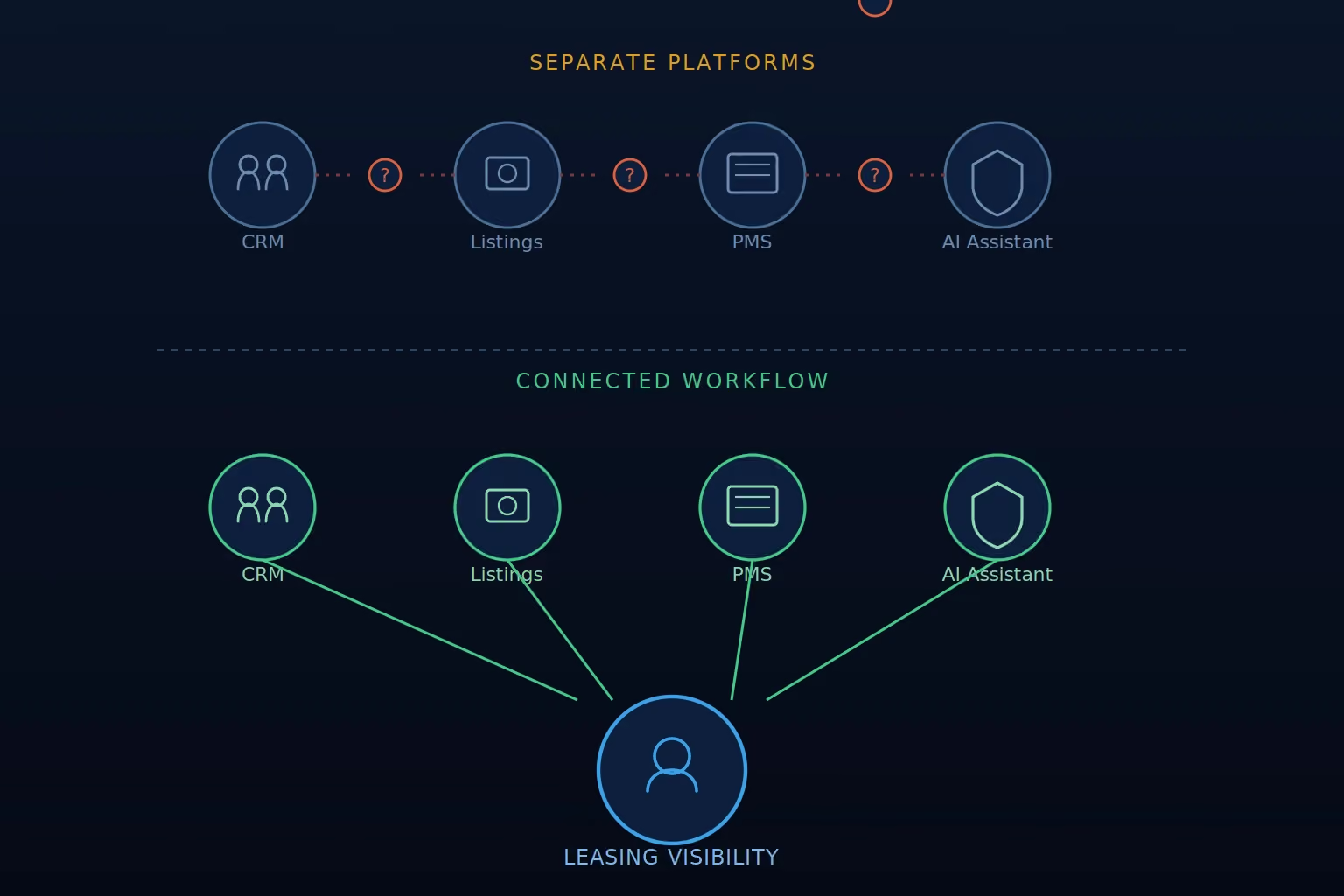
Once the workflow gaps are understood and the relevant technology categories are identified, the next step is evaluating which platforms will actually improve the leasing process rather than add additional complexity.
The best leasing technology stacks are not built by selecting the tools with the most features. They are built by selecting solutions that solve specific operational problems, integrate with existing systems, and provide meaningful outputs that support better decisions.
When evaluating leasing technology, operators should consider five key areas.
1. Integration with existing systems
A leasing tool that does not connect with the systems already supporting operations can create another data silo.
Multifamily teams often rely on multiple platforms across the leasing process, including property management systems, listing platforms, CRMs, and reporting tools. When those systems do not communicate effectively, teams may spend additional time reconciling information instead of acting on it.
Technology should be evaluated based on how cleanly it connects with the existing operating environment.
The question is not only: What features does the platform provide?
It is: How does this platform improve the workflows and information already used by the team?
2. Quality of the output
Not all technology outputs create the same level of value.
Some tools provide additional data that still requires teams to interpret and analyze before making a decision. Other tools provide information that is already connected to a specific workflow, performance question, or operational action.
The difference is moving from reporting to decision support.
A reporting tool may show how leasing activity changed, conversion declined, or occupancy moved. A decision-support tool helps teams understand: what changed, why it may have changed, where the issue may exist, what should be evaluated next.
The strongest leasing technology helps teams move from collecting information to acting on it.
3. Shared visibility across the team
Leasing decisions are not made by one team alone. Leasing teams, revenue managers, property managers, and asset managers all influence performance, but each group may view leasing activity through a different lens.
A leasing tool that only provides visibility to one team can create another information gap. While the leasing team may understand daily prospect activity, asset managers and revenue teams also need visibility into how leasing performance is affecting occupancy, availability, and broader property goals.
The most effective leasing technology creates shared visibility across teams so everyone is working from the same operational picture. This reduces the need to reconcile separate reports and allows teams to evaluate performance changes together rather than relying on disconnected information.
For portfolio operators, shared visibility becomes increasingly important as leasing activity varies across properties, markets, and asset strategies. The ability to move from portfolio-level trends into property-level detail helps teams identify where attention may be needed and coordinate the right response.
4. Whether it connects to the decisions the team is actually making
The most common leasing technology mistake is choosing a platform based on features rather than the decisions it needs to support.
A sophisticated tool does not automatically create value if it is solving the wrong operational problem. The purpose of technology is not simply to collect more information or automate more tasks. It is to help teams make better decisions with better context.
Before selecting a leasing technology solution, operators should understand what decision the platform is intended to improve. Is the goal to increase prospect response speed? Improve funnel conversion? Understand where leasing performance is changing? Identify future occupancy risk? Support pricing and leasing strategy decisions?
The strongest leasing technology connects outputs directly to operational decisions. Instead of requiring teams to interpret disconnected information manually, the platform should help clarify what is happening, why it matters, and where additional attention may be needed.
The right technology supports the decisions teams are already responsible for making and helps operators act with greater speed, consistency, and confidence.
Top Picks:
- How to Improve Leasing Conversion Speed in Multifamily
- Centralized Leasing in Multifamily: A Complete Guide
5. Building the stack in the right order
The most effective leasing technology stacks are built intentionally rather than implemented all at once.
Operators should first address the highest-volume and most operationally significant gaps. For many teams, this may begin with improving inquiry response and prospect management. As those workflows mature, additional layers such as analytics, funnel visibility, and revenue intelligence can provide deeper performance insights.
The goal is not to collect the most technology tools. It is to build a connected system where each solution addresses a specific operational need and contributes to a clearer understanding of leasing performance.
Rentana fits into this technology stack as the analytics and revenue intelligence layer that connects leasing activity to forward performance. Leasing velocity and funnel conversion signals help identify where leasing performance may be changing, while Predicted Occupancy and exposure forecasting provide visibility into future availability and occupancy conditions.
The strongest leasing technology environments are built around the right tools, connected in the right order, with a clear understanding of the operational gaps each solution is designed to solve.
Conclusion on How to Choose Tech Tools for Your Leasing Workflow
Choosing technology for a multifamily leasing workflow is about understanding where the current process has gaps and selecting solutions that address the operational challenges creating the greatest impact.
The strongest leasing technology stacks are not built by adding more tools. They are built by connecting the right tools around clearly defined workflows, ensuring teams have consistent visibility into leasing performance, and reducing the manual effort required to understand what is happening across the portfolio.
As leasing operations become more complex, operators need technology that does more than store information or automate individual tasks. The most valuable solutions help teams understand performance, identify where conditions are changing, and make better decisions about where to focus attention.
The goal is not technology for technology’s sake. It is a connected leasing workflow where systems support the teams responsible for driving occupancy, improving conversion, and executing the asset strategy.
Start with the operational gap. Match the technology category to the problem. Evaluate how the solution improves decision-making, integration, and visibility. Build the stack intentionally around the outcomes the portfolio needs to achieve.