
Current occupancy tells teams how many units are occupied today. It does not show how scheduled lease expirations, confirmed departures, and potential future availability may affect the property over the coming months. Multifamily exposure management connects those forward-looking signals with leasing performance and asset strategy so teams can prepare before pressure builds.
The National Apartment Association’s analysis of 2024 operating results found that repairs and maintenance costs had risen nearly 28% since 2021, while NOI increased approximately 10%. With operating costs placing pressure on property performance, understanding potential vacancy and turnover needs is an important part of planning.
Exposure management helps teams evaluate lease expiration distribution, prioritize renewal outreach, and review lease terms and pricing in the context of upcoming inventory. It gives teams more time and information to respond while distinguishing confirmed availability from estimates.
This article explains how to build that forward view, set expiration targets, and connect leasing and renewal decisions with the availability those decisions help shape.
Related:
- 7+ Multifamily Lease-Up Strategies
- Lease Renewal Agreement: How to Manage The Entire Process Easily
What is Multifamily Exposure?
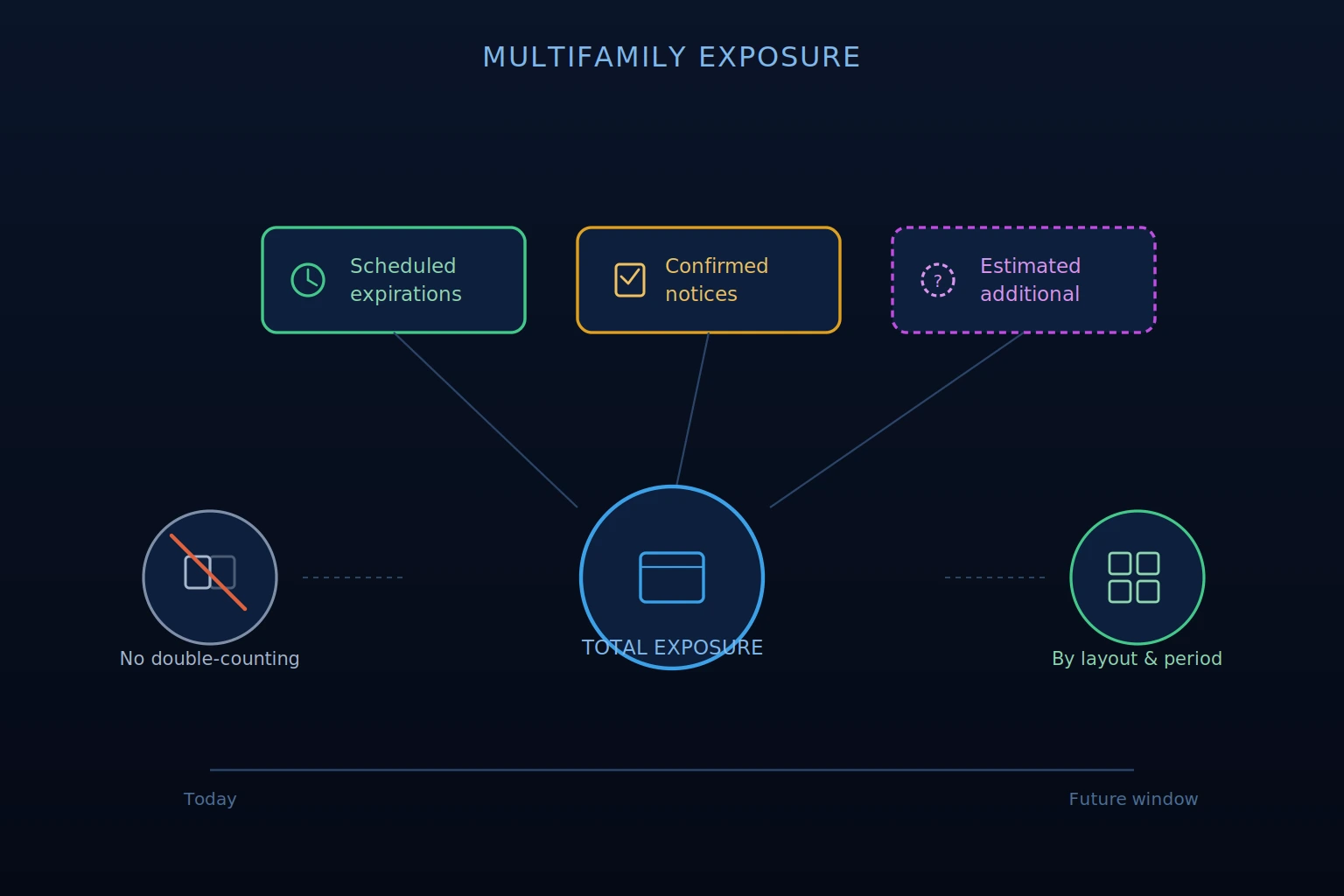
Multifamily exposure describes the inventory that may need to be leased within a defined future period. Evaluating it requires a view of scheduled lease expirations, known upcoming availability, and additional anticipated availability informed by historical performance.
These categories represent different levels of certainty. A scheduled expiration identifies when a lease ends, but the resident may renew. A confirmed notice identifies a planned departure. Estimates for month-to-month behavior and early terminations help teams consider additional availability that is not yet confirmed.
Exposure analysis connects that information with currently available inventory, signed leases awaiting move-in, and leasing pace. Records should be reconciled so the same unit is not counted twice, for example, as both a scheduled expiration and a confirmed notice.
A property can have strong occupancy today while facing a concentrated expiration window ahead. Reviewing exposure by layout and time period helps teams assess how much availability may emerge, how it compares with their goals, and where earlier outreach or strategy review may be useful.
Why Lease Expiration Concentration Matters
Lease expiration concentration occurs when many leases end within the same period, particularly within a specific layout. The risk depends on how many residents renew, when departures occur, and whether new leasing can keep pace with the units becoming available.
If move-outs exceed the property’s ability to replace them within its occupancy timeline, vacancy may increase and rental revenue may come under pressure. Turnover volume can also stretch maintenance and leasing capacity, making unit readiness and follow-up important parts of the response.
GlobeSt’s coverage of rising operating costs highlights the financial pressure facing multifamily operators. Expiration planning gives teams a way to prepare for potential turnover demands and evaluate their implications for staffing, vacancy costs, and lease economics.
The lease terms offered when filling those units also matter. Re-leasing many units during the same period on identical terms can recreate a concentrated expiration window later. Reviewing term options against expiration targets helps teams consider both the immediate leasing need and the future schedule they are creating.
Concentration does not guarantee an occupancy problem. It identifies a period that warrants closer review, giving teams time to assess renewal status, prepare units, support leasing, and evaluate appropriate responses.
1. Look Beyond Scheduled Lease Expirations
Scheduled expirations show when leases end, but they do not establish which residents will leave or when units will be ready to lease again. Build the forward view using currently available inventory, scheduled expirations, confirmed notices, renewal status, and signed leases awaiting move-in.
Reconcile overlapping records so the same unit is not counted twice. A confirmed notice may relate to an expiration already on the calendar, while an early termination may shift availability into a different period.
Additional anticipated availability, such as month-to-month behavior and early terminations, can be incorporated based on historical performance. Keep those estimates distinguishable from confirmed departures and revisit the assumptions as new information becomes available.
Timing matters as much as volume. A departure date, expected ready date, and incoming resident’s move-in date may fall in different periods. Reviewing those dates by layout helps teams assess potential vacancy duration and coordinate maintenance, marketing, and leasing support.
2. Set Exposure Targets Around Asset Strategy
Set lease expiration targets that reflect the property’s seasonal leasing patterns, layout mix, occupancy goals, and operational capacity. These targets provide a framework for managing future concentration; an equal number of expirations every month is not necessarily the right fit.
Review the distribution by layout as well as at the property level. A manageable total can conceal concentration in a layout with slower leasing or limited demand. Historical leasing and renewal performance can inform the targets, with assumptions revisited as conditions change.
Keep expiration targets distinct from expected availability. The target describes the lease calendar the team is working toward. Availability analysis considers how renewals, confirmed departures, and anticipated move-outs may affect the inventory that needs to be leased.
A window above target warrants investigation, but it does not automatically require a pricing change. Review renewal status, leasing pace, and operational capacity before deciding how to respond.
Related:
- The Multifamily Leasing Funnel Explained
- How to Improve Leasing Activity
3. Use Lease Term Pricing to Shape Future Expirations
Lease term offerings influence where future expirations fall. Evaluate each available term against the property’s expiration targets, expected seasonal demand, and asset strategy before deciding how to price it.
Longer terms do not always deserve discounts, and shorter terms do not always warrant premiums. A longer lease may end in an already concentrated period, while a shorter option may place the expiration in a window the property is better positioned to manage. The expiration date and the agreement’s economics should guide the review.
Consider term pricing alongside base rent, concessions, and prospect preferences. An offer needs to remain viable for the leasing decision in front of the team while supporting the future distribution being created.
Review the calendar as new leases and renewals are signed. Lease-up provides an early opportunity to shape expiration patterns, but teams can continue influencing the distribution throughout the property’s operating life.
4. Connect Renewal and Retention Strategy With Exposure
Renewal outcomes influence how much scheduled exposure becomes leasing availability, requiring a new resident. Review signed renewals, confirmed departures, and pending decisions by layout and expiration window to understand where uncertainty remains.
Start outreach early enough to understand residents’ plans and address concerns the team can resolve. Resident experience, maintenance responsiveness, communication, and perceived value can all affect retention. Concentrated expiration windows may warrant additional follow-up capacity, without overlooking residents elsewhere in the property.
Apply company-defined renewal settings aligned with asset strategy, and review offers alongside potential turnover costs, retention outcomes, and forward availability. Evaluate renewal term options for how they contribute to the desired expiration distribution.
Track reasons for non-renewal where available and investigate patterns over time. These findings help teams distinguish pricing concerns from service issues or changing household needs and choose a response supported by the circumstances.
5. Coordinate Pricing, Concessions, and Marketing With Upcoming Availability
When potential availability is building faster than current leasing pace can absorb, identify the layouts and periods driving the gap. Review inquiry volume, funnel conversion, renewal status, unit readiness, and signed leases before deciding which action is warranted.
Pricing: Evaluate whether current asking rents and lease terms support the required leasing pace, considering occupancy goals and asset strategy. High exposure adds context to the decision; it does not establish that rents should decrease.
Concessions: Consider whether an incentive could address a defined leasing need. Establish its scope, duration, and review points, and evaluate effective rent over the full lease term alongside potential vacancy costs. Concessions can be considered with other responses rather than only after a price adjustment has failed.
Marketing and leasing support: Direct attention toward inventory that needs it. Depending on the findings, that may involve layout-specific content, campaign timing, tour availability, faster follow-up, or coordination with maintenance to prepare units.
Review the results against the original gap. Leasing pace, signed lease economics, and occupancy progress together help teams assess whether the response is working or needs adjustment.
Related:
How Rentana Supports Multifamily Exposure Management
Rentana helps teams connect lease expiration planning with the pricing, renewal, and leasing decisions that influence future availability.
Exposure analysis shows scheduled lease expirations against configured targets by layout and time window. Teams can identify where concentration is building and evaluate how new lease and renewal term options would affect the distribution.
Forward availability analysis brings known upcoming availability together with additional anticipated availability, such as month-to-month behavior and early terminations, informed by historical performance. This adds context beyond the expiration calendar while preserving the distinction between known information and estimates.
Pricing recommendations by layout draw on property-level performance signals, forward availability, and configured asset strategy. Supporting data and reasoning help teams evaluate recommendations in the context of upcoming inventory and occupancy goals.
Renewal workflows support scheduled offer prompts, offers generated from configured asset strategy, offer syncing, and batch review. Teams can review exposure alongside completed renewals and residents needing outreach or follow-up to inform their approach to upcoming expiration windows.
Predicted Occupancy provides a forward-looking view alongside current occupancy, helping teams assess how leasing activity, renewal trends, and future availability may affect performance.
AI-generated Insights and Ask Rentana, the AI analyst, support further investigation. Insights highlight operational changes that may warrant attention, while Ask Rentana helps teams explore absorption, retention, concessions, and conversion performance. Explained reasoning, interactive charts and tables, and downloadable analysis support team reviews and ownership communication.
Together, these capabilities help teams assess potential availability pressure earlier and evaluate responses against the property’s strategy, with decisions remaining in the hands of the team.
Conclusion on Multifamily Exposure Management
Multifamily exposure management connects the lease calendar with the availability a property may need to absorb. Scheduled expirations, confirmed departures, renewal decisions, and historically informed estimates each contribute different information to that view.
Set expiration targets around asset strategy, evaluate how lease terms shape future concentration, and coordinate renewal outreach with leasing, pricing, and marketing decisions. Regular review gives teams more time to prepare for potential turnover and assess the trade-offs of each response.
The goal is to manage uncertainty with clearer information and deliberate decisions that support occupancy and revenue performance over time.