A multifamily lease-up strategy shapes both how a property builds occupancy and the lease expiration schedule it will manage afterward. Pricing, concessions, unit delivery timing, and lease term choices affect the economics of the first signed leases as well as future availability and renewal decisions.
The National Apartment Association’s analysis of 2024 operating results highlights the pressure elevated operating costs place on property performance. For a lease-up, that makes it important to evaluate leasing pace alongside vacancy costs, concession spending, and the rental revenue being established.
Reaching an occupancy target is one measure of progress. Teams also need to understand whether signed lease economics support the business plan and whether expirations are accumulating in periods the property may struggle to absorb.
This article covers eight lease-up strategies that connect occupancy goals, pricing, marketing, concessions, and renewal planning with the future availability being shaped by today’s decisions.
Related:
- AI for Lease Management: 5 Core Use Cases
- Lease Renewal Strategies That Reduce Turnover Costs
7+ Multifamily Lease-Up Strategies for Long-Term Performance
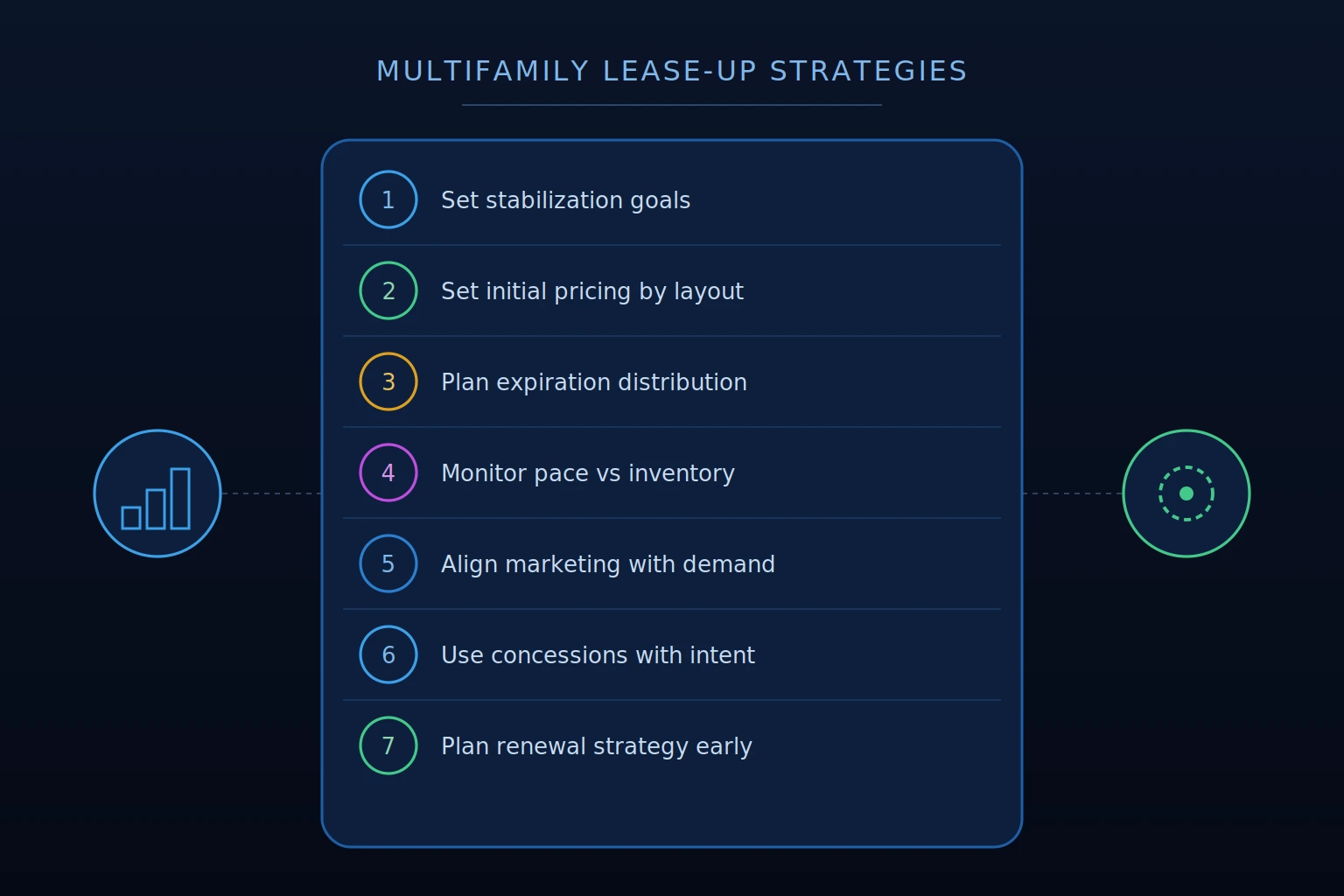
- Establish Stabilization, Occupancy, and Absorption Goals
- Set Initial Pricing by Layout
- Plan Lease Terms and Future Expiration Distribution
- Monitor Leasing Pace Against Available and Upcoming Inventory
- Align Marketing and Leasing Support With Demand and Conversion
- Use Concessions With Clear Objectives and Review Points
- Build Renewal and Retention Strategy Into Lease-Up Planning
- Evaluate Occupancy Growth Alongside Lease Economics and Revenue
1. Establish Stabilization, Occupancy, and Absorption Goals
Start by defining stabilization against the property’s business plan, including the occupancy target, expected timeline, and financial objectives. Translate that plan into leasing and move-in goals by period and layout, accounting for when units will be delivered and ready for residents.
Keep signed leases, scheduled move-ins, and physical occupancy distinct. Preleasing demonstrates commitments, but rental revenue and occupancy progress depend on residents moving into completed units. A property can be ahead on signed leases while delayed deliveries put its move-in schedule behind plan.
Set goals that reflect the inventory becoming available in each phase. Property-wide results can conceal a layout that is falling behind or a delivery phase that will require more leasing activity than the current pace supports.
Review progress regularly and document why results differ from the plan. Construction delays, changes in unit readiness, weaker inquiry volume, and lower conversion call for different responses. Clear goals help teams identify the gap and decide which assumptions or actions need review.
2. Set Initial Pricing by Layout
Initial pricing is a starting point to test against leasing results. A new property has limited operating history, so teams should establish asking rents using the business plan, differences between layouts, the delivery schedule, and the occupancy timeline, then review those assumptions as evidence develops.
Set base rents by layout and apply unit-specific premiums for features such as views, floor location, outdoor space, or finish packages. Keep those components clear so teams can distinguish a layout-pricing question from an amenity-premium question when reviewing performance.
Evaluate early asking rents alongside prospect interest, funnel conversion, signed lease terms, concessions, and leasing pace. A few quick leases do not establish that rents are too low, just as a slow opening period does not establish that pricing is too high. Available inventory, tour access, unit readiness, and marketing activity all affect early results.
Compare achieved effective rents and leasing progress with the business plan, allowing for the limited sample of initial leases. Where results diverge, investigate the contributing factors and evaluate a measured response. The aim is to build occupancy at lease economics that support the asset’s strategy, while updating assumptions when the evidence warrants it.
3. Plan Lease Terms and Future Expiration Distribution
Lease terms offered during lease-up shape the expiration schedule the property will manage as it stabilizes. Signing many leases within a short period on the same term can concentrate expirations in a future window, increasing potential availability if renewals and new leasing do not keep pace.
Establish expiration targets that reflect seasonal leasing expectations, layout mix, and asset strategy. Evaluate term options alongside pricing and concessions so teams understand both the economics of each offer and where it places the next expiration.
Review the distribution as leases are signed. If concentration begins to build, consider whether different term offerings or term pricing could encourage a more balanced schedule while remaining attractive to prospective residents. The goal is a distribution the property can support, rather than an equal number of expirations every month.
Keep scheduled expirations distinct from expected move-outs. Renewal outcomes will influence how much inventory actually becomes available. Lease-up provides an early opportunity to shape that calendar, and teams can continue managing it through subsequent new leases and renewals.
Top Picks:
- How to Improve Leasing Speed in Multifamily
- Multifamily Marketing Strategies that Actually Drive Leasing
4. Monitor Leasing Pace Against Available and Upcoming Inventory
Leasing pace matters in relation to how many units the property needs to fill and when those units will be ready. Ten signed leases in a month may represent strong progress with five additional units becoming available, but leave a growing gap when the next delivery phase adds twenty.
Track signed leases, scheduled move-ins, occupied units, and units ready to lease separately. Review them by layout against the delivery schedule and stabilization timeline so teams can distinguish a leasing shortfall from a construction or move-in delay.
Update the inventory view as delivery dates and readiness change. Units expected next month may require marketing and preleasing support now, while completed units sitting vacant create a different priority. Include known upcoming departures as the resident base grows, with additional anticipated availability informed by historical performance where sufficient relevant data exists.
When progress falls behind plan, investigate demand, conversion, cancellations, readiness, and pricing before choosing a response. Regular review helps teams direct support toward the specific layouts or delivery phases that need attention and reassess whether the remaining timeline is achievable.
5. Align Marketing and Leasing Support With Demand and Conversion
Leasing results help teams identify where marketing and onsite support need attention. Low inquiry volume calls for a different investigation from steady inquiries with few completed tours or strong tour activity with few signed leases.
Review the funnel by stage and layout where the data supports it. Consider marketing reach, listing accuracy, response times, tour availability, follow-up, and unit readiness alongside pricing and lease terms. During phased delivery, prospects also need clear information about which units they can tour and when they can move in.
Evaluate lead sources by progression to tours, applications, and signed leases, allowing enough time for prospects to move through the process. Inquiry volume alone does not establish that a channel is effective, and a small number of early leases may not justify a major budget shift.
Use those findings to direct marketing and leasing resources toward the inventory that needs support. That may mean improving layout-specific content, adjusting campaign timing ahead of delivery, expanding tour capacity, or strengthening follow-up. Review the effect on conversion and signed leases before deciding whether further changes are needed.
6. Use Concessions With Clear Objectives and Review Points
Concessions can support a lease-up when they address a defined leasing need. Establish what an offer is intended to accomplish, which available units it applies to, and when its performance will be reviewed. A targeted offer may fit a layout that is behind pace, while a broader promotion may be appropriate when the leasing gap extends across the property.
CBRE’s 2026 Multifamily Outlook describes operators using concessions to support occupancy amid slower new lease rent growth. For an individual lease-up, the decision should reflect its own available inventory, leasing performance, and asset strategy.
Evaluate the concession’s effect on effective rent over the full lease term alongside the potential cost of continued vacancy. Include lease length and expiration timing in the review so an offer that supports occupancy today does not add unnecessarily to a concentrated future window.
Set a defined offer period and review leasing pace, conversion, and signed lease economics before extending or changing it. Consider other changes during the period, such as completed units becoming available to tour, so improved results are not automatically attributed to the incentive.
Plan for the eventual renewal conversation as well. Clear communication about the initial concession and its duration helps residents understand their lease costs and gives teams a better foundation for discussing renewal options.
Read Also:
7. Build Renewal and Retention Strategy Into Lease-Up Planning
Renewal planning begins while the property is welcoming its first residents. Early move-in experiences, maintenance responsiveness, and communication about ongoing construction can influence whether residents choose to stay when their initial leases expire.
Establish offer timing, outreach responsibilities, and follow-up processes before the first renewal cycle. Allow enough time to understand residents’ plans, address concerns, and review options within applicable lease and notice requirements. Keep signed renewals, confirmed departures, and pending decisions visible so teams can plan for potential availability.
Generate offers using configured asset strategy, then review them alongside retention outcomes, potential turnover costs, and forward exposure. Evaluate renewal term options for how they fit the desired expiration distribution, particularly if early lease-up activity created concentrated windows.
Initial concessions also need attention. When an incentive ends, a resident’s effective monthly cost can increase even if the face rent stays unchanged. Review that transition when evaluating offers and communicate the terms clearly.
As renewal results develop, use resident feedback and conversion performance to investigate where the approach may need adjustment. This helps teams support retention while continuing to build occupancy and manage the expiration schedule.
8. Evaluate Occupancy Growth Alongside Lease Economics and Revenue
Lease-up progress should be evaluated against both the occupancy timeline and the economics established in the business plan. Reaching an occupancy target is an important milestone, but teams also need to understand the rents achieved, concessions committed, vacancy costs incurred, and revenue being generated.
Review physical occupancy, signed leases awaiting move-in, effective rent, and scheduled rental revenue together. Strong preleasing may not translate into revenue on schedule if deliveries are delayed. Higher rents on a small number of leases may not offset the cost of prolonged vacancy across the remaining inventory.
Concessions may be part of the planned lease-up investment. Compare their actual usage and effect on lease economics with the budget, then evaluate whether they are supporting the required leasing pace. Include both the cost of the incentive and the potential vacancy cost when considering changes.
As occupancy builds, review how the rent roll, expiration distribution, and early renewal outcomes position the property for its next operating phase. Use the findings to update assumptions and priorities, keeping the focus on progress toward the asset’s overall goals rather than any single headline number.
How Rentana Supports Multifamily Lease-Up Strategy
Rentana connects PMS-sourced operational data with pricing recommendations, exposure analysis, and performance reporting to help teams evaluate lease-up progress against asset strategy.
Pricing recommendations by layout help teams review initial pricing as leasing activity builds. Recommendations draw on property-level performance signals, forward availability, and configured asset strategy, with supporting reasoning to help teams assess whether an adjustment fits their occupancy and revenue goals.
Amenity analysis helps teams investigate how units with features such as balconies, preferred views, or upgraded finishes perform at their configured premiums. Reviewing leasing results alongside unit characteristics supports a more informed assessment of initial premium assumptions as sufficient comparable activity becomes available.
Leasing demand and conversion analysis helps teams identify which layouts need attention and where prospects are dropping out of the funnel. Dashboards, charts, and reports support investigation into whether slower leasing warrants a review of marketing, follow-up, unit readiness, or pricing.
Exposure analysis shows the expiration distribution being created as leases are signed. Teams can compare that distribution with configured targets and evaluate term offerings before concentration builds in future leasing periods.
Predicted Occupancy provides forward-looking occupancy context that teams can review alongside construction delivery and unit-readiness schedules when assessing progress toward stabilization.
Renewal workflows help teams prepare for the first expiration cycle while new leasing is still underway. Scheduled offer prompts, offers generated from configured asset strategy, and batch views support timely review, outreach, and follow-up.
Ask Rentana, the AI analyst, helps teams investigate lease-up absorption, concessions, conversion, and performance changes. Teams can explore the assumptions behind their absorption plan and use explained reasoning, interactive charts and tables, and downloadable analysis to communicate findings with ownership. AI-generated Insights also highlight changes that may warrant closer review.
Together, these capabilities help teams evaluate how today’s leasing decisions support both the stabilization timeline and the occupancy, renewal, and revenue conditions the property will manage afterward.
Don’t Miss:
- The Multifamily Leasing Funnel Explained
- Top 7 Leasing Strategies
Conclusion on Multifamily Lease-Up Strategies
A successful multifamily lease-up builds occupancy while establishing lease economics and an expiration schedule that support the property’s next operating phase. Pricing, amenity premiums, concessions, marketing, and renewal planning all contribute to that outcome.
Set clear goals, review leasing progress against available and upcoming inventory, and revisit assumptions as evidence develops. Evaluate changes for both their immediate effect on leasing and their implications for future availability, retention, and revenue.
That discipline helps teams adapt during lease-up while keeping decisions connected to the asset’s business plan and long-term performance goals.