The property management system is the system of record for multifamily operations. Leases, rent payments, occupancy data, resident information, availability, and rent roll details all trace back to the PMS.
But most PMS platforms are designed to store operational data, not automatically connect every downstream system that depends on it. Revenue management platforms need leasing velocity and occupancy data. Analytics tools need expiration and availability data. Accounting systems need financial information. Listing platforms need current unit status.
When those connections are handled manually, teams spend time exporting, formatting, uploading, and reconciling data that already exists in the PMS. That creates lag, version-control issues, and data quality risks.
PMS integration removes that manual step. It allows data to move automatically between the PMS and connected platforms so the operational picture stays current, the error rate drops, and teams can spend more time using the data instead of assembling it.
This guide explains what PMS integration means in multifamily, how it works, why integration quality matters, and what operators should evaluate before relying on a connected platform.
Related:
- 7 Best AI Tools for Multifamily Property Management
- Multifamily Property Data: What Operators Should Actually Track
What Is PMS Integration?
PMS integration is the connection between a property management system and another software platform that allows data to move automatically between them.
In multifamily, that connection helps keep leasing activity, occupancy data, rent roll information, pricing, availability, and lease details synchronized across the technology stack without requiring teams to export, reformat, or re-enter the same information manually.
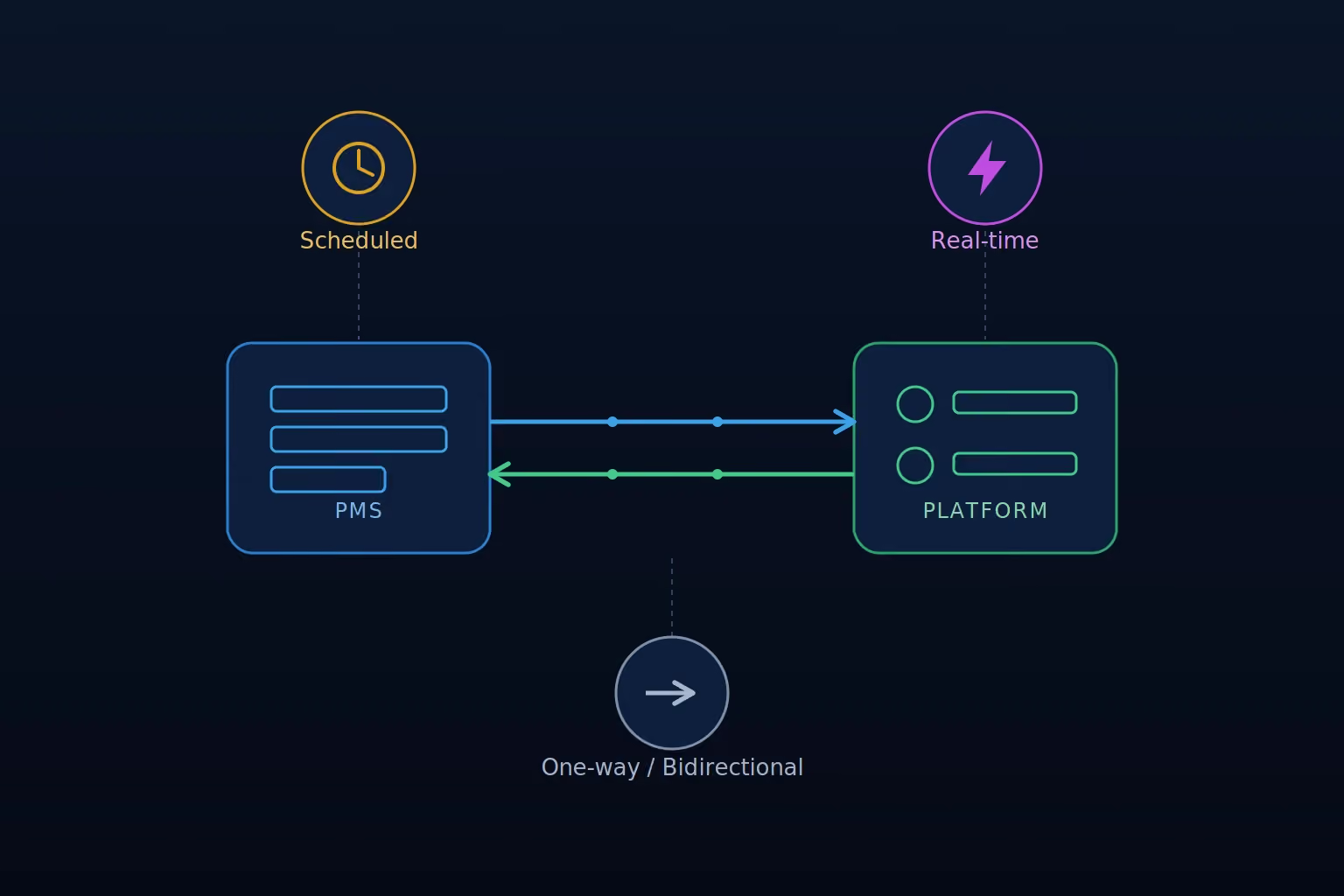
PMS integrations can work in different ways:
- One-way integrations pull data from the PMS into another platform.
- Bidirectional integrations both pull data from the PMS and write approved updates back to it.
- Scheduled integrations sync data on a defined cadence, such as hourly, daily, or nightly.
- Real-time integrations update connected systems as events happen in the PMS.
The key distinction is automation. If a team still needs to manually export, upload, or reconcile the data before another system can use it, the process is not a true integration. It is a manual workflow with extra steps.
A strong PMS integration keeps connected systems aligned with the source of record, so teams are making decisions from current operational data rather than from the last report someone had time to pull.
Why PMS Integration Matters
PMS integration matters because every connected platform is only as reliable as the data it receives.
When data is manually exported, reformatted, uploaded, or reconciled, the operational picture is already behind. That lag affects pricing decisions, availability accuracy, leasing analysis, renewal planning, and portfolio reporting.
A strong PMS integration helps operators:
- Keep data current: Leasing velocity, occupancy, availability, and rent roll information update automatically instead of depending on the last manual export.
- Reduce manual errors: Integration removes re-entry, spreadsheet formatting, and version-control issues that can distort downstream analysis.
- Give teams time back: Less time spent assembling data means more time available for analysis, strategy, and decision-making.
- Create shared visibility: Leasing, revenue management, operations, and asset management teams work from the same current data instead of different reports pulled at different times.
- Improve analytics outputs: Forward-looking signals, reporting, and recommendations are more reliable when they are built on current and consistent PMS data.
- Support write-back workflows: In bidirectional integrations, approved updates can flow back into the PMS without requiring manual entry.
The value of integration is not just technical efficiency. It is operational confidence. Teams can make decisions knowing the data they are using reflects current property conditions, not a stale snapshot from the last report cycle.
Read Also:
- Multifamily Occupancy Management: 7 Best Practices
- How to Calculate Occupancy Rate
How PMS Integration Works in Practice
PMS integration usually works through a technical connection that allows one system to request, receive, update, or send data to another system. The structure can vary by PMS and platform, but operators should understand five core components.
1. The API Connection
Most PMS integrations use an API, or application programming interface. An API is the connection point that allows two software systems to exchange data in a structured way.
The quality of the API affects what data can be accessed, how consistently it can be transferred, and whether the connected platform can support the workflows the operator needs.
2. Sync Cadence
Not every integration updates at the same frequency. Some data moves in real time, while other data syncs on a schedule, such as hourly, daily, or nightly.
Real-time updates are most valuable for time-sensitive information like availability, lease activity, and notices to vacate. Scheduled syncs may be sufficient for reporting, historical analysis, or less time-sensitive performance summaries.
3. Data Mapping
Data mapping determines how fields in the PMS connect to fields in the integrated platform.
For example, unit status in the PMS needs to map correctly to availability status in the connected system. Lease start dates, lease end dates, market rents, executed rents, renewal dates, and unit attributes all need to land in the right place.
When mapping is incomplete or incorrect, the integration may technically “work,” but the output can still be wrong.
4. Write-Back Capability
Some integrations only read data from the PMS. Others can write approved updates back to the PMS.
For revenue management, write-back capability is especially important because it can reduce the manual step between approving a pricing decision and updating the PMS. Operators should confirm which fields can be written back, what approval workflow is required, and what happens if a write-back fails.
5. Data Quality
Integration does not fix bad data. It moves the data that exists in the PMS.
If unit statuses, lease dates, amenity tags, renewal activity, or occupancy fields are inconsistent in the PMS, those inconsistencies will flow into connected platforms. Clean PMS data is the foundation for reliable integration outputs.
What to Evaluate in a PMS Integration
Not every PMS integration delivers the same operational value. Before relying on an integration for pricing, reporting, analytics, or portfolio decisions, operators should evaluate whether the connection is accurate, current, and complete enough to support the workflow.
Key questions to ask include:
- What data is being pulled?
Confirm which fields flow from the PMS into the connected platform, including availability, lease dates, rent roll data, occupancy, renewal activity, pricing, and unit attributes. - How often does the data sync?
Understand whether the integration updates in real time, on a scheduled cadence, or only after a manual trigger. - Is the integration one-way or bidirectional?
A one-way integration may be enough for reporting. A bidirectional integration is more valuable when approved updates need to flow back into the PMS. - Which fields can be written back?
If the platform supports write-back, confirm exactly what can be updated, what approval process is required, and how failed updates are handled. - How is data mapped?
Review whether PMS fields map cleanly to the connected platform. Incorrect mapping can make the integration look functional while producing inaccurate outputs. - What data quality issues need to be resolved first?
Integration does not clean the data. If PMS data is inconsistent, the integration will carry those inconsistencies into every connected workflow. - Who monitors integration health?
Operators should know how sync failures, missing fields, delayed updates, or mapping issues are identified and resolved.
The goal is not just to confirm that a platform “integrates with the PMS.” The goal is to confirm that the integration supports the decisions teams need to make from it.
How Rentana's PMS Integration Supports Multifamily Operators
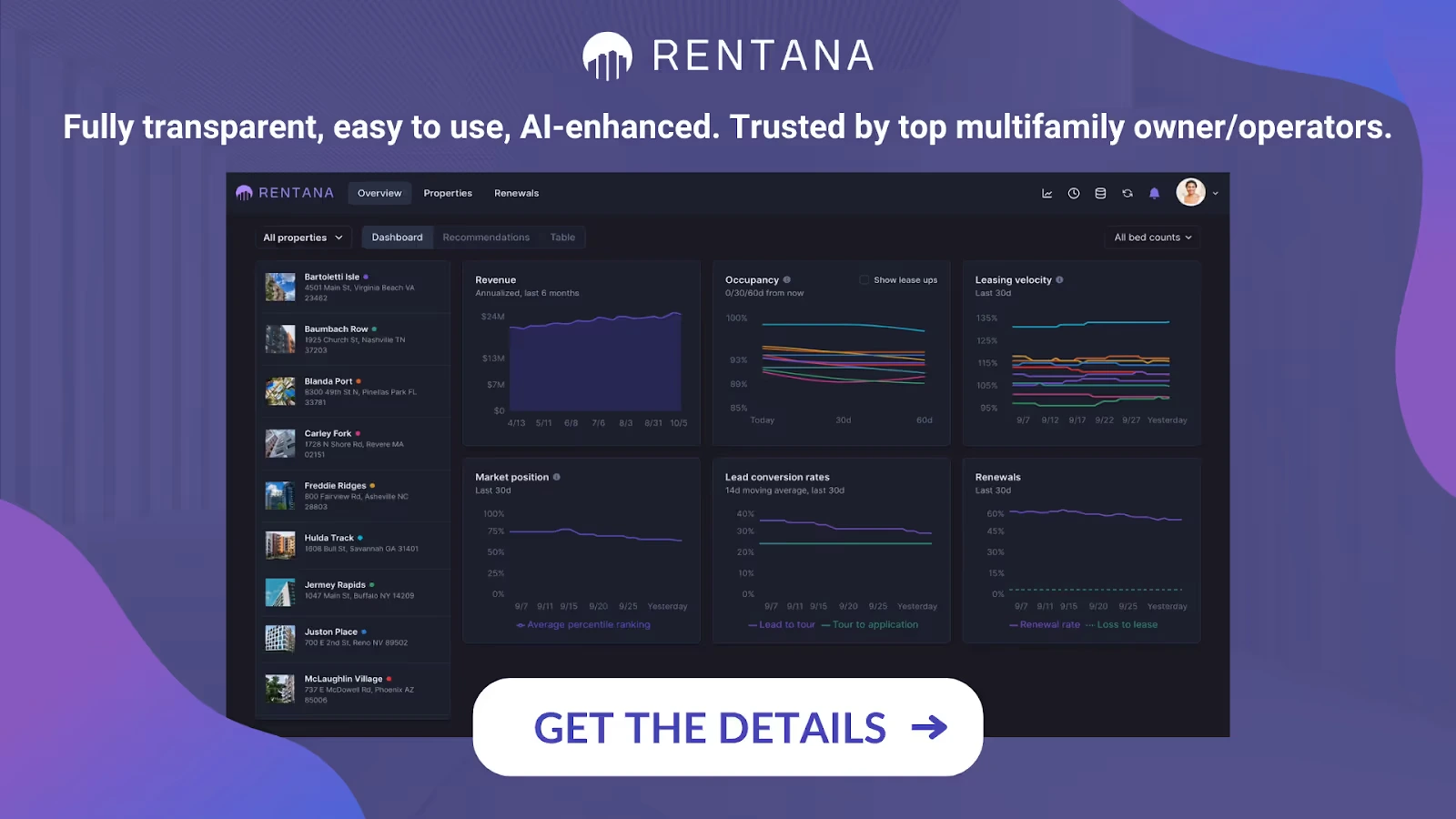
Rentana integrates with property management systems to keep leasing, occupancy, pricing, renewal, and availability data current without requiring teams to rely on manual exports or disconnected reports.
In practice, Rentana acts as a dashboard for the property’s PMS data. It brings key operating signals into one place, highlights where performance may need attention, and can help surface potential data issues that would otherwise stay buried in reports or manual workflows.
That integration supports several key workflows:
- Forward availability: Unit availability status, availability dates, lease expirations, notices to vacate, and renewal activity help teams understand what is coming back to market.
- Pricing recommendations: Current leasing velocity, occupancy, availability, rent, and performance data help support pricing recommendations and the reasoning behind them.
- Predicted Occupancy: Current leasing activity, renewal trends, and future availability help teams see where occupancy is anticipated under current conditions.
- Exposure forecasting: Lease expirations, renewal activity, and availability data help teams identify where future exposure may be building.
- Portfolio visibility: Leasing managers, revenue managers, operations leaders, and asset managers can work from the same current operating picture instead of different reports pulled at different times.
- Data issue visibility: Because Rentana organizes PMS data into operational views, inconsistencies such as missing attributes, stale availability, unusual leasing patterns, or configuration gaps may become easier to identify and investigate.
The integration does not replace the need for clean PMS data. Accurate unit status, lease dates, amenity tags, rent data, and renewal activity are still essential. Rentana’s outputs are strongest when the PMS data feeding them is complete, current, and consistently maintained.
The value of the integration is that it turns PMS data into shared operational visibility. Instead of spending time assembling the data before each review, teams can focus on evaluating what the data is showing, where the data may need cleanup, and what action, if any, is needed.
Don’t Miss:
- Occupancy Decline in Multifamily: How to Diagnose the Cause and Respond
- The Multifamily Leasing Funnel Explained
Conclusion on Multifamily PMS Integration
PMS integration is more than a software feature. It is the connection that determines whether pricing, leasing, renewal, availability, and portfolio decisions are being made from current operational data or from manually assembled snapshots.
A strong integration keeps data moving automatically, reduces manual errors, gives teams shared visibility, and supports more reliable analytics outputs. A weak integration, or one built on inconsistent PMS data, can make connected platforms look current while still producing unreliable results.
For multifamily operators, the question is not only whether a platform integrates with the PMS. It is what data the integration pulls, how often it updates, whether it can write approved changes back, how the fields are mapped, and how data quality issues are surfaced.
When the integration is reliable and the source data is clean, teams can spend less time assembling information and more time using it to evaluate performance, identify issues, and make better operating decisions.