How much of your operations team’s day is spent on work that moves performance forward, versus work that simply keeps the operation running?
For most multifamily teams, the honest answer is less than it should be. Maintenance coordination, manual reporting, data reconciliation, routine communication, and administrative follow-up are all necessary parts of property management. But when those tasks consume too much of the team’s capacity, there is less time available for the decisions and resident interactions that directly affect occupancy, retention, and NOI.
That matters in the current operating environment. According to Multifamily Executive, property management staff turnover now exceeds 30% annually, hile turnover costs can run between $3,500 and $5,000 per unit when vacancy loss, marketing, make-ready work, and leasing commissions are included. The same article notes that residents often leave not because of rent pricing alone, but because operations break down through unanswered maintenance requests, slow communication, and impersonal service. The cost of operational inefficiency in multifamily is not abstract. It shows up in staff capacity, resident experience, leasing performance, turnover costs, and NOI pressure.
Improving operations team efficiency is not about asking teams to do more with less. It is about reducing manual drag, standardizing repeatable workflows, and giving teams the visibility to focus their time on the work that actually drives performance.
The seven improvements in this article are designed to help multifamily teams redirect time and attention toward higher-value work while building the operational infrastructure needed to execute consistently at scale.
Related:
- Multifamily Property Performance: 5 Key Metrics to Track
- Multifamily Rent Reporting: Complete Guide
What Is Multifamily Operations Efficiency?
Multifamily operations efficiency is the measure of how effectively a property management team converts its time, resources, systems, and information into the outcomes that drive portfolio performance: occupied units, retained residents, resolved maintenance issues, consistent leasing execution, and confident decisions made at the right time with the right information.
It is not just about doing tasks faster. A leasing team that responds to every inquiry within minutes but cannot see where prospects are dropping off in the funnel may be working efficiently on the wrong problem. A maintenance team that closes work orders quickly but has no visibility into recurring issues or equipment failure patterns is executing tasks without creating the operational insight needed to improve over time.
True operational efficiency means the team is spending less time assembling information, chasing manual follow-up, and managing preventable breakdowns, and more time on the work that actually improves performance. It also means the team has the infrastructure to know where attention is needed, which actions matter most, and whether those actions are producing the intended result.
A simple example: two property managers each oversee 150 units. The first spends two hours every Monday morning pulling occupancy data, leasing activity, and renewal reports from three separate systems, then assembling them into a spreadsheet before any analysis can begin. The second opens a single platform, sees the same picture already assembled and current, and spends those two hours reviewing what the data is pointing toward and deciding what to do about it.
Both are working. Only one is working efficiently.
Over the course of a year, that difference represents more than 100 hours redirected from data assembly toward the decisions and resident interactions that actually affect how the portfolio performs.
Top 7 Ways to Improve Multifamily Operations
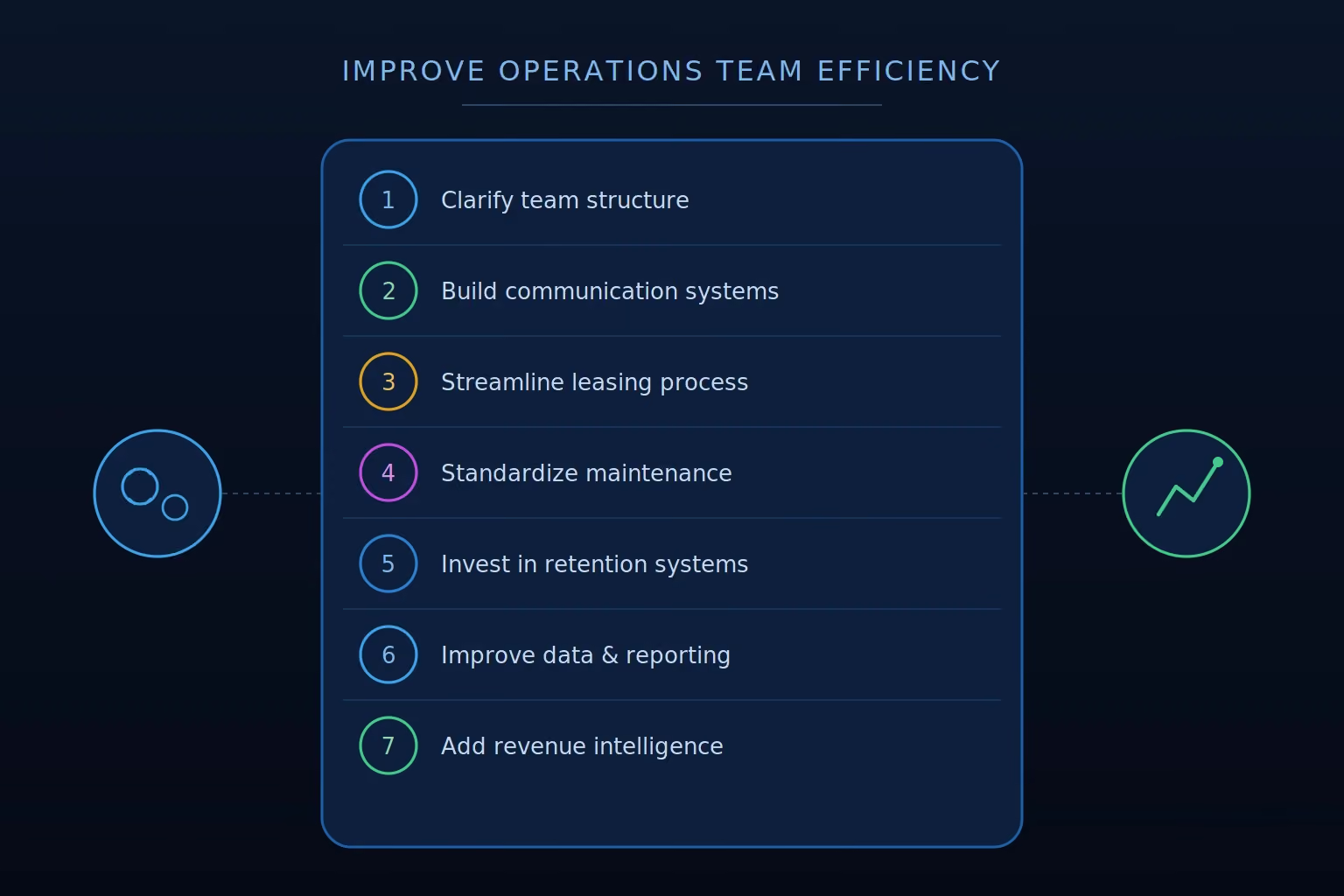
- Clarify Team Structure and Role Ownership
- Build Consistent Communication Systems
- Streamline the Leasing Process
- Standardize Maintenance Workflows
- Invest in Resident Retention Systems
- Improve Data and Reporting Infrastructure
- Implement Revenue Intelligence and Analytics
1.Clarify Team Structure and Role Ownership
Operational inefficiency in multifamily teams often traces back not to a lack of effort, but to a lack of clarity about who owns what.
When leasing, renewals, maintenance follow-up, resident communication, reporting, and pricing review are all managed through informal ownership, work gets done inconsistently. One person assumes another person followed up. A resident issue gets passed between roles without clear accountability. A pricing or renewal concern is noticed by one team but never escalated to the person responsible for acting on it.
Clarifying team structure means defining which functions are owned by which roles, where handoffs happen between functions, and what each role is accountable for producing. The goal is not to make the team more rigid. The goal is to make sure the right work reaches the right person at the right time.
In larger portfolios, this may mean creating more specialized ownership across leasing, renewals, resident experience, maintenance coordination, reporting, and revenue management. In smaller teams, it may mean keeping broader roles but making ownership and escalation paths more explicit.
The efficiency gain comes from reducing ambiguity. When everyone knows who owns each workflow, teams spend less time chasing answers, duplicating work, or reacting to missed handoffs, and more time executing the work that directly affects performance.
Read Also:
- How to Improve Resident Experience
- Top Multifamily Challenges & How to Solve Them
2. Build Consistent Communication Systems
Inconsistent communication is one of the most preventable sources of resident dissatisfaction and staff inefficiency in multifamily operations.
When every team member handles communication differently, using different channels, response standards, and follow-up habits, the resident experience becomes unpredictable. The team then spends additional time managing the consequences of communication gaps: repeated questions, escalations, avoidable complaints, missed expectations, and preventable friction.
According to Multifamily Dive, operators who strategically prioritized occupancy through proactive retention and communication efforts saw revenue and NOI outperformance compared to those managing retention reactively.
Building consistent communication systems means establishing clear standards for how the team communicates with residents, prospects, vendors, and internal stakeholders. This includes defined communication channels, response time expectations, escalation protocols, and message templates that create consistency without removing the human judgment needed for sensitive situations.
Consistency matters because many operational issues become larger when communication is unclear. A delayed maintenance update can become a resident satisfaction problem. A missed prospect follow-up can become a lost lease. An unclear internal handoff can become duplicated work or no action at all.
AI-assisted tools can support communication consistency by handling routine, high-volume interactions and helping teams maintain timely responses. But the purpose is not to remove people from the process. It is to preserve staff capacity for the conversations that require judgment, empathy, and problem-solving.
3. Streamline the Leasing Process
A leasing process that relies on individual agent memory, informal follow-up habits, and manual scheduling will perform inconsistently.
When one agent follows up within hours and another waits two days, the team is not operating a process. It is operating a collection of individual behaviors. That creates inconsistent prospect experiences, uneven conversion outcomes, and limited visibility into where leasing performance is actually breaking down.
Streamlining leasing operations means defining the steps every prospect moves through from first inquiry to signed lease. This includes response time expectations, tour scheduling standards, follow-up sequences, quote delivery processes, application follow-up, and clear ownership for each stage of the funnel.
The goal is not just to make leasing faster. It is to make the process more consistent and measurable.
A streamlined leasing process allows the team to see where prospects are converting and where they are dropping off. If inquiries are not becoming tours, the issue may be response time, lead quality, or initial engagement. If tours are not becoming applications, the issue may be pricing, product positioning, the showing experience, or follow-up. If applications are not becoming signed leases, the issue may be approval timing, communication, or closing process friction.
Without that visibility, teams often respond to leasing softness with broad actions that may not address the actual problem. With a streamlined process and clear funnel tracking, the team can focus its time on the specific stage where conversion is being lost.
4. Standardize Maintenance Workflows
Maintenance is one of the highest-volume operational functions in multifamily and one of the most visible drivers of resident experience.
When maintenance workflows are not standardized, work orders can be handled differently depending on who receives them, which vendor is contacted, or how the issue is escalated. Response times vary. Documentation becomes inconsistent. Residents may not receive timely updates. Managers have limited visibility into recurring issues, vendor performance, or patterns that should inform future planning.
Standardizing maintenance workflows means creating a consistent path from work order submission through completion. This includes response time expectations, triage standards, vendor protocols, resident communication steps, documentation requirements, and follow-up processes that close the loop once the issue is resolved.
The operational value is not only faster work order completion. It is also better visibility.
When maintenance activity is documented consistently, managers can identify recurring issues, monitor response times, evaluate vendor performance, and understand which problems are creating the greatest operational drag. That information can support staffing decisions, vendor management, resident retention efforts, and capital planning.
A standardized maintenance workflow helps teams move from reacting to individual issues to managing maintenance as an operational system.
Top Picks:
- PMS Integration for Multifamily: What is it & How it Works?
- How to Use AI for Multifamily Analytics
5. Invest in Resident Retention Systems
Every preventable resident departure creates work across multiple functions at the same time. A leasing agent needs to re-lease the unit. A maintenance team needs to complete the make-ready. Marketing may need to generate replacement demand. A manager needs to handle the move-out process, documentation, and turnover coordination.
Resident retention is often discussed as a renewal metric, but operationally it is much broader than that. Retention is influenced by the quality of the resident experience long before the renewal offer is sent. Maintenance responsiveness, communication consistency, service follow-through, and timing all affect whether a resident is open to renewing when the conversation begins.
According to Multifamily Dive's guide to resident retention, improving resident retention requires a multi-pronged strategy that creates a consistently positive resident experience, with communication, maintenance responsiveness, and community connection all playing meaningful roles in whether a resident chooses to renew.
Investing in resident retention systems means creating a consistent process for renewal outreach, resident communication, service follow-up, and issue resolution. It also means giving teams enough visibility to understand where renewal conversion is softening and where upcoming expirations could create additional occupancy pressure.
The goal is not to treat retention as a one-time renewal event. The goal is to manage it as an ongoing operational discipline.
When teams track renewal conversion by layout, monitor upcoming expiration windows, and connect retention activity to forward availability, they can focus attention before the resident has already decided to leave and before the unit becomes part of the future vacancy problem.
6. Improve Data and Reporting Infrastructure
Most multifamily operations teams are not short on data. They are short on a coherent workflow for turning that data into decisions before the conditions it describes have already changed.
When leasing data lives in the CRM, occupancy data lives in the PMS, renewal activity lives in another report, and financial results are reviewed on a separate timeline, teams spend too much time assembling the picture before they can evaluate what it means. That delay creates operational drag. By the time the team identifies the issue, the best response window may have already narrowed.
Improving data and reporting infrastructure means connecting systems where possible, standardizing definitions, reducing manual reporting work, and organizing performance review around the questions teams need to answer.
Those questions include: Is occupancy stable or starting to shift? Is leasing velocity keeping pace with upcoming availability? Are renewals supporting retention goals? Are specific layouts creating performance pressure? Are pricing, leasing, and renewal strategies working together or pulling in different directions?
Better reporting infrastructure does not just save time. It improves decision quality.
When teams can see current leasing activity, occupancy movement, renewal trends, and exposure risk in the same operating context, they spend less time reconciling data and more time deciding what action is needed.
7. Implement Revenue Intelligence and Analytics
The operational efficiency gap that can cost multifamily teams the most is not always the speed of individual tasks. It is the quality and timing of the decisions that determine where revenue lands.
A pricing decision made with lagging information, a renewal offer sent without visibility into forward exposure, or an occupancy issue discovered only after it appears in a monthly report can all create performance gaps that efficient task execution alone cannot close.
Revenue intelligence and analytics help close that gap by connecting pricing, leasing velocity, renewal conversion, exposure forecasting, and forward availability into one operational view. Instead of reviewing each workflow separately, teams can evaluate how those signals interact and where attention is needed before the outcome is already set.
Rentana sits in this category for multifamily operators. It connects PMS data automatically, surfaces AI-generated property insights that help teams understand what is changing and why conditions may be shifting, and generates pricing recommendations at the bedroom or custom unit group level with supporting reasoning visible.
The operational efficiency gain is not just faster reporting. It is better prioritization, better timing, and better coordination across the decisions that affect occupancy, renewals, pricing, and NOI.
A team that can see where performance is heading can use its time differently. Instead of reacting after a problem appears in the numbers, the team can focus attention earlier, while there is still time to change the outcome.
Don’t Miss:
Conclusion on Multifamily Operations Efficiently
Multifamily operations efficiency is not about squeezing more activity out of the same team. It is about helping the team spend less time on manual drag, preventable follow-up, and disconnected workflows, and more time on the work that actually improves performance.
The seven improvements in this article address different parts of the operating model: role ownership, communication, leasing, maintenance, retention, reporting infrastructure, and revenue intelligence. Each one reduces a different source of inefficiency. Together, they create a more consistent operating environment where teams know what they own, information moves more clearly, and decisions are made with better context.
The strongest multifamily operations teams are not the ones with the most staff or the most tools. They are the ones that have built systems around the decisions and interactions that matter most, with the visibility to know where attention is needed before the outcome is already set.
Improving efficiency is not just an internal productivity goal. It is a performance strategy that affects occupancy, retention, resident experience, team capacity, and NOI.