Multifamily leasing performance is improving in many markets, but stronger demand does not eliminate the need for disciplined execution.
According to Multifamily Dive’s 2026 spring leasing analysis, operators are seeing improved leasing velocity as new supply begins to moderate, but performance remains highly dependent on local market conditions. In competitive submarkets, renters still have significant choice, making pricing, follow-up, and conversion discipline critical.
Effective leasing is not simply about generating more leads. It is about converting the demand already entering the funnel, identifying where prospects are dropping off, and making sure pricing, marketing, renewals, and leasing activity are working toward the same occupancy goals.
The following seven multifamily leasing tips focus on the operational habits that help teams improve conversion, respond to changing market conditions, and maintain stronger leasing performance over time.
Related:
Why Leasing Effectiveness Matters More Than Lead Volume
For this article, leasing effectiveness means how efficiently incoming leads move through the funnel and convert into signed leases that support the property’s occupancy goals.
Lead volume tells you how much prospect activity is entering the funnel. Leasing effectiveness tells you how well that activity is converting into results.
A property can generate strong inquiry volume and still underperform if prospects are dropping out of the funnel before signing. The more useful questions are where conversion is breaking down, which lead sources are producing signed leases, whether pricing is supporting absorption, and whether current leasing pace is sufficient relative to upcoming availability.
That shift from volume to effectiveness helps teams focus on the specific part of the leasing process that needs attention instead of responding to every slowdown by simply trying to generate more leads.
Top 7 Multifamily Leasing Tips
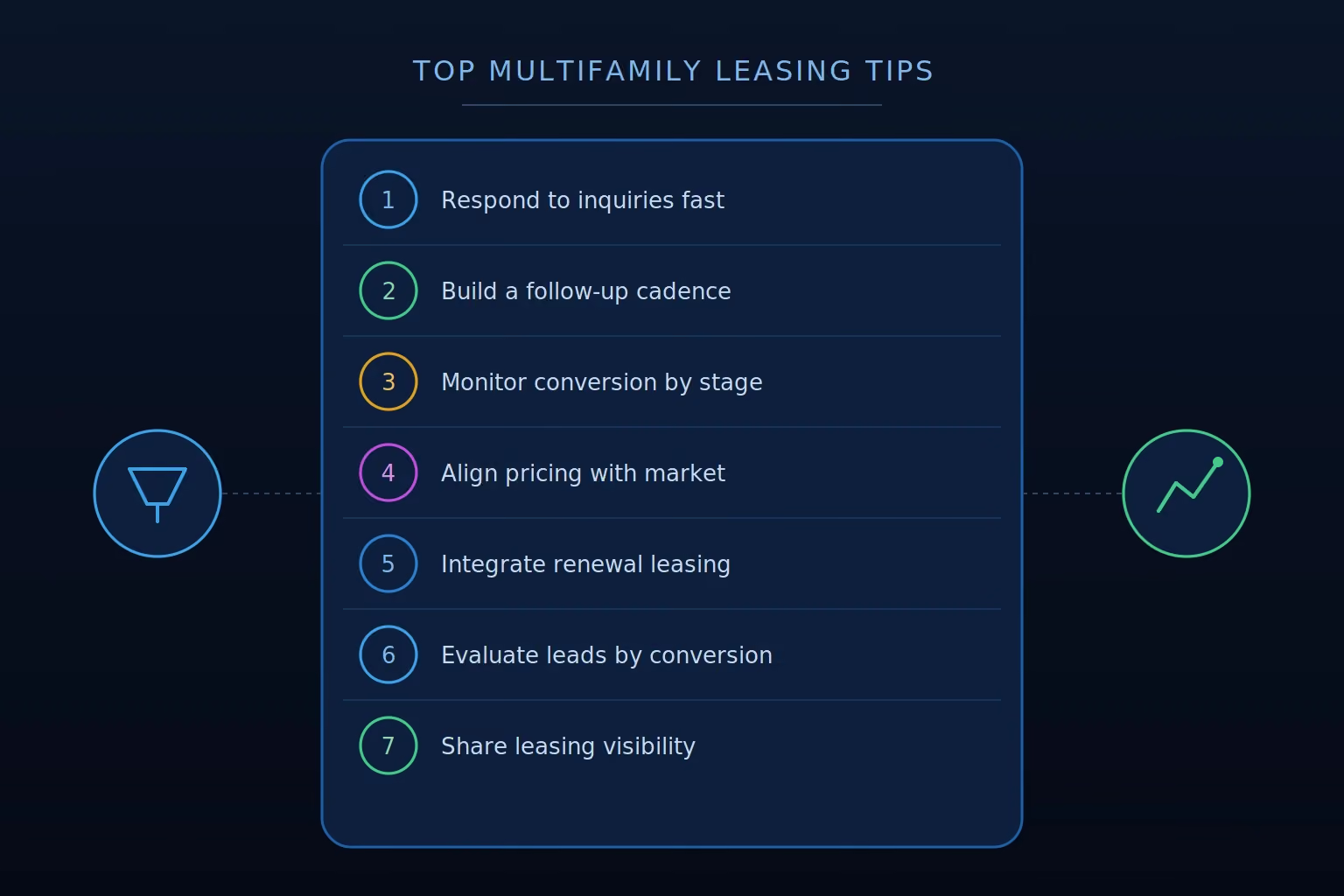
- Respond to Every Inquiry Promptly
- Build a Consistent Follow-Up Cadence
- Monitor Funnel Conversion by Stage
- Track Prospect Feedback to Identify Leasing Friction
- Integrate Renewal Leasing Into the Overall Strategy
- Evaluate Lead Sources by Conversion, Not Volume
- Give Teams Shared Visibility Into Leasing Performance
1. Respond to Every Inquiry Promptly
Prospects often contact multiple communities at the same time, which makes timely response an important part of the leasing process.
A prompt first response helps keep the property in consideration while the prospect is actively evaluating options. This becomes especially important during high-volume periods or outside normal office hours, when inquiries can otherwise sit unanswered until the next business day.
AI-assisted leasing tools can help manage initial responses and routine questions so prospects receive timely engagement, while leasing agents step in when a conversation requires more context, judgment, or direct follow-up.
2. Build a Consistent Follow-Up Cadence
A timely first response matters, but leasing performance can still break down when follow-up becomes inconsistent.
Prospects may need multiple touchpoints between their initial inquiry, tour, application, and final decision. A structured follow-up cadence helps make sure those touchpoints do not depend entirely on individual agent memory.
The goal is consistency rather than simply increasing outreach. Teams should define when follow-up happens, what stage of the leasing journey it supports, and when a lead should be closed or moved to the next step.
3. Monitor Funnel Conversion by Stage
Total leads and total leases do not show where the leasing process is working or where prospects are dropping out.
Tracking conversion at each stage of the funnel gives teams more useful diagnostic information. Low inquiry-to-tour conversion may indicate issues with response time, follow-up outreach, or scheduling. Low tour-to-application conversion can point to a mismatch between marketing expectations and the actual product, the onsite customer experience, or opportunities to strengthen closing skills. Low application-to-lease conversion may indicate delays in follow-up or friction within the application and approval process.
These signals are starting points for investigation, not automatic conclusions. Looking at conversion by stage helps teams narrow down where to investigate rather than assuming every leasing slowdown is a lead-generation or onsite performance problem.
Read Also:
- Best Leasing Solutions for Managing Multiple Multifamily Assets
- AI Leasing Assistants for Multifamily Teams
4. Track Prospect Feedback to Identify Leasing Friction
Leasing metrics can show where prospects are dropping out of the funnel. Prospect feedback can help explain why.
Teams should consistently capture recurring questions, objections, and comments from tours and follow-up conversations. If prospects repeatedly raise the same concern—such as amenities, parking, finishes, layout functionality, application requirements, or another part of the leasing experience, as that pattern can point to an issue worth investigating.
The goal is not to overreact to individual comments. It is to identify recurring themes that may be affecting conversion and use that feedback to improve leasing presentation, marketing, operations, or the prospect experience.
5. Integrate Renewal Leasing Into the Overall Strategy
Renewals are an important part of leasing strategy because every resident who renews is one less unit that must be turned, marketed, and re-leased.
Renewal decisions should be evaluated alongside pricing, replacement economics, forward availability, exposure, and seasonal demand. In some cases, retaining an existing resident may create more value than replacing the lease at a higher asking rent once vacancy, concessions, and turnover costs are considered.
Renewal performance should also be monitored after offers are generated so teams can identify changes in conversion and adjust future strategy accordingly.
6. Evaluate Lead Sources by Conversion, Not Volume
A lead source that generates the most inquiries is not necessarily the one producing the strongest leasing results.
Teams should evaluate marketing channels by how prospects move through the full funnel, including tours, applications, and signed leases. A source with high inquiry volume but weak downstream conversion may warrant further review, while a lower-volume source that consistently produces qualified prospects may deserve greater investment.
Looking beyond top-of-funnel volume helps teams allocate marketing resources toward the channels that are actually contributing to leasing performance.
7. Give Teams Shared Visibility Into Leasing Performance
Leasing, property management, revenue management, and asset management often view the same property from different perspectives. Performance becomes harder to diagnose when those teams are working from different data or focusing on different metrics.
Shared visibility helps teams see whether a challenge is primarily related to lead volume, funnel conversion, pricing, leasing velocity, renewals, or upcoming availability.
Rentana brings those signals together in one place. Portfolio dashboards, leasing velocity and funnel conversion metrics, Predicted Occupancy, and AI-generated Insights help teams identify where performance is changing, understand what may be driving it, and prioritize the assets or unit groups that need attention.
When teams are working from the same current performance picture, they can coordinate more effectively and make decisions with greater context.
How Better Leasing Visibility Supports Better Outcomes
The seven tips above are operational habits. Their value compounds when teams have enough visibility to understand what is working, where performance is changing, and which part of the leasing process needs attention.
What Better Leasing Visibility Enables:
- Knowing where prospects are dropping out of the funnel instead of looking only at total leads and leases
- Distinguishing between a lead volume problem and a conversion problem at a specific stage
- Evaluating lead sources by downstream conversion rather than inquiry volume alone
- Tracking leasing velocity by layout or unit group against current and upcoming availability
- Connecting renewal performance and forward exposure to the broader leasing strategy
- Giving leasing, property management, revenue management, and asset management a shared view of performance
Where Rentana Supports Leasing Visibility:
- Leasing velocity: Track performance by layout to identify where pace is falling behind expectations
- Funnel conversion: See where prospects are dropping off and distinguish top-of-funnel volume issues from conversion issues further down the funnel
- Predicted occupancy: Connect current leasing activity, renewal trends, and future availability to understand where occupancy is heading
- Portfolio visibility: Compare performance across properties and quickly identify assets that need attention
- AI-generated Insights: Surface meaningful changes in asset performance, explain why they matter, and highlight opportunities for course correction before the issue becomes more visible in historical reporting
Related:
- Multifamily Marketing Strategies that Actually Drive Leasing
- How to Centralize Leasing Without Losing Resident Experience
Conclusion on Multifamily Leasing Tips
Strong multifamily leasing performance is not driven by lead volume alone. It depends on how consistently teams respond, follow up, convert prospects, align pricing, manage renewals, and evaluate performance across the full leasing funnel.
The most effective teams use that visibility to identify where performance is changing and respond to the specific issue instead of relying on broad, reactive adjustments.
Better leasing outcomes come from combining disciplined execution with the data and context needed to make the right decision at the right time.