The multifamily housing market in 2026 is increasingly defined by divergence rather than a single national trend. Supply, demand, rent growth, and occupancy are moving differently across regions, asset classes, and individual markets.
According to the National Apartment Association’s 2026 Apartment Housing Outlook, the industry is moving through the later stages of a high-supply cycle. New deliveries are beginning to moderate, but performance remains highly market specific as some regions work through elevated inventory while others continue to benefit from constrained supply and stronger rent growth.
At the same time, operators are navigating slower demand growth, affordability pressure, changing renter expectations, increased use of AI and automation, and greater emphasis on operational performance.
The following 11 multifamily housing trends highlight the forces shaping the market in 2026 and what they mean for operators, investors, and asset managers.
Related:
- Multifamily Rent Growth: Public Market Trends
- How to Improve Renewal Conversion in Multifamily
11 Multifamily Housing Trends Shaping the Market in 2026
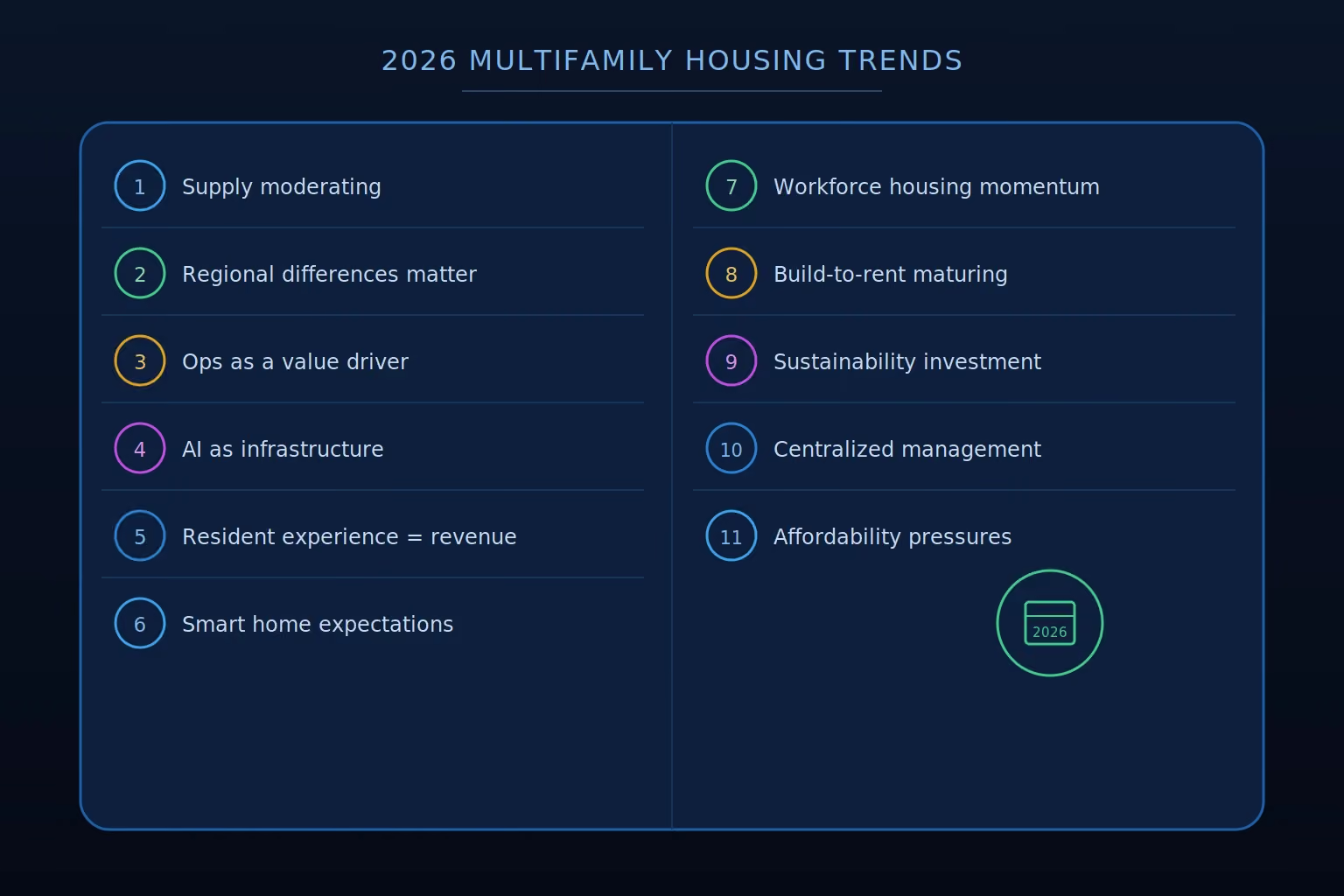
- Supply Moderation Is Creating a More Balanced Market
- Regional Differences Matter More Than National Averages
- Operational Performance Is Becoming a Bigger Value Driver
- AI and Automation Are Becoming Operational Infrastructure
- Resident Experience Is Becoming a Retention and Revenue Strategy
- Smart Home Technology Becoming a Greater Leasing Expectation
- Workforce and Middle-Market Are Housing Gaining Momentum
- Build-to-Rent Is Continuing to Mature
- Sustainability and Energy EfficiencyAre Gaining Investment Importance
- Centralization Reshaping How Portfolios Are Managed
- Affordability Pressures Continue to Shape Renter Demand
1. Supply Moderation Is Creating a More Balanced Market
The supply wave that shaped multifamily performance over the past several years is beginning to moderate. According to CBRE, 58,100 multifamily units were delivered in Q1 2026, down 30% year over year, while net absorption exceeded new construction completions during the quarter.
For operators, slowing deliveries can gradually reduce the competitive pressure that has weighed on rent growth and increased concession use in high-supply markets. The benefit will not arrive evenly, though. Some markets have already absorbed much of their recent supply, while others are still working through late-cycle deliveries.
The key is understanding where each asset sits within its local supply cycle rather than assuming national moderation will translate immediately into stronger performance everywhere.
2. Regional Differences Matter More Than National Averages
Multifamily performance continues to vary significantly by region and submarket, making national averages less useful as a standalone operating guide.
According to the National Apartment Association’s 2026 Apartment Housing Outlook, many high-supply Sun Belt markets entered 2026 in gradual recovery, while constrained supply supported stronger rent performance across parts of the Northeast and Midwest.
For portfolio operators, that means pricing, leasing, renewal, and exposure strategies need to reflect the conditions surrounding each property. A strategy that works in a supply-constrained market may be inappropriate for an asset still competing against significant new deliveries.
3. Operational Performance Is Becoming a Bigger Value Driver
As rent growth normalizes, operators have less ability to rely on broad market appreciation to drive performance.
The PwC and Urban Land Institute Emerging Trends in Real Estate 2026 report highlights a renewed focus on core fundamentals, asset selection, operations, and the use of technology and data to navigate a more uncertain real estate environment.
For multifamily teams, that puts greater emphasis on the operational disciplines that directly influence NOI: maintaining occupancy, managing expenses, setting pricing with greater precision, improving renewal performance, and identifying exposure before it becomes vacancy pressure.
Revenue intelligence platforms like Rentana help connect pricing, leasing activity, renewals, and forward exposure so teams can evaluate performance with more context rather than waiting for issues to appear in historical reporting.
4. AI and Automation Are Becoming Operational Infrastructure
AI adoption in multifamily is moving beyond experimentation and into day-to-day operations. According to Multifamily Executive, operators are increasingly using centralization, automation, and AI to reduce manual work, improve consistency, and support leaner operating models.
The strongest applications are those connected directly to real operational problems. That includes AI-assisted leasing, workflow automation, predictive maintenance, and revenue intelligence that helps teams identify where performance is changing.
Rentana supports this shift by combining pricing recommendations, leasing activity, renewals, exposure, predicted occupancy, and AI-generated Insights so teams can surface changes earlier and make decisions with more context.
5. Resident Experience Is Becoming a Retention and Revenue Strategy
Resident experience is becoming more closely connected to financial performance as operators place greater emphasis on retention.
Multifamily Executive identifies resident experience as a key performance metric for 2026, with operators increasingly focused on reducing friction across communication, maintenance, billing, amenities, and renewal workflows.
The financial impact becomes especially important when renewals represent a large share of leasing activity. According to CBRE’s 2026 U.S. Real Estate Market Outlook, renewals account for 57% of all leasing activity, up from 51% in 2015.
For operators, resident experience is therefore not only a service metric. Consistent communication, responsive operations, and a well-managed renewal process can help support retention and reduce the vacancy, make-ready, marketing, and re-leasing costs associated with turnover.
6. Smart Home Technology Becoming a Greater Leasing Expectation
Smart home technology continues to move from a premium amenity toward a more common part of the multifamily experience.
According to the National Apartment Association, research from Parks Associates found that residents consistently rated properties offering smart home devices more highly, with 74% of participants placing high value on features such as energy savings, remote appliance control, and home monitoring.
Smart locks, thermostats, connected access, package management, and reliable connectivity can influence both the resident experience and operational efficiency. The opportunity for operators is not simply to add more technology, but to invest in features that residents value and that integrate effectively into property operations.
Related:
7. Workforce and Middle-Market Housing Gaining Momentum
Housing affordability pressures are increasing attention on rental options for households that earn too much to qualify for many traditional affordable housing programs but still struggle with market-rate housing costs.
In 2026, the National Apartment Association and National Multifamily Housing Council supported the introduction of the Workforce Housing Tax Credit Act, which is designed to encourage new rental housing for moderate-income households. The proposal reflects a broader recognition of the housing challenges facing middle-income renters.
For developers and investors, that creates growing interest in workforce and middle-market housing strategies. The opportunity will vary significantly by market, but affordability pressures, limited housing options, and the high cost of homeownership are keeping this segment increasingly relevant to multifamily investment and development decisions.
8. Build-to-Rent Is Continuing to Mature
Build-to-rent has moved beyond its earlier rapid-growth phase and into a more mature part of the rental housing market.
According to the National Apartment Association, BTR demand remained relatively stable through early 2026 even as rent growth slowed and development activity recalibrated. NAA’s Q2 data also showed national BTR occupancy reaching 92.6%, while construction and investment activity declined from the prior year.
For investors and operators, that points to a more disciplined BTR environment. Performance increasingly depends on realistic underwriting, local demand, rent-versus-buy economics, lease-up assumptions, and strong operational execution rather than rapid sector expansion alone.
9. Sustainability and Energy Efficiency Are Gaining Investment Importance
Sustainability and energy efficiency continue to influence multifamily investment and operating decisions, but the economics and requirements vary significantly by market and asset.
The National Apartment Association reports that apartment operators are using initiatives ranging from weatherization and LED lighting to heat pumps, solar, and low-flow plumbing to reduce costs, manage risk, and improve resident experience. At the same time, regulatory requirements remain highly jurisdiction-specific.
For operators, the focus is increasingly on investments that can improve building performance, reduce utility consumption, manage operating costs, or address regulatory and climate-related risks. Sustainability decisions therefore need to be evaluated through both their environmental impact and their financial return.
10. Centralization Is Reshaping How Portfolios Are Managed
Centralization continues to change how multifamily operators organize leasing, pricing, maintenance, analytics, and other portfolio functions.
According to Multifamily Executive, owners are increasingly consolidating technology and moving toward centralized operating models designed to reduce manual work, limit handoffs, and create more consistent execution across portfolios.
Technology is what makes that model scalable. Centralized pricing and revenue management teams need shared visibility into leasing, renewals, exposure, and property performance across assets. Platforms like Rentana help provide that portfolio-level view so specialized teams can identify where conditions are changing and prioritize attention without relying on separate property-level reporting.
8. Build-to-Rent Is Continuing to Mature
Build-to-rent has moved beyond its earlier rapid-growth phase and into a more mature part of the rental housing market.
According to the National Apartment Association, BTR demand remained relatively stable through early 2026 even as rent growth slowed and development activity recalibrated. NAA’s Q2 data also showed national BTR occupancy reaching 92.6%, while construction and investment activity declined from the prior year.
For investors and operators, that points to a more disciplined BTR environment. Performance increasingly depends on realistic underwriting, local demand, rent-versus-buy economics, lease-up assumptions, and strong operational execution rather than rapid sector expansion alone.
9. Sustainability and Energy Efficiency Are Gaining Investment Importance
Sustainability and energy efficiency continue to influence multifamily investment and operating decisions, but the economics and requirements vary significantly by market and asset.
The National Apartment Association reports that apartment operators are using initiatives ranging from weatherization and LED lighting to heat pumps, solar, and low-flow plumbing to reduce costs, manage risk, and improve resident experience. At the same time, regulatory requirements remain highly jurisdiction-specific.
For operators, the focus is increasingly on investments that can improve building performance, reduce utility consumption, manage operating costs, or address regulatory and climate-related risks. Sustainability decisions therefore need to be evaluated through both their environmental impact and their financial return.
Read Also:
10. Centralization Is Reshaping How Portfolios Are Managed
Centralization continues to change how multifamily operators organize leasing, pricing, maintenance, analytics, and other portfolio functions.
According to Multifamily Executive, owners are increasingly consolidating technology and moving toward centralized operating models designed to reduce manual work, limit handoffs, and create more consistent execution across portfolios.
Technology is what makes that model scalable. Centralized pricing and revenue management teams need shared visibility into leasing, renewals, exposure, and property performance across assets. Platforms like Rentana help provide that portfolio-level view so specialized teams can identify where conditions are changing and prioritize attention without relying on separate property-level reporting.
11. Affordability Pressures Continue to Shape Renter Demand
Housing affordability remains one of the strongest forces shaping the rental market.
According to the Harvard Joint Center for Housing Studies’ America’s Rental Housing 2026, 22.7 million renter households were cost burdened in 2024, representing nearly half of all renters. The report also notes that the high cost of homeownership supported strong renter household growth before economic uncertainty began slowing overall demand later in 2025.
For multifamily operators and investors, those trends create a complicated demand environment. High home prices and financing costs can keep households renting longer, while affordability pressure simultaneously limits how much additional rent many households can absorb.
Understanding that balance will remain critical to pricing, product positioning, renewal strategy, and investment decisions as the market moves through 2026.
Don’t Miss:
- 25 Interesting Multifamily Housing Statistics You Didn't Know
- How To Calculate the Value of a Multifamily Property Easily
Conclusion on 2026 Multifamily Housing Trends
The multifamily housing trends shaping 2026 point to a market that is becoming more balanced, but also more complex.
Supply is moderating, regional differences remain significant, renter affordability continues to influence demand, and operators are placing greater emphasis on retention, operational efficiency, technology, and portfolio-level visibility.
For multifamily teams, the advantage increasingly comes from understanding what is changing at the asset and market level and responding with the right pricing, leasing, renewal, and operating strategy rather than relying on broad market averages or historical tailwinds.