Proptech investment is accelerating, but more technology does not automatically mean better operations.
According to Multifamily Dive, $16.7 billion was invested globally in proptech and adjacent real estate technology companies in 2025, a 67.9% year-over-year increase from 2024. Investors have been focusing on platforms with strong fundamentals, clear product-market fit, measurable impact, strong data foundations, and integration into core workflows.
For multifamily operators, that investment reflects a category that has grown faster than many teams can evaluate it. The challenge is not finding options. It is knowing which tools are worth adding, which ones overlap with systems already in place, and which ones will actually improve how the portfolio is managed.
The value of a multifamily proptech stack is not in the number of tools it contains. It is in how well those tools solve specific operating problems, how cleanly they connect to one another, and whether they turn data into clearer visibility rather than creating another system for the team to maintain.
Building the right multifamily proptech stack requires a different starting point than many technology evaluations use. Instead of starting with available products and deciding which ones to add, operators should start with the operating problems that need to be solved and work backward to the categories and capabilities that address them.
Related:
- Best AI Tools for Multifamily Property Management
- How Integrations Reduce Manual Data Entry in Property Management
What Is Multifamily Proptech?
Multifamily proptech, short for property technology, refers to the software platforms, digital tools, and technology solutions that multifamily operators use to manage, lease, analyze, and support residential portfolios.
It includes everything from the property management system that holds the rent roll to the leasing CRM that manages prospect follow-up, the resident portal that supports communication, and the revenue intelligence platform that connects leasing, pricing, renewals, and availability into a clearer operating view.
The category has evolved significantly over the past decade. Early proptech in multifamily was primarily about digitizing manual processes: moving rent collection online, replacing paper maintenance logs with digital work orders, and giving residents a portal to submit requests and make payments. Those capabilities are now baseline expectations rather than meaningful differentiators.
The more consequential shift has been toward connected, data-driven platforms that do more than record activity. Modern multifamily proptech can help operators understand what is changing, where performance may need closer attention, and how signals across leasing, renewals, pricing, maintenance, and resident experience connect to one another.
What distinguishes multifamily proptech from general real estate technology is its specificity to residential portfolio operations. Lease expiration management, renewal conversion tracking, leasing funnel visibility, exposure forecasting, amenity analysis, and pricing by bedroom type or custom unit group all reflect operating dynamics that are specific to multifamily.
The practical implication is that not every tool marketed as proptech is equally relevant to every multifamily operation. A platform built for single-family rental management applies different logic than one built for large multifamily portfolios. A tool designed for a boutique operator may not support the configuration, reporting, or integration needs of an institutional portfolio.
Understanding what multifamily proptech is, and what each category is designed to do, is the starting point for building a stack that fits the operation it is meant to support.
The Core Categories of Multifamily Proptech and What Each One Does
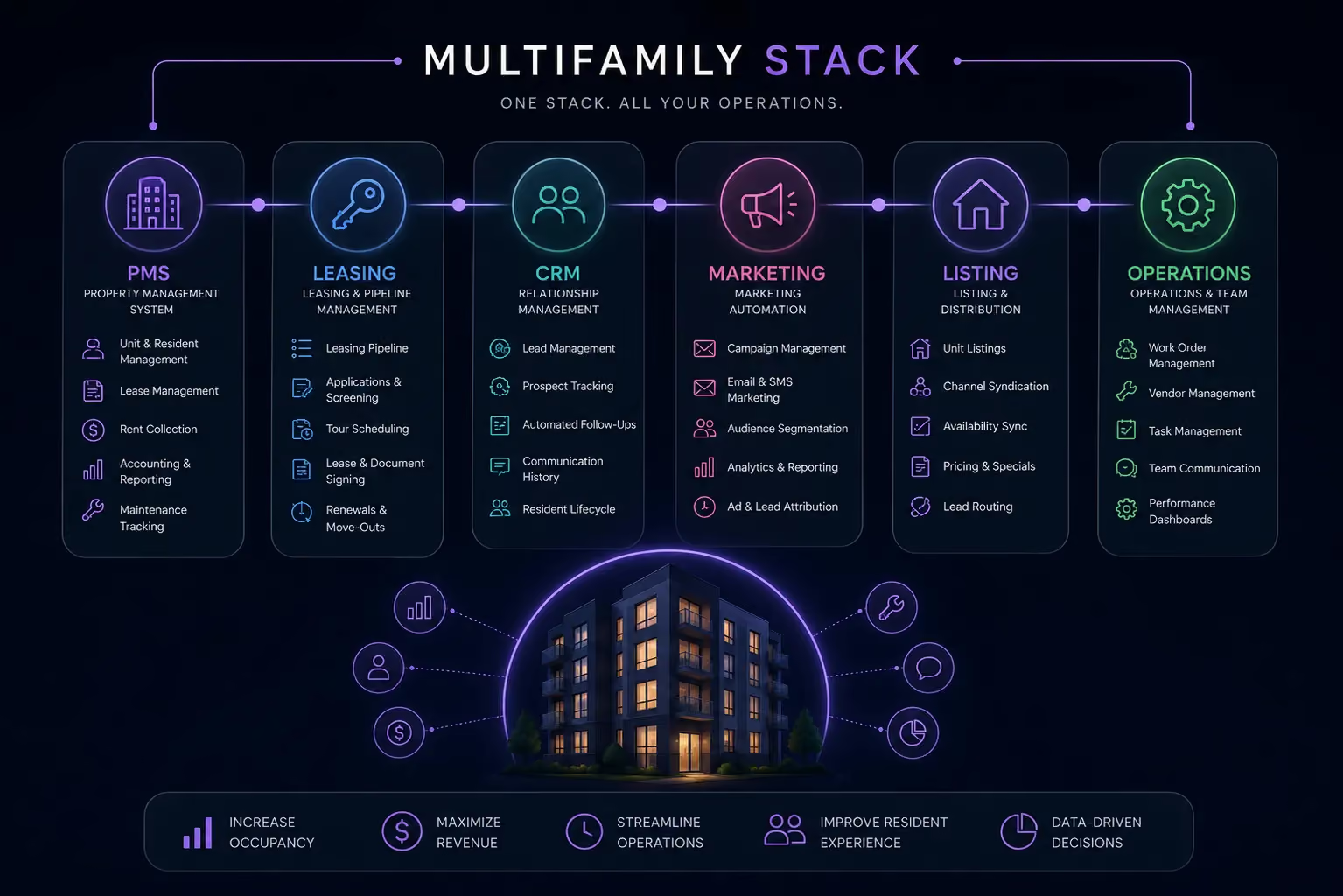
A multifamily proptech stack usually includes several categories of tools, each designed to support a different part of the operating model.
1. Property Management Systems
The property management system is the operational foundation of the portfolio. It stores leases, resident records, rent charges, maintenance activity, accounting data, and unit status information.
The PMS is the system of record, not the full system of insight. Every analytics, reporting, pricing, and decision-support tool connected to it depends on the quality and consistency of the data it contains.
2. Leasing and CRM Platforms
Leasing and CRM platforms manage the prospect journey from first inquiry through tour, application, approval, lease signing, and move-in.
These systems help leasing teams track lead sources, follow-up activity, tour performance, and application status. They are most valuable when they connect cleanly to the PMS so leasing activity, availability, and occupancy data stay aligned without manual transfer.
Related:
3. Resident Experience Tools
Resident experience tools support the ongoing relationship after move-in. Resident portals, communication platforms, payment tools, maintenance-request systems, and community engagement tools all fall into this category.
Their value is not only convenience. A smoother resident experience can affect service satisfaction, retention, and renewal conversion.
4. Marketing and Listing Platforms
Marketing and listing platforms manage how available units are presented to prospective residents across ILS platforms, search aggregators, property websites, and advertising channels.
Their primary role is generating inquiry volume at the top of the leasing funnel. They work best when availability, pricing, and unit information sync accurately from the PMS or connected systems so prospects are seeing current information.
5. Maintenance and Operations Tools
Maintenance and operations tools manage work orders, inspections, vendor coordination, preventive maintenance, unit turns, and operational task management.
These tools help reduce response time, control repair costs, improve unit readiness, and create a more consistent resident experience. The data they generate can also provide context for expense performance and renewal outcomes.
Related:
- 5 Ways to Centralize Leasing Without Losing Resident Experience
- Multifamily Marketing Strategies that Actually Drive Leasing
6. Revenue Intelligence Platforms
Revenue intelligence platforms connect leasing velocity, renewal conversion, pricing performance, exposure concentration, forward availability, and asset-level goals into a shared operating view.
This category goes beyond reporting by helping teams understand what is changing, where performance may warrant closer attention, and which operating signals may be contributing. Rentana fits in this category, using PMS-connected data to support AI-generated property insights, Predicted occupancy, exposure forecasting, pricing recommendations, and portfolio-level visibility.
7. Analytics and Reporting Tools
Analytics and multifamily reporting tools aggregate data from multiple systems into dashboards, reports, and performance views for ownership, asset management, operations, and lenders.
General BI tools can be useful for consolidating historical performance data. Purpose-built multifamily analytics tools go further when they connect leasing, pricing, renewals, availability, and asset strategy into a more operationally useful view.
How to Build the Right Multifamily Proptech Stack
Building a proptech stack that works as a connected system rather than a collection of disconnected tools requires a different starting point than many technology evaluations use. The instinct is often to compare features first. The more productive approach is to start with the operational problems the team needs to solve and work backward to the categories and capabilities that address them.
1. Start With the Problem, Not the Product
Every tool in a proptech stack should exist because it solves a specific operational problem that is costing the team time, accuracy, visibility, or performance.
A leasing CRM exists because prospect pipeline management without one can create follow-up gaps and lost leads. A resident experience platform exists because communication, maintenance response, and service consistency can affect satisfaction and renewal conversion. A revenue intelligence platform exists because pricing, renewal, exposure, and occupancy decisions are more effective when they are evaluated with connected forward-looking context.
Starting with the problem prevents one of the most common proptech mistakes: adding tools that duplicate existing capabilities, require their own data-maintenance process, or create another system for teams to manage without producing a proportional improvement in operations.
2. Prioritize Integration Capability
A proptech stack where data does not move between systems is not really a stack. It is a collection of silos that the team has to reconcile manually before cross-functional analysis can happen.
Every tool should be evaluated on how cleanly it connects to the PMS and to the other platforms it needs to exchange data with. Integration quality affects data currency, reporting accuracy, team adoption, and the reliability of every downstream output.
Rentana’s PMS integration is built around this principle. Rather than requiring manual data exports or periodic uploads, Rentana pulls leasing, occupancy, pricing, and performance data from the PMS so teams can evaluate current operating conditions without rebuilding the data picture manually first.
3. Avoid Duplication
As proptech categories have expanded, overlap between tools has grown. Leasing CRMs may include some analytics. PMS platforms may offer reporting modules. Revenue management tools may incorporate public market data features. Resident platforms may include communication, payments, and service workflows that overlap with other tools.
Before adding a new platform, teams should evaluate whether an existing system already covers the same capability, whether that coverage is sufficient for the operational need, and whether the new tool would create a data conflict with systems already in place.
Duplication creates version-control risk when two systems track similar data but do not agree. It also creates adoption problems when staff are expected to maintain activity in multiple platforms that serve overlapping purposes.
Related:
- Best Leasing Solutions for Managing Multiple Multifamily Assets
- 7 Multifamily Management Challenges & How To Solve Them
4. Evaluate the Workflow and Data Value
Every tool should improve a workflow, create useful data, or ideally do both.
A tool that makes a process faster but produces inconsistent or inaccessible data may solve one problem while creating another. A tool that collects useful data but does not fit naturally into the team’s workflow may struggle with adoption. The strongest platforms improve the work itself while creating data that can support better reporting, analysis, or decision-making.
For example, a leasing tool should not only help teams manage follow-up. It should also make funnel performance more visible. A maintenance platform should not only route work orders. It should also help teams understand response time, recurring issues, and unit-readiness trends. A revenue intelligence platform should not only display data. It should connect leasing, pricing, renewals, exposure, and asset goals into operating context teams can use.
Rentana supports that type of workflow and data value by turning PMS-connected leasing, occupancy, pricing, renewal, and availability data into portfolio visibility, AI-generated property insights, Predicted Occupancy, exposure forecasting, and pricing recommendations that operators can review and act on within their own strategy.
5. Build for Where the Portfolio Is Going, Not Just Where It Is
The right proptech stack for a five-asset portfolio may not be the right stack for a fifteen-asset portfolio.
As portfolios grow, coordination, visibility, configuration, and reporting requirements grow with them. A tool that works well at one scale may create bottlenecks at another. A stack built only for today’s complexity may not support the operational requirements of the portfolio two years from now.
Teams should evaluate whether tools can scale with the operation, support different asset strategies, connect to new systems as the stack evolves, and maintain reliable data as the portfolio becomes more complex.
A well-built proptech stack should become more valuable as the portfolio grows, not harder to manage.
Where Rentana Fits in the Multifamily Proptech Stack
Rentana fits within the revenue intelligence category of the multifamily proptech stack.
It is not a PMS, leasing CRM, accounting system, or resident portal. Instead, Rentana connects data from the PMS and other operating workflows to help teams evaluate leasing, pricing, renewals, exposure, and portfolio performance in one operating view.
For operators and asset managers, the value is in connecting signals that are often reviewed separately. Leasing velocity, renewal conversion, pricing performance, forward availability, exposure concentration, funnel trends, and asset-level goals all affect one another. When those signals are disconnected, teams may spend more time assembling reports than evaluating what is actually changing.
Rentana supports that evaluation through portfolio dashboards, AI-generated property insights, Predicted Occupancy, exposure forecasting, pricing recommendations, and the Metrics Browser. Those tools help teams understand what is anticipated under current conditions, where performance may warrant closer attention, and which factors may be contributing.
Rentana does not replace the systems of record or the operator’s judgment. It extends the value of connected data by helping teams work from a clearer operating context when reviewing pricing, occupancy, renewal, and asset-performance decisions.
Conclusion on Multifamily Proptech
Building the right multifamily proptech stack is not about having the most tools. It is about having the right tools connected in the right way around a clear understanding of which operational problems each tool is designed to solve.
The operators who get the most value from proptech investments are not necessarily the ones evaluating the most platforms. They are the ones starting with the problem, prioritizing integration, avoiding unnecessary duplication, and choosing tools that improve workflows while creating reliable data.
A well-built proptech stack should make the operation easier to understand and manage. Data should move between systems with less manual effort, teams should have clearer visibility into current conditions, and portfolio leaders should be able to evaluate performance without rebuilding the operating picture from disconnected reports.
The starting question is not which tool to add next. It is which operational problem is costing the most time, accuracy, visibility, or performance, and whether the current stack is already solving it well enough.