If you manage a multifamily portfolio, you already have dashboards. The real question is whether they provide you with insights and actually help you make effective decisions.
Most property performance dashboards for multifamily portfolios are full of numbers but short on clarity. Key metrics may appear stable in isolation, while underlying performance shifts go unnoticed. By the time patterns become obvious, the opportunity to act has often passed.
A well-designed property performance dashboard for a multifamily portfolio should do more than report metrics. It should help you quickly understand what is happening across your portfolio, where attention is needed, and what decisions matter most right now.
We will discuss how to create property performance dashboards that support real multifamily portfolio analysis and turn data into action.
Related: How To Calculate the Value of a Multifamily Property Easily
Why Property Performance Dashboards Matter for Multifamily Portfolios
As multifamily portfolios grow, it becomes harder to keep performance aligned across properties. Each asset has its own leasing pace, expense profile, and market dynamics. Property performance dashboards exist to bring order to that complexity.
At a basic level, dashboards help you monitor the overall health of your portfolio by consolidating occupancy, revenue, and NOI into a single view. This makes it easier to spot which properties are performing as expected and which ones may need attention.
Property performance dashboards for multifamily portfolios also play a key role in identifying risk early. Early indicators, such as rising vacancy, slower leasing, or softening demand, often show up before larger performance issues. A good dashboard surfaces these shifts quickly so teams can respond before performance declines. Without this visibility, issues tend to stay hidden until they are harder to fix.
Finally, dashboards support faster and better decisions. When key metrics are clearly organized and easy to understand, teams spend less time pulling data and more time acting on it.
Whether the decision is about pricing, renewals, or where to focus operational resources, dashboards help decision-makers act consistently across multiple properties rather than reacting property by property.
Read Also: What is a Good Multifamily Cap Rate?
How to Create Property Performance Dashboards for Multifamily Portfolio: Key Metrics to Include

A strong multifamily performance dashboard focuses on the metrics that actually drive outcomes. Each metric should help answer a specific question about how a property or portfolio is performing and where attention may be needed.
Here is how to create property performance dashboards for multifamily portfolio and the key metrics to use
1. Occupancy & Exposure
Occupancy and vacancy together provide a clear picture of portfolio exposure, not just how full properties are today, but where revenue risk may be building. Even small shifts in occupancy can have an outsized impact on revenue and NOI, making this one of the faster indicators of overall property health.
Including both metrics in a performance dashboard helps teams see where demand is holding and where it is slipping.
Vacancy highlights which units or properties are sitting empty and for how long, while occupancy shows how those gaps are affecting the portfolio as a whole. Viewed together at the unit, property, and portfolio levels, these metrics make it easier to identify emerging issues early, prioritize leasing and pricing action, and reduce prolonged downtime between leases.
2. Revenue Performance
Revenue Performance dashboards should focus on the signals that influence financial outcomes, not just end results. While net operating income (NOI) is ultimately measured through financial reporting, dashboards play a critical role in tracking the pricing and demand dynamics that drive it.
Rent growth, pricing trends, and leasing performance help teams understand whether revenue strategies are keeping pace with current property conditions or falling behind. When viewed alongside occupancy and exposure, these metrics provide early insight into whether current decisions are likely to support stronger NOI, or create pressure before it appears in financial statements.
By monitoring these leading indicators at the property and portfolio levels, operators can adjust pricing and leasing strategy earlier, rather than reacting after revenue and profitability have already been impacted.
3. Leasing Velocity
Leasing velocity measures how quickly units move from availability to lease. It provides an early view into demand strength and pricing alignment. When leasing slows, it often signals a shift in pricing effectiveness, leasing conditions, or lead quality, well before vacancy levels rise.
Including leasing velocity on a performance dashboard helps teams catch these changes early, allowing them to adjust pricing, marketing, or leasing strategy before exposure increases.
Related: Top Real Estate Market Analysis Tools
4. Public Market Context
Public market data can provide additional context for property performance by helping teams understand broader trends in supply, demand, advertised rents, and availability.
This information should be considered alongside property-level metrics such as occupancy, leasing velocity, pricing performance, and exposure rather than used as a substitute for internal performance data.
5. Renewal Performance
Renewal performance shows how effectively properties retain residents and maintain revenue stability. Strong renewal outcomes reduce turnover costs and support more predictable income.
Tracking renewal metrics on a dashboard helps teams evaluate the timing and effectiveness of renewal strategies and identify opportunities to improve retention.
6. Alerts & Key Insights
Alerts and key insights help teams focus attention where it matters most. Instead of scanning rows of metrics, this layer highlights what has changed, why it matters, and what may require action.
Effective dashboards use clear visual cues, such as color indicators, trend markers, and thresholds to surface risk and opportunity quickly. By translating performance signals into prioritized insights and action items, teams can respond faster, align around the same information, and move from monitoring performance to actively managing it.
Together, these metrics provide a balanced view of operational health, revenue performance, and future risk. A dashboard that focuses on these signals helps multifamily teams move beyond reporting and toward proactive portfolio management.
Related: The Best Multifamily Software for Investors
Designing Dashboards for Portfolio-Level vs. Property-Level Analysis
Not everyone needs to see the same information in the same way. One of the most common mistakes in dashboard design is trying to make a single view work for every role. Effective property performance dashboards for multifamily portfolios are tailored to their audience and the decisions that audience is responsible for.
Portfolio-Level Dashboards for Owners and Executives
Portfolio-level dashboards are designed for owners and executive teams who need a high-level view of performance. These dashboards focus on trends and comparisons rather than day-to-day detail. Key metrics like overall occupancy, revenue trends, property performance , and portfolio health indicators should be front and center.
The goal is clarity, not complexity. Owners should be able to quickly see which assets are outperforming, which are underperforming, and where strategic attention is needed. Visual cues and summaries work better than long tables of numbers.
Property-Level Dashboards for Asset Managers
Asset managers need a balance between overview and detail. Their dashboards should show how each property is performing while still allowing them to drill down into specific metrics like leasing velocity, vacancy, or renewal performance.
These dashboards support decision-making around pricing, capital allocation, and operational strategy. Asset managers benefit from seeing patterns across properties while also understanding what is driving performance at the individual asset level.
Operational Dashboards for Onsite Teams
Onsite teams need dashboards that support daily action. These views focus on near-term leasing activity, upcoming renewals, available units, and performance against targets. Simplicity is key, as onsite teams need information that is easy to scan and act on quickly.
By designing dashboards with each audience in mind, multifamily teams ensure that data supports better decisions at every level rather than overwhelming users with unnecessary detail.
Read Also: The Best AI Tools for Real Estate Investors
Property Performance Dashboards for Multifamily Portfolios: How to Turn Insights Into Action With Multifamily Platforms Like Rentana
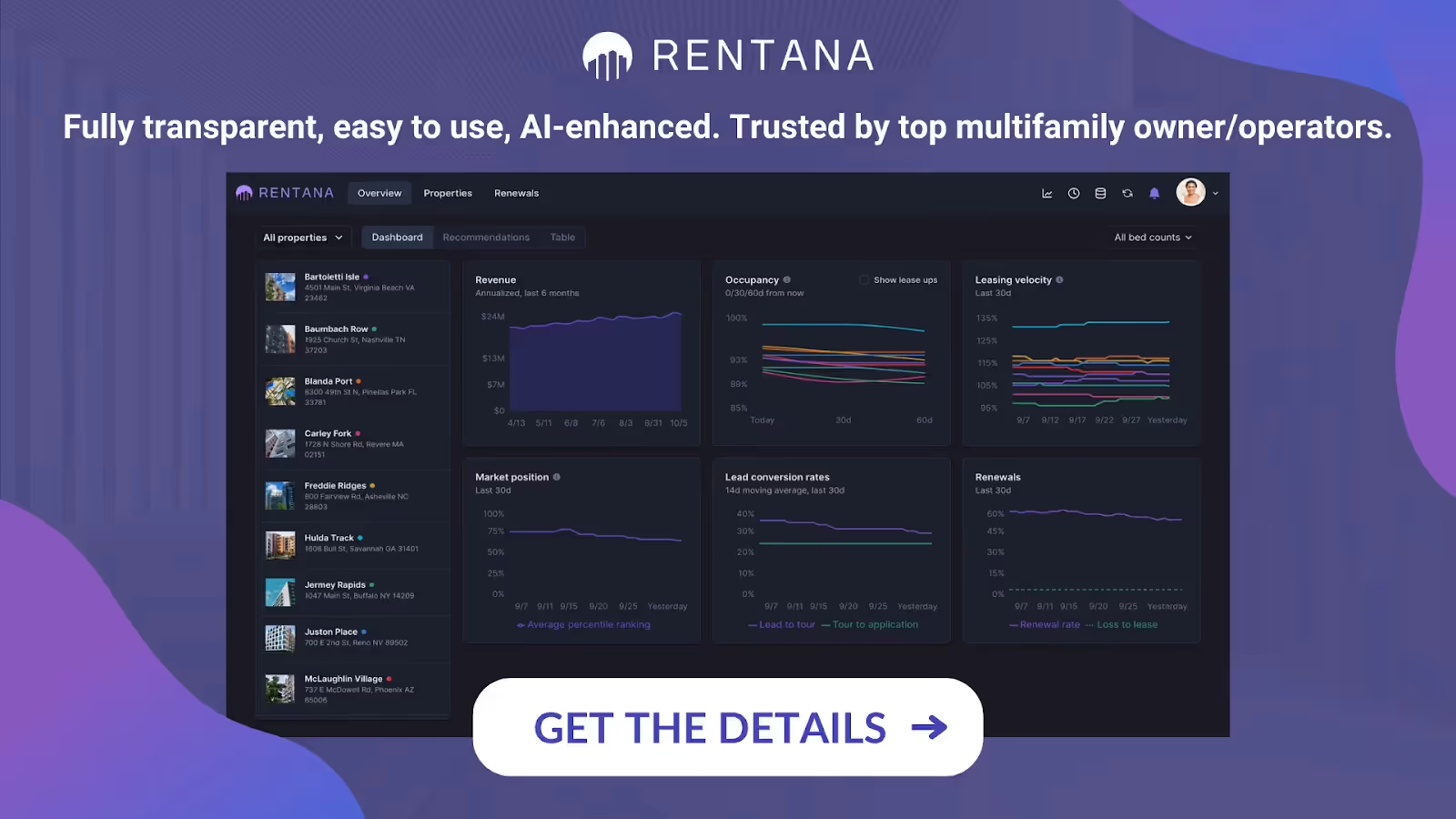
Property performance dashboards for multifamily portfolios are the most valuable when they do more than display metrics. The real challenge is turning performance data into clear priorities and timely action, especially across large portfolios with competing signals.
Platforms like Rentana support this by layering AI-generated insights on top of core portfolio and property metrics. These insights synthesize pricing, leasing activity, renewal performance, occupancy, exposure, and other property performance signals into plain language summaries that explain what is changing, why it matters, and where attention is needed.
Below are the key ways teams can turn dashboard insights into meaningful action.
1. Spotting Trends Before They Become Problems
AI-powered dashboards continuously monitor performance across properties and units. Instead of waiting for month-end reports, teams can see early signals such as slowing leasing velocity, rising vacancy, or changes in market condition.
Rentana helps surface these trends clearly through metrics such as demand and conversion performance, availability forecasting, and market positioning, allowing operators to respond before performance declines.
2. Prioritizing Where Attention Is Needed Most
Not every issue requires the same level of urgency. In addition to the detailed performance insights, Rentana uses simple visual indicators to highlight which properties are on track and which need attention.
These indicators make it easy for leaders to quickly spot goals that are at risk or predicted to underperform, understand what is driving that forecast through supporting insights, and direct on-site teams toward the specific actions needed to course-correct, before performance slips.
3. Guiding Pricing Decisions With Real Market Context
Dashboards become more powerful when they connect performance metrics to pricing guidance. Rentana evaluates property-level factors such as leasing velocity, occupancy, availability, exposure, and pricing performance when generating pricing recommendations.
This gives teams clearer context for understanding whether pricing adjustments are supported by current property performance and how those decisions align with occupancy and revenue goals.
4. Supporting Smarter Leasing Decisions
Effective property performance dashboards bring leasing velocity, availability, and demand trends together in one place. This helps multifamily teams quickly see which units are leasing efficiently and which may need attention, reducing days vacant and improving revenue consistency.
In addition, dashboards that include amenity performance, concession effectiveness, and lead-to-application conversions and marketing sources provide clearer insight into what is influencing leasing outcomes. By pairing these visual metrics with insight callouts, teams can adjust pricing, incentives, and marketing strategy with greater precision across the portfolio.
5. Improving Renewal Timing and Retention
Effective renewal strategies rely on anticipating future exposure, not just reacting to expirations. Rentana highlights upcoming exposure relative to property-level targets, helping teams see where future risk or opportunity is emerging. Dashboard insights compare renewal conversion rates to targets and evaluate lease trade-out, concession usage, and pricing alignment between new leases and renewals. Combined with visibility into renewal trends, known move-outs, upcoming expirations, and anticipated availability, this helps teams evaluate renewal timing and pricing with greater context
6. Moving Beyond Static Reporting
Traditional dashboards require teams to interpret data on their own. Rentana goes further by bringing performance data together and using AI-generated Insights to surface important changes and potential next steps. This transforms dashboards from passive reports into active tools that support daily decisions.
Each insight is presented with a clear headline, a concise summary of what is happening, a recommended action, and a supporting explanation of the underlying drives. This transforms dashboards from passive reports to active tools that support daily decision-making.
When dashboards are paired with AI and analytics platforms like Rentana, they become more than a snapshot of performance. They become a system for spotting trends, prioritizing action, and managing multifamily portfolios with greater clarity and confidence.
Don’t Miss: How Real Estate Agents can use AI
Conclusion on Property Performance Dashboards for Multifamily Portfolios
Property performance dashboards for multifamily portfolios should not exist just to report numbers. Their real purpose is to help teams understand what is happening across a portfolio and act early, before opportunities are missed or risks compounds. When dashboards are built around the right metrics and supported by AI, they shift from passive reporting tools to active decision-making systems.
Platforms like Rentana illustrate what this evolution looks like in practice by translating performance data into clear signals, prioritized insights, and actionable guidance. Instead of reacting to last month’s results, teams can stay aligned with current property performance and emerging operational trends.
The question to consider is simple: if your dashboards could clearly tell you where to focus today and explain why, how different would your decisions look tomorrow?