


Finding a multifamily property to buy is not the same as finding a home to live in. The process is more deliberate, the sources are more varied, and the best deals rarely come from browsing a listing website. Most experienced multifamily investors will tell you that knowing where to look is half the work.
The multifamily market operates across two parallel universes: on-market properties that are openly listed and available to any buyer, and off-market properties that trade quietly through broker relationships, direct outreach, and investor networks before they ever appear on a public platform. Buyers who only search one universe are working with half the available inventory.
This guide covers where multifamily properties are actually found, how to access both on-market and off-market deal flow, and how to position yourself to see opportunities that other buyers don't.
Related:
- What is Multifamily Housing? Complete Guide for Investors
- Student Housing vs Conventional Multifamily
Where to Find Multifamily Properties: 20 Platforms and Sources
Here's a comprehensive reference of the primary platforms and sources where multifamily properties are listed and traded:
Online Listing Platforms
1. MLS - primary source for 2 to 4 unit residential multifamily, accessible through any licensed real estate agent
2. LoopNet - most widely used public platform for 5 unit and above commercial multifamily listings nationwide
3. Crexi - growing commercial listing platform particularly strong for small to mid-size multifamily in the 5 to 50 unit range
4. CoStar - institutional-grade platform with deeper market data and transaction history, requires paid subscription
5. Ten-X - online auction and transaction platform for commercial multifamily with competitive bidding
6. Auction.com - distressed and bank-owned multifamily properties including foreclosures and court-ordered sales
7. Zillow and Realtor.com - useful for smaller 2 to 4 unit properties listed by residential agents
Broker and Institutional Sources
8. Commercial real estate brokerage websites - major brokerages list inventory directly on their own sites before broad distribution
9. Marcus and Millichap - one of the largest dedicated multifamily brokerage platforms in the US with a proprietary listing network
10. CBRE, JLL, and Cushman and Wakefield - institutional brokerages handling larger multifamily assets typically above 50 units
11. Local and regional commercial brokerages - often the best source for mid-size multifamily in specific markets
Related:
Off-Market and Direct Sources
12. Direct mail to property owners - targeted outreach to owners of specific properties identified through public records
13. Public tax records and county assessor databases - free public records identifying property owners by address or parcel number
14. Tax delinquency lists - publicly available lists of properties with unpaid taxes, a strong indicator of motivated sellers
15. Probate and estate attorney networks - properties from estates often sell off-market before being listed publicly
16. Wholesale networks - investors who source distressed properties and assign contracts to end buyers for a fee
Investor Networks and Communities
17. Real estate investment associations - local REIA chapters are one of the best sources of off-market deal flow and investor referrals
18. BiggerPockets - online investor community with a marketplace section where members list properties directly
19. LinkedIn and social media - increasingly used by owners and brokers to share deal flow within professional networks
20. Real estate syndication networks - useful for passive investors looking to participate in larger multifamily deals without direct ownership
Top Picks:
- How Does Financing Differ in Small vs Large Multifamily Properties?
- How to Buy a Multifamily Property with no Money (Financing Options)
Off-Market Sources: Where Listed Multifamily Properties Are Found
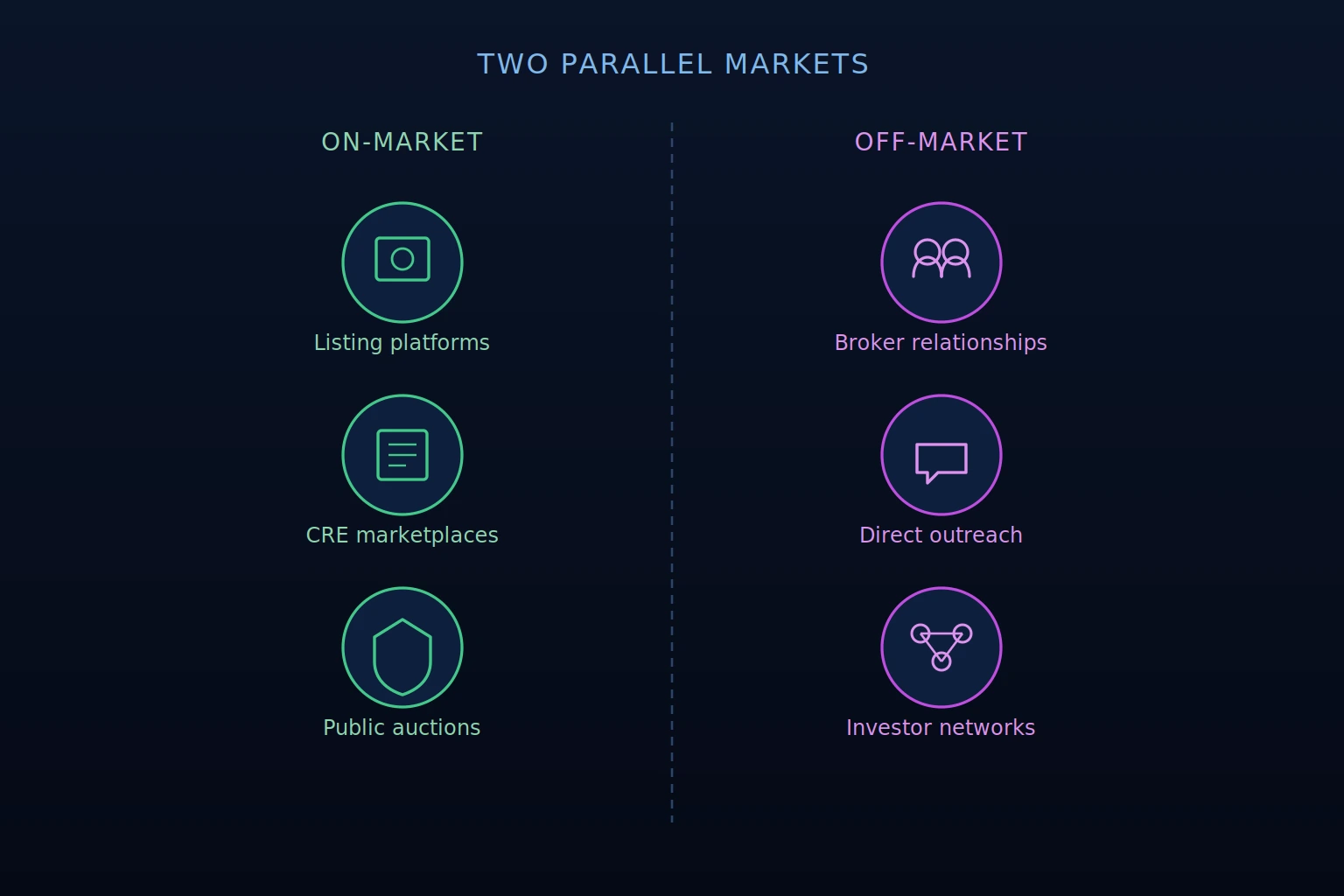
Here’s how serious investors find deals before they're listed
By the time a property is publicly listed, it has already been seen by every active buyer in the market and priced accordingly. Off-market deal flow is where experienced investors find properties before competition drives the price up, and building access to that flow is one of the most valuable skills in multifamily investing.
Broker Relationships
Many off-market multifamily deals never appear on any public platform because they are handled entirely within a broker's existing network. A broker who has represented a building owner for years will often know when that owner is considering selling before any listing agreement is signed, and will call the buyers they know and trust before bringing the property to market broadly.
Getting into that call list requires building genuine relationships with active multifamily brokers in your target market before you need them. Brokers prioritize buyers who close, who move quickly, who don't waste their time with low offers, and who bring their own capital or financing to the table. Demonstrating those qualities over time is how you get access to deal flow that never becomes public.
Wholesalers and Bird Dogs
Real estate wholesalers are investors who specialize in finding distressed or off-market properties, getting them under contract, and then assigning those contracts to end buyers for an assignment fee. For multifamily investors who don't want to run their own direct sourcing operation, wholesaler networks can be a useful source of deal flow, particularly for smaller value-add properties in the two to twenty unit range.
The tradeoff is that wholesale deals come with an assignment fee built into the price, which means you're paying for the sourcing work the wholesaler did. Evaluating whether the deal still makes sense at the wholesaled price requires the same rigorous underwriting you would apply to any other acquisition.
Networking and Referrals
Some of the best multifamily deals come from people who aren't actively trying to sell a property but who mention to the right person at the right time that they've been thinking about it. Local real estate investor associations, property management company relationships, attorneys who handle estate planning and probate, accountants who work with real estate investors, and lenders who finance multifamily acquisitions are all nodes in a network that generates deal flow for investors who show up consistently and make their acquisition criteria known.
Working with Brokers: How to Use Professional Networks Effectively
In multifamily real estate, brokers are not just transaction facilitators. They are one of the primary sources of deal flow, particularly for properties in the five to fifty unit range where most transactions are handled by specialized commercial brokers rather than residential agents. Building effective broker relationships is one of the highest-return activities a multifamily investor can invest time in.
Find the Right Brokers
Not all commercial brokers specialize in multifamily. Some focus on office, retail, or industrial properties and handle multifamily only occasionally. You want brokers whose primary business is multifamily transactions in your target market, who have an established owner client base, and who do enough volume to have consistent deal flow rather than handling one or two multifamily transactions per year.
Position Yourself as a Serious Buyer
Brokers show their best deals to buyers who they know will close. Before you can expect preferred access to deal flow, you need to establish credibility with the brokers you're targeting. That means being specific about your acquisition criteria, demonstrating that you have financing in place or equity ready to deploy, moving quickly when you request information, and following through on commitments during the due diligence process.
A buyer who asks for an offering memorandum, goes dark for three weeks, then submits a lowball offer with no supporting logic trains brokers not to call them first. A buyer who responds quickly, asks intelligent questions, submits offers with clear rationale, and closes on what they agree to gets called before the listing goes live.
Stay in Regular Contact
Broker relationships require maintenance. A quarterly check-in call or email that updates your target broker on what you're looking for, what you've seen recently, and what you've closed keeps you visible in their network without being intrusive. Brokers work with dozens of buyers simultaneously and naturally prioritize the ones who are most active and most top of mind when a new deal comes in.
Don’t Miss:
Conclusion on Where to Find Multifamily Properties
Finding multifamily properties is a process, not an event. The investors who build consistent deal flow do it by combining multiple sources, on-market platforms for broad inventory visibility, off-market outreach for proprietary opportunities, and broker relationships for early access, rather than relying on any single channel.
The quality of your deal flow is directly proportional to the effort you put into building the relationships and systems that generate it. Start with the market, narrow to the submarket, build the broker relationships, run the direct mail, and show up consistently in the networks where multifamily deals change hands. Do that long enough and the deals start coming to you rather than you chasing them.


