


Most real estate companies think they understand their clients. But knowing how a client felt after a showing, a lease, or a closing is very different from actually measuring it.
That’s where Net Promoter Score, or NPS, comes in.
If you’ve ever worked with a brokerage, property manager, or real estate platform, you’ve probably seen it. A quick question asking how likely you are to recommend the service to someone else. It seems simple, but that one question gives real estate teams a clear way to track client satisfaction, referrals, and long-term loyalty.
The problem is, NPS often gets reduced to just a number. Teams might say their NPS is 50 or 60, without really understanding what’s driving it or how to improve it.
In this guide, we’ll break it down in a practical, real estate context. You’ll learn what Net Promoter Score is, how the rating system works, the exact question used, how the formula is calculated, and how to actually use NPS to improve client experience and drive more referrals.
Related:
- What is the 2 Rule in Real Estate?
- In Apartments, What is the Average Ceiling Height?
What is Net Promoter Score (NPS)?
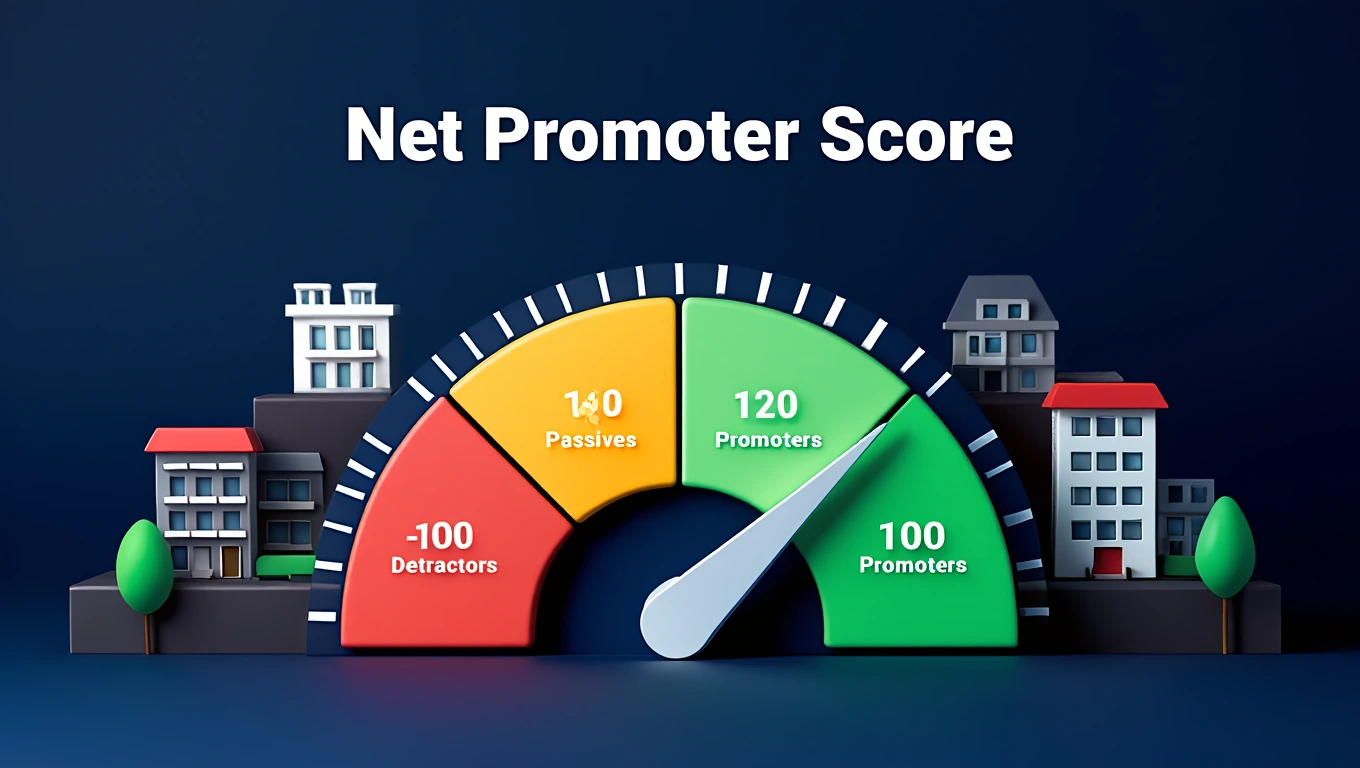
Net Promoter Score (NPS) is a customer experience metric that measures how likely someone is to recommend your business to others.
In simple terms, it tells you how satisfied and loyal your clients are based on one core question: would they refer you to a friend, colleague, or another investor?
For real estate businesses, this can apply to tenants, buyers, sellers, or property owners. Instead of guessing how people feel after a transaction or lease, NPS gives you a clear, standardized way to measure it.
Companies use NPS because it goes beyond basic satisfaction. It focuses on referrals and loyalty, which are especially important in real estate where word-of-mouth drives a large portion of new business.
A high NPS usually means your clients had a strong enough experience to recommend you. A low score signals friction in your process, whether that’s communication, service quality, or overall experience.
What is the Net Promoter Score Question?
The Net Promoter Score question, often called the NPS question or NPS score question, is a simple survey question used to measure customer loyalty:
“How likely are you to recommend [company] to a friend or colleague?”
Respondents answer on a scale from 0 to 10, where:
- 0 means not at all likely
- 10 means extremely likely
This 0–10 scale is what allows companies to group responses and calculate their NPS later on.
In real estate, this question might be asked after a key moment, like closing on a home, signing a lease, or completing a property management cycle. It helps capture how the client actually felt about the experience.
Most companies also include a follow-up question, such as:
“What is the main reason for your score?”
This second question is just as important. While the NPS question gives you the score, the follow-up explains why someone had that experience and what you can improve.
Top Pick:
- What Is Intrafamily Transfer and Dissolution?
- What is a Lender Inspection? Key Facts Explained
How NPS Ratings Work (0–10 Scale Explained)
Once someone answers the NPS question, their response is grouped into one of three categories. This is what the NPS rating system is based on.
- 0–6: Detractors
These are unhappy clients. They likely had a poor experience and are unlikely to recommend your business. In real estate, this could be a frustrated tenant, a buyer who felt unsupported, or an owner dealing with issues. Detractors can hurt your reputation through negative reviews or word of mouth. - 7–8: Passives
These clients are satisfied, but not impressed. Their experience was “fine,” but not memorable enough to talk about. They are unlikely to refer you, and they may switch to a competitor if given a better option. - 9–10: Promoters
These are your strongest advocates. They had a great experience and are highly likely to recommend you to others. In real estate, promoters often turn into repeat clients and referral sources, which are key drivers of growth.
The goal of NPS is to increase the number of promoters while reducing detractors. The more promoters you have, the stronger your overall client experience and referral pipeline.
What is a Good Net Promoter Score?
A good Net Promoter Score depends on your industry, but there are general benchmarks you can use to understand where you stand.
- Above 0 = Good
This means you have more promoters than detractors. It’s a positive signal that clients are generally satisfied, but there is still room to improve. - Above 30 = Strong
At this level, you are doing better than most companies. You likely have a solid client experience and are generating consistent referrals. - Above 50 = Excellent
This is considered a top-tier score. It means a large portion of your clients are highly satisfied and actively recommending your business.
What this means for Real Estate
In real estate, NPS can vary depending on your niche. A property management company, brokerage, or rental platform may all have different averages. But the principle stays the same:
- Low scores usually point to issues in communication, expectations, or service delivery
- High scores indicate smooth transactions, strong relationships, and a higher likelihood of referrals
Instead of chasing a perfect score, the real goal is to consistently improve your NPS over time and understand what’s driving it.
Read Also:
Why Net Promoter Score Matters
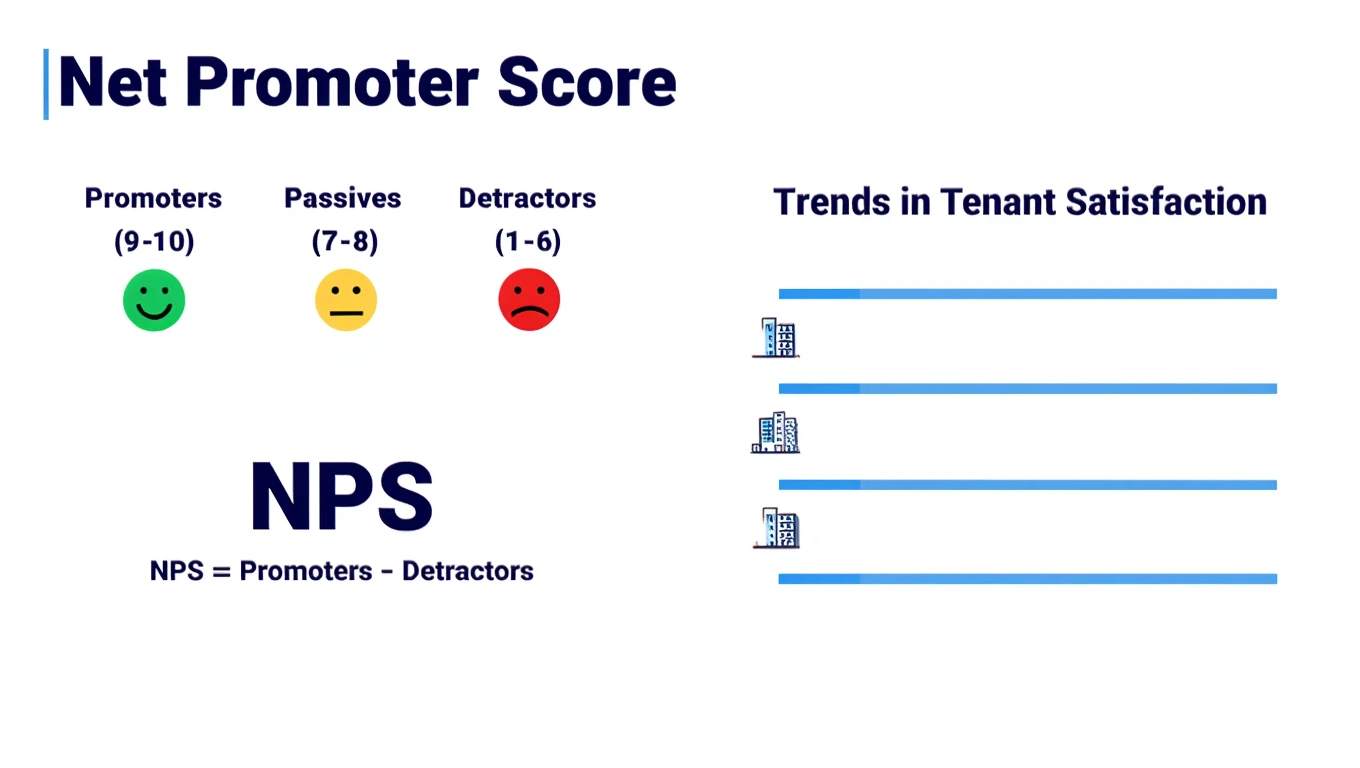
Net Promoter Score matters because it gives you a clear signal of how your clients actually feel about your business, not just whether a deal was completed.
- It measures customer loyalty:
NPS goes beyond basic satisfaction. It shows whether clients would actively recommend you, which is one of the strongest indicators of trust, especially in real estate where referrals drive a large share of business. - It helps predict growth:
More promoters usually means more word-of-mouth referrals, repeat clients, and long-term relationships. A rising NPS is often a sign that your business is positioned to grow. - It’s simple to track over time:
Because NPS is based on one consistent question, it’s easy to measure regularly. You can track trends, spot dips in performance, and see whether changes in your process are actually improving client experience.
You Might Like:
- How to Buy Land With No Money Down: Financing Options
- Do you Still Pay Rent after a Concession?
How Companies Use NPS
Collecting an NPS score is only the first step. The real value comes from how you use the data to improve your business.
- Product and service feedback:
The follow-up responses to the NPS question help you understand what clients liked and what went wrong. In real estate, this could highlight issues with communication, delays, or specific parts of the transaction process. - Customer experience tracking:
Companies use NPS to monitor key moments in the client journey, such as after a property viewing, lease signing, or closing. This helps identify where the experience is strong and where it breaks down. - Improving retention and referrals:
By identifying detractors early, you can fix issues before they turn into negative reviews. At the same time, you can engage promoters, encourage referrals, and turn satisfied clients into long-term advocates.
Used properly, NPS becomes more than just a metric. It becomes a feedback loop that helps you consistently improve how you serve your clients.
Don’t Miss:
- What is the Standard Flooring Depreciation Life in Real Estate?
- What is a Convenience Fee for Rent?
Frequently Asked Questions on Net Promoter Score (NPS)
What Is a Good NPS Rating?
A good NPS rating is generally any score above 0, which means you have more promoters than detractors. This indicates that, overall, customers are satisfied with your service. In most industries, a score above 30 is considered strong, while anything above 50 is excellent and reflects a high level of customer loyalty and referrals.
What Is the Detractor Rating of NPS?
In NPS, detractors are customers who give a score between 0 and 6. These respondents are typically unhappy with their experience and are unlikely to recommend your business. In many cases, detractors may also leave negative reviews or share poor experiences, which can impact your reputation if not addressed.
What Are the Ratings for NPS?
NPS ratings are based on a 0 to 10 scale and are divided into three groups. Scores from 0 to 6 are detractors, 7 to 8 are passives, and 9 to 10 are promoters. This grouping allows businesses to quickly understand how customers feel and where improvements are needed.
Is NPS of 40 Good?
Yes, an NPS of 40 is considered strong and above average in most industries. It means you have significantly more promoters than detractors, which is a positive sign for customer satisfaction. At this level, your business is likely generating referrals and building a solid reputation.
Is a 47 NPS Good?
Yes, a 47 NPS is a very strong score and indicates a high level of customer satisfaction. It suggests that a large portion of your customers had a positive experience and are willing to recommend you. Businesses with scores in this range are usually performing well compared to competitors.
Is NPS 50 Good?
Yes, an NPS of 50 is considered excellent and places you among top-performing companies. It reflects a strong base of promoters who are likely to refer your business to others. This level of score is often associated with consistent service quality and strong customer relationships.
Is NPS 60 Good?
Yes, an NPS of 60 is exceptional and well above industry averages. It indicates that most of your customers are promoters and very few are detractors. Businesses with this score typically have strong brand loyalty and benefit heavily from word-of-mouth growth.
Is an NPS of 35 Good?
Yes, an NPS of 35 is considered strong and shows that your business is performing well. It means you have more promoters than detractors and a generally positive customer experience. While there is still room to improve, this score is a solid foundation for growth.
Is NPS 65 Good?
Yes, an NPS of 65 is outstanding and reflects a very high level of customer satisfaction. Scores in this range are rare and usually indicate that your service consistently exceeds expectations. This often leads to strong referrals and repeat business.
Is an NPS Score of 58 Good?
Yes, an NPS score of 58 is excellent and signals a strong customer experience. It shows that a large percentage of your customers are promoters who are willing to recommend your business. This level of score typically supports steady growth through referrals.
Is 72 NPS Good?
Yes, an NPS of 72 is considered world-class and extremely rare. It means almost all of your customers are promoters, with very few detractors. Businesses with scores this high usually deliver exceptional experiences consistently.
Is 53 a Good NPS?
Yes, an NPS of 53 is excellent and above what most companies achieve. It indicates strong customer loyalty and a high likelihood of referrals. At this level, your business is likely benefiting from positive word-of-mouth and repeat clients.


