


If you’ve served in the military, you’ve probably heard that a VA loan is one of the best ways to buy real estate. What’s less clear is how far you can actually take it, especially when it comes to multifamily properties.
A lot of people assume VA loans are only for single-family homes, but that’s not entirely the case. Under the right conditions, you can use a VA loan to buy a small multifamily property and generate rental income at the same time.
The key is understanding the rules and how the loan is meant to be used. Once you know how it works, it can be a practical way to get into real estate while reducing your upfront costs.
Related:
Can You Buy a Multifamily Property With a VA Loan?
Yes, you can buy a multifamily property with a VA loan, but it comes with specific requirements.
VA loans allow you to purchase properties with up to 4 units, including duplexes, triplexes, and fourplexes. This makes it possible to generate rental income while using a loan designed for primary residences.
However, there is a key condition: you must live in one of the units as your primary residence. VA loans are not intended for purely investment properties, so you cannot use one to buy a multifamily property that you don’t plan to occupy.
In practice, many buyers use this setup to live in one unit and rent out the others. The rental income can help offset the mortgage, making it easier to afford the property while building long-term equity.
As long as the property meets VA guidelines and you meet eligibility requirements, this can be a practical way to get started with multifamily real estate.
Top Pick:
- What is a Rent Roll in Real Estate: A Complete Guide
- Are Townhomes Considered Multifamily?
What Is a VA Loan in Real Estate?
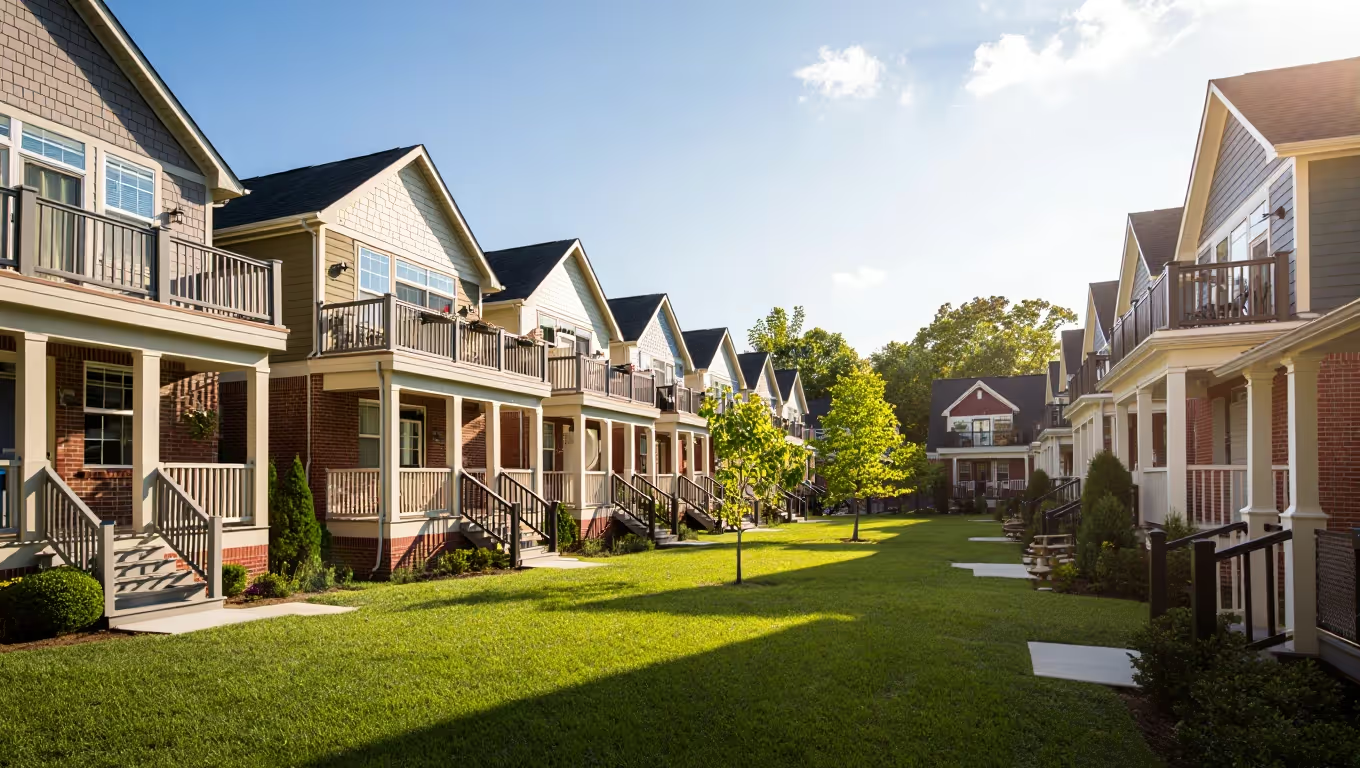
A VA loan is a mortgage program backed by the U.S. Department of Veterans Affairs (VA) that is designed to help eligible veterans, active-duty service members, and certain military families buy a home.
Instead of issuing loans directly, the VA guarantees a portion of the loan provided by private lenders. This reduces risk for lenders and allows borrowers to access more favorable terms compared to traditional loans.
One of the main benefits of a VA loan is that it often requires low or no down payment, making it easier to purchase a property without needing significant upfront cash. VA loans also typically offer competitive interest rates and more flexible qualification requirements.
Because VA loans are intended for primary residences, they can be used for multifamily properties only if the buyer lives in one of the units.
Example of Buying a Multifamily Property With a VA Loan
To see how this works in practice, here’s a simple example.
Imagine a veteran buys a duplex for $400,000 using a VA loan. Because VA loans often require little to no down payment, they’re able to purchase the property without a large upfront investment.
- Unit 1: Owner-occupied
- Unit 2: Rented for $1,800/month
How the Structure Works
- Purchase price: $400,000
- Down payment: $0 (VA loan)
- Monthly mortgage: ~$2,200
- Rental income: $1,800
In this case, the rental income from the second unit covers a large portion of the mortgage. The buyer lives in one unit while the tenant in the other unit helps offset housing costs.
What This Means
- The buyer meets the VA requirement by living in the property
- The property generates income at the same time
- Housing costs are reduced compared to owning a single-family home
This is a common way VA loans are used for multifamily housing. It allows you to combine homeownership with rental income, often referred to as house hacking, while still following VA loan rules.
Related:
- How to Buy Land Without Any Money Down: Financing Options
- What is a Good Cap Rate for Multifamily Properties?
VA Loan Requirements for Multifamily Properties

If you’re planning to use a VA loan to buy a multifamily property, there are a few key requirements you need to meet. These rules determine what properties qualify and how you can use the loan.
- Owner-occupancy
- 2–4 units
- Credit/income
- Property condition
- Entitlement/loan limits
1. Owner-Occupancy Requirement
You must live in one of the units as your primary residence. VA loans are designed for owner-occupied properties, not purely investment purchases.
In practice, this means you can rent out the other units, but you need to move into the property within a reasonable timeframe, typically within 60 days of closing.
2. 2–4 Unit Limit
VA loans can only be used for properties with up to 4 units. This includes:
- Duplex (2 units)
- Triplex (3 units)
- Fourplex (4 units)
Properties with 5 or more units are considered commercial and do not qualify for VA financing.
3. Credit and Income Requirements
While the VA does not set a strict minimum credit score, most lenders have their own requirements, often in the mid-600s or higher.
You’ll also need to show stable income and the ability to repay the loan. In some cases, lenders may consider potential rental income from the additional units to help you qualify.
4. Property Condition Standards
The property must meet VA minimum property requirements. This means it needs to be safe, structurally sound, and move-in ready.
For multifamily properties, all units typically need to meet these standards. If there are major issues, they may need to be fixed before the loan is approved.
5. VA Loan Entitlement and Loan Limits
VA loans are tied to your entitlement, which determines how much the VA will guarantee. This affects how much you can borrow and whether a down payment is required.
If you have full entitlement, you may be able to purchase without a down payment. If not, your borrowing power may be reduced or require additional cash.
Related:
Benefits of Buying Multifamily With a VA Loan
Using a VA loan to buy a multifamily property can make it easier to get started in real estate while keeping upfront costs low.
1. Low or No Down Payment
One of the biggest advantages of a VA loan is the ability to purchase a property with little or no down payment. This makes it possible to buy a multifamily property without needing to save a large amount of cash upfront.
2. Lower Interest Rates
VA loans often come with competitive interest rates compared to conventional loans. This can reduce your monthly mortgage payments and improve the overall affordability of the property.
3. Rental Income Potential
Because you can rent out the additional units, a multifamily property can generate income from day one. This rental income can help offset your mortgage and other expenses while you live in one of the units.
Limitations of VA Loans for Multifamily
While VA loans offer strong benefits, there are also important limitations to keep in mind.
1. Must Live in the Property
You are required to occupy one of the units as your primary residence. This means you cannot use a VA loan to buy a multifamily property purely as an investment.
2. Not for Large Multifamily Properties
VA loans are limited to properties with up to 4 units. Larger multifamily buildings with 5 or more units are considered commercial and are not eligible.
3. VA Funding Fee
Most VA loans include a funding fee, which is a one-time cost that helps support the program. This fee can often be rolled into the loan, but it still increases the overall loan amount.
4. Property Eligibility Requirements
The property must meet VA standards for safety and condition. If the property requires significant repairs, it may not qualify until those issues are addressed.
Understanding both the benefits and limitations helps you decide whether a VA loan is the right fit for your situation.
Don’t Miss:
- What is Multifamily Syndication?
- 25 Interesting Multifamily Housing Statistics You Didn't Know
Frequently Asked Questions on Purchasing a Multifamily Home with a VA Loan
Who Pays Closing Costs on a VA Loan?
Closing costs on a VA loan can be paid by the buyer, the seller, or split between both parties. In many cases, buyers negotiate for the seller to cover some or all of the closing costs. VA loans also limit certain fees, which can help reduce the overall cost.
What Would Disqualify You From a VA Loan?
You may be disqualified from a VA loan if you don’t meet eligibility requirements, such as military service criteria or credit and income standards. Issues like poor credit history, insufficient income, or high debt levels can also affect approval. Additionally, the property itself must meet VA guidelines.
How Much of a Down Payment Is Needed for a VA Loan?
Most VA loans do not require a down payment, which is one of their main benefits. As long as you have full entitlement and meet lender requirements, you can finance 100% of the purchase price. In some cases, a down payment may be required depending on the loan amount or entitlement status.
What Are Current VA Loan Rates?
VA loan interest rates vary based on market conditions, lender, and borrower profile. They are typically lower than conventional loan rates because the VA guarantees a portion of the loan. To get an accurate rate, you need to check with lenders based on current market conditions.
What Types of Homes Qualify for VA Loans?
VA loans can be used for single-family homes, condos, and multifamily properties with up to 4 units. The key requirement is that the property must be used as a primary residence. It also needs to meet VA standards for safety, livability, and condition.
Is It Hard to Get Approved for a VA Loan?
VA loans are generally considered easier to qualify for than conventional loans. They offer more flexible credit requirements and do not require a down payment. However, you still need stable income, acceptable credit, and eligibility based on military service.
What Is the 4% Rule on a VA Loan?
The 4% rule limits how much a buyer can pay in certain closing costs and concessions. Specifically, the VA restricts seller concessions to 4% of the loan amount. This helps protect buyers from excessive fees and ensures fair loan terms.
What Is the Minimum Credit Score for a VA Loan?
The VA does not set a minimum credit score, but most lenders require a score in the mid-600s or higher. Some lenders may approve lower scores depending on other factors like income and debt. Requirements can vary between lenders.
Who Is Not Eligible for VA Benefits?
Individuals who do not meet the required military service criteria are not eligible for VA loan benefits. This can include those with insufficient service time or certain discharge statuses. Eligibility is typically confirmed through a Certificate of Eligibility (COE).
What Is the Maximum VA Loan Amount?
There is no strict maximum loan amount for borrowers with full entitlement. However, lenders will still determine how much you can borrow based on your income, credit, and financial situation. Loan limits may apply if you have partial entitlement.
Can You Pay Off a VA Loan Early?
Yes, VA loans do not have prepayment penalties. This means you can pay off the loan early or make extra payments without additional fees. Paying early can reduce the total interest paid over time.
Why Does Dave Ramsey Not Recommend a VA Loan?
Dave Ramsey generally prefers larger down payments and avoiding fees like the VA funding fee. His approach focuses on minimizing debt risk. However, many buyers still choose VA loans because of their flexibility and low upfront cost.
Is a VA Loan for Life?
No, a VA loan is not limited to one-time use. You can use your VA loan benefit multiple times, as long as you have remaining entitlement and meet eligibility requirements. You can also restore entitlement after selling a property.
What Is the Current VA Loan Interest Rate?
VA loan interest rates change frequently based on market conditions and individual borrower factors. They are typically competitive compared to other loan types. To get the current rate, you need to check with lenders or mortgage providers.
What Is the Biggest Advantage of a VA Loan?
The biggest advantage of a VA loan is the ability to purchase a home with little or no down payment. Combined with competitive interest rates and flexible requirements, it makes homeownership more accessible for eligible borrowers.
Can I Pay Off a VA Loan Early?
Yes, you can pay off a VA loan early without penalties. This gives you flexibility to reduce interest costs and pay down your loan faster if your financial situation allows.


