Every multifamily operation runs on data: lease dates, rent payments, maintenance requests, occupancy figures, resident records, and financial performance. The property management system is the platform that centralizes much of that information and makes it accessible to the teams that need it.
Most operators interact with their PMS every day without thinking much about what it is doing. It is the system of record for the property or portfolio. But as portfolios grow and the technology stack around the PMS expands, understanding what the PMS does, what it does not do, and how it connects to other platforms becomes increasingly important.
The scale of the category reflects that shift. According to Global Growth Insights, the global property management software market reached $3.58 billion in 2025 and is projected to reach $7.44 billion by 2035. That growth reflects how central PMS platforms have become to residential real estate operations and how much investment is flowing into more connected property-management technology.
A PMS is foundational. It stores the operational and financial data that leasing, maintenance, accounting, compliance, reporting, and many connected tools rely on. The quality and consistency of that data directly affects the reliability of the reports, analytics, recommendations, and decisions built from it.
At the same time, a PMS is not usually designed to answer every forward-looking operating question on its own. Many operators use connected systems to turn PMS data into pricing context, leasing-funnel visibility, exposure analysis, portfolio prioritization, and other forms of decision support.
This article explains what property management systems are, what they typically handle, where their role ends, and how they connect to the broader technology ecosystem that modern multifamily operations depend on.
Related:
- Best AI Tools for Multifamily Property Management
- The Role of Business Intelligence in Property Management
What is a Property Management System?
A property management system is software that centralizes the operational and financial functions required to manage a residential real estate property or portfolio.
In multifamily, the PMS is the system of record for leases, residents, rent, maintenance, accounting, and compliance. It is where the rent roll lives, where lease dates and unit statuses are maintained, and where much of the data used for reporting and downstream analysis originates.
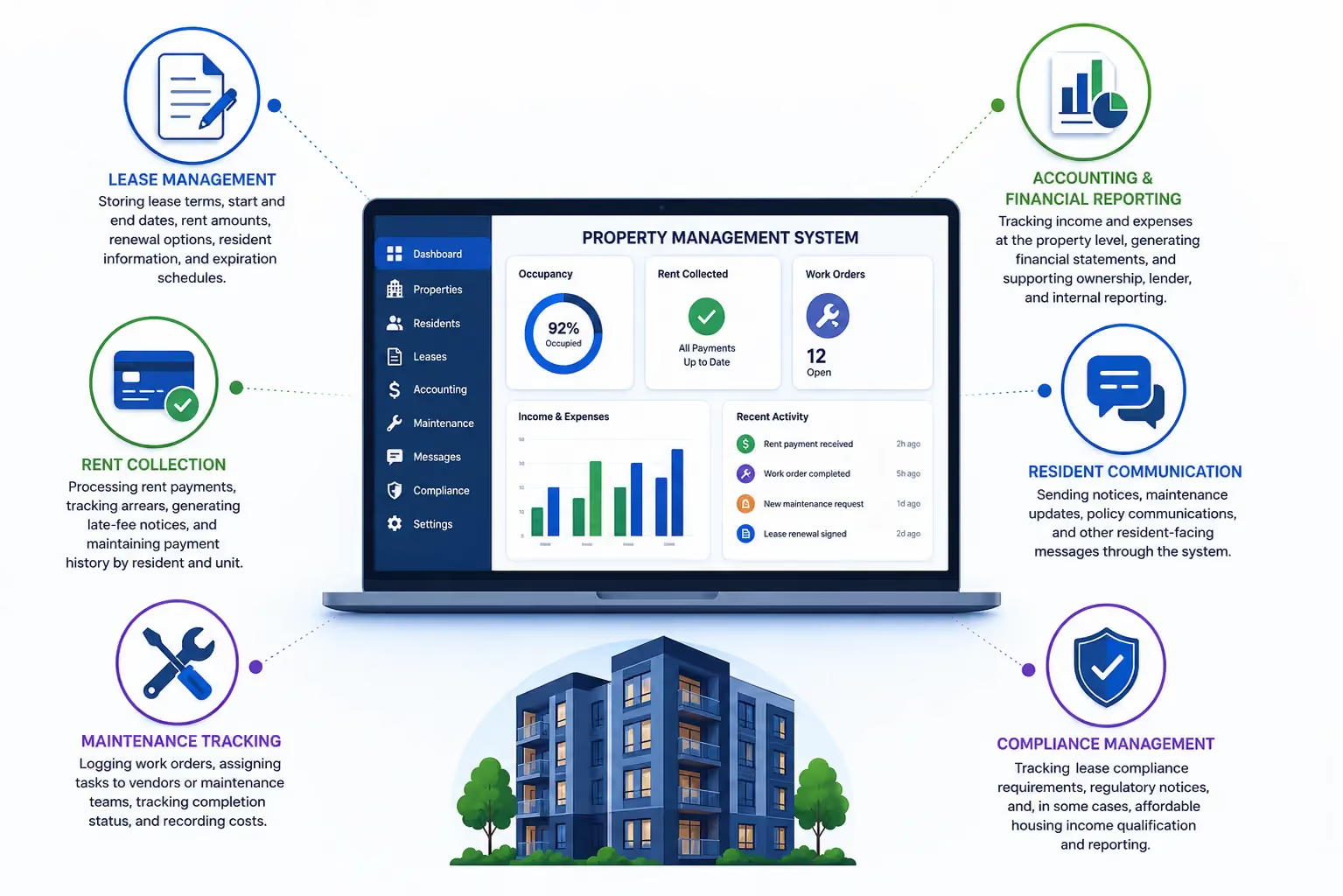
The Core Functions a PMS Handles Typically Include:
- Lease management: Storing lease terms, start and end dates, rent amounts, renewal options, resident information, and expiration schedules.
- Rent collection: Processing rent payments, tracking arrears, generating late-fee notices, and maintaining payment history by resident and unit.
- Maintenance tracking: Logging work orders, assigning tasks to vendors or maintenance teams, tracking completion status, and recording costs.
- Accounting and financial reporting: Tracking income and expenses at the property level, generating financial statements, and supporting ownership, lender, and internal reporting.
- Resident communication: Sending notices, maintenance updates, policy communications, and other resident-facing messages through the system.
- Compliance management: Tracking lease compliance requirements, regulatory notices, and, in some cases, affordable housing income qualification and reporting.
The PMS is not just another tool in the multifamily technology stack. It is the operational foundation that many other systems connect to. The data that supports leasing analytics, pricing decisions, financial reporting, and investor communication often originates in the PMS.
That is why data hygiene and consistent data-entry practices matter. If unit statuses, lease dates, rent amounts, resident records, or compliance fields are inconsistent in the PMS, every downstream report or connected platform may inherit those problems.
What a PMS Does Well– and Where Other Tools Fill the Gap
A PMS is strongest at recording, organizing, and reporting the operational activity that has already happened. It captures lease activity, rent payments, maintenance work, resident records, financial performance, and compliance information with the consistency operators need to run the property.
Where many PMS platforms are more limited is in connecting those records into forward-looking operating context. A PMS may show current occupancy, lease expirations, rent charges, and resident status, but operators often need connected tools to evaluate where performance may be heading, which assets may need attention, and how leasing, pricing, renewals, and availability are interacting.
1. Forward-Looking Analytics
PMS reports are often strongest at showing where the asset stands today or what happened during a prior reporting period. Occupancy reports show current or historical occupancy. Financial summaries show what happened last month. Expiration schedules show upcoming lease ends.
Those outputs are essential, but they do not always connect expirations to leasing velocity, renewal conversion, seasonality, and future availability in a way that helps teams evaluate where pressure may be building.
Rentana integrates with existing PMS systems to use leasing, occupancy, and performance data as the foundation for forward-looking visibility. Predicted Occupancy shows what is anticipated under current conditions by connecting current leasing activity, renewal trends, and future availability.
2. Pricing Context
Most PMS platforms store rents and track leasing outcomes. They are not typically designed to generate pricing recommendations or explain which operating signals may be contributing to a recommended pricing change.
That analysis often happens in a revenue intelligence or pricing platform connected to PMS data. Rentana generates pricing recommendations at the bedroom-type or custom unit-group level, with transparent reasoning so teams can evaluate the conditions being considered before deciding whether to approve, modify, or decline the recommendation.
When approved pricing changes are sent back to the PMS, the integration reduces the manual work and version-control risk that can occur when pricing decisions have to be entered separately across systems.
Read Also:
- 7 Best Asset Management Reporting Software for Multifamily
- Multifamily Performance Reporting: 9 Key Metrics That Matter
3. Portfolio-Level Prioritization
A PMS is usually organized around individual properties. That structure works well for property operations, but portfolio teams often need to compare multiple assets at once.
They may need to understand which properties are showing softening leasing velocity, where renewal conversion is changing, where exposure concentration is building, or which assets are moving away from their configured goals.
Rentana’s portfolio dashboards bring PMS-connected data into a shared portfolio view so teams can identify where conditions may warrant closer attention without manually reviewing each property in isolation.
4. Leasing Funnel Visibility
PMS platforms typically capture lease outcomes, but the full prospect journey often sits across CRM, leasing, and marketing systems. Inquiry volume, tour conversion, application conversion, approval rate, lease signing, and move-in conversion may not all live cleanly inside the PMS.
Connecting leasing funnel data to occupancy, availability, and pricing context gives teams a clearer view of where leasing performance may be slowing. Rentana’s leasing velocity and funnel conversion signals help teams distinguish a volume problem from a conversion problem and evaluate whether the issue is concentrated at a specific stage of the prospect journey.
The PMS remains the operational foundation. Connected platforms extend its value by turning the records it holds into context teams can use for pricing, leasing, renewal, exposure, and portfolio decisions.
What This Means for Technology Decisions
The PMS is the foundation, not the ceiling. Operators who expect their PMS to deliver forward-looking analytics, portfolio prioritization, pricing recommendations, and full leasing-funnel visibility are often expecting it to do work it was not primarily designed to do.
The more productive framing is to treat the PMS as the system of record and connect purpose-built tools around it that turn PMS data into operational visibility and decision support.
Rentana is built around that model. It pulls from the PMS rather than replacing it, extending the value of PMS data into a forward-looking context that helps teams evaluate pricing, leasing, renewal, exposure, and portfolio performance.
Related:
- Best Unit-Level Pricing Strategy in Multifamily
- The Best Lease Renewal Software for Multifamily Real Estate
How to Evaluate a Property Management System
Choosing or assessing a PMS is not only a features decision. It is an infrastructure decision that affects the reliability of the operational, financial, and analytical systems built around it.
The right PMS should fit the portfolio’s current operating needs while supporting the systems and workflows the organization expects to use as it grows.
1. Data Integrity and Consistency
The most important thing a PMS does is store accurate, consistent data. Teams should evaluate how the system handles unit status, lease dates, rent amounts, resident records, property attributes, and reporting definitions across the portfolio.
A PMS that allows inconsistent unit tagging, occupancy calculations, lease recording, or rent roll updates can create unreliable outputs in every connected system that depends on that data.
2. Integration Capability
A PMS that cannot connect cleanly to other platforms can create data silos and manual reconciliation work.
Operators should evaluate what integrations are available, how data moves between systems, how often syncs occur, and what happens when there is a discrepancy between the PMS and a connected platform.
The more reliable the integration layer, the more value teams can get from the data the PMS already holds.
3. Reporting Flexibility
Standard PMS reports usually cover the core operational and financial basics. Teams should also evaluate whether the PMS supports the reporting structure the organization actually uses.
That includes custom reporting configurations, scheduled reports, ownership and lender reporting needs, and whether the output is clean enough to use without significant manual reformatting.
4. Scalability Across Asset Types
A PMS should support the asset types and strategies in the current portfolio as well as those the organization may add later.
A portfolio with lease-ups, value-add renovations, affordable or income-restricted units, mixed-income communities, or multiple ownership structures may need more configuration flexibility than a portfolio made up entirely of stabilized market-rate assets.
5. Support and Implementation
A PMS requires ongoing configuration, staff training, and support. Teams should evaluate the vendor’s implementation process, support responsiveness, training resources, and how easily new team members can learn the system.
The operational cost of a PMS that is difficult to implement, poorly supported, or inconsistently adopted can compound across every property and team that depends on it.
Don’t Miss:
- How to Manage a Multifamily Portfolio Smarter
- Rent Reporting in Multifamily Real Estate: A Guide
Conclusion on Property Management System
A property management system is the operational foundation of a multifamily portfolio. It centralizes the lease, resident, rent, maintenance, accounting, compliance, and reporting data that teams rely on every day.
The value of a PMS depends not only on the platform itself, but on the quality and consistency of the data entered into it. Every connected report, analytics tool, pricing recommendation, and portfolio view is only as reliable as the information flowing from the system of record.
Understanding what a PMS does well and where its role ends helps operators build a stronger technology stack around it. The PMS holds the data. Connected tools determine how that data is transformed into forward-looking context, portfolio visibility, and decision support.
The strongest operations treat the PMS as both a core operating system and a data foundation. When it is configured well, maintained consistently, and connected to the right supporting platforms, it becomes the starting point for clearer reporting, more reliable analytics, and better-informed multifamily decisions.