
Value-add multifamily investing has a clear appeal. Find an asset that is underperforming relative to its potential, acquire it at a price that reflects current operations rather than future potential, execute a renovation program, and capture the spread between what residents were paying and what they will pay for an improved product. The thesis is straightforward. The execution is where most of the complexity lives.
The acquisition establishes the opportunity. Everything after it determines whether that opportunity becomes an actual return. Renovation timing, pricing alignment, leasing performance, renewal strategy, and exposure management all influence whether the projections in the underwriting model translate into the NOI growth that justifies the business plan.
Many value-add strategies succeed on paper and underperform operationally, not because the asset was wrong but because the execution during the hold period did not deliver what the model assumed.
According to Newmark's Q1 2025 U.S. Multifamily Capital Markets Report, investment sales volume reached $30 billion in Q1 2025, a 35.5% year-over-year increase, with multifamily continuing to attract significant capital as fundamentals improve and supply growth slows.
In a market where capital is actively flowing back into multifamily acquisitions, the operators who execute value-add business plans most effectively are the ones who will generate the returns that attract the next round of investment.
This article covers what value-add multifamily investing actually is, the four areas that most directly determine whether a value-add strategy succeeds during execution, how to measure whether the thesis is being realized, and where the right tools support better execution across the hold period.
Related:
- NOI in Multifamily: Complete Guide
- How to Improve NOI for Multifamily
What Is Value-Add Multifamily Investing?
Value-add multifamily investing is a strategy that targets residential apartment assets trading below their income potential due to deferred maintenance, below-market rents, operational inefficiency, or outdated unit finishes. The investor acquires the asset at a price that reflects its current underperformance, executes a defined improvement program, and seeks to capture the resulting increase in NOI through higher rents, improved occupancy, or both.
How it differs from other strategies: Value-add sits between core and opportunistic investing on the risk-return spectrum. Core investments target stabilized, fully leased assets in primary markets with predictable cash flows and lower return expectations. Opportunistic investments take on significantly more risk, often involving ground-up development, major repositioning, or distressed assets requiring substantial capital. Value-add occupies the middle ground, taking on execution risk in exchange for return potential that exceeds what stabilized assets can deliver.
Typical Characteristics of a Value-add Asset
- Units with dated finishes, older appliances, or layouts that have not been updated in a decade or more
- Rents sitting below comparable renovated units in the same submarket
- Occupancy that is stable but not optimized, reflecting below-market pricing rather than genuine demand strength
- A clear renovation thesis with a defined premium that market research suggests residents will pay for an improved product
- Operational inefficiencies that a more sophisticated management approach can address
A Brief Overview of Multifamily Value-add Acquisition and Business Planning
The value-add acquisition process centers on identifying the gap between in-place NOI and stabilized NOI at a target rent level. The underwriting model projects renovation costs, premium capture, leasing velocity at the improved price point, and the resulting NOI growth over the hold period. The spread between acquisition price and projected exit value, once the business plan is executed, is where the return lives.
Example: A 150-unit asset is acquired with a plan to renovate 120 units at a cost of $20,000 per unit. The underwriting projects a $200 monthly premium on renovated homes, improved occupancy, and NOI growth sufficient to justify both the renovation investment and the projected exit value. The opportunity appears attractive on paper. The challenge is delivering those assumptions in practice. If premium capture falls short, leasing velocity slows, or turnover costs rise, the projected return can deteriorate quickly despite a well-underwritten acquisition.
That is the thesis. Whether it becomes the result depends entirely on what happens during execution.
Read Also:
- How to Calculate NOI in Real Estate: Complete Guide
- 9 Tenant Retention Strategies that Improve Multifamily NOI
The Four Areas That Determine Value-Add Success in Multifamily

The business plan establishes what the value-add strategy is supposed to produce. The four areas below are where execution either delivers on that plan or falls short of it.
1. Renovation Timing and Occupancy Management
Renovation execution requires taking units offline, which creates temporary availability that has to be managed carefully against leasing demand and expiration timing. Done well, renovated units come back to market at the right seasonal moment, absorb quickly at the target premium, and the temporary availability is absorbed without creating broader occupancy pressure.
Done poorly, the renovation schedule and the expiration calendar collide in a way that forces the operator to choose between absorbing vacancy loss or reducing rents to move units, either of which erodes the renovation ROI.
Seasonality matters as much as the renovation schedule itself. A unit coming available for re-lease in February in a market with soft winter demand has a very different absorption profile than the same unit coming available in May. Planning renovation schedules around seasonal demand patterns rather than construction convenience is one of the most consistent differentiators between value-add executions that hit their projections and those that do not.
Example: A property planned to execute renovations so that units would come online at the start of summer, a seasonally appropriate time for higher demand. However, the team did not review their expiration distribution, which was already above threshold.
An overly aggressive renewal strategy created an occupancy drop at the same time the renovation units were coming online. The operator was forced to choose between accepting vacancy loss or offering concessions that directly eroded the renovation ROI in the first year of execution.
Rentana's exposure forecasting surfaces expiration concentration before it creates that kind of pressure. Property-level configuration allows value-add assets to be set up with the specific occupancy targets and leasing velocity expectations that reflect their renovation phase rather than a stabilized asset framework that does not fit.
2. Pricing and Premium Capture
The renovation premium is the financial engine of the value-add thesis. If renovated units do not achieve the projected premium, or if they achieve it but absorb more slowly than the model assumed, the NOI improvement that drives exit valuation falls short.
Underwriting assumptions about premium capture need to be validated against actual leasing performance continuously during execution, not just at the end of the first renovation phase.
Many value-add business plans assume a renovation premium is uniform across the asset. In practice, resident preferences, affordability thresholds, and competitive positioning often vary by unit type, making premium acceptance uneven across the property.
A $150 premium on one-bedrooms may be absorbing exactly as projected while two-bedroom premiums are underperforming because the demographic that leases larger units in that submarket is more price sensitive. Property-level averages can obscure that distinction until enough time has passed that the gap becomes difficult to close.
Example: A value-add operator successfully achieved the projected rent premium on renovated units, but leasing velocity was materially slower than underwriting had assumed. While the premium appeared successful when viewed through achieved rents alone, the additional days vacant between residents increased vacancy loss and reduced the NOI benefit of the renovation program. Evaluating both premium capture and leasing performance together revealed that the original pricing assumptions required adjustment to support the business plan.
Rentana's pricing recommendations are generated at the bedroom or custom unit-group level and align with the asset strategy configured by the operator, including occupancy goals and target timeframes. This allows teams to evaluate premium capture and leasing performance at a more granular level throughout execution rather than relying solely on property-level averages.
Top Picks:
- How To Calculate the Value of a Multifamily Property Easily
- What is a Good Cap Rate for Multifamily Properties?
3. Leasing Performance and Market Acceptance
Leasing velocity on renovated units is one of the clearest early signals of whether the value-add thesis is being validated by the market. Units that are absorbing quickly at or above the target premium are confirming that the product, price, and positioning are aligned with what residents in that submarket are willing to pay. Units that are sitting longer than projected at the target premium are telling a different story, one that is worth investigating before the pattern compounds.
Slower absorption may indicate a pricing issue, a product positioning challenge, or a market condition that was not fully reflected in the underwriting assumptions. Identifying which of those is driving the slowdown early in the execution process allows the operator to adjust before the deviation from the business plan has compounded into a material variance.
Example: A value-add operator completed renovations on a group of units and generated strong prospect interest, but leasing velocity for the fully renovated units remained below expectations. The property offered classic units, partially upgraded units, and fully renovated units.
Analysis showed that many renters viewed the partially upgraded units as the better value, while only a smaller segment was willing to pay for the fully renovated product. As a result, demand for the renovated units lagged the business plan. Identifying this dynamic early allowed the operator to adjust pricing, positioning, and unit mix strategy before it materially affected asset performance.
4. Renewal Strategy and Retention
Capturing value does not end when the initial lease is signed. Renewal performance on renovated units determines whether the premium achieved at lease-up translates into durable NOI growth or a one-time gain that erodes as residents turn over.
The resident profile attracted by a renovated product is not always the same profile that renews at a similar rate as the pre-renovation resident base, and value-add business plans that do not account for this distinction can find themselves with strong initial lease-up numbers and unexpectedly high turnover in year two.
Retention and premium capture need to remain balanced throughout the hold period. A renovated unit that achieves a strong initial rent but generates above-average turnover may produce worse long-term NOI performance than a more moderately renovated unit with stronger retention, once turnover costs, vacancy loss, and re-leasing time are factored in.
Example: A value-add operator initially planned to renovate every unit turn as leases expired. After reviewing rent roll performance, the team found that a subset of unit types are already paying rents near the projected post-renovation levels despite living in unrenovated units. Renovating those units would require significant capital investment while generating little incremental rent growth.
The operator adjusted the renovation strategy, prioritizing units with the largest gap between in-place rents and projected renovated rents while deferring renovations on units already performing near target levels. The result was stronger renovation ROI, lower capital spend, and a more efficient path to the NOI growth assumed in the business plan.
Rentana's renewal conversion tracking helps operators monitor retention performance alongside future availability conditions, providing additional context around future occupancy and revenue outcomes.
The Year-Two Occupancy Cliff
This deserves its own mention because it is one of the most consistently underestimated risks in value-add execution. Strong lease-up activity in year one, driven by renovation completion and new resident interest, can create a concentration of lease expirations in year two that catches operators off guard.
The pattern is predictable. A property executes renovations efficiently, fills units quickly, and enters year two with healthy occupancy. Then a large portion of those year-one leases begin expiring simultaneously. If the leasing pipeline is not strong enough to absorb that volume, if renewal conversion is softer than expected, or if the seasonal timing of the expirations aligns with a slow leasing period, the property faces unexpected occupancy pressure, concession spend, and revenue volatility that was entirely avoidable with earlier expiration management.
Managing expiration distribution from the beginning of the business plan, rather than after the year-two cliff has already arrived, is what separates value-add executions that sustain their year-one performance from those that give back gains in year two.
Rentana's exposure forecasting and lease term pricing capabilities support this from the start of execution, distributing future expirations thoughtfully and surfacing concentration risk before it creates the leasing pressure that erodes renovation ROI.
Read Also:
How to Measure Whether the Value-Add Strategy Is Working
The business plan projects what the value-add strategy is supposed to produce. The operational signals below are what tell operators whether execution is tracking toward those projections or drifting away from them during the hold period.
1. Leasing Velocity on Renovated Units
How quickly renovated units are absorbing is the earliest and clearest signal of market acceptance. If renovated units are leasing faster than pre-renovation units were at the old price point, the market is responding. If they are sitting longer than projected at the target premium, that is a signal worth investigating before the pattern compounds across the renovation schedule.
2. Premium Acceptance by Unit Type
Portfolio-level premium capture can look healthy while specific unit types are underperforming. Tracking premium acceptance at the bedroom or unit-group level throughout execution is what surfaces the distinctions that asset-level averages often obscure. Different unit types, renovation packages, and resident segments may respond differently to pricing, making granular visibility critical to understanding whether the business plan is performing as expected.
3. Renewal Performance on Renovated Units
Are residents who leased renovated units at the target premium renewing at a rate that supports the long-term revenue assumptions in the business plan? A renewal conversion rate that is running below expectations on renovated units is a signal that the resident profile attracted by the renovation may not be as sticky as the model assumed, and that the turnover cost implications need to be factored into the forward NOI projection.
4. Occupancy Trends and Exposure Concentration
Is occupancy holding within the target range as renovation units return to market? Is expiration concentration building in a way that sets up a year-two occupancy cliff? These are the forward-looking occupancy signals that tell operators whether the renovation schedule and leasing activity are working together or against each other.
5. Revenue Growth Against Underwriting Projections
Ultimately, the business plan is measured by whether operational performance is producing the NOI growth assumed during underwriting. Leasing velocity, premium acceptance, retention, occupancy, and exposure management all influence that outcome. Reviewing performance against underwriting assumptions throughout execution allows operators to identify gaps early and adjust renovation scope, pricing strategy, leasing approach, or retention efforts while there is still time to influence results.
How Rentana Supports Value-Add Execution in Multifamily
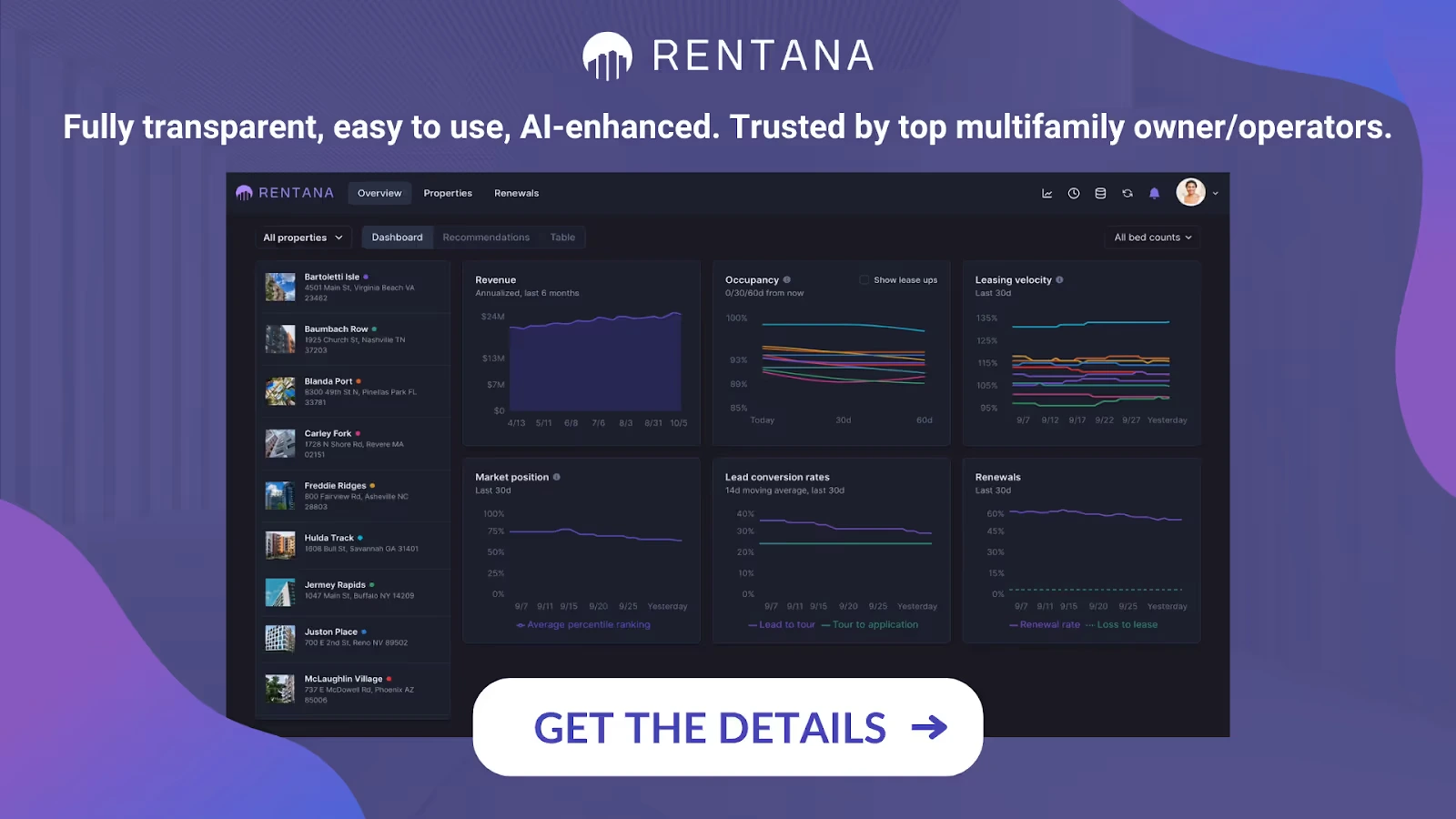
Rentana is not an acquisition platform. It is the operational layer that helps value-add operators execute and monitor their business plan after acquisition, helping teams evaluate whether performance is tracking toward expectations throughout the hold period rather than discovering deviations after they have compounded. Value-add success depends on translating underwriting assumptions into operational results, and that requires visibility into leasing performance, premium acceptance, renewal trends, occupancy conditions, and future availability as execution unfolds.
- Property-level strategy configuration allows each value-add asset to be set up with occupancy targets and pricing guardrails that reflect its renovation phase and business plan
- Pricing recommendations by bedroom or custom unit group are generated at the bedroom or custom unit-group level and align with the asset strategy configured by the operator, including occupancy goals and target timeframes. This allows teams to evaluate premium capture and leasing performance at a more granular level throughout execution rather than relying solely on property-level averages.
- Leasing velocity tracking surfaces where renovated units are absorbing ahead of or behind projected pace, giving operators the early signal to investigate before a leasing gap has compounded into a material variance
- Amenity performance analysis helps operators evaluate how specific upgrades are performing relative to leasing activity and achieved rents, providing additional visibility into which investments may be contributing to premium acceptance.
- Renewal conversion visibility helps operators monitor retention performance alongside future availability conditions, providing additional context around future occupancy and revenue outcomes.
- Exposure forecasting surfaces expiration concentration before it creates the year-two occupancy cliff that catches so many value-add executions off guard, incorporating notices to vacate, month-to-month behavior, and early terminations into a forward availability picture that reflects what is actually coming to market
- Predicted occupancy connects current leasing activity, renewal trends, and future availability to provide forward visibility into where occupancy is heading, helping teams evaluate future conditions alongside current performance throughout the execution of the business plan.
The most successful value-add operators treat execution as carefully as underwriting because that is where value is ultimately created. Rentana is built to support that execution discipline continuously across the hold period.
Don’t Miss:
Conclusion on Value-add Multifamily Investing
Value-add multifamily investing is widely discussed as an acquisition strategy. The returns are determined during execution.
Renovation timing, premium capture, leasing performance, renewal retention, and exposure management all influence whether the projections in the underwriting model translate into actual NOI growth. Many value-add business plans that look strong on paper underperform operationally because execution during the hold period did not deliver what the model assumed.
The operators who close that gap consistently are the ones who monitor execution signals continuously, adjust when the market is telling them something different from what the business plan projected, and manage expiration concentration from the beginning rather than responding to the year-two cliff after it has already arrived.
The acquisition establishes the opportunity. Execution determines the outcome.