
Multifamily management has never been simple. But the combination of conditions converging in 2026 is making it more operationally demanding than it has been in recent memory. Rising expenses, tighter margins, more diverse portfolio strategies, elevated resident expectations, and a competitive leasing environment where concessions remain elevated are all hitting at the same time.
According to Multifamily Executive, 19% of renters identified seeking a better property manager as a reason for moving, reflecting the growing importance of management quality, communication, and consistency in the resident experience, particularly among younger renters with higher expectations for timely and transparent communication. These expectations raise the stakes for every challenge covered in this article
The challenges below are not new. Most operators have encountered all of them in some form. What has changed is how much each one costs when it goes unaddressed, and how much visibility, coordination, and forward-looking operational discipline are required to manage them consistently well in the current environment.
Related:
- Real-Time Data Insights for Multifamily Pricing
- PMS Integration for Multifamily: What is it & How it Works?
Top 7 Multifamily Challenges and How to Solve Them
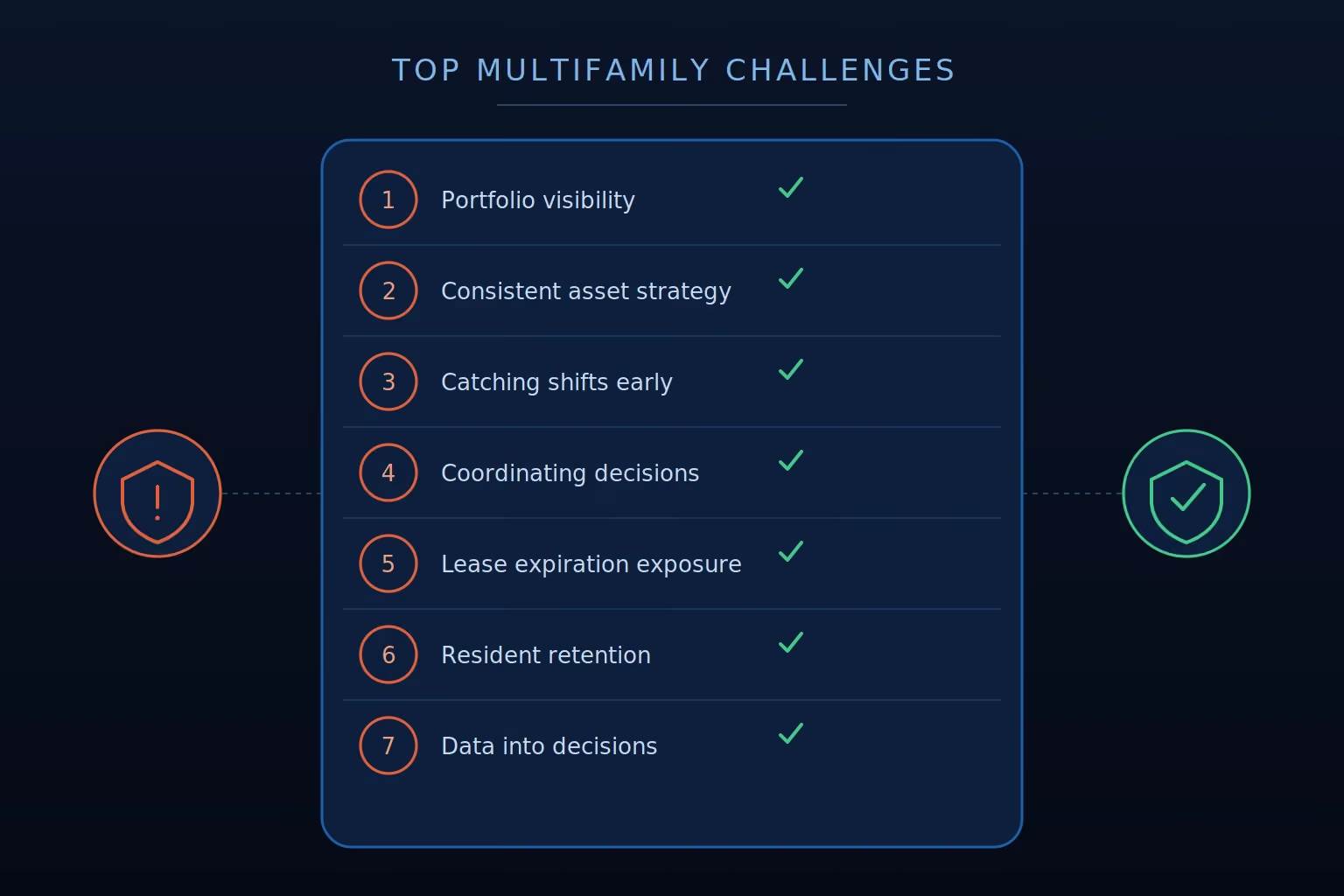
- Maintaining Visibility Across a Growing Portfolio
- Managing Diverse Asset Strategies Without Inconsistency
- Staying Ahead of Performance Shifts Before They Reach Financial Reporting
- Coordinating Decisions Across Leasing, Pricing, and Renewals
- Managing Lease Expiration Exposure Proactively
- Retaining Residents in a Competitive Environment
- Turning Data Into Decisions Rather Than More Reports
1. Maintaining Visibility Across a Growing Portfolio
The multifamily Challenge: As portfolios grow, maintaining a clear, current picture of how every asset is performing simultaneously becomes harder to sustain. Sequential property-level reviews take time, data lives in multiple systems, and by the time the full portfolio picture is assembled, conditions at the first asset reviewed may have already changed. Without a connected portfolio view, attention tends to go toward the most visible or immediate issue rather than where the need is actually greatest.
The Solution: Build portfolio management around a single shared view that surfaces performance across every property simultaneously rather than requiring sequential review. Prioritization based on where multiple conditions are shifting simultaneously is what allows a team managing fifteen assets to direct time and attention effectively rather than spreading it equally across properties that do not all need the same level of focus at the same time.
How Rentana Helps: Rentana's portfolio dashboards provide a color-coded view of performance across the full portfolio, helping operators identify which assets are performing as expected and which may warrant closer review. Teams can move from portfolio-level trends into property-level and unit-group detail within the same platform, making it easier to understand where conditions are changing and focus attention accordingly.
2. Managing Diverse Asset Strategies Without Inconsistency
The multifamily Challenge: A portfolio with lease-up assets, stabilized assets, and value-add properties mid-renovation requires fundamentally different management approaches for each. Applying the same occupancy targets, pricing frameworks, and renewal strategies across assets with different objectives produces decisions that serve none of them well.
The Solution: Standardize the workflow structure while configuring the parameters within which each workflow operates at the property level. Consistency in process combined with flexibility in parameters is what allows the same operational discipline to apply across the portfolio without forcing every asset to operate under the same targets and guardrails regardless of what it is trying to achieve.
How Rentana Helps: Rentana's property-level configuration allows occupancy targets, pricing guardrails, and leasing velocity expectations to be set at the asset level. A lease-up asset is evaluated within parameters appropriate for a property building its initial rent roll. A stabilized asset operates within parameters designed to maintain occupancy within a defined range and protect effective rent. Each asset gets the configuration its strategy requires rather than a uniform framework that does not fit any of them precisely.
3. Staying Ahead of Performance Shifts Before They Reach Financial Reporting
The multifamily Challenge: By the time a performance shift shows up in a monthly financial report, the conditions driving it may have been developing for weeks. Managing from lagging financial data means the team is often responding after the decision window has already narrowed significantly.
The Solution: Shift performance monitoring from lagging financial metrics to the leading operational signals that consistently precede them. Leasing velocity trends, renewal conversion rates, forward availability conditions, and expiration concentration are all visible in operational data before they move occupancy and revenue. Monitoring these signals regularly is what creates the response window that proactive management requires.
How Rentana Helps: Rentana's predicted occupancy connects current leasing activity, renewal trends, and future availability to provide forward visibility into where occupancy is heading under current conditions. AI-generated property insights help teams understand what is changing at a specific asset and why it may matter operationally, giving earlier context for evaluating whether changes may be needed to support the asset's objectives.
4. Coordinating Decisions Across Leasing, Pricing, and Renewals
The multifamily Challenge: Leasing, pricing, and renewals are connected decisions that are frequently managed as separate functions with separate data on separate timelines. Each decision managed in isolation creates misalignment with the decisions adjacent to it, and those misalignments can contribute to performance gaps that are difficult to diagnose after the fact.
The Solution: Evaluate leasing, pricing, and renewal decisions from the same operational signals at the same time. When the team reviewing pricing can see leasing velocity trends and forward availability alongside the recommendation, and when the team managing renewals can see how forward exposure is building in specific unit types, the decisions that follow are more coherent and easier to coordinate.
How Rentana Helps: Rentana connects leasing velocity signals, renewal conversion trends, exposure forecasting, and asset strategy configuration within a shared operational view. Teams can evaluate pricing, leasing, and renewal conditions together rather than through disconnected workflows, and shared visibility helps leasing, revenue management, and asset management work from the same performance context rather than reconciling separate reports before any evaluation can begin.
Top Picks:
5. Managing Lease Expiration Exposure Proactively
The multifamily Challenge: Lease expiration concentration is one of the most predictable risks in multifamily and one of the most consistently undermanaged. The data to see it coming is available in every PMS. What most teams lack is the process to surface it consistently, connect it to a complete forward availability picture, and act on it early enough for the response to be strategic rather than reactive.
The Solution: Build expiration management as a forward discipline rather than a reactive one. Track not just scheduled expirations but the broader forward availability picture, including notices already received, month-to-month lease behavior, and early termination patterns, so the team has a clearer understanding of what is likely coming to market rather than only what is formally scheduled.
How Rentana Helps: Rentana's exposure forecasting shows scheduled lease expirations against configured exposure targets, helping teams identify where concentration may be building by property, unit group, and time period. When predicted availability is enabled, the forward view also incorporates notices to vacate, month-to-month behavior based on historical patterns, and anticipated unplanned availability from early terminations, giving teams additional context for evaluating whether current renewal, leasing, pricing, and leasing strategies remain appropriate given the forward availability picture.
6. Retaining Residents in a Competitive Environment
The multifamily Challenge: Resident retention has always mattered in multifamily. What has changed is how much the competitive environment has raised the cost of losing a resident who could have been retained. Elevated concessions at competing properties give residents more options, and a renewal offer that does not reflect current market positioning gives them a financial reason to act on those options.
The Solution: Treat renewal strategy as an asset management decision rather than a leasing task. Evaluate renewal offers with visibility into where each unit sits relative to current market positioning, what the forward exposure picture looks like in that unit type, and what the full cost of losing that resident would be compared to the cost of a retention-focused offer. Early outreach, while the resident is still evaluating options, gives the team the most opportunity to understand concerns and respond effectively.
How Rentana Helps: Rentana's renewal conversion tracking provides visibility into how conversion trends are moving across unit types and properties, helping teams identify where retention may be softening based on current resident decisions. Renewal batch management and configurable renewal recommendations allow teams to evaluate offers alongside current leasing conditions, market positioning, forward availability, and exposure, supporting a more informed renewal strategy without assuming every resident requires the same approach.
7. Turning Data Into Decisions Rather Than More Reports
The multifamily Challenge: Most multifamily operations are not short on data. They are short on the time and infrastructure to turn that data into decisions before the conditions it describes have already changed. Multifamily analysts spend 80% to 90% of their time collating data and only 10% to 20% actually analyzing it, because pricing, leasing, budgeting, and maintenance systems remain effectively fragmented.
The Solution: Build the data infrastructure around decisions rather than reports. The goal is a system that surfaces what is changing, provides context around why it matters, and helps teams understand where to focus attention without requiring someone to pull, reconcile, and assemble data before the evaluation can begin.
How Rentana Helps: Rentana integrates with existing property management systems and brings leasing, occupancy, pricing, renewal, and performance data into a connected operational view. AI-generated property insights help teams understand what is changing at specific assets and why it may matter operationally. The metrics browser supports more granular analysis across properties, bedroom types, and leasing funnel stages, helping teams investigate patterns without rebuilding the analysis from separate reports each time.
Conclusion on Multifamily Challenges
The multifamily challenges in this article are not unique to any one operator or portfolio size. They show up consistently across multifamily operations because they reflect structural tensions that get harder to manage as portfolios grow, market conditions tighten, and the pace of change outstrips what manual processes and disconnected workflows can reliably keep up with.
None of these challenges have a technology-only solution. They require operational discipline, clear asset strategy, and teams focused on the judgment calls that actually move performance. But the right tools make that work significantly easier by reducing manual data assembly, improving visibility across assets, and helping teams evaluate changing conditions with better context and earlier timing.