Artificial intelligence is quickly becoming part of the multifamily operating environment, but the challenge for property managers is no longer simply deciding whether to use AI. The bigger question is understanding where AI can create meaningful operational value.
Multifamily operators manage thousands of daily interactions across leasing, resident communication, maintenance, reporting, compliance, and revenue management. Many of these workflows involve repetitive tasks, large amounts of data, and decisions that require teams to identify patterns quickly and respond consistently.
According to Multifamily Dive’s coverage of AI in property management operations, operators are moving beyond experimenting with AI and focusing on practical applications that improve workflows, reporting, and decision-making. The focus is shifting from simply adding automation to understanding where AI can help teams work more effectively and deliver better outcomes.
The most valuable AI applications in property management are not designed to replace teams. They are designed to reduce repetitive work, surface important information faster, and help property teams spend more time on decisions and interactions that require human judgment.
For multifamily operators, the best AI strategy starts with identifying the operational challenges that consume the most time, create the most friction, or have the greatest impact on performance.
This article explores how property managers can use AI across key areas of multifamily operations, from leasing and resident communication to reporting, analytics, and revenue performance.
Related:
What AI Means in Property Management
AI in property management can support many different workflows, but not every AI tool solves the same problem.
Some AI platforms focus on automation:
- responding to prospect inquiries
- answering resident questions
- routing maintenance requests
- assisting with administrative tasks
Others focus on analysis and decision support:
- identifying performance trends
- summarizing operational changes
- surfacing risks
- helping teams understand where attention may be needed
The value of AI depends on the workflow it supports and the outcome it improves.
A leasing AI tool may help improve prospect response times. A resident communication tool may help teams provide more consistent service. An analytics platform may help operators understand why performance is changing across a portfolio.
The strongest AI implementations start with the operational problem first, then determine which technology best supports that need.
Top 7 Ways to Use AI in Property Management
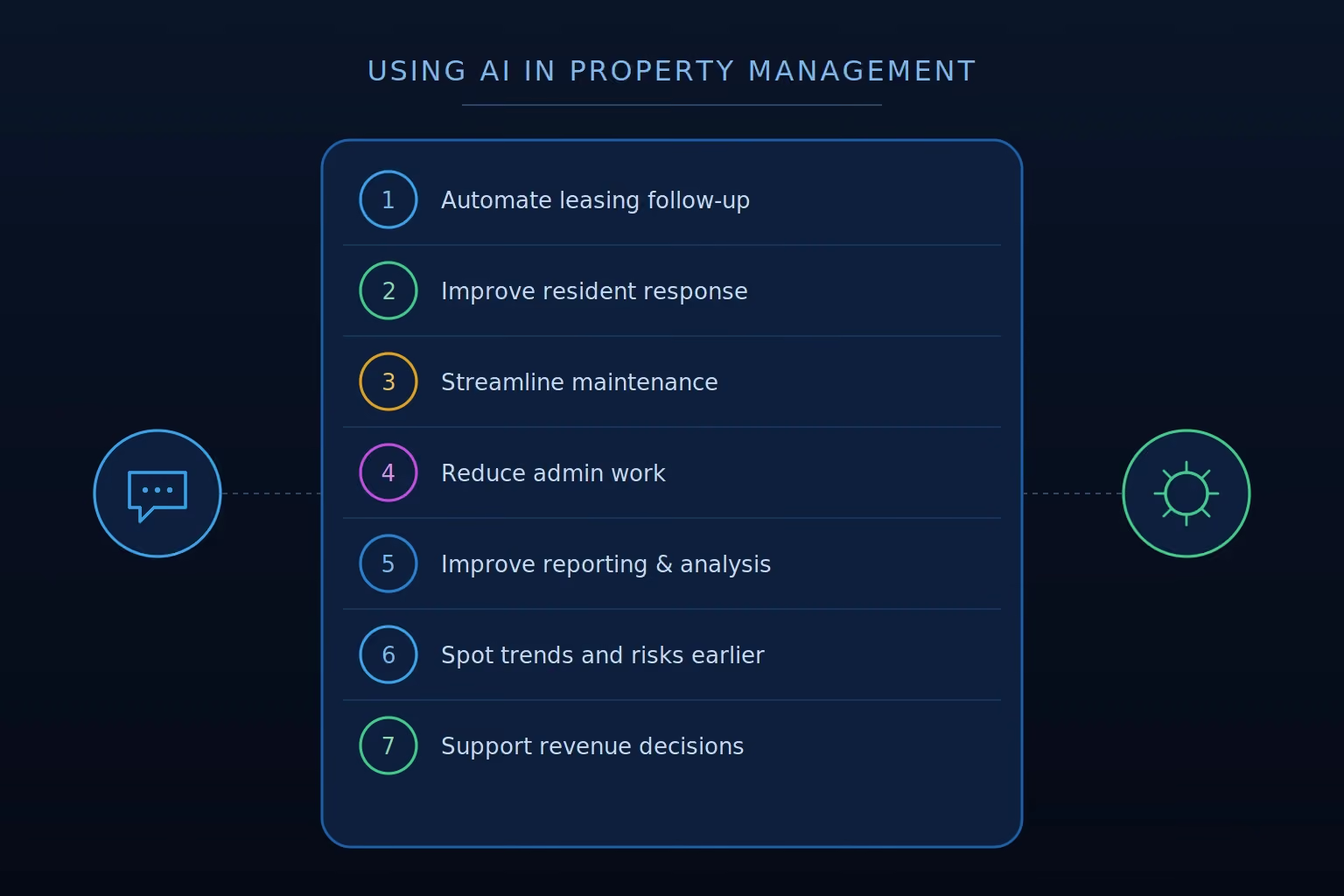
- Automate Leasing Communications and Prospect Follow-Up
- Improve Resident Communication and Service Response
- Streamline Maintenance Coordination
- Reduce Administrative Work and Improve Operational Efficiency
- Improve Reporting and Data Analysis
- Identify Performance Trends and Risks Earlier
- Support Revenue and Asset Performance Decisions
1. Automate Leasing Communications and Prospect Follow-Up
Leasing is one of the highest-volume areas of multifamily operations and one of the clearest opportunities for AI to improve efficiency.
Prospects expect fast responses, immediate access to information, and convenient ways to schedule tours or continue conversations. At the same time, leasing teams are balancing prospect communication with tours, applications, renewals, and onsite responsibilities.
AI leasing tools can help teams manage repetitive communication workflows by:
- responding to common prospect questions
- providing availability information
- assisting with tour scheduling
- supporting follow-up communication
- ensuring prospects receive timely responses outside traditional office hours
The goal is not replacing leasing teams. The strongest AI implementations allow leasing professionals to spend less time managing repetitive interactions and more time building relationships, answering complex questions, and helping prospects make decisions.
Multi-Housing News highlights how AI leasing assistants are being used in multifamily marketing to support prospect communication, answer questions, and guide prospects through early leasing steps before human team members take over when needed.
When evaluating AI leasing tools, operators should consider more than response speed. The most valuable platforms improve the entire leasing workflow, including how prospect interactions are captured, transferred, and converted into signed leases.
Read Also:
2. Improve Resident Communication and Service Response
Resident communication is one of the most visible parts of property management, and inconsistent communication can quickly impact resident satisfaction.
Residents expect timely updates, clear answers, and easy access to information. However, property teams often manage high volumes of questions related to payments, policies, maintenance, amenities, and community operations.
AI can help improve communication consistency by:
- drafting resident responses
- answering common questions
- providing updates
- organizing communication workflows
- helping teams respond faster
The objective is not to remove human interaction from the resident experience. It is to ensure routine communication is handled consistently so teams can focus on situations requiring empathy, judgment, or problem-solving.
Multi-Housing News highlights how AI and automation are being used across leasing, resident communication, maintenance, and reporting workflows to help property teams scale operations while maintaining service quality.
The best resident communication strategies combine AI efficiency with human oversight. Technology should make interactions easier and more consistent while preserving the relationships that define the resident experience.
3. Streamline Maintenance Coordination
Maintenance operations involve thousands of daily interactions across a multifamily portfolio — from receiving service requests and prioritizing urgency to coordinating updates, scheduling work, and communicating progress with residents.
AI can support maintenance workflows by helping teams organize information, improve consistency, and reduce administrative effort.
Common applications include:
- Categorizing and prioritizing incoming requests
- Summarizing service details for teams
- Routing information to the appropriate team members
- Identifying recurring maintenance patterns
- Improving communication throughout the service process
The goal of AI in maintenance is not to replace maintenance professionals. It is to reduce repetitive administrative work so teams can focus more time on resolving issues, delivering quality service, and addressing the situations that require expertise and judgment.
For operators, the value of AI maintenance tools comes from improving workflow visibility and response consistency. When teams have better information at the right time, they can make faster decisions, communicate more effectively with residents, and manage service operations more efficiently.
When evaluating AI maintenance solutions, operators should consider:
- Does the platform improve response and resolution workflows?
- Does it integrate with existing property management systems?
- Does it help teams prioritize work more effectively?
- Does it provide visibility into recurring operational issues?
The strongest AI implementations enhance existing teams by helping them work more efficiently while preserving the human expertise required to maintain communities effectively.
Related:
- AI Adoption in Real Estate: 15 Interesting Facts
- Best AI Tools for Multifamily Property Management
4. Reduce Administrative Work and Improve Operational Efficiency
Property management teams manage hundreds of recurring tasks every day: processing requests, preparing communications, reviewing information, coordinating follow-up, and maintaining operational documentation.
Many of these workflows are necessary, but they also consume significant team capacity that could otherwise be spent on resident relationships, property performance, and strategic decision-making.
AI can help reduce administrative burden by supporting tasks such as:
- drafting routine communications
- summarizing information
- organizing workflow tasks
- identifying missing information
- preparing documentation for review
The goal is not to automate every operational process. The goal is to remove repetitive work that prevents teams from focusing on higher-value activities.
The most effective AI implementations are designed around specific workflows with clear ownership, measurable outcomes, and appropriate human oversight. Teams should evaluate whether AI reduces friction in the process without creating additional complexity or disconnected systems.
AI works best when it supports employees rather than replacing the judgment and expertise required to manage communities effectively.
5. Improve Reporting and Data Analysis
Multifamily operators have access to more data than ever, but collecting information is not the same as gaining insight.
Teams often spend significant time pulling reports, organizing information, and comparing data across systems before they can begin analyzing what it means. That creates a delay between when a performance change occurs and when the team understands what action may be needed.
AI can improve reporting and analytics workflows by helping teams:
- summarize large amounts of operational data
- identify trends and patterns
- highlight changes that may require attention
- reduce manual analysis time
- provide context around performance shifts
The value of AI-powered analytics is not simply producing another report. It is helping teams understand what the data is showing and where they should focus.
For example, a traditional report may show that occupancy declined. AI-powered analysis can help identify the factors contributing to that change, such as slowing leasing velocity, renewal trends, availability pressure, or performance differences across unit groups.
Rentana’s AI-generated Insights support this type of proactive analysis by helping teams identify what is changing at an asset, why it may matter, and where additional investigation or course correction may be needed.
6. Identify Performance Trends and Risks Earlier
Many property performance issues do not appear suddenly. They develop through smaller operational signals that may not be obvious when teams are reviewing individual reports.
A decline in occupancy may begin with:
- slower leasing velocity
- weakening conversion rates
- increased future availability
- renewal softness
- changes in demand by unit type
The challenge for operators is identifying those signals early enough to respond.
AI can help teams move from reactive reporting to proactive performance management by identifying patterns across large amounts of operational information.
Instead of waiting for an issue to appear in historical financial reporting, teams can evaluate:
- What is changing?
- Why might it be happening?
- What operational factors are contributing?
- What actions should be evaluated?
This is where AI becomes more than an efficiency tool. It becomes a decision-support layer that helps operators prioritize attention across a portfolio.
The strongest AI solutions do not make decisions for teams. They provide context that helps teams make better decisions faster.
Read Also:
- Will AI Replace Real Estate Agents?
- AI Adoption Challenges in Real Estate & How to Solve Them
7. Support Revenue and Asset Performance Decisions
One of the highest-value applications of AI in property management is helping teams connect operational activity to financial performance.
Revenue outcomes are influenced by hundreds of daily decisions:
- pricing changes
- leasing activity
- renewal strategy
- occupancy management
- concession decisions
- exposure planning
However, these decisions are often evaluated through separate workflows and disconnected reports.
AI-powered revenue intelligence helps bring these signals together so operators can better understand how operational conditions may impact performance.
For multifamily operators, this means using AI to help answer questions such as:
- Which properties or unit groups require attention?
- Is a performance change related to pricing, leasing, renewals, or availability?
- Where may revenue opportunities exist?
- Which risks should be evaluated before they impact NOI?
Rentana applies AI to revenue intelligence by connecting pricing, leasing, renewals, occupancy, exposure, and performance data into a shared operating view. AI-generated Insights help surface performance changes proactively, explain why they may matter, and highlight areas where teams may want to investigate further.
The goal is not replacing revenue management expertise. It is giving teams better visibility and context so they can spend less time searching for answers and more time acting on them.
Don’t Miss:
- AI Adoption in Multifamily: Why it's Accelerating So Fast
- AI Leasing Assistants for Multifamily Teams
How to Choose the Right AI Tools for Property Management
The best AI tool is not necessarily the one with the most advanced technology. It is the one that solves a meaningful operational problem for the organization using it.
Before selecting an AI platform, operators should identify where the greatest opportunities exist.
Ask:
What Workflow Creates the Most Friction?
AI is most valuable when applied to repetitive, high-volume processes where improvement can be measured.
Examples:
- slow prospect response times
- inconsistent resident communication
- manual reporting processes
- limited visibility into portfolio performance
Does the Platform Improve Outcomes or Simply Automate Tasks?
Automation alone does not guarantee value.
The strongest AI solutions help teams:
- save time
- improve consistency
- identify important trends
- make better decisions
Does it Integrate with Existing Systems?
AI should improve the operating environment, not create another disconnected tool.
Operators should evaluate:
- data integrations
- workflow compatibility
- reporting consistency
- user adoption requirements
Does it Maintain Appropriate Human Oversight?
AI should support decisions, not remove accountability.
The best implementations define:
- where AI assists
- where humans review
- where teams make final decisions
According to GlobeSt’s analysis of early AI adoption in property management, operators are finding the greatest success by identifying specific operational challenges where AI can create measurable improvements rather than implementing AI without a clear business purpose.
Conclusion on AI in Property Management
AI is changing property management, but the value is not simply in automating more tasks.
The strongest operators will use AI to improve how teams work, how information moves, and how decisions are made.
From leasing communication and resident service to reporting, analytics, and revenue performance, AI can help property teams reduce administrative burden while gaining better visibility into the factors that influence portfolio performance.
The goal is not a fully automated property operation. The goal is a more informed, efficient operation where teams have the time and context needed to focus on the decisions that matter most.
The best use of AI in property management is not replacing the people who operate communities. It is giving those people better tools to deliver stronger performance, better resident experiences, and more consistent results across the portfolio.