Most AI systems used in multifamily today still wait for instructions. It analyzes data, generates insights, and then stops. Humans decide what to do next.
Agentic AI changes that relationship by introducing goal-aware, continuous decision support. Instead of acting like a calculator, it behaves more like an assistant with initiative. It observes what is happening, understands goals, and helps guide actions over time rather than responding to one-off requests.
As multifamily operations become more complex and markets move faster, this shift matters. Agentic AI represents the next step in how technology supports decision-making, not by replacing people, but by helping them stay ahead. In this article, we break down what agentic AI is, how it works in multifamily, and why it is becoming increasingly important.
Related: Conversational AI in Real Estate: Top 5 Applications
What Is Agentic AI and How Is It Different From Traditional AI?
Agentic AI refers to artificial intelligence systems that are designed to act with a sense of purpose rather than simply respond to commands. In simple terms, it is AI that can observe what is happening, understand goals, and help guide actions continuously over time instead of reacting to a single input.
Traditional AI in real estate is often reactive. It runs calculations, follows predefined rules, or produces recommendations when prompted. Rules-based automation does exactly what it is told and nothing more. If conditions change, the rules have to be updated manually.
Reactive AI can analyze data and generate insights, but it still waits for humans to decide what to do next.
Agentic AI is different because it is goal-aware. It continuously monitors data, looks for patterns or changes, and helps steer decisions toward a desired outcome. Rather than asking it one question at a time, teams can rely on agentic AI to keep watch, surface issues early, and support ongoing decision-making.
This makes it especially useful in complex environments like multifamily operations, where conditions shift constantly and timing matters.
Related: AI in Revenue Management: Top 7 Use Cases
How Agentic AI Works in a Multifamily Environment

Agentic AI operates as a continuous decision-support system rather than a one-time tool. In a multifamily environment, it follows a simple but powerful cycle that helps teams stay aligned with changing conditions.
Observing Data Across the Portfolio
Agentic AI continuously monitors data from across the portfolio, including pricing, demand, leasing activity, occupancy, and market conditions. Instead of checking performance at set intervals, it keeps watch in real time, looking for meaningful changes and patterns.
This constant observation allows the system to understand how properties and units are performing as conditions evolve.
Understanding Goals and Priorities
Agentic AI works with defined goals such as maintaining occupancy, supporting revenue stability, or improving NOI. These goals guide how the system interprets data and what it pays attention to. When performance drifts away from those priorities, the AI recognizes it.
This goal awareness is what separates agentic AI from traditional analytics tools that simply report metrics without context.
Guiding Actions, Decisions and Priorities
Rather than waiting for a specific query, agentic AI helps guide actions by surfacing insights and highlighting where decisions may be needed. It can flag pricing misalignment, potential vacancy risk, or upcoming renewal pressure, helping teams know where to focus next.
The system supports decision-making by prioritizing issues and suggesting areas for attention rather than executing changes on its own.
Learning From Outcomes Over Time
Agentic AI improves as it observes what happens after decisions are made. Over time, it learns which signals mattered most and how different actions influenced outcomes. This feedback loop helps refine future insights and guidance.
In a multifamily setting, this ongoing learning makes the system more useful over time, supporting more informed decisions as conditions and strategies evolve.
Read Also: The Best 9 AI Tools for Real Estate Investors
Use Cases of Agentic AI in Multifamily & the Best Platform to Use
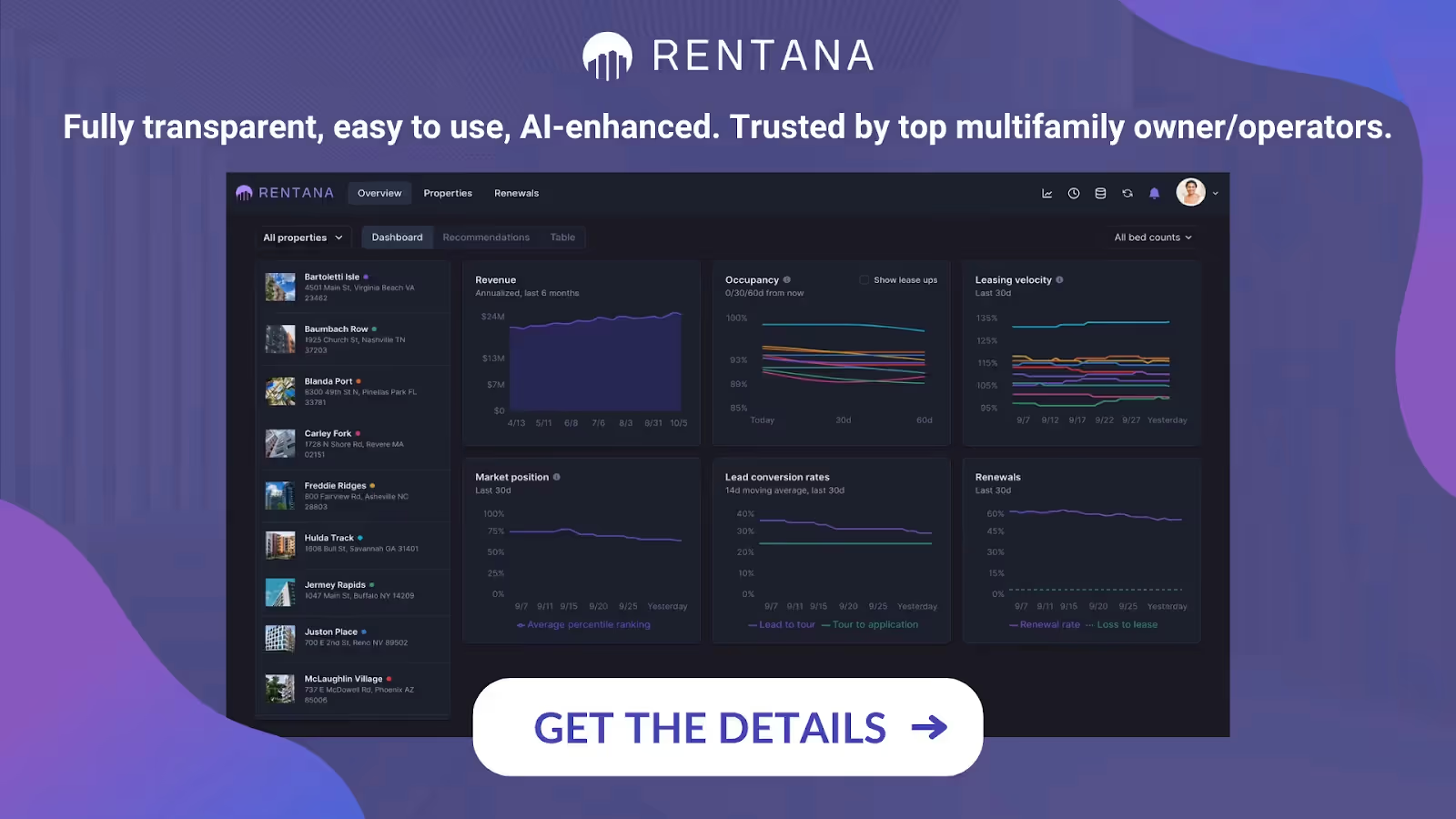
Agentic AI becomes most valuable when applied to the decisions multifamily teams manage every day. Instead of reacting to isolated metrics, it supports ongoing awareness and guidance across key workflows. Below are some of the most practical real-world use cases, including where platforms like Rentana naturally fit.
1. Pricing Adjustments That Reflect Changing Conditions
Agentic AI continuously monitors demand, leasing velocity, and market movement to understand when pricing may no longer be aligned with current conditions. Rather than relying on scheduled reviews, it helps teams recognize when pricing decisions deserve attention.
Rentana supports this by surfacing pricing insights grounded in public real-time market behavior and unit performance, allowing operators to adjust thoughtfully instead of reacting after vacancy rises.
2. Ongoing Demand Monitoring
Demand does not shift all at once. Agentic AI watches for subtle changes in renter interest, lead activity, and leasing conversions over time. This ongoing monitoring helps teams see changes in demand trends early and understand how they are evolving.
With Rentana, demand signals are connected to layout and property performance, making it easier to understand where interest is strengthening or softening across a portfolio.
3. Leasing Support and Prioritization
Agentic AI helps leasing teams focus on what matters most. By identifying which units are likely to lease quickly and which may need attention, it helps teams prioritize effort and resources.
Rentana supports leasing decisions by highlighting units under pressure and surfacing insights that help reduce days vacant without overcorrecting on pricing.
4. Portfolio Performance Monitoring
At the portfolio level, agentic AI provides continuous awareness of overall health. Instead of static snapshots, it highlights performance shifts and emerging risks across properties.
Rentana supports this with portfolio-level visibility that helps owners and asset managers see where attention is needed and act early, keeping performance aligned with goals.
Together, these use cases show how agentic AI moves beyond reporting and into active decision support. Platforms like Rentana demonstrate how this approach can fit naturally into multifamily workflows without replacing human judgment.
Related: How to Build Property Performance Dashboards for Multifamily
The Future of Agentic AI in Multifamily Decision-Making
Agentic AI is still early, but its direction is clear. The technology is moving from simply supporting analysis to actively helping teams stay ahead of change. In the future, agentic AI will not wait for reports to be pulled or questions to be asked.
It will continuously monitor performance, surface risks, and guide attention as conditions evolve.
For operators, this means spending less time chasing data and more time managing outcomes.
Day-to-day decisions around pricing, leasing, and renewals will become more informed and less reactive. For asset managers, agentic AI will provide clearer portfolio-wide awareness, making it easier to spot patterns, compare assets, and intervene early. For owners, it will bring greater confidence that performance is being managed proactively rather than reviewed after the fact.
Most importantly, agentic AI will not replace human judgment. It will strengthen it.
By handling continuous monitoring and surfacing what matters most, agentic AI allows people to focus on strategy, experience, and leadership. As platforms like Rentana continue to evolve in this direction, multifamily decision-making will shift from reactive problem-solving to deliberate, forward-looking management at scale.
Frequently Asked Questions on Agentic AI
What Is Multi-Agent Agentic AI?
Multi-agent agentic AI refers to systems where multiple AI agents work together to achieve a goal. Each agent has a specific role, and they communicate, coordinate, and make decisions collectively to solve complex tasks more efficiently.
What Is The Concept Of Agentic AI?
Agentic AI is a type of artificial intelligence designed to act autonomously toward a goal. It can plan steps, make decisions, take actions, and adapt based on feedback rather than only responding to direct prompts.
What Are Examples Of Agentic AI?
Examples of agentic AI include AI assistants that plan and execute workflows, autonomous customer support agents, AI systems that manage pricing or inventory, and multi-agent systems that collaborate on research, scheduling, or optimization tasks.
Is There Any Agentic AI Available?
Yes, agentic AI is already available in tools that automate workflows, decision-making, and optimization. Many modern AI platforms use agentic capabilities behind the scenes to monitor data, trigger actions, and improve outcomes with minimal human input.
What Is The Difference Between AI And Agentic AI?
Traditional AI typically responds to inputs or performs predefined tasks. Agentic AI goes further by setting goals, planning actions, making decisions independently, and executing tasks over time without constant human guidance.