Build to rent has moved from a niche residential strategy to a more established segment of the rental housing market. The sector expanded quickly over the past several years, but the current environment is more disciplined than the early growth cycle. According to the National Apartment Association's analysis of BTR data through Q1 2026, the build-to-rent sector has shifted from rapid expansion into a period of recalibration, with fundamentals remaining stable while growth dynamics moderate. Transaction activity continued above $500 million in early 2026, suggesting that capital has not exited the sector, but investors are becoming more selective.
That selectivity is the defining characteristic of the current BTR market. Investors can no longer rely on aggressive rent growth assumptions alone. Stronger strategies are being built around cash flow durability, operational execution, market selection, and realistic lease-up expectations.
This article covers what build to rent is, how it differs from traditional multifamily, the investment case and risks investors should understand, and what BTR operations require from both a management and technology perspective.
Related:
- Why Invest in Multifamily Real Estate?
- How to Improve Multifamily Operations Team Efficiency
What Is Build to Rent?
Build to rent refers to residential housing that is purpose-built for long-term rental rather than for individual sale.
Unlike traditional apartment communities, which are often mid-rise or high-rise multifamily buildings, build-to-rent communities typically consist of single-family homes, townhomes, duplexes, or cottage-style attached housing designed specifically for renters.
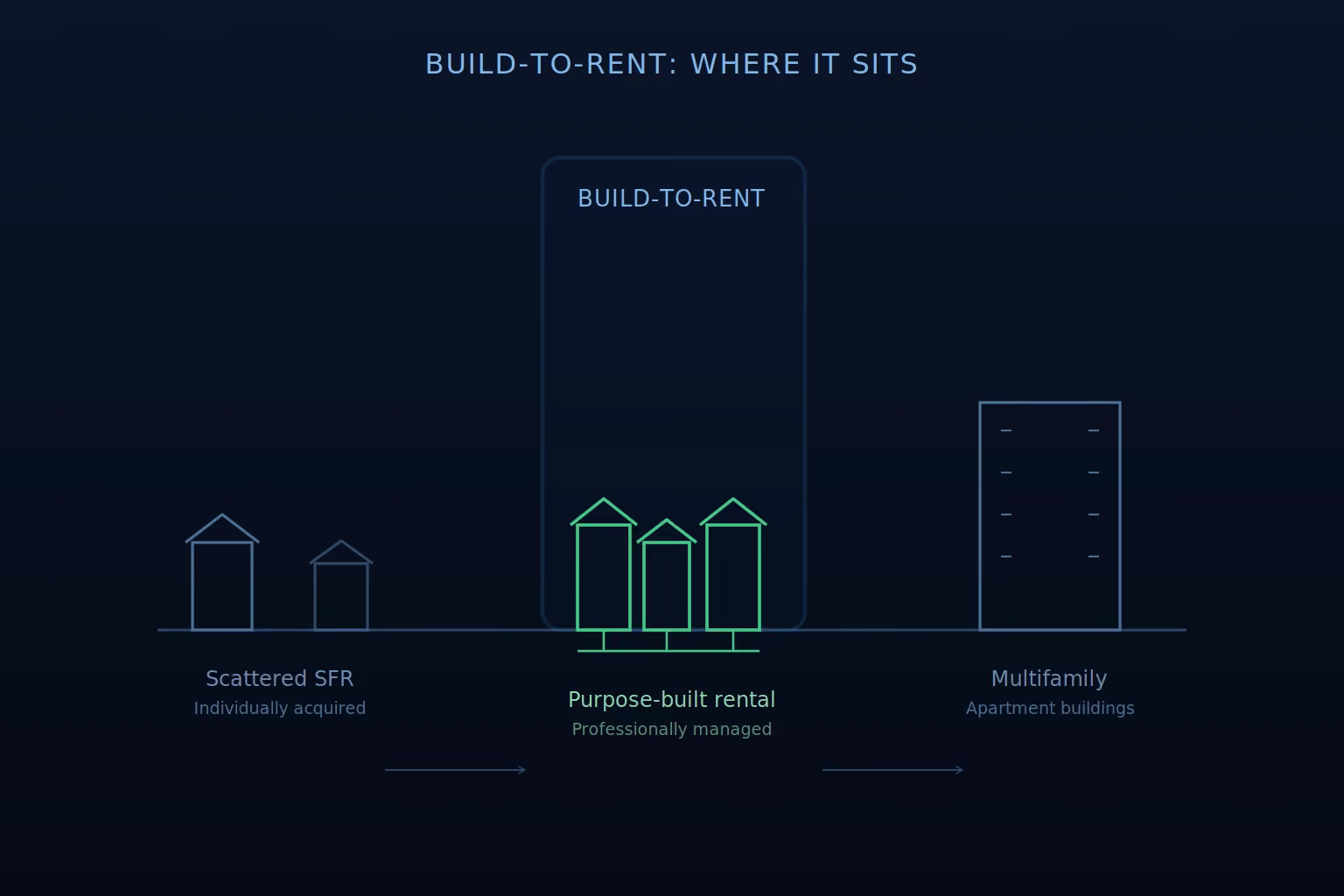
The category sits between traditional single-family rentals and conventional multifamily. Traditional single-family rentals are often scattered individual homes acquired on the open market. Conventional multifamily communities are typically apartment buildings or apartment campuses. Build-to-rent communities are purpose-built, professionally managed rental communities designed from the beginning as rental housing.
That distinction matters. Because BTR communities are designed for rental operation from inception, they are underwritten, leased, maintained, and managed differently than both scattered-site single-family rentals and traditional apartment communities.
How Build to Rent Differs From Traditional Multifamily
Understanding the differences between build to rent and traditional multifamily is important because BTR cannot be underwritten, leased, or operated exactly like a conventional apartment community.
1. Unit Configuration and Resident Profile
Build-to-rent communities typically offer larger, more home-like units than traditional apartments. Single-family homes, townhomes, duplexes, private entrances, garages, yards, and in-unit laundry are more common expectations in BTR than in conventional multifamily.
That product design often appeals to renters who want more space, privacy, and a more private residential feel, but either are not ready to purchase a home or prefer the flexibility of renting.
2. Lease Dynamics and Renewal Behavior
BTR residents may stay longer than traditional apartment residents, which can reduce turnover frequency and leasing costs. However, when a resident does move out, the make-ready and re-leasing process can be more expensive and time-intensive because the units are often larger and more complex to turn.
That makes renewal strategy especially important. BTR operators need to think carefully about renewal timing, pricing, resident communication, and the cost of replacing the lease.
3. Geographic Distribution and Operational Complexity
Traditional multifamily communities usually concentrate units in one building or campus. BTR communities may be spread across multiple streets, phases, or neighborhoods, creating different maintenance, leasing, and resident communication challenges.
This makes coordination more important. Maintenance routing, vendor management, leasing visibility, and portfolio reporting all need to reflect the more distributed nature of the product.
Read Also:
- Multifamily Property Performance: 5 Key Metrics to Track
- How to Maximize ROI on Multifamily Investments
4. Development, Lease-Up and Demand Dynamics
Build-to-rent demand is influenced by more than traditional apartment fundamentals. Rent-versus-buy economics, mortgage rates, home prices, and the cost of homeownership can all affect how attractive BTR is relative to purchasing a home.
Demand also needs to be evaluated at the submarket level. BTR communities compete with apartments, scattered-site rentals, other BTR communities, and for-sale housing, so strong multifamily demand does not automatically translate into strong BTR absorption.
Seasonality can matter as well, particularly in family-oriented submarkets where school calendars influence moving decisions. For investors, lease-up assumptions should reflect the specific product, price point, competitive set, and seasonal demand patterns of the market.
5. The Return Characteristics
Build-to-rent can offer an attractive combination of stable rental income and operational upside. Longer resident tenure may reduce turnover and re-leasing costs, while purpose-built construction can limit near-term capital expenditure compared with older rental housing.
The return profile, however, depends heavily on disciplined underwriting. Investors need to account for development costs, realistic absorption, operating expenses, financing costs, and achievable rents rather than relying on aggressive rent-growth assumptions.
As the BTR sector matures, the investment thesis is increasingly centered on durable cash flow and operational performance rather than rapid market expansion alone.
Risks to Consider in Build-to-Rent Strategy
- Higher development costs. BTR communities can carry higher per-unit land, infrastructure, and construction costs than conventional multifamily, particularly for detached homes and townhome products.
- Longer or less predictable lease-up. Absorption depends on the specific product, rent level, submarket demand, and rent-versus-buy economics. Applying conventional apartment lease-up assumptions can lead to overly aggressive projections.
- Operating expense pressure. Larger homes, distributed units, dedicated mechanical systems, landscaping, and greater travel time for maintenance can create a different expense profile than vertically integrated multifamily.
- Geographic and supply concentration. BTR development has been concentrated in certain high-growth markets, making investors more exposed to local supply pipelines, rent moderation, and changes in submarket demand.
- Financing and exit risk. Higher interest rates, refinancing costs, changing cap rates, and more conservative rent-growth assumptions can materially affect returns, particularly for assets originally underwritten during stronger growth periods.
Operational Considerations for Build-to-Rent Portfolios
Build-to-rent portfolios share many of the same operating priorities as conventional multifamily, including leasing performance, renewals, maintenance, and portfolio visibility. The difference is that those priorities need to be evaluated against the specific product type, resident profile, and operating structure of BTR communities.
1. Leasing Velocity and Absorption Management
Leasing performance should be evaluated against realistic demand for the specific community rather than conventional apartment benchmarks. Product type, rent level, submarket demand, and stage of lease-up can all affect what healthy absorption looks like.
Operators should track leasing velocity by layout or unit type and compare performance against expectations for that specific asset. A pace that would signal a problem in conventional multifamily may be appropriate for a BTR community with a different renter pool and absorption profile.
Top Picks:
- Top 7 Multifamily Challenges and How to Solve Them
- Multifamily Proptech: 7 Tools for the Right Stack
2. Renewal Strategy and Resident Retention
Renewal strategy carries added importance when turnover is more expensive or units take longer to re-lease.
Operators should evaluate renewal pricing alongside current pricing conditions, replacement economics, future availability, and the resident’s alternatives in the market. The goal is to understand the full cost and risk of losing an existing lease rather than viewing the renewal decision in isolation.
3. Maintenance Coordination Across Distributed Assets
Maintenance can be more complex in BTR communities because units may be distributed across multiple streets, phases, or neighborhoods rather than concentrated within a single building.
Travel time, technician routing, vendor coordination, and the maintenance requirements of individual homes all need to be considered when staffing and evaluating operating efficiency.
4. Portfolio Performance Visibility
As BTR portfolios scale across communities and markets, operators need clear visibility into where performance is changing and which assets require attention.
Portfolio-level reporting is important, but benchmarks should reflect differences in product type, lease-up stage, and asset strategy. Comparing every BTR community against the same portfolio-wide target can obscure meaningful differences in performance.
Don’t Miss:
- Why Real-Time Data Insights is Important for Multifamily Pricing
- Multifamily KPIs: 15 Core Metrics to Track
Conclusion on Build to Rent Strategy
Build to rent is not simply traditional multifamily in a different format. Its performance is shaped by a different mix of demand drivers, operating costs, lease-up dynamics, and resident behavior.
For investors, a strong build-to-rent strategy starts with realistic assumptions about the specific market and product, then carries those assumptions through leasing, renewals, maintenance, and portfolio oversight.
The opportunity can be compelling, but the assets need to be underwritten and operated according to what actually drives BTR performance rather than conventional apartment benchmarks.