Lease management is one of the most document-heavy and deadline-driven parts of real estate operations. Leases need to be created, tracked, renewed, reviewed, and monitored across dozens or hundreds of units, with expiration dates, notice windows, compliance requirements, and renewal timing all requiring consistent attention.
AI is changing how lease management workflows are supported. Not by replacing the judgment that lease decisions require, but by helping teams manage the volume, consistency, and timing challenges that often overwhelm manual processes as portfolios grow.
In multifamily, lease data affects more than the lease file itself. Expiration schedules influence future availability. Renewal activity affects occupancy. Notice windows affect compliance. Lease terms affect exposure, pricing, and operational planning.
When that information lives in disconnected documents, spreadsheets, or reports that require manual assembly, teams may not see important patterns until the issue is already affecting performance.
AI for lease management helps organize, surface, and connect lease-related information so teams can identify what needs attention earlier. This guide explains what AI for lease management means, where it can add operational value, and how to evaluate which AI capabilities belong in a lease management workflow.
Related:
- Lease Renewal Strategies That Reduce Turnover Costs
- The Best Lease Renewal Software for Real Estate
What Is AI for Lease Management?
AI for lease management is the use of artificial intelligence to support the workflows involved in creating, tracking, analyzing, and managing lease agreements across a real estate portfolio. It can include a range of capabilities, from document tools that extract key lease terms to operational platforms that connect lease expiration data, renewal activity, and forward availability to broader performance decisions.
The purpose of AI in lease management is not to remove human review from lease decisions. It is to reduce the manual work required to organize lease information, identify important dates, track recurring patterns, and surface issues before they become harder to address.
A simple example: Lease Expiration Tracking. A property manager manually tracking hundreds of lease expirations in a spreadsheet may only review the schedule periodically. An AI-supported lease management workflow can help surface expiration concentration, renewal timing issues, or exposure risk earlier, giving the team more time to evaluate the right response.
The value is not just automation. It is better visibility, more consistent tracking, and earlier awareness of lease-related conditions that may affect occupancy, compliance, and revenue performance.
5 Core Use Cases for AI in Lease Management
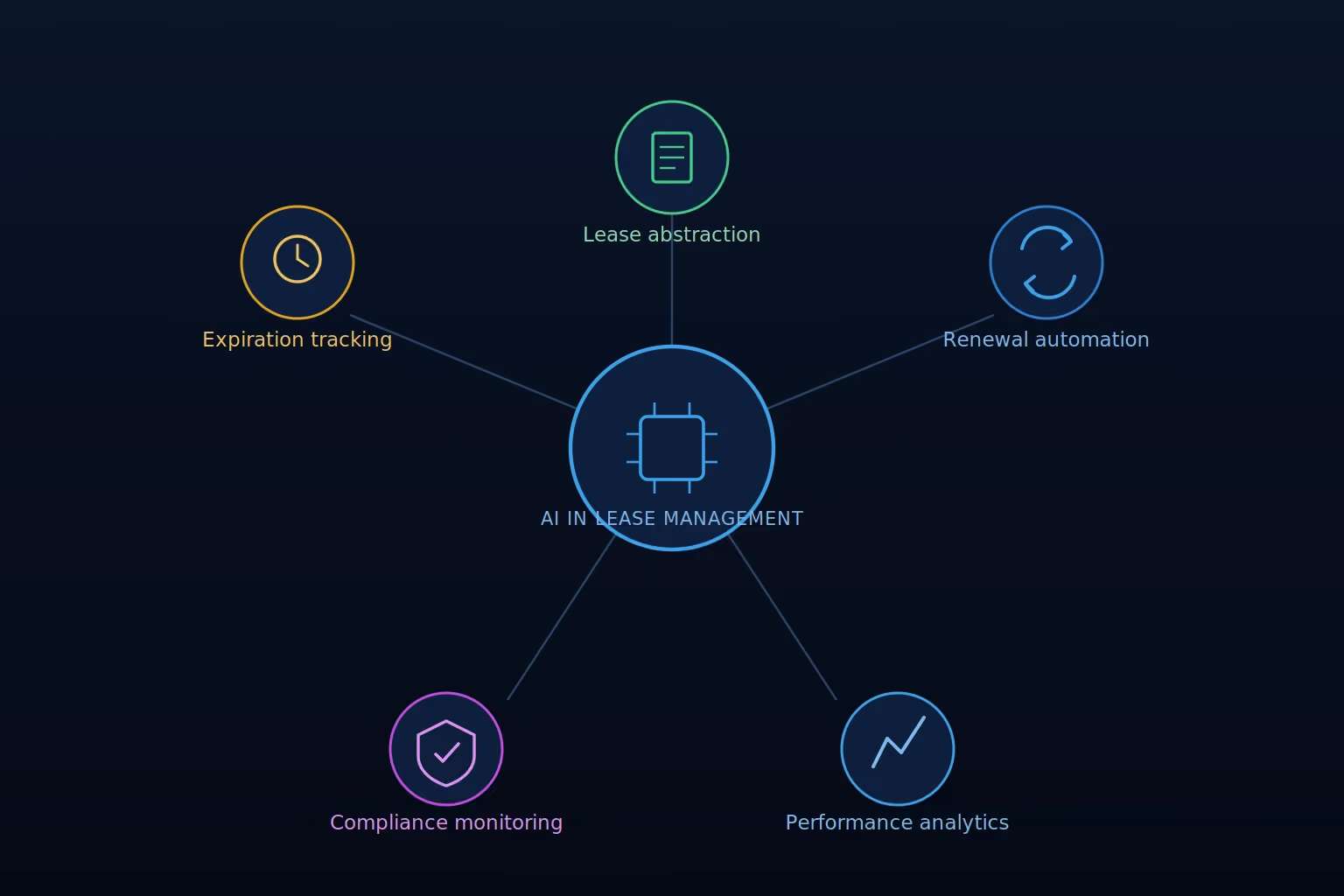
AI can support several different parts of the lease management workflow. The most relevant use cases depend on the portfolio type, lease complexity, team structure, and where manual processes create the most risk or inefficiency.
The core use cases include:
- Lease Abstraction and Document Analysis
- Expiration Tracking and Exposure Management
- Renewal Workflow Automation
- Compliance Monitoring
- Performance Analytics Connected to Lease Data
Each use case addresses a different operational challenge. Some are more relevant for commercial real estate portfolios with complex lease documents, while others are especially important for multifamily operators managing lease expirations, renewals, availability, and occupancy performance at scale.
1. Lease Abstraction and Document Analysis
Lease abstraction is the process of extracting key terms, dates, obligations, and clauses from lease documents into a structured format that can be reviewed, tracked, and acted on.
AI-powered lease abstraction tools can help teams process lease documents more efficiently by identifying important information such as lease dates, renewal options, notice requirements, payment obligations, and compliance-related terms.
This use case is especially relevant for commercial real estate portfolios, where leases are often longer, more customized, and more complex. For multifamily operators, the same concept applies more narrowly to lease dates, expiration tracking, renewal notice windows, rent control requirements, and other lease terms that need to be monitored consistently across a portfolio.
The value of AI in lease abstraction is not eliminating legal or operational review. It is reducing the manual effort required to locate and organize important lease information so teams can review it more efficiently and act on it more consistently.
Top Picks:
- How to Choose Tech Tools for Your Leasing Workflow
- Top 7 Leasing Strategies to Boost Occupancy
2. Expiration Tracking and Exposure Management
Lease expiration tracking is one of the most important AI lease management use cases for multifamily operators.
A standard expiration report shows which leases are ending and when. AI-supported exposure management can go further by helping teams understand how upcoming expirations, notices to vacate, month-to-month behavior, and early terminations may affect future availability.
This matters because expiration concentration can create occupancy pressure before it is visible in current performance reports. If too many leases are expiring in the same month, unit type, or pricing group, the team may need to adjust renewal strategy, leasing focus, or pricing decisions before those units return to market.
Rentana supports this use case through exposure forecasting, which helps teams identify where future availability may be building and whether current leasing activity is strong enough to absorb it.
The value is earlier visibility. Instead of reacting once availability has already increased, teams can evaluate exposure risk while there is still time to influence the outcome.
3. Renewal Workflow Support
Renewal workflows are highly timing-dependent. Teams need to know which leases are approaching expiration, when outreach should happen, how offers should be positioned, and where follow-up is needed.
AI can support renewal workflows by helping organize upcoming renewal activity, surface patterns in renewal conversion, and connect renewal decisions to current leasing conditions and forward availability.
For multifamily operators, renewal management is not just an administrative process. Renewal outcomes affect occupancy, turnover costs, future availability, and revenue performance. A missed renewal window or poorly timed outreach process can create avoidable vacancy pressure.
Rentana supports renewal workflow decisions through configurable renewal recommendations and renewal performance visibility. Renewal recommendations can be evaluated alongside current leasing conditions, forward availability, and asset strategy goals, helping teams make more informed renewal decisions rather than relying on fixed escalation assumptions.
The value is not automatic renewal decision-making. It is giving teams better context, timing, and visibility so they can manage renewal activity more consistently.
4. Compliance Monitoring
Lease compliance is another area where AI can help reduce manual risk, especially for operators managing assets across multiple markets. Compliance requirements may include notice windows, rent control regulations, lease term restrictions, fair housing obligations, affordable housing requirements, or other local rules that affect how leases and renewals are managed.
AI-supported compliance tools can help teams organize requirements, flag important deadlines, and reduce the chance that a notice window or regulatory requirement is missed.
This use case is especially important for portfolios where compliance rules vary by market or asset type. The larger and more complex the portfolio, the harder it becomes to rely on manual tracking alone.
AI should not replace legal or compliance review. The value is helping teams identify what needs to be reviewed earlier and making the process more consistent across the portfolio.
5. Performance Analytics Connected to Lease Data
Lease data is one of the foundations of multifamily performance analytics.
Expiration schedules affect exposure forecasting. Renewal conversion affects forward availability. Lease terms influence future expiration concentration. Notices to vacate, month-to-month behavior, and early terminations all shape the availability picture the property will need to manage.
When lease data is connected to performance analytics, teams can move beyond using lease information as a static record and start using it as a forward-looking operational signal.
Rentana connects lease data from the PMS to leasing velocity, renewal performance, exposure forecasting, and predicted occupancy. Predicted occupancy shows what is anticipated under current conditions by connecting current leasing activity, renewal trends, and future availability.
The value is a more connected view of performance. Teams can better understand how lease activity is affecting future occupancy and where operational attention may be needed before conditions show up in lagging reports.
Related:
- Best Leasing Solutions for Managing Multiple Multifamily Assets
- How to Improve Leasing Speed in Multifamily
How to Evaluate AI Lease Management Tools
The right AI lease management tool depends on which use case creates the most operational risk or manual effort for the team. Before evaluating platforms, operators should be clear about whether the main challenge is lease abstraction, expiration tracking, renewal workflow support, compliance monitoring, or performance analytics connected to lease data.
Use the following criteria to evaluate AI lease management tools.
1. Integration with Existing PMS
- Does the tool connect directly to the PMS?
- Does lease data flow automatically between systems?
- Does the tool require manual exports before it can function?
- Does it create a separate record, or does it support the existing system of record?
- Is the data current enough to support timely lease and renewal decisions?
2. Transparency of Outputs
- Does the tool explain the reasoning behind its recommendations or flagged items?
- Can the team review the logic before acting?
- Is the output specific enough to support a decision?
- Does the tool provide context, or does it simply surface information without explanation?
- Can users understand why something was flagged as important?
3. Forward-Looking Signals Versus Backward-Looking Reporting
- Does the tool help teams understand where lease performance may be heading?
- Does expiration tracking include notices to vacate, month-to-month behavior, and early terminations?
- Does renewal monitoring show where conversion may be softening before it affects occupancy?
- Does the platform connect lease activity to future availability and occupancy expectations?
- Does it help teams act earlier, or does it only report what already happened?
4. Shared Team Visibility
- Does the tool give leasing, revenue management, property management, and asset management teams access to the same current picture?
- Does it reduce the need for separate manual reports?
- Can different teams evaluate lease performance from the same data?
- Does it support coordinated decision-making?
- Or does it create another information silo that only one team can interpret?
5. Scalability Across Asset Types
- Can the tool support stabilized, lease-up, value-add, affordable, and rent-controlled assets?
- Can it be configured for different occupancy targets, renewal strategies, and asset goals?
- Does it handle portfolio complexity without requiring manual workarounds?
- Can the tool scale as the portfolio grows?
- Does it support different operating strategies without forcing every asset into the same workflow?
How Rentana Helps
Rentana supports the AI lease management use cases that most directly affect multifamily revenue, occupancy, and operational visibility.
- Expiration tracking and exposure management: Rentana’s exposure forecasting helps teams understand where future availability may be building by incorporating scheduled expirations, notices to vacate, month-to-month behavior, and early terminations into a forward-looking availability picture.
- Renewal workflow support: Configurable renewal recommendations help teams evaluate renewal offers alongside current leasing conditions, forward availability, and asset strategy goals, rather than relying only on fixed escalation assumptions.
- Performance analytics connected to lease data: Predicted Occupancy shows what is anticipated under current conditions by connecting current leasing activity, renewal trends, and future availability.
- AI-generated property insights: Property insights help teams understand what is changing at the asset level, why it may matter, and where additional investigation or action may be needed.
- Shared team visibility: Portfolio dashboards give leasing, revenue management, property management, and asset management teams access to the same current performance picture without requiring separate manual reports.
- PMS integration: Rentana connects directly to existing PMS systems, pulling lease and property data automatically so teams can evaluate current conditions without relying on manual exports.
Don’t Miss:
- AI Leasing Assistants for Multifamily Teams
- Lease Renewal Optimization Software for Multifamily
Conclusion on AI for Lease Management
AI for lease management is not one tool or one capability. It is a set of applications that can support different parts of the lease lifecycle, from document abstraction and compliance monitoring to expiration tracking, renewal workflow support, and performance analytics connected to lease data.
The strongest use cases are the ones where manual processes are most likely to miss something important: an expiration concentration building quietly, a renewal window approaching, a compliance requirement that needs review, or a shift in lease activity that may affect future occupancy.
AI helps by organizing information, surfacing patterns, and giving teams earlier visibility into what needs attention. The judgment about what action to take still belongs to the team.
For multifamily operators, the greatest value comes when lease data is connected to operational decisions. When expiration schedules, renewal activity, notices, month-to-month behavior, and future availability are viewed together, teams can make more informed decisions about occupancy, renewals, pricing, and asset performance.
Start with the lease management use case where the current process is most fragile. Build from there.