Design
Strip Mall
Open air, single row of stores
Shopping Mall
Enclosed with interior corridors
Plaza
Usually open air, may have multiple buildings



If you’ve ever pulled into a parking lot, parked right in front of a row of small stores, and walked a few steps to grab coffee, pick up dry cleaning, or get a haircut, you’ve probably visited a strip mall.
They’re everywhere. In cities, in suburbs, along busy roads, and at major intersections. Most people use them every week without thinking much about what they’re actually called or why.
So what exactly is a strip mall, and where did the name come from?
The term sounds simple, but there’s real history behind it. Strip malls grew alongside suburban neighborhoods and car culture, and their design reflects that.
A straightforward row of storefronts, shared parking out front, quick in and quick out. In this article, we’ll break down what defines a strip mall, how it’s different from other types of shopping centers, and why it ended up with that name in the first place.
Related: What is the 2 Percent Rule in Real Estate?
A strip mall is an open air retail property where multiple stores are arranged in a single row, or strip, and share a common parking lot directly in front of the storefronts. Customers typically park just steps away from the entrance and access each business from the outside rather than through an enclosed hallway.
For example, imagine a small retail property at a busy suburban intersection with a pizza shop, nail salon, dry cleaner, and convenience store all connected side by side, with parking spaces lined up in front. That setup is a classic strip mall.
At its core, a strip mall is a small to mid sized retail center made up of adjoining storefronts in a linear layout, with direct exterior access to each tenant and shared on site parking.
It is designed for convenience, quick visits, and everyday services rather than long shopping trips.
The layout is simple and practical. Stores sit in a straight line under one continuous roof. Large front windows face the parking lot. Customers park in a shared lot directly in front of the units and walk straight into the business they need.
There are no interior corridors, escalators, or large common areas like you would find in an enclosed shopping mall.
Read Also: What is a Material Fact in Real Estate?
Strip malls vary in size. A neighborhood strip center might have five to ten small tenants and serve the immediate residential area nearby.
A community strip center is usually larger and may include a grocery store or pharmacy as an anchor tenant, along with multiple smaller shops. These centers draw customers from a wider trade area but still maintain the same open air, linear layout that defines a strip mall.
The name “strip mall” is fairly literal. The word strip refers to the way the stores are built in a straight line, forming a continuous strip of storefronts under one roof. Instead of being arranged around an interior hallway or multiple levels, the businesses sit side by side in a single row.
This design became common in the United States after World War II. As suburbs expanded and more families moved away from dense urban centers, retail followed. Developers built small retail properties along major roads near new housing developments so residents could run errands close to home. The simple row layout was cost effective to build and easy to replicate across growing communities.
Strip malls were also designed with cars in mind. Unlike older downtown shopping streets built for foot traffic, these centers featured large parking lots directly in front of the stores. Wide road frontage made them highly visible to passing drivers.
Customers could pull in, park a few feet from the entrance, and leave quickly. The layout reflected a shift toward convenience and automobile access.
The term also helps distinguish these properties from enclosed shopping malls. A traditional mall typically has interior corridors, climate control, multiple entrances, and large anchor department stores.
A strip mall, on the other hand, is open air. Each store has its own exterior entrance, and there are no shared indoor walkways. While both are retail properties, their design, scale, and shopping experience are very different.
Related: What is a Latent Fact in Real Estate?

These terms are often used interchangeably, but they describe different types of retail properties. The differences come down to design, tenant mix, parking layout, and how people move through the space.
A strip mall is open air. Each store has its own exterior entrance, and shoppers walk along a sidewalk in front of the units.
A shopping mall is enclosed. Stores are connected by interior hallways, often across multiple levels, with centralized entrances and climate control.
A plaza is typically open air like a strip mall, though the layout may vary. Some plazas include separate buildings arranged around a parking lot or courtyard rather than one continuous row.
Strip malls usually focus on small to mid sized tenants such as salons, quick service restaurants, and service businesses. Some larger strip centers may include a grocery store or pharmacy as an anchor, but many neighborhood strips do not.
Shopping malls are built around major anchor tenants. Department stores, large retailers, or entertainment venues are designed to draw heavy foot traffic that supports the smaller stores inside.
Plazas can fall somewhere in between. Some include a strong anchor tenant, while others are made up primarily of small local businesses.
In a strip mall, parking is usually located directly in front of the storefronts. Customers park a short distance from the entrance and walk straight into the business they need.
Shopping malls often have large surrounding parking lots or parking garages. Shoppers typically enter through a main entrance and then walk through interior corridors to reach individual stores.
Plazas usually offer shared surface parking, but the layout may wrap around multiple buildings instead of sitting directly in front of a single row.
Top Pick: Do you Still Pay Rent after a Concession?
Strip malls are built for quick visits. Most customers arrive with a specific store in mind and leave once their errand is done.
Shopping malls are designed for browsing. The enclosed layout encourages shoppers to walk past multiple stores, increasing impulse visits.
Plazas vary depending on their size and design, but many function similarly to strip malls, serving convenience driven trips rather than extended shopping experiences.
Read Also: Does Garage Space Count as Square Footage?
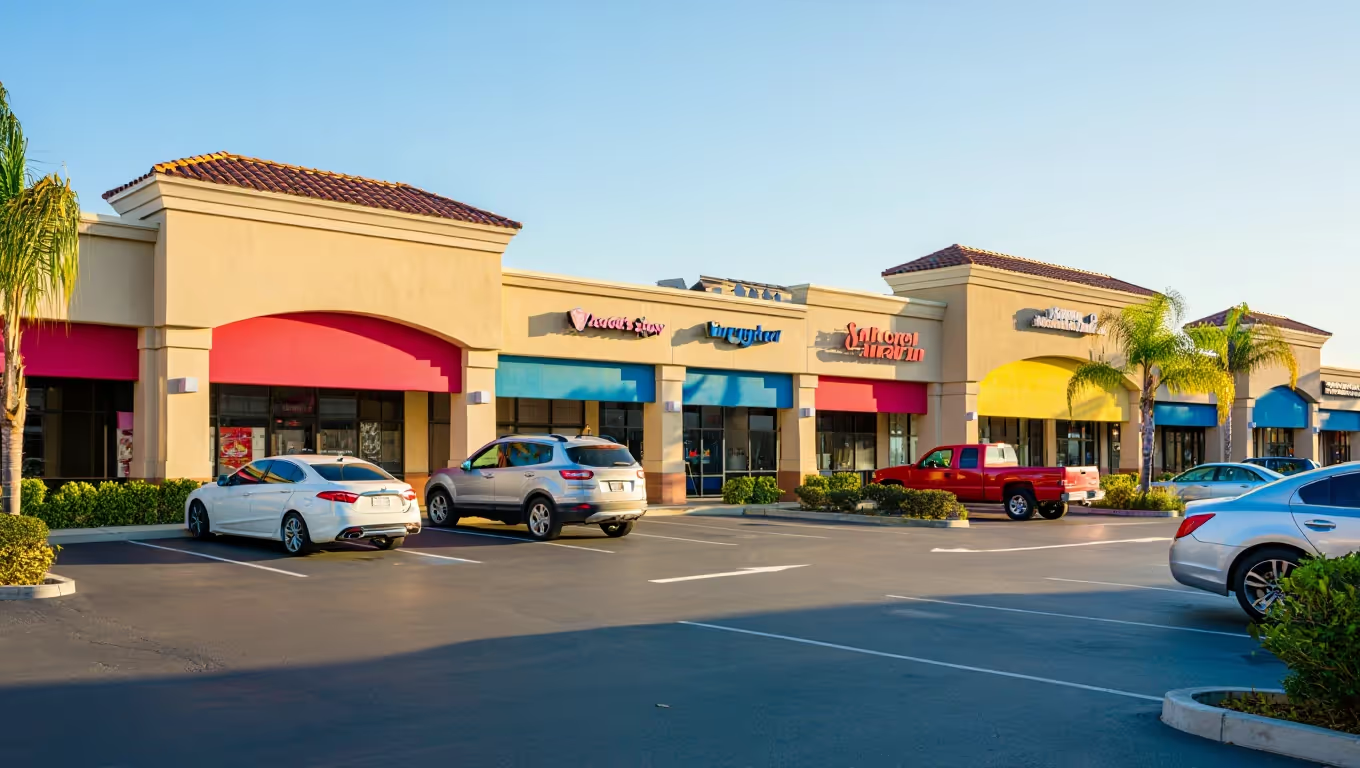
Strip malls continue to play an important role in local retail because they are built around convenience. Most customers are not looking to spend an afternoon browsing. They want to grab coffee, pick up prescriptions, attend a fitness class, or handle a quick errand on the way home. The simple layout and easy parking make that possible.
Strip malls are designed for fast access. Parking sits directly in front of storefronts, entrances are visible from the road, and customers can be in and out in minutes. This format aligns well with modern consumer behavior, where time and accessibility often matter more than the overall shopping experience.
Many strip mall tenants provide everyday services that people rely on regularly. Grocery stores, pharmacies, medical clinics, dental offices, salons, and quick service restaurants generate consistent traffic regardless of broader retail trends.
Because these businesses serve ongoing needs, strip centers often maintain stable occupancy compared to discretionary retail formats.
Suburban markets continue to support strip mall growth. As residential communities expand, nearby retail follows. Smaller neighborhood centers positioned near housing developments benefit from built in demand and repeat local customers. In many areas, these properties are more resilient than large regional malls.
Compared to enclosed shopping malls, strip malls are typically less expensive to build and maintain. There are no interior common areas that require extensive climate control, security, or large scale maintenance. These lower operating costs can translate into more affordable rents for tenants and better margins for property owners.
Strip malls have also adapted well to changing retail demand. Many now house medical offices, physical therapy clinics, boutique fitness studios, tutoring centers, specialty food concepts, and other service oriented businesses. Their flexible unit sizes and straightforward layouts make them easy to reposition as consumer needs evolve.
For both tenants and property owners, strip malls remain a practical and durable retail format in today’s market.
Don’t Miss:
Strip malls may not be flashy, but they have become one of the most practical and durable retail formats in the United States. Their straightforward design, easy parking, and focus on everyday services make them a natural fit for how people shop today.
The name itself comes from their simple layout, a strip of stores lined up side by side. They are built to serve growing suburban communities, and continue to thrive because they prioritize convenience, accessibility, and essential businesses.


