



If you have ever toured an office or commercial space and wondered why the square footage on the listing felt bigger than the space you were standing in, you are not alone. This confusion usually comes down to one term that shows up in almost every commercial lease, rentable square footage, or RSF.
RSF plays a big role in how rent is calculated, yet it is often misunderstood. Tenants may assume they are paying only for the space inside their walls, while landlords use a broader measurement that includes shared areas of the building.
In this article, we will break down what RSF really means, how it is calculated, and why it matters for both tenants and property owners. By the end, you will be able to read a lease or listing with a lot more confidence and far fewer surprises.
Related: What is the 2 Rule in Real Estate?
Rentable Square Footage, or RSF, is the total amount of space a tenant pays rent on in a commercial building. It includes the space you directly occupy, like an office, store, or suite, plus a share of the building’s common areas.
These common areas can include hallways, lobbies, restrooms, elevators, and shared amenities. Even though tenants do not have exclusive use of these spaces, they rely on them every day, which is why they are included in RSF.
RSF exists to fairly spread the cost of maintaining the building across all tenants. Instead of charging separately for shared spaces, landlords include each tenant’s portion of those areas in the rent calculation.
Example:
Imagine you lease an office that is 1,000 square feet inside your walls. The building also has shared hallways, restrooms, and a lobby. After those common areas are factored in, your rentable square footage might be 1,200 square feet. You pay rent based on 1,200 square feet, even though your usable office space is 1,000 square feet.
In short, RSF reflects both the space you use and your share of the building that supports it.
Rentable Square Footage and Usable Square Footage measure space in different ways, and understanding the difference is key to understanding how rent is calculated.
Usable Square Footage, or USF, is the space a tenant can actually use and control. This includes areas inside the walls of the leased space, such as offices, conference rooms, storage areas, and private restrooms that belong only to that tenant. USF does not include shared spaces.
Rentable Square Footage, or RSF, includes the usable space plus a portion of the building’s common areas. These common areas can include lobbies, hallways, elevators, stairwells, shared restrooms, and other spaces used by all tenants. Because RSF includes more than just the tenant’s private space, it is always higher than USF.
The difference between RSF and USF is explained by something called the load factor. The load factor is a multiplier that adds a tenant’s share of common areas to their usable space. It reflects how much of the building is made up of shared space versus private space.
Example:
If a tenant has 1,000 square feet of usable space and the building has a load factor of 1.20, the rentable square footage would be 1,200 square feet. The extra 200 square feet represents the tenant’s share of the common areas. Rent is calculated using the 1,200 square feet, not the 1,000.
RSF is higher than USF because it accounts for the full cost of operating the building. While tenants may not work inside hallways or lobbies, those spaces are necessary for the building to function. RSF ensures that all tenants contribute fairly to the spaces they share.
Top Pick: How to Buy Land Without Any Money Down
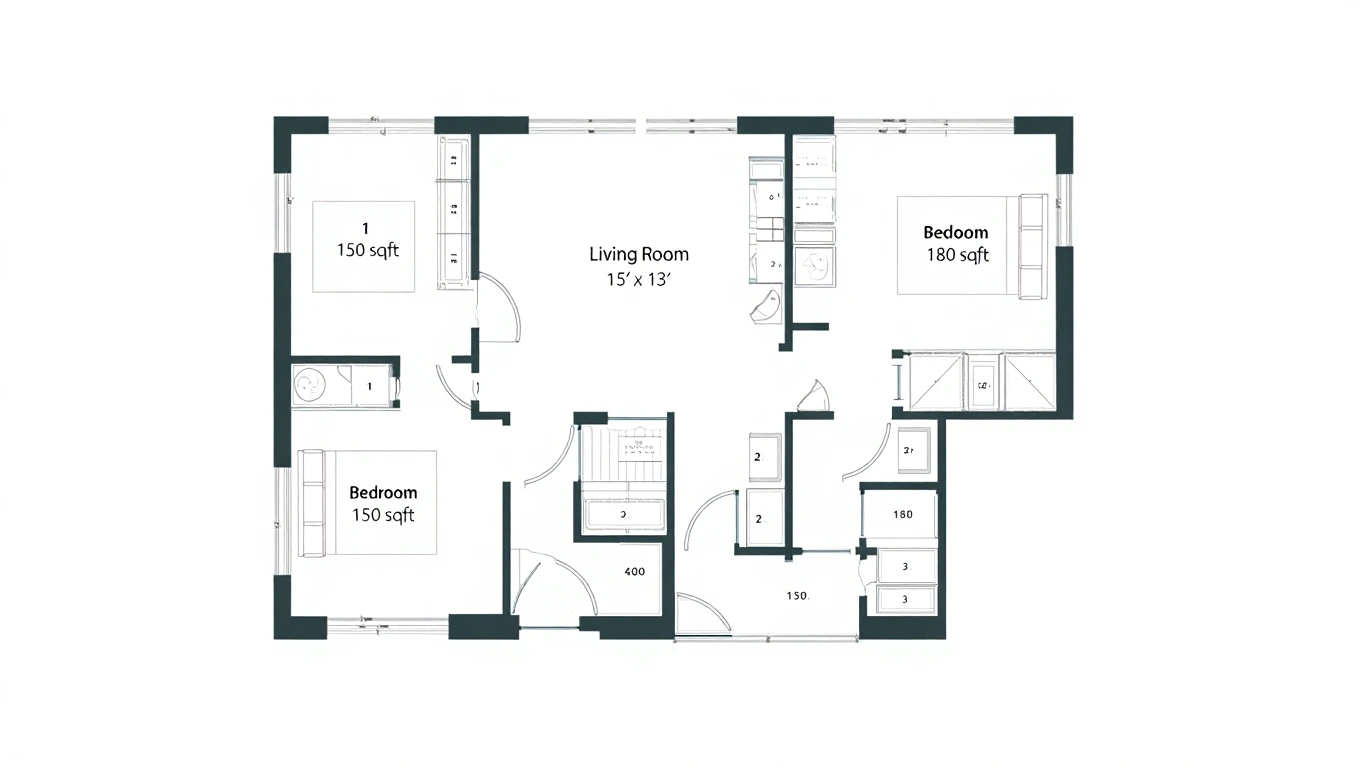
Rentable Square Footage is calculated by starting with the usable space and then adding a tenant’s share of the building’s common areas. This is done using a number called the load factor.
The basic formula looks like this:
Rentable Square Footage (RSF) = Usable Square Footage (USF) × Load Factor
The load factor represents how much extra space is added to account for common areas like hallways, lobbies, elevators, and shared restrooms. A higher load factor means a building has more shared space, while a lower load factor means more of the building is made up of private, usable areas.
First, determine the usable square footage. This is the space inside the tenant’s leased area that they can actually use. It includes offices, open work areas, storage rooms, and any private restrooms or kitchens within the suite.
For example, a tenant may have 1,000 square feet of usable space inside their unit.
Next, apply the building’s load factor. Load factors are usually expressed as a decimal, such as 1.15, 1.20, or 1.25. The exact number depends on how much of the building is dedicated to common areas.
A building with large lobbies, wide hallways, and many shared amenities will typically have a higher load factor than a building with minimal shared space.
Multiply the usable square footage by the load factor to get the rentable square footage.
Example:
If a tenant has 1,000 square feet of usable space and the building’s load factor is 1.20:
1,000 × 1.20 = 1,200 square feet
The tenant’s rentable square footage is 1,200 square feet. Rent will be calculated based on this number, not the original 1,000 square feet.
In simple terms, the load factor adds a tenant’s fair share of common areas to their usable space. This is why rentable square footage is always higher than usable square footage and why understanding the calculation is important when comparing lease options.
Related: What Is Intrafamily Transfer and Dissolution? A Comprehensive Guide
Rentable Square Footage affects more than just how space is measured. It directly impacts pricing, lease costs, and how spaces are compared. Understanding RSF helps both tenants and landlords make better decisions.
Rent in commercial real estate is almost always quoted per square foot based on RSF, not USF. This means the rent rate is applied to the larger number.
For example, if rent is listed at $40 per square foot and the RSF is 1,200 square feet, the annual rent is calculated using the full 1,200 square feet. Even though the usable space may be smaller, the price reflects the total rentable area.
Because RSF includes common areas, it increases the total cost of a lease. Two spaces with the same usable square footage can have very different total rents if their load factors are different.
A building with a higher load factor may look cheaper at first based on price per square foot, but end up costing more overall. This is why understanding RSF is important when reviewing lease terms and budgeting.
RSF allows landlords to price space consistently across a building, but it can make comparisons tricky for tenants.
When comparing two properties, tenants should look at both RSF and USF. A space with a lower RSF but higher USF may offer more usable space for the same price. Without understanding RSF, it is easy to compare listings that are not truly equal.
Related
Rentable Square Footage is often misunderstood, which can lead to surprises later on. Knowing the most common mistakes can help tenants and landlords avoid confusion and costly errors.
One of the most common mistakes is assuming the square footage listed in a lease or listing refers only to the space inside the unit. Many tenants are surprised to learn they are paying rent on more space than they physically occupy.
Always confirm whether the quoted square footage is RSF or USF. This simple question can prevent misunderstandings before a lease is signed.
The load factor has a direct impact on rent, but it is often buried in lease documents or not explained clearly.
A higher load factor means more common area costs are being added to the usable space. Tenants should ask what the load factor is and what common areas are included so they understand how their rent is calculated.
Two spaces may have similar rent per square foot, but very different total costs. Differences in RSF, load factors, and building layouts can make one option much more expensive over time.
When comparing properties, look beyond the listed price and calculate the total rent using RSF. This helps ensure you are comparing spaces on equal terms.
Not all buildings measure space the same way. Different standards or older measurements can lead to inconsistencies in reported square footage.
Tenants and landlords should clarify how RSF was measured and whether a recognized standard was used. Clear documentation helps avoid disputes later.
Many RSF issues arise because questions were not asked at the beginning of the leasing process.
Asking how RSF is calculated, what the load factor is, and what areas are included can save time, money, and frustration. The more clarity there is upfront, the smoother the lease experience will be.
Understanding these common mistakes makes it easier to navigate commercial leases with confidence and avoid unexpected costs down the line.
Read Also: Does Garage Space Qualify as Square Footage?
Rentable Square Footage plays a major role in how commercial real estate is priced, compared, and leased. Understanding how RSF works, how it differs from usable square footage, and how it affects rent helps tenants avoid surprises and helps landlords price space more clearly and fairly.
But knowing RSF is only part of the picture. Once square footage, rents, and lease terms are understood, the real challenge becomes managing that information across properties and portfolios. This is where having the right tools matters.
For teams managing multifamily and commercial assets, Rentana helps turn rent, space, and lease data into clear insights. By bringing pricing, performance, and intelligence together in one place, Rentana makes it easier to move from understanding the numbers to acting on them with confidence.
Yes, rentable square footage typically includes a portion of exterior walls and shared common areas. These areas are allocated proportionally to tenants, which is why rentable square footage is usually larger than usable square footage.
To calculate usable square footage from rentable square footage, divide the rentable square footage by the building’s load factor. The load factor accounts for common areas like hallways, restrooms, and lobbies that are shared by tenants.
Yes, stairwells are generally included in rentable square footage as part of a building’s common areas. Their square footage is typically allocated across tenants rather than assigned to a single space.
Basement storage can be considered rentable square footage if it is leased to a tenant and used exclusively by them. Shared or mechanical basement areas are usually classified as common space and not directly rentable.
Gross square footage is different from both rentable and usable square footage. Gross square footage measures the total building area, while rentable square footage includes usable space plus a share of common areas, and usable square footage includes only the space a tenant actually occupies.
Rentable square footage includes the usable space within a tenant’s premises plus a proportionate share of common areas such as hallways, lobbies, restrooms, stairwells, and exterior wall thickness. It is the figure landlords use to calculate rent.
