What if the difference between an average multifamily deal and a great one had less to do with the market and more to do with the software you use?
Multifamily investing has always been a game of margins, timing, and information. But today, the investors who consistently move faster, underwrite smarter, and operate more efficiently are not only relying on experience or intuition. They are relying on good PropTech software. From deal sourcing and underwriting to asset management and investor reporting, software has quietly become one of the most powerful advantages in a multifamily investor’s toolkit.
In fact, the global PropTech market is projected to grow to $88.37 billion by 2032, driven largely by demand from real estate and multifamily owners and operators looking to scale. As portfolios grow and competition tightens, spreadsheets and disconnected tools simply are not enough anymore.
In this article, we break down the best PropTech software for multifamily investors, how each tool fits into the investment lifecycle, and how to choose the right stack for your portfolio so technology works for you, not against you.
Related: The Best AI Tools for Real Estate Investors
Why PropTech Matters for Multifamily Investing
Multifamily investing used to be a lot more manual. Deals came from brokers you knew, underwriting lived in spreadsheets that only one person truly understood, and asset management meant reacting to issues after they showed up on a monthly report. That approach can still work at a small scale, but it starts to break down fast as portfolios grow.
This is where a good PropTech software becomes important.
On the front end, proptech software gives investors access to more deals, more data, and better signals. Instead of relying solely on what hits your inbox, you can surface off market opportunities, analyze submarkets in minutes, and quickly spot pricing or rent trends that would have taken weeks to uncover manually.
Underwriting is where the impact really compounds. Purpose built tools reduce human error, standardize assumptions, and allow you to stress test deals across multiple scenarios in seconds. When you are evaluating dozens of opportunities a month, that speed and consistency can be the difference between missing a great deal and moving with confidence.
Operations and asset management benefit just as much. Modern platforms centralize rent rolls, expenses, maintenance data, and performance metrics so you always know how an asset is actually performing, not how it looked last quarter. This makes it easier to identify issues early, optimize NOI, and communicate clearly with partners and investors.
Most importantly, PropTech improves decision making at scale. As portfolios grow, complexity increases. The right proptech software turns that complexity into clarity, giving multifamily investors better visibility, faster feedback loops, and the ability to grow without losing control.
Key Categories of PropTech Software Investors Should Know
PropTech is a broad term, and that is where a lot of investors get stuck. There are hundreds of tools on the market, all promising to save time or boost returns. The easiest way to make sense of it is to think in categories. Each one supports a different part of the multifamily investment lifecycle.
Investor Relations and Reporting
For syndicators and fund managers, this category is increasingly important. Investor portals, reporting tools, and communication platforms make it easy to share updates, distributions, and performance data while maintaining a professional experience for investors.
Deal Sourcing and Market Analytics
These tools help you find opportunities and understand markets faster. They aggregate sales data, rent trends, demographics, and comparable properties so you can evaluate submarkets and deals with confidence before ever opening a spreadsheet.
Underwriting and Financial Modeling
This category focuses on analyzing deals quickly and consistently. Underwriting software standardizes assumptions, models cash flow, and lets you run multiple scenarios without rebuilding models from scratch. For investors reviewing high deal volume, this category is essential.
Property Management and Operations
Once a deal closes, operations take over. Property management software handles leasing, rent collection, maintenance, and tenant communication. Even for investors using third party managers, access to clean operational data is critical for oversight and performance tracking.
Accounting and Financial Reporting
These tools track income, expenses, and financial statements at both the property and portfolio level. Strong accounting software ensures accurate books, simplifies tax reporting, and makes it easier to understand where cash flow is really coming from.
Marketing and Leasing
Marketing platforms help attract and convert tenants. They manage listings, pricing, lead tracking, and leasing performance. In competitive markets, this software can directly impact occupancy and revenue.
Thinking in these buckets creates a clear mental framework. Instead of chasing individual tools, investors can build a PropTech stack that supports each stage of the multifamily investment journey.
Read Also: Is Multifamily Considered Commercial?
Rentana: The Best PropTech Software for Multifamily Investors
Every multifamily investor wants two things: clarity and control. Rentana delivers both.
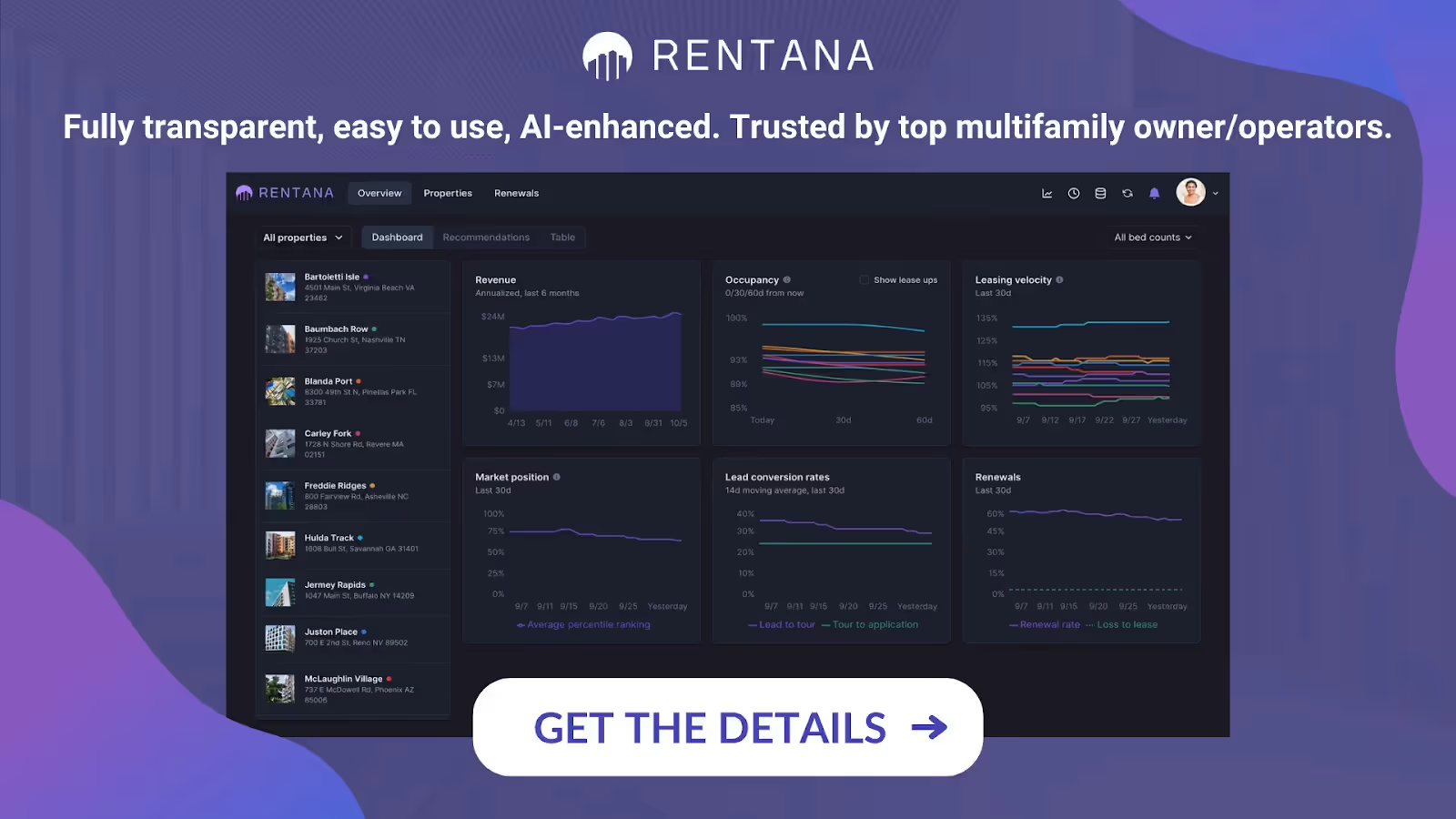
At its core, Rentana is a revenue intelligence platform built to help multifamily investors visualize, analyze, and act on their portfolio data, all in one place. It combines transparency, automation, and AI-driven insights to replace disconnected spreadsheets and outdated reports with a single, easy-to-use system
From the 10,000-foot view to the unit level, Rentana lets you see the health of your entire portfolio at a glance. You can group assets by geography, partner, or property type and instantly identify what’s on track, at risk, or underperforming. With one click, you can drill down into a specific property to see detailed supply and demand trends, conversion rates, occupancy forecasts, and pricing performance
What truly sets Rentana apart is its AI-powered transparency. Every pricing recommendation comes with a full, plain-English breakdown, showing the math, variables, and trends behind the suggestion. You’re never guessing at how the system reached its conclusion; you can review the data, adjust the assumptions, or override the recommendation with full confidence
Rentana also integrates seamlessly with your existing systems. Data can flow in and out via CSV, API, or direct PMS connections, making it easy to use within your current workflow. Its metrics browser lets users explore any metric, property, or time frame, then build custom reports in seconds, empowering teams to find answers without waiting on analysts or IT
In a market where information moves fast, Rentana helps multifamily investors make decisions faster and smarter. It’s a software that gives you a clearer way to see your portfolio, uncover opportunities, and stay ahead of the competition.
How to Choose the Right PropTech Stack for Your Portfolio

There is no one size fits all PropTech stack. The tools that make sense for a 60 unit value add portfolio can be very different from what a 6,000 unit institutional owner needs. The key is to choose software that matches where you are today, and where you plan to be in the next few years.
Let’s break it down by the big four variables: portfolio size, asset class, management structure, and budget.
1. Start With Your Portfolio Size
Small portfolios (up to ~200 units)
If you are in this range, simplicity wins. You probably do not need a dozen different tools. Focus on:
- A solid property management system with built in accounting
- One strong analytics or revenue intelligence platform so you can actually see performance clearly
- A basic investor reporting tool if you syndicate deals
Look for tools that are easy to implement, have good support, and do not require a dedicated team to run.
Mid sized portfolios (200 to 2,000 units)
Here, you start to feel the pain of scale. Manual underwriting, ad hoc reports, and scattered spreadsheets become real bottlenecks. You will likely need:
- Dedicated underwriting or modeling software to standardize deal analysis
- Portfolio and revenue intelligence to monitor performance across properties in one place
- Strong integrations between your PMS, accounting, and analytics tools
At this stage, prioritize tools that talk to each other. Otherwise you end up with data silos and a lot of manual reconciliation.
Large portfolios (2,000 plus units)
For larger owners and operators, the stack needs to support scale and specialization:
- Enterprise grade property management and accounting
- Advanced revenue management and pricing optimization
- Custom reporting, BI, and data warehouse integrations
- Robust investor relations platforms and portals
Here you care about API access, data governance, and the ability to create custom workflows. The right PropTech stack is not just about features. It is about building an ecosystem.
Related: What is a Good IRR for Rental Properties?
2. Match Your Tools to Your Asset Class (Class A, B, C)
Class A portfolios
These assets often compete on experience and premium pricing. Your stack should emphasize:
- Dynamic pricing and revenue optimization
- Marketing and leasing platforms that support digital tours, online applications, and fast response times
- Detailed demand analytics so you can see how pricing and concessions affect lease velocity
Small shifts in pricing and absorption can have a big impact at the high end of the market, so data and speed matter a lot.
Class B portfolios
Class B is often about balance. Your tools need to support both revenue growth and cost control:
- Strong operational and maintenance tracking to protect asset quality
- Revenue intelligence to identify underperforming floor plans or pockets of demand
- Marketing tools that help you stay competitive without overspending on concessions or ad spend
You want enough sophistication to compete, but not so much complexity that your team stops using the tools.
Class C portfolios
With Class C, the focus is often on occupancy, collections, and efficient operations:
- Reliable property management and collections workflows
- Simple reporting that highlights delinquency, turnover, and maintenance costs
- Tools that help you identify chronic issues quickly and prioritize spend
You may not need the most advanced AI pricing engine here, but you absolutely need clarity around cash flow and operational performance.
3. Consider In House vs Third Party Management
In house management
If your team runs the day to day operations, your stack becomes the operating system for the whole business:
- Choose tools your onsite teams will actually use day in, day out
- Make sure training, onboarding, and support are strong
- Look for platforms that centralize data, so asset managers, regional managers, and executives are all looking at the same truth
In this case, change management matters as much as features. A powerful tool that no one adopts is just an expensive line item.
4. Align Your Stack With Your Budget
Lean budget or early stage investor
If you are just getting started, do not try to buy everything at once. Focus on:
- One good core system (PMS plus accounting)
- One tool that gives you better visibility, such as an analytics or revenue intelligence platform
- Free or low cost add ons for things like basic reporting or e sign leasing
The goal is to avoid tech debt. Invest in tools that can grow with you, even if you are not using every feature on day one.
Don’t Miss: The Best AI Tools for Commercial Real Estate
Conclusion on PropTech Software
Great multifamily portfolios are rarely built on gut alone. They are built on clear data, fast feedback, and teams that can act with confidence. The right PropTech stack turns noisy operations into readable signals so you can buy smarter, price smarter, and manage smarter.
If you take one step after reading this, make it a simple audit. List your core workflows, note where decisions slow down, then map tools to those choke points. Pilot one or two solutions, set clear success metrics, and give your team the training and time to adopt them. Small wins compound quickly.
As you stitch the stack together, look for a hub that brings the story together across deals, pricing, and performance. A revenue intelligence platform like Rentana can sit neatly on top of your existing systems, unify the data, and surface the few insights that actually move NOI without adding complexity.
The question to leave with is this: if you had perfect visibility into your portfolio tomorrow, what decision would you make first?