Rental pricing in multifamily has traditionally been treated as a periodic exercise. Teams review an availability list , look at a handful of nearby properties, and adjust pricing based on what appears to be happening in the market. For many years, that approach was enough to keep properties competitive.
Today the operating environment is far more dynamic.
Leasing velocity can shift quickly from month to month. Lease expirations can cluster and create sudden exposure in future periods. Renewal decisions affect upcoming availability. At the same time, supply pipelines and demand patterns continue to evolve at the submarket level, creating additional volatility.
Every move out carries a real financial impact. Industry research estimates that the average cost of apartment turnover is roughly $3,800 to $4,000 per unit once lost rent, repairs, marketing, and leasing costs are included.
Because of this, pricing decisions are no longer just about comparing rents across the market. Operators need to understand how leasing, renewals, and exposure interact, and how those signals evolve across the portfolio.
Modern rental pricing software reflects this shift. The most advanced platforms are not simply tools that recommend rent levels. They evaluate leasing performance, forecast predicted availability, analyze renewal behavior, and help operators understand how pricing decisions influence exposure risk and occupancy stability.
In other words, pricing is becoming part of a broader revenue intelligence workflow.
Also, technology adoption has accelerated across the industry. Surveys from the National Multifamily Housing Council (NMHC) and industry benchmarking studies show that a large share of multifamily operators now rely on data and technology platforms to support leasing and operations.
Instead of relying on static rent grids or manual comp reviews, modern rental pricing software surfaces forward-looking signals such as leasing velocity, predicted availability, floorplan demand, and exposure risk, alongside pricing recommendations. These insights help teams understand the context behind pricing recommendations and guide strategy across the entire portfolio.
Understanding how rental pricing software fits into this broader operational workflow is the key to choosing the right platform for multifamily operations.
Related:
- The Best Lease Renewal Software for Multifamily Real Estate
- How to Choose a Good Rent Analysis Tool for Multifamily Pricing Strategy
What Is a Rental Pricing Software?
A Rental pricing software is a technology platform that helps real estate operators set and manage rents using operational data, leasing performance signals, and public market conditions rather than relying on static rent grids or manual reviews.
In multifamily operations, pricing decisions influence far more than the rent attached to a single unit. Pricing affects leasing velocity, renewal behavior, predicted availability, and how lease exposure develops across the portfolio. These dynamics are interconnected, and small pricing decisions at the unit level can compound into meaningful portfolio-level outcomes.
Rental pricing software brings these signals together into a single system.
Instead of reviewing rents periodically, operators can monitor leasing activity in real time, evaluate how quickly units are leasing, and understand how upcoming expirations may affect future availability. Pricing recommendations are generated using operational data from the property combined with publicly available market information so teams can evaluate current pricing trends with greater context.
Modern pricing platforms also allow operators to analyze performance across different unit types and lease terms, track renewal activity, and visualize portfolio level trends with the ability to drill down into property and unit performance. This gives asset managers and property teams a clearer understanding of how pricing decisions affect the broader health of the portfolio.
The goal is not simply to suggest rent levels.
The goal is to help operators interpret the signals that shape leasing performance and use those insights to guide pricing strategy across properties, floorplans, and entire portfolios.
Related:
- The Best Pricing Optimization Software for Multifamily Real Estate
- Multifamily Rent Pricing Strategy: A Complete Guide for Investors
What Rental Pricing Software Actually Does in Multifamily Operations
Rental pricing software helps operators translate leasing activity, market signals, and lease timing into clear pricing decisions across their properties. Instead of treating pricing as a periodic update to a rent grid, modern platforms continuously evaluate operational data and highlight the factors influencing leasing performance.
This shifts pricing from a reactive process to a proactive strategy, where operators can anticipate changes in demand and exposure before they impact occupancy or revenue.
In practice, pricing decisions are tied to several moving parts. Leasing velocity may change as supply is absorbed and demand shifts. Upcoming expirations may increase availability in certain months. Renewal offers may affect how many units return to the market. Pricing software connects these signals so operators can see how current conditions influence pricing strategy across the portfolio.
Modern platforms typically provide several core capabilities that support this process.
1. Dynamic Pricing Across Unit Types
Demand rarely moves evenly across a property. One unit type may lease quickly while another takes longer to fill. Pricing platforms allow operators to adjust rents across different unit groupings so pricing reflects current demand patterns.
Rather than applying one static rent schedule, operators can evaluate performance by unit type, bedroom count, or custom groupings. This allows pricing to reflect real-time demand signals rather than averaged performance across the asset.
2. Exposure Forecasting
Lease expiration timing plays a major role in occupancy stability. When too many leases expire in the same period, properties can experience sudden increases in availability that create leasing pressure.
Research shows that Multifamily vacancy rates typically hover around 6% nationally, while many stabilized portfolios aim to operate closer to 3–5% vacancy to maintain stable income.
With rental pricing platforms, operators forecast future exposure by analyzing upcoming expirations and predicted availability. With this visibility, teams can evaluate how current leasing decisions may affect availability months ahead and proactively adjust pricing, lease terms, or renewal strategy to smooth exposure across the portfolio.
3. Renewal Pricing Alignment
Renewal activity directly affects how many units return to the market. If renewal pricing is disconnected from overall strategy, properties may unintentionally create unexpected availability or disrupt leasing momentum.
Modern pricing platforms allow renewal pricing to be evaluated alongside new lease pricing. Rather than reacting to market rents alone, renewal pricing can be structured based on asset strategy, target occupancy, and the desired relationship between renewal and new lease pricing.
4. Leasing Velocity Monitoring
Leasing velocity is one of the clearest indicators of demand at a property. When units lease quickly, it suggests strong demand for that floorplan or price point. When units take longer to lease, it may signal softer demand or pricing intolerance.
Pricing software monitors leasing activity across properties and unit types so operators can identify changes in demand early. These forward-looking signals allow teams to adjust pricing before occupancy or exposure is impacted.
5. Portfolio Level Pricing Visibility
Asset managers often need to evaluate pricing strategy across multiple properties rather than reviewing each asset individually. Portfolio dashboards provide a high level view of leasing activity, pricing trends, and exposure patterns across the entire portfolio.
This enables consistent strategy execution, faster identification of underperforming assets, and more coordinated decision-making across markets.
Read Also:
- 9 Tenant Retention Strategies that Improve Multifamily NOI
- Multifamily Performance Reporting: Metrics That Drive Performance
Why Rentana is the Best Rental Pricing Software for Multifamily Real Estate
Not all rental pricing software serves the same role in multifamily operations. Some tools focus narrowly on pricing comparisons or basic rent suggestions. More advanced platforms take a broader view by connecting pricing decisions with leasing activity, renewal behavior, and future availability across the portfolio.
This is where revenue intelligence platforms have begun to stand apart.
Instead of treating pricing as an isolated function, these systems bring together operational signals that influence leasing performance. Asset managers can evaluate how quickly units are leasing, how future availability is developing, and how renewal decisions may affect upcoming exposure. Pricing recommendations are then evaluated within that broader operating picture.
Rentana was built around this idea.
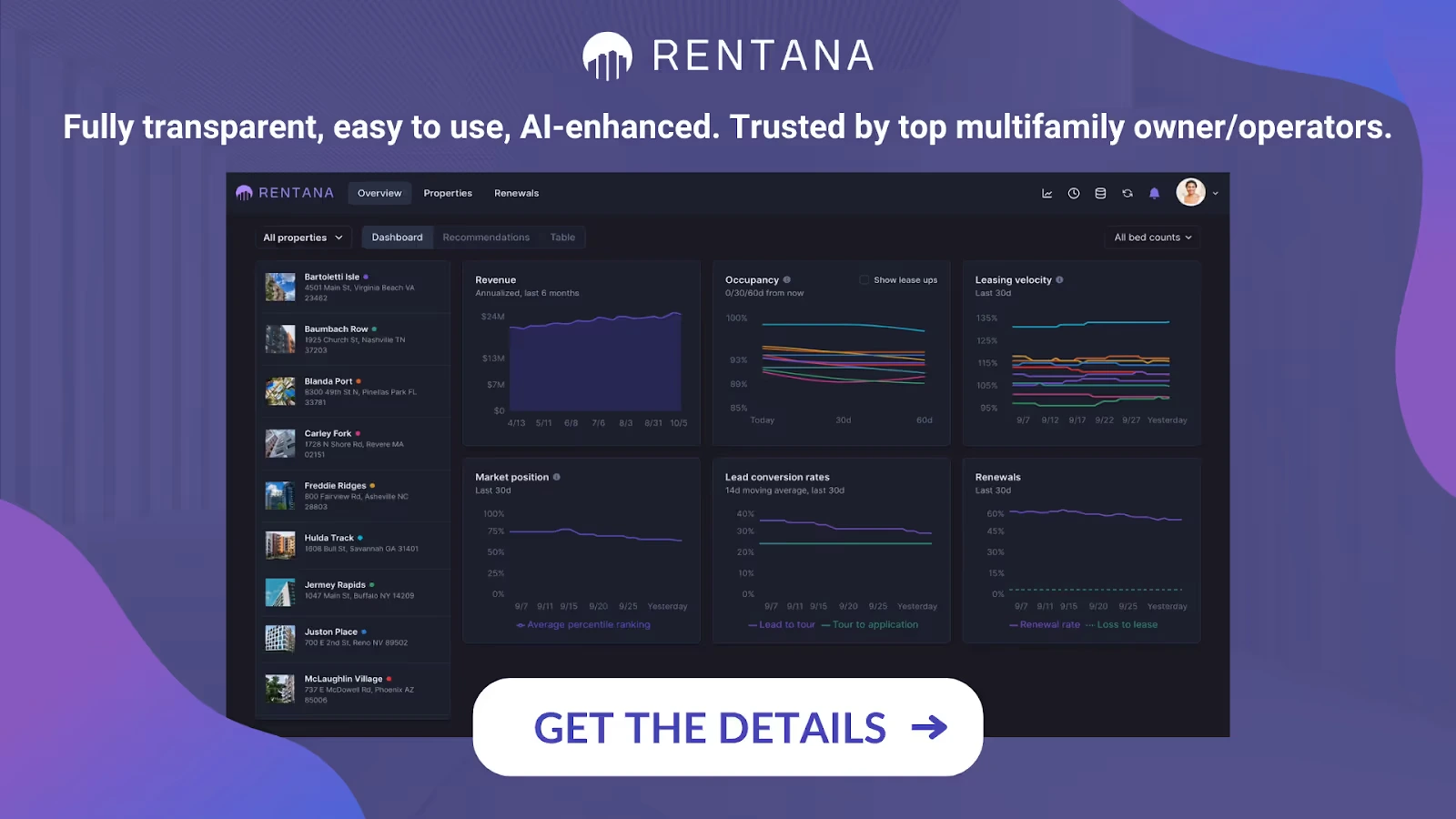
The platform functions as a revenue intelligence system that helps operators interpret demand signals and apply pricing decisions within the context of leasing activity, predicted availability, and public market conditions. Rather than presenting a simple rent suggestion, Rentana provides both the recommendation and explanations of the underlying drivers of the changes so teams can understand not just what to do, but why.
Teams can move from a portfolio overview into individual properties and even down to unit level insights, giving both asset managers and property teams a clearer view of how pricing strategy is performing across the portfolio.
Key capabilities include:
- Dynamic pricing recommendations across unit groups: Pricing recommendations are generated based on leasing velocity, predicted availability, and asset-level configuration settings, ensuring alignment with each property’s strategy rather than a one-size-fits-all approach.
- Leasing velocity analysis: The platform monitors how quickly units are leasing across properties and floor plans, with visibility down to unit group performance, helping operators identify demand shifts early.
- Predicted availability forecasting: Rentana forecasts upcoming availability by analyzing current leases, move out patterns, and renewal behavior, allowing operators to anticipate exposure before it materializes.
- Renewal pricing configuration tied to market conditions: Renewal pricing is configurable based on the relationship between renewal offers and market rent, allowing operators to align retention strategy with occupancy targets and exposure management, not just market conditions.
- Exposure management tools: Operators can visualize lease expiration timing and identify potential exposure clusters across the portfolio. Integrated pricing and lease term controls help actively shape future exposure rather than simply react to it. This helps teams guide pricing and lease term decisions to avoid spikes in availability.
- Floorplan demand insights: Rentana analyzes leasing activity and performance across different floorplans, helping operators understand where demand is strongest and where adjustments may be needed.
- Amenity performance insights: Operators can evaluate how specific unit features and amenities impact leasing velocity, helping explain why similar units perform differently and informing more precise pricing decisions.
- Concession tracking: The system tracks entered concessions and leasing incentives alongside pricing activity, giving teams a clearer picture of how concessions influence leasing performance.
- Portfolio pricing dashboards: Asset managers can evaluate pricing signals across the entire portfolio through centralized dashboards that highlight leasing activity, availability trends, and pricing performance.
- AI generated explanations for pricing recommendations: Each recommendation is supported by AI insights that explain the exact factors influencing the pricing suggestion. Operators can review the data behind the recommendation before applying it, ensuring transparency in how decisions are generated.
By combining these capabilities into a single platform, Rentana helps multifamily operators move beyond isolated pricing tools and toward a unified revenue intelligence workflow, here pricing decisions are evaluated in the context of leasing activity, renewal strategy, and future availability across the portfolio.
Related:
How Rental Pricing Platforms Integrate Into the Leasing and Revenue Management Workflow
Rental pricing software works best when it becomes part of the day to day operating workflow rather than a tool used occasionally to review rents. In modern multifamily operations, pricing platforms sit at the center of several key decisions that affect leasing activity, renewal outcomes, and future availability.
Instead of reacting to market changes after they occur, operators use pricing platforms to continuously interpret leasing signals and guide decisions in real time across the portfolio.
The process often begins with portfolio level visibility. Asset managers and revenue teams review dashboards that summarize leasing velocity, predicted availability, and exposure patterns across properties. This high level view helps identify which assets may require attention and where pricing signals are beginning to change.
From there, teams move into the property level analysis. Pricing platforms surface operational signals such as floorplan demand, leasing activity trends, concession usage, and upcoming lease expirations. This gives operators a clearer understanding of what is driving performance at each asset. Additional signals such as rent trade-out, market positioning and leasing demand trends further contextualize performance directly within the dashboard view.
Pricing recommendations are then evaluated within that context. Instead of adjusting rents based only on market comparisons, teams can review how quickly units are leasing, how many units may become available in future months, and how renewal activity is shaping future exposure.
Once pricing decisions are reviewed, operators can apply pricing updates to active listings and available units while continuing to monitor how those changes affect leasing velocity and availability.
Renewal pricing also becomes part of the same workflow. Operators can evaluate renewal offers alongside new lease pricing so retention decisions support the broader leasing strategy rather than creating unexpected availability.
Throughout this process, the pricing platform functions as a decision support system. It gathers operational data, analyzes leasing signals, and presents pricing insights that help asset managers and property teams guide leasing activity with greater visibility across the portfolio.
When integrated properly, pricing platforms allow operators to move from reactive rent updates to a more structured approach where pricing decisions are continuously informed by leasing performance, renewal behavior, and predicted availability.
Don’t Miss:
- How To Do A Rental Market Analysis Like a Pro (With AI Tools)
- The Best Rental Property Software for Landlords
Conclusion on Rental Pricing Software
What if rental pricing was not something you reviewed once a month, but something you understood continuously across your entire portfolio?
That is the direction multifamily operations are moving.
Pricing is no longer just about comparing rents across the market. Leasing velocity, predicted availability, renewal activity, concessions, and lease exposure all influence how pricing should move over time. When these signals are interpreted together, pricing becomes a forward-looking strategy rather than a reactive adjustment.
This is why rental pricing software has evolved beyond basic comparison tools. The most effective platforms function as revenue intelligence systems that help operators interpret operational data and guide leasing strategy with greater clarity.
Rentana was designed with this operating model in mind. By combining pricing recommendations, leasing velocity analysis, exposure forecasting, renewal pricing alignment, and portfolio level visibility, the platform helps multifamily teams understand the signals influencing pricing decisions and apply them consistently across their assets.