In multifamily housing, timing often matters as much as performance. By the time occupancy softens or renewal conversions decline, the shift has already occurred. Real estate portfolios have traditionally been managed through historical reporting.
Monthly summaries and quarterly reviews provide clarity on what happened, but they rarely provide early visibility into what may be developing. Real estate predictive analytics software changes that dynamic.
Instead of only summarizing past performance, predictive tools analyze patterns in operational data and relevant market trends to highlight forward looking shifts, momentum shifts, and exposure concentrations.
The goal is not certainty. It’s structured foresight.
In this article, we explore what predictive analytics software should actually deliver for multifamily owners and operators, the most valuable use cases in portfolio overlight, and how to evaluate the right tool for long-term investment discipline.
Related: The Best AI Tools for Real Estate Investors
What Is a Real Estate Predictive Analytics Software?
Predictive analytics software in real estate is designed to help owners and operators anticipate patterns rather than simply record them.
At its core, predictive analytics uses historical performance data, current operational signals, and relevant market indicators to identify trends that may influence future outcomes. It does not guarantee results. Instead, it highlights probabilities, timing patterns, and directional shifts so teams can plan with greater clarity. Rather than replacing human judgement, predictive analytics supports it by organizing complex data into structured forward looking context.
How It Differs From Historical Reporting
Traditional reporting answers questions like:
- What was the occupancy last month?
- How many units leased this quarter?
- What was the renewal rate last year?
These reports are useful, but they are backward-looking. They summarize what has already happened.
Predictive analytics takes the same data and looks for patterns within it. For example:
- Do current leasing trends align with upcoming expiration volume and forecasted renewal conversions?
- Is availability projected to increase based on current leasing indicators, and how does that compare to asset occupancy goals?
- Are certain floorplans consistently outperforming others in lead generation or conversion metrics?
Instead of stopping at a static number, predictive tools analyze trend direction, timing, and interdependence between metrics. The objective is not simply to forecast occupancy, but to understand whether operation momentum supports forward stability.
Read Also: How To Calculate the Value of a Multifamily Property Easily
Example: How a Real Estate Predictive Analytics Software Uses Data Patterns to Support Forward Looking Decisions

A real estate predictive analytics software works by identifying relationships across multiple indicators over time.
For example, imagine a 250-unit property where occupancy has remained stable at 95% for the past 2 months. The 60 day occupancy trend has held above 93%, and the property is entering the spring leasing season where traffic historically increases. On the surface, performance appears steady and well positioned.
However, predictive analysis shows that:
- Lease expirations between 90 and 120 days are significantly concentrated and overexposed per historical demand.
- Renewal conversion rates have trended lower over recent quarters
- Lead activity remains healthy, but application and lease execution timelines are showing variability, particularly in the smaller floorplan groups.
Individually, none of these signals would necessarily trigger concern. Together, they provide early context that occupancy pressure could emerge if no proactive adjustments are made.
With this visibility, teams can begin asking better questions. They might investigate whether renewal offers are being delivered early enough and whether pricing strategy aligns with current demand conditions.
They can review whether renewal communication is timely and consistent, and whether specific layouts that historically convert at lower rates may require targeted retention incentives or more deliberate engagement.
Related: What is a Good IRR for Rental Properties
At the same time, teams can evaluate whether marketing efforts should be adjusted in advance of projected availability. If smaller floorplans are experiencing greater variability in application timelines, targeted campaigns for those layouts could support absorption before expirations materialize. Marketing spend can be allocated more efficiently when it is ahead of projected vacancy rather than after it appears.
By seeing these signals before occupancy shifts, teams gain the opportunity to preserve stability rather than respond to decline.
Predictive analytics does not eliminate uncertainty. It strengthens preparedness. When expiration timing, renewal behavior, and leasing momentum are evaluated together, today’s stable occupancy can be assessed within a clearer forward looking context.
Top Pick: How To Do A Rental Market Analysis Like a Pro (With AI Tools)
Key Use Cases for Predictive Analytics in Multifamily Real Estate
Predictive analytics becomes most valuable when it is applied to real decisions that owners and operators make every week. It is not about abstract modeling. It is about clearer planning.
Here are five practical ways predictive analytics is used in multifamily today.
1. Evaluating the Durability of Current Occupancy
Occupancy is more than a percentage. Predictive analytics evaluates how sustainable it is across upcoming time horizons.
A property may report strong occupancy today, yet forward projections can reveal how dependent that stability is on renewal performance, expiration concentration, and sustained leasing velocity.
The focus shifts from current occupancy to occupancy resilience.
Rentana visualizes projected availability and expiration timing, helping teams anticipate volatility windows before they emerge.
2. Supporting Pricing Confidence Through Momentum
Predictive analytics also clarifies when conditions support disciplined pricing.
When occupancy recovery, sustained absorption, and embedded rent upside align, operators can adjust pricing with greater confidence rather than relying on reactive discounting.
Momentum validation reduces hesitation and improves pricing discipline.
Rentana connects occupancy trends, leasing velocity, and in-place rent positioning within a structured view.
Related: How AI is Changing Real Estate in the USA
3. Identifying Conversion Friction
Strong lead volume does not guarantee efficient leasing.
Predictive analytics highlights where conversion softens within the funnel, distinguishing between demand constraints and execution bottlenecks.
If application-to-lease conversion lags despite healthy traffic, workflow refinement may be more impactful than increased marketing spend.
Rentana surfaces structured funnel metrics alongside occupancy and demand indicators, helping teams isolate operation friction.
4. Managing Expiration Concentration
Renewal strategy is also about timing distribution.
Predictive analytics identifies expiration clustering across future quarters, allowing teams to smooth turnover risk before peak exposure periods.
Expiration Management becomes a structural stability decisions, not just a monthly metric.
Rentana provides forward visibility into renewal timing and concentration patterns.
5. Protecting NOI Through Coordinated Planning
Predictive analytics is more effective when renewal behavior, pricing cadence, and projected availability are evaluated together.
By aligning renewal outreach, leasing execution, and pricing strategy within the same forward view, operators can preserve revenue stability across defined periods.
The objective is sustained NOI performance, not isolated metric optimization.
Rentana integrates renewal timing, lease trade-out trends, and forward availability into one connected workflow. Across all of these use cases, the theme is preparation.
Predictive analytics helps real estate teams move from reacting to what just happened toward planning for what is likely to happen next. When forecasting, leasing momentum, demand trends, and renewal patterns are evaluated together, portfolio oversight becomes more structured and more disciplined.
Instead of relying on isolated metrics, teams gain visibility into how timing, exposure, and execution interact, strengthening decision making before performance shifts occur.
Read Also: How to Choose a PropTech Software: A Guide for investors
A Modern Example of a Real Estate Predictive Analytics Software in Action
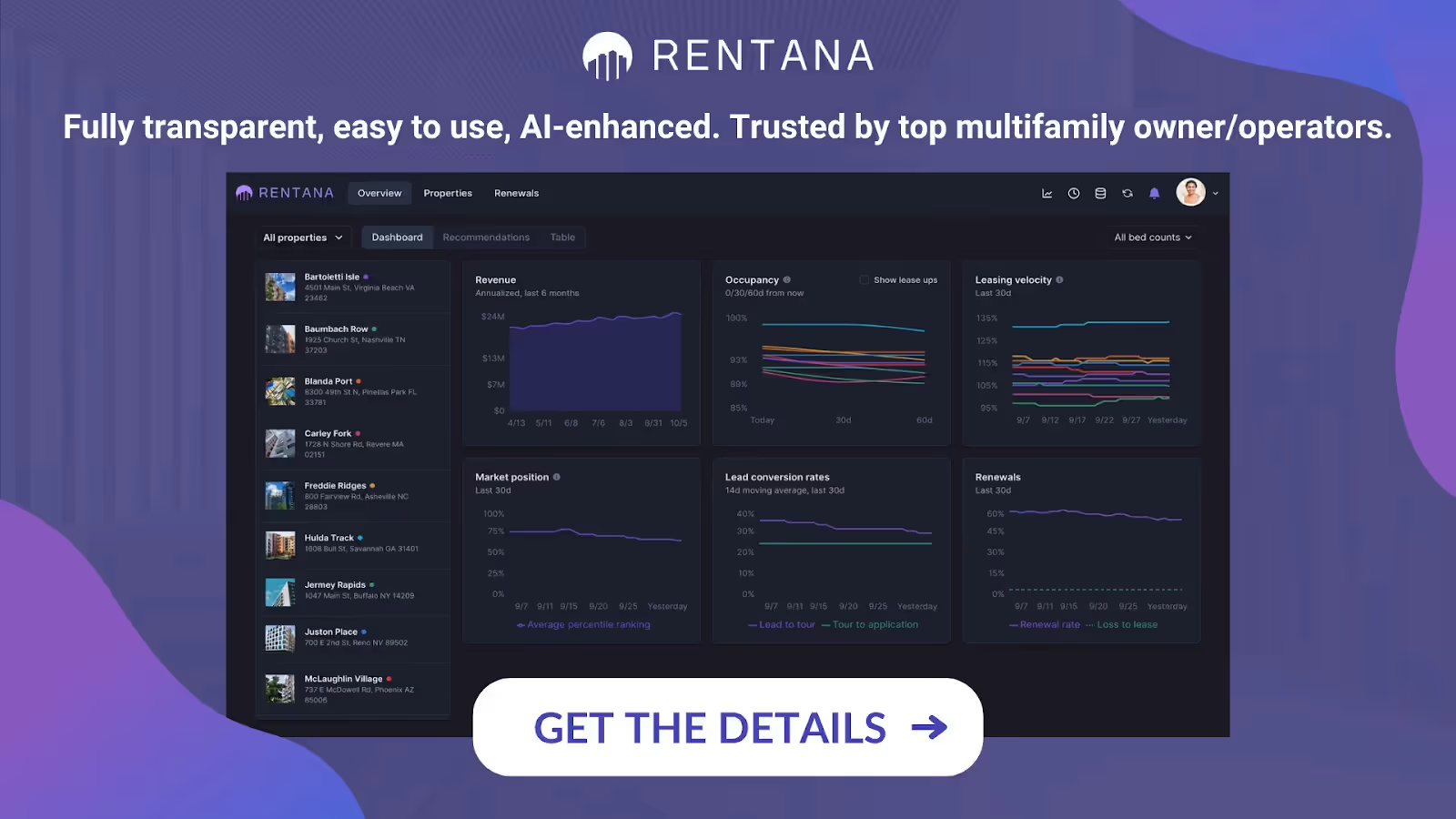
It is one thing to define predictive analytics. It is another to see how it works inside a real portfolio.
A modern predictive analytics platform should connect forecasting, trend analysis, and renewal planning in a way that feels practical, not abstract. Rentana provides a useful example of how this can work in everyday operations.
1. Portfolio Level Forecasting
At the portfolio level, predictive analytics help leadership understand where performance may be heading, not just where it stands today.
Instead of reviewing each property in isolation, teams can see forward-looking occupancy projections, upcoming availability concentrations, and leasing momentum across assets within a single framework.
For example, if several properties share heavier expiration cycles within the same quarter, portfolio-level forecasting surfaces that concentration early. Leadership can then align renewal strategy, marketing allocations, and operational planning across assets before exposure materializes.
Rentana organizes portfolio trends into a structured overview, helping teams identify where coordinated attention may be required next.
2. Property Level Trend Analysis
When a portfolio level signal emerges, the next step is understanding the underlying drivers.
Predictive analytics at the property level evaluates leasing velocity trends, renewal timing, projected availability, and performance direction over time.
For example, a property may report strong current occupancy, yet trend analysis could reveal softening conversion efficiency or increasing projected availability within the next 60 days. That forward visibility provides context beyond a single occupancy metric.
Rentana’s drill-down workflow allows users to move seamlessly from portfolio signals into property level detail, connecting high-level forecasts to operational execution.
Related: How Real Estate Agents can use AI
3. Renewal and Availability Projections
Renewals and availability are central to forward revenue planning.
Predictive analytics models expiration timelines, evaluates historical renewal behavior, and projects how upcoming turnover may influence availability across defined periods.
A property may appear stable today, but concentrated expirations within a short window can introduce temporary volatility if renewal engagement or leasing execution falters. Seeing that timing early allows teams to adjust outreach, pricing cadence, or lease term structuring before pressure builds. Rentana brings renewal timing, lease trade-out trends, and availability projections into one connected system, supporting more deliberate retention and turnover planning.
4. Transparent Insights Instead of Black Box Outputs
Transparency is critical in predictive analysis.
Leadership teams need to understand what inputs are influencing projections and how trend direction is being evaluated. Clear visualization of expiration timing, leasing momentum, and conversion patterns builds confidence in forward planning decisions. Rentana emphasizes structured, explainable analytics. Rather than presenting isolated outputs, it connects operational data and broader market context in a way that makes forward performance clear.
In practice, predictive analytics does not replace operational judgement. It strengthens it.
By connecting forecasting, renewal timing, leasing momentum, and availability projections within one structured framework, platforms like Rentana, support more disciplined, forward looking oversight across multifamily projections.
Related: The Best AI Tool for Rental Market Analysis by Zip Code
What Makes a Good Real Estate Predictive Analytics Software?

When evaluating a good real estate predictive analytics software, the objective is not complexity. It is clarity and reliability.
The right platform should strengthen forward planning without overwhelming teams with opaque models or disconnected dashboards.
Here are key criteria to consider when evaluating predictive analytics software for multifamily:
1. Transparent and Explainable Models
Predictive insights must be understandable. Teams should be able to quickly see the trends, inputs, and factors influencing forecasts rather than relying on outputs that feel opaque.
Transparency allows teams to evaluate why a recommendation is being made adn determine whether the drive is market conditions, operational execution, or underlying data inputs.
When models are explainable, recommendations can be assessed and acted upon with confidence, not simply accepted at face value.
2. Built on Reliable Operational and Market Data
Strong predictive tools connect property-level performance data with relevant market context. Reliable, clearly sourced inputs form the foundation for meaningful projections.
Just as important, the platform should explain how those inputs influence forward signals. If pricing pressure, occupancy compression, or renewal variability is identified, teams should be able to see whether that insight is driven by leasing momentum, expiration concentration, conversion performance, or broader market movement.
When operational data and market signals are both visible and contextualized, forecasts become interpretable, not speculative.
You Might Like: 19 Interesting Real Estate Fun Facts
3. Portfolio-to-Property Drill-Down Visibility
Forecasting is most useful when it works at multiple levels. Leadership should be able to view portfolio-wide projections and then move directly into property-level detail to understand what is driving those forecasts.
A strong system clearly identified which metrics are on track, which warrant closer monitoring, and which require immediate attention. Dashboard level insights should surface the most material drivers of performance, highlighting where action may have the greatest impact.
From there, teams should be able to move from high level signals into supporting detail with minimal friction, connecting portfolio oversight to property level execution in a single workflow.
4. Integration with PMS and reporting systems
Predictive analytics should fit naturally into existing workflows. Seamless integration with property management systems and reporting processes reduces manual work and ensures insights are accessible where decisions are made.
Reliable data synchronization, including scheduled updates and on-demand refresh capabilities, allows teams to respond quickly to changing conditions. When pricing settings or operational inputs are adjusted, updated recommendations should reflect those changes without unnecessary delay.
The goal is continuity. Predictive insights should integrate into daily decision making, not operate as a separate analytical exercise.
Read Also: The Best Real Estate Dashboards for Decision Making
5. Designed for Owners and Operators, not Just Analysts
The best predictive tools are intuitive and aligned with real estate operations. They should support leasing, renewal planning, marketing strategy, and portfolio oversight without requiring advanced technical expertise.
Insights should highlight clear actions and the reasoning behind them, allowing teams to execute with confidence rather than interpret raw data.
A strong platform should also be configured and self-serve. Renewal batches, pricing settings, and specials should be adjustable as conditions evolve, without technical friction.
Clear visual dashboards and narrative context help teams quickly see performance against occupancy and revenue goals, translating into operational execution.
When these elements come together, predictive analytics becomes more than a feature. It becomes a structured planning tool that supports clearer, more informed decision making across multifamily portfolios.
Don’t Miss: Conversational AI in Real Estate: A Complete Guide
Conclusion on Real Estate Predictive Analytics Software
Predictive analytics is about identifying patterns early enough to act with intention.
When forecasting, leasing momentum, renewal timing, and availability projections are connected within one structured system, portfolio oversight shifts from reactive adjustment to proactive management.
The advantage is not certainty. It is clarity. And in multifamily operations, earlier visibility meaningfully shapes how pricing, renewals, and execution decisions are made.