
How is AI is changing real estate in USA?
Have you ever wondered how much of your next real estate decision might be guided by artificial intelligence?
According to a 2025 survey by Realtor.com, 82% of Americans use AI for housing market information. AI is changing real estate in the USA by quietly transforming how the industry operates. It predicts home prices, drafts property listings and even handles tenant requests.
What used to take days of manual work now happens in minutes, powered by smart algorithms that learn from market data, buyer behavior, and historical trends.
Across the country, real estate professionals are embracing AI tools to make faster, more confident decisions. Agents use it to identify the best leads, investors rely on it to spot profitable markets, and property managers depend on it to anticipate maintenance issues before they arise.
According to recent industry reports, the adoption of AI in real estate is growing every quarter as companies look for ways to cut costs, boost accuracy, and gain a competitive edge.
The result is a new era where real estate is genuinely about insight. AI is helping professionals understand markets on a deeper level, connect with clients more personally, and run operations with greater efficiency.
In the following sections, we’ll explore how AI is changing real estate in USA, and why this technology is becoming a must-have for everyone from agents to investors.
Related: 9 Best AI Tools for Commercial Real Estate
11 Ways AI is Changing Real Estate in USA
- AI-Powered Revenue Intelligence and Property Performance Analytics
- Smarter Property Valuations and Automated Pricing Models
- Predictive Market Forecasting and Investment Insights
- AI-Driven Lead Generation and Client Matching
- Virtual Tours and 3D Property Visualization
- Automated Property Management and Maintenance Scheduling
- Personalized Marketing and Dynamic Ad Targeting
- Intelligent Tenant Screening and Risk Assessment
- AI Chatbots and Virtual Assistants for Customer Support
- Smart Building Technology and Energy Optimization
- Real Estate Development and Construction Planning
1. AI-Powered Revenue Intelligence and Property Performance Analytics
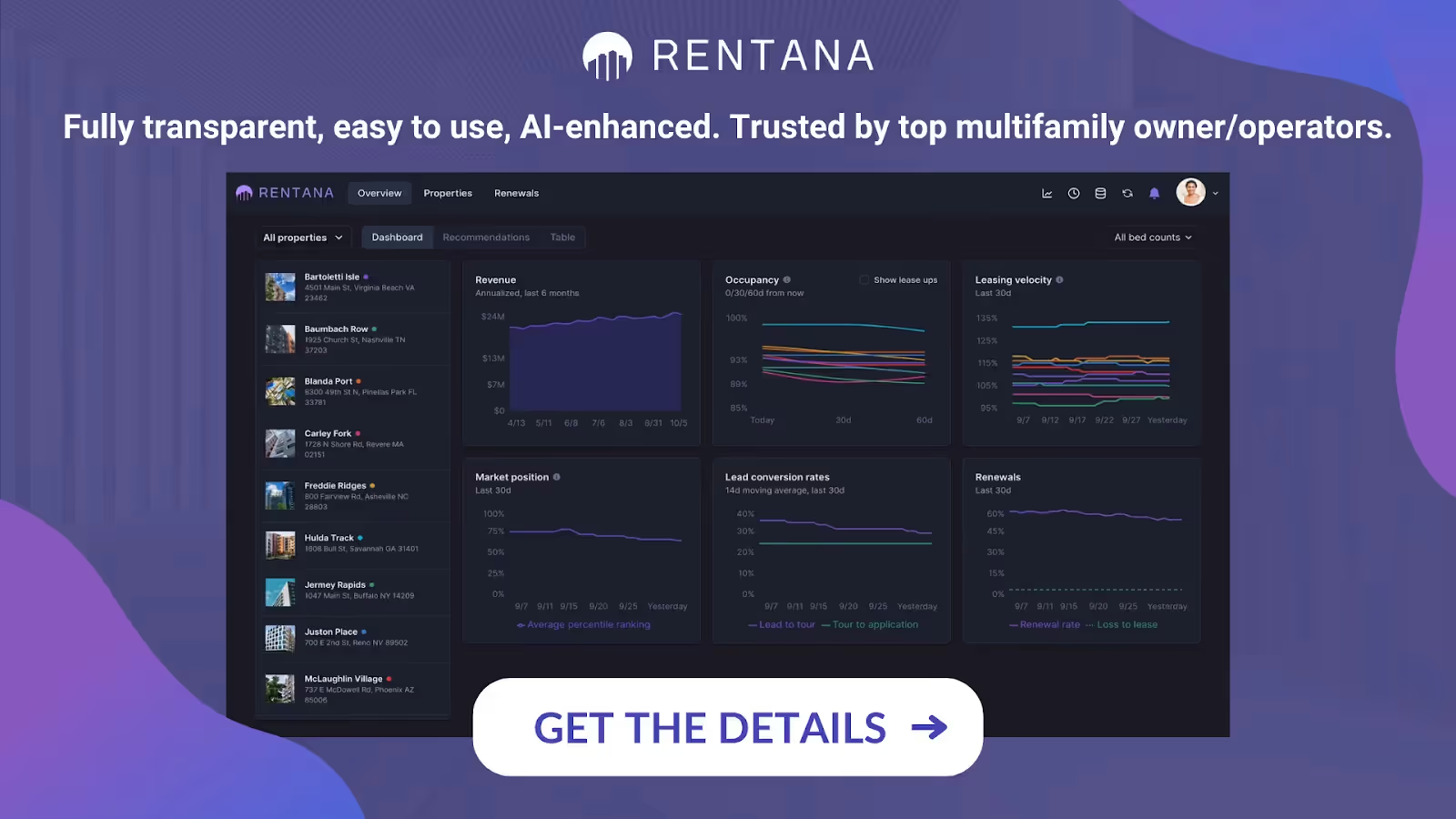
Imagine being able to predict how your properties will perform months in advance, not by guessing, but by reading real-time data that tells you what’s really happening behind the numbers.
AI-powered revenue intelligence is how AI is changing real estate in USA. Instead of waiting for reports at the end of the quarter, investors and property managers can now see trends unfold as they happen.
AI systems analyze rent patterns, occupancy rates, and local market data to find what’s working and what needs attention. They can flag potential revenue leaks, suggest smarter pricing adjustments, and even forecast future performance based on demand signals. This kind of insight helps owners make decisions that boost income while reducing risk.
A great example of this in action is Rentana, a revenue intelligence and analytics platform built specifically for multifamily real estate. Rentana combines public data into one clear dashboard. What makes it powerful is its visual performance system; green indicators show properties performing well, yellow flags highlight areas that need attention, and red alerts signal properties falling behind goals.
Beyond the color cues, Rentana uses AI to recommend pricing adjustments, forecast occupancy changes, and uncover hidden revenue opportunities. It also explains the “why” behind each suggestion, so users understand the reasoning and can make informed choices. The result is smarter, faster, and more confident decision-making that helps operators shift from reactive management to proactive growth.
With tools like Rentana leading the way, AI-driven revenue intelligence is becoming the standard for how real estate professionals manage portfolios and grow their bottom line.
2. Smarter Property Valuations and Automated Pricing Models
Property valuation is another way AI is changing real estate in the USA.
In the past, property valuation meant comparing recent sales and relying on an appraiser’s judgment. Today, AI can analyze thousands of data points; everything from local market trends to school ratings, traffic patterns, and even nearby business activity, to estimate property values with impressive accuracy.
For example, imagine two similar apartments in the same city.
One sits near new restaurants and public transit, while the other faces higher vacancy rates in its neighborhood. Traditional valuation might treat them equally, but AI-powered pricing models quickly recognize the small differences that affect long-term value. These tools learn from millions of past transactions and market shifts, giving real-time insights into what a property is truly worth.
Many real estate agents and investors now use AI-driven platforms to set listing prices, adjust rents dynamically, and even forecast appreciation potential. The result is more accurate pricing, faster sales, and fewer surprises, all driven by data that keeps up with the market instead of lagging behind it.
Top Pick: What is a Good Cap Rate for a Multifamily Property?
3. Predictive Market Forecasting and Investment Insights
AI is transforming how real estate professionals understand market trends and make investment decisions. Instead of relying only on historical data or broad market reports, predictive algorithms now analyze live market signals, rental demand, local job growth, new construction, and even shifts in consumer behavior, to forecast what’s likely to happen next.
This kind of forecasting is how AI is changing real estate in USA because it helps investors identify which markets are heating up, where rents may rise, and which properties are most likely to deliver strong returns.
For instance, if a neighborhood shows steady rent growth, declining vacancy rates, and improving local amenities, AI tools can flag it as a potential high-yield area long before traditional reports catch up.
Rentana takes this a step further with its predictive analytics and business intelligence engine. By blending public market data with private portfolio performance, it helps track gross revenue to help achieve better NOI. Rentana’s AI doesn’t only show what’s happening, it anticipates what’s coming, giving investors and operators a head start on their next move.
With predictive forecasting built into modern platforms, investors can plan with more confidence, reduce risk, and make data-driven decisions that align with where the market is going, not just where it’s been.
4. AI-Driven Lead Generation and Client Matching
Finding the right buyer, renter, or investor used to mean hours of cold calls and guesswork. Now, AI is making that process faster, smarter, and far more personal. Instead of chasing every lead, real estate professionals can focus on the ones most likely to convert.
AI-powered lead generation tools analyze behavior patterns, search history, and engagement data to identify people who are actively looking for properties.
They can tell when someone is ready to buy, rent, or sell based on signals like online activity, time spent on listings, and even the types of homes they view most often.
Once those leads are identified, AI-driven matching systems connect them with the right property or agent. For example, a renter searching for two-bedroom apartments in Austin might automatically get matched with listings that fit their budget, commute preferences, and lifestyle needs. For agents and property managers, this means less manual filtering and more meaningful conversations with serious prospects.
By combining predictive data with personalization, AI takes the guesswork out of lead generation and turns it into a process that feels natural, efficient, and surprisingly human.
5. Virtual Tours and 3D Property Visualization
3D property visualization is one of the top ways AI is changing real estate in USA.
AI has completely changed how buyers and renters experience properties before ever setting foot inside. Virtual tours and 3D visualization tools make it possible to explore homes from anywhere, turning what used to be flat photos into interactive, lifelike experiences.
With AI-enhanced imaging, users can “walk through” rooms, check layouts, and even visualize furniture placement.
For instance, a renter in Chicago can tour an apartment in Miami on their phone, viewing every angle as if they were standing inside. Some tools even use AI to adjust lighting, highlight key features, or suggest design improvements, helping buyers imagine the full potential of a space.
For agents and property managers, this technology means fewer wasted showings and better-qualified leads. Prospective clients can narrow down their choices before visiting in person, making the process faster and more convenient for everyone involved.
Virtual tours powered by AI tell a story, helping buyers connect emotionally with a space long before they reach the front door.
Recommended: What is the 2 Percent Rule in Real Estate?
6. Automated Property Management and Maintenance Scheduling
Managing multiple properties can quickly become overwhelming, but AI is making it simpler by automating repetitive tasks and predicting what needs attention before it becomes a problem. From handling rent payments to scheduling repairs, automation powered by AI helps property managers stay organized and proactive.
AI tools can track rent due dates, send reminders, and even process payments automatically. When maintenance requests come in, the system can prioritize them based on urgency, assign the right vendor, and update tenants in real time. Some advanced platforms even predict future maintenance needs.
For example, alerting managers when an HVAC system shows signs of inefficiency or when water usage suddenly spikes, signaling a possible leak.
This level of automation means fewer emergencies, happier tenants, and more time for managers to focus on strategy instead of putting out fires. By keeping everything running smoothly behind the scenes, AI turns property management into a more efficient, stress-free process for both owners and residents.
7. Personalized Marketing and Dynamic Ad Targeting
AI is transforming how real estate marketing works by making it personal and precise. Instead of sending the same ad to everyone, AI tools can tailor campaigns to reach the right audience at the right time with the right message.
These systems analyze search data, online behavior, and demographics to understand what potential buyers or renters are really looking for.
For example, if someone spends time browsing waterfront homes in Florida, AI can automatically serve them listings that fit that interest.
For real estate agents and property managers, this means higher engagement and lower ad spend. Every dollar goes toward reaching people who are most likely to take action. Platforms powered by AI can also track which ads perform best and adjust future campaigns instantly, ensuring results improve over time.
By turning raw data into targeted storytelling, AI helps real estate professionals connect with clients more effectively and makes marketing feel less like advertising and more like matchmaking.
8. Intelligent Tenant Screening and Risk Assessment
Tenant Screening is also one of the ways AI is changing real estate in USA.
Choosing the right tenant is one of the most important parts of successful property management, and AI is helping landlords make smarter, faster, and fairer decisions. Traditional tenant screening relies heavily on credit scores and income statements, but AI goes several steps further.
Modern screening tools can analyze a broader range of data, including rental payment history, employment stability, past landlord feedback, and even behavioral patterns that predict reliability.
For example, AI can flag applicants who consistently pay late or identify renters with strong payment histories but limited credit, giving property managers a clearer, more balanced picture.
AI also helps reduce bias by focusing on data-driven insights rather than subjective judgments. This means more consistent, fair evaluations across all applicants. On the financial side, predictive algorithms can estimate the likelihood of missed payments or early move-outs, helping owners protect their investment and maintain steady cash flow.
By combining automation with intelligence, AI makes tenant screening faster, more accurate, and more transparent, giving landlords confidence that they’re choosing tenants who are both responsible and a good fit for their properties.
9. AI Chatbots and Virtual Assistants for Customer Support
AI chatbots signal the biggest ways AI is changing real estate in the USA.
In today’s fast-moving real estate world, responsiveness matters. Buyers, renters, and owners expect quick answers, and that’s where AI chatbots and virtual assistants come in. These smart tools handle questions, schedule appointments, and provide instant support 24/7, making customer service smoother and more efficient.
Imagine a renter messaging an apartment community late at night about a maintenance issue. Instead of waiting until the next morning, an AI chatbot can log the request, offer troubleshooting tips, or even schedule a technician automatically.
For real estate agents, chatbots can answer common questions about listings, book showings, and capture new leads while they focus on closing deals.
Virtual assistants powered by AI also learn from every interaction. Over time, they understand customer preferences, remember past inquiries, and personalize responses, making each experience feel more natural and human.
For property managers, these tools mean fewer missed opportunities and faster responses. For tenants and buyers, it means getting help when they need it most. AI chatbots have become the friendly, always-available team members that keep communication flowing and clients satisfied.
Read Also: What is a Good IRR for Rental Properties?
10. Smart Building Technology and Energy Optimization
AI is making buildings smarter, greener, and more efficient. With smart building technology, property owners can monitor and control everything from lighting and temperature to water usage and security, all powered by intelligent automation.
Sensors and AI-driven systems track real-time data throughout a property, automatically adjusting settings to reduce energy waste and improve comfort. For example, lights can turn off when rooms are empty, thermostats can adjust based on occupancy patterns, and ventilation systems can adapt to weather conditions.
These tools don’t just save money on utilities; they also extend the life of building systems by preventing overuse.
Property managers can spot unusual energy spikes, detect leaks, or predict when equipment will need maintenance long before problems arise.
Smart building technology powered by AI creates spaces that are not only cost-effective but also more sustainable. For multifamily operators and investors, it’s a win for both the environment and the bottom line.
11. AI in Real Estate Development and Construction Planning
AI is changing how buildings are designed, planned, and constructed, making development faster, safer, and more efficient. Instead of relying solely on traditional blueprints and estimates, developers now use AI-powered modeling tools to predict costs, optimize layouts, and reduce waste before a single brick is laid.
For example, AI can analyze zoning data, material availability, and local demand to identify the best locations and project types to build. During construction, sensors and predictive models help monitor progress, detect safety risks, and keep projects on schedule.
Some platforms even forecast material needs and delivery times, helping avoid costly delays and budget overruns.
Architects and engineers also benefit from AI’s ability to simulate different design scenarios. They can test energy efficiency, space utilization, and long-term maintenance costs in minutes; insights that used to take weeks to calculate.
By turning data into smart guidance, AI is helping developers make better decisions from concept to completion. The result is more sustainable projects, fewer surprises, and developments that meet the needs of both investors and communities with greater precision.
The Growing Adoption: How AI Continues to Change Real Estate in the USA

AI is changing real estate in the USA in tremendous ways. It is no longer a futuristic idea. It’s quickly becoming part of everyday operations across the industry.
From large institutional investors to small property management firms, professionals are realizing how much easier and more efficient their work becomes when AI takes on the heavy lifting.
In the U.S., adoption has accelerated sharply in the past few years. More than half of real estate companies now use some form of AI-powered software, whether it’s for pricing, analytics, marketing, or customer service. The shift is being driven by the need to save time, reduce costs, and make smarter, faster decisions in a highly competitive market.
Property managers use AI tools like Rentana for business intelligence and predictive analytics, agents rely on intelligent CRMs to track leads and close deals and investors use predictive models to analyze new markets before committing capital. What was once an optional advantage is quickly becoming essential to staying relevant and profitable.
The best part is that AI adoption isn’t about replacing people but helping them do their jobs better. With automation handling data, scheduling, and reporting, real estate professionals can focus on strategy, relationships, and long-term growth.
The message is clear: those who embrace AI now are building the foundation for the next generation of real estate success.
Frequently Asked Questions on How AI is Changing Real Estate in USA
Could AI Replace Real Estate?
No, AI is unlikely to replace real estate as an industry. It can automate data analysis, forecasting, and reporting, but decisions around pricing, negotiations, and client relationships still rely on human judgment. AI works best as a tool that supports agents, investors, and property managers rather than one that replaces them.
Which 3 Jobs Will Survive AI?
Roles built on relationships and judgment are the most resistant to automation, including real estate agents and brokers, property managers, and investment strategists or asset managers. These jobs involve negotiation, client trust, and on-the-ground decision-making that AI can support but not fully take over. Data-heavy, repetitive tasks are what AI tends to replace first, not entire roles.
How Are Real Estate Agents Using AI?
Real estate agents use AI for lead scoring, personalized marketing, and market trend analysis. It also helps automate routine communication through chatbots and virtual assistants, freeing up time for client-facing work. Many agents also use AI-powered tools to analyze buyer behavior and match clients to properties faster.
Can AI Generate Real Estate Leads?
Yes, AI can generate real estate leads by analyzing online behavior, social media activity, and property search patterns. It helps identify potential buyers and sellers, then scores leads by likelihood to convert. This allows agents to prioritize outreach and focus their time on the most promising prospects.
What Can AI Do in Real Estate?
AI can analyze market trends, forecast rent and demand shifts, and help investors and property managers spot opportunities faster. It also supports portfolio management, risk assessment, and deal sourcing by processing large amounts of data in a fraction of the time manual methods take. The result is faster, more informed decision-making across the industry.