Most asset managers don’t have a data problem.
They have a decision problem.
There’s no shortage of reports, dashboards, or metrics. Occupancy is tracked. Rent growth is measured. Variance to budget is reviewed. But when performance starts to shift, the real challenge isn’t seeing the numbers.
It’s knowing what to do next, and where to focus first.
A slowdown in leasing might be tied to pricing. A dip in renewals might increase future exposure. A marketing push might drive traffic, but not conversion. These signals show up in different places, at different times, often owned by different teams.
In fact, If you ask most asset managers what they spend their time on, the answer is usually the same:
Reviewing reports. Explaining variance. Following up with property teams.
But that is not what actually drives performance.
The real work happens in the decisions behind those reports. How pricing is set. How leasing is pacing. How renewals are handled. How exposure builds over time. Those decisions are happening every day across different teams, often without a clear view of how they connect.
That gap is where performance is won or lost.
Because multifamily portfolios do not drift off track all at once. It happens gradually. Leasing slows in one property. Renewals soften in another. Availability builds in a few months that were not closely watched. By the time it shows up in a report, the moment to act has already passed.
This is why asset management is changing. It is no longer just about looking back and explaining outcomes. It is about staying close to what is changing across the portfolio and helping teams respond in time. That requires more than access to data. It requires clarity on which signals matter and how they should guide decisions.
The role becomes less about oversight and more about coordination.
Not just knowing what is happening, but helping ensure that pricing, leasing, and operations are moving in the same direction.
Related:
- AI Adoption in Multifamily: Why it's Accelerating So Fast
- What Does a Multifamily Asset Manager Do?
What Is Multifamily Asset Management?
Multifamily asset management is the process of guiding how a property or portfolio performs over time.
It sits above day-to-day property management and focuses on bigger decisions. How pricing is set. How leasing is pacing. How renewals are handled. How future availability and exposure is managed across months. The goal is to make sure these decisions are working together in a way that supports the asset’s financial plan.
In practice, it is less about any single metric and more about how different signals connect.
An asset manager is looking at leasing activity, renewal behavior, availability, and pricing at the same time. Not just to understand what is happening, but to decide what should change.
That often means working across teams.
Pricing decisions affect leasing. Leasing outcomes affect occupancy. Renewal trends affect future availability. Marketing influences demand. Asset management sits in the middle of all of this, helping ensure decisions are aligned.
Example
A property shows stable occupancy at 95%.
At first glance, everything looks fine.
But leasing velocity has started to slow, and renewal conversion has dropped over the past few weeks. At the same time, a higher number of leases are set to expire over the next 60 days, increasing near-term exposure. That means more units are likely to come back to market soon, even if current occupancy has not changed yet.
An asset manager would look at this and recognize what is coming.
Instead of waiting for occupancy to decline, they may work with onsite teams to adjust pricing, review renewal strategy, or focus leasing efforts on specific unit types. They may also look at how expirations are distributed and take steps to reduce short-term clustering where possible. The goal is to respond before the impact becomes visible in headline metrics.
Related:
- Multifamily Market Trends Every Investor Should Know
- How to Improve Leasing Speed in Multifamily
Multifamily Asset Management Is No Longer Just Oversight
Asset management today sits at the center of how a portfolio performs.
Reports still matter. Financials still matter. But reviewing them is only one part of the role. The bigger responsibility is making sure decisions across pricing, leasing, and operations are working together in a coordinated way.
Every property is generating activity at the same time.
Leases are being signed. Units are becoming available. Renewal decisions are being made. Pricing is being adjusted. Marketing is driving traffic. None of these happen in isolation, and none of them are owned by a single team.
This is where asset managers come in.
They act as the point where these signals come together. They connect what is happening across properties and help guide how teams respond. When leasing slows, the question is not just what the numbers say. It is how pricing, availability, and demand are interacting. When renewals shift, it is not just about retention. It is about how that affects future exposure and leasing pressure.
Portfolio performance depends on how well these connections are understood.
If pricing moves without awareness of leasing activity, units may sit longer than expected. If marketing drives demand toward units that are not aligned with current availability, conversion drops. If renewal decisions are made without visibility into upcoming exposure, pressure builds in future months.
These are not isolated issues. They are connected outcomes.
The role of asset management is to keep those connections visible and actionable. It is about helping teams operate with the same understanding of what is happening across the portfolio, so decisions are aligned rather than reactive.
Performance ultimately comes down to how decisions across pricing, leasing, and operations stay aligned as conditions change.
Why Traditional Reporting Falls Short for Asset Managers
Most asset management workflows are still built around reports.
Weekly updates. Monthly reviews. Variance to budget. Occupancy snapshots. These are useful, but they reflect a version of the portfolio that has already moved.
The challenge is that operations do not pause between reporting cycles.
Leasing activity changes daily. Units become available. Pricing is adjusted. Renewals are accepted or declined. By the time these show up in a report, the underlying conditions have already shifted.
That is where static reporting starts to fall short.
It captures outcomes, but not how those outcomes are developing.
Another limitation is timing.
Reports tend to highlight completed outcomes. A drop in occupancy. Slower leasing. Lower renewal rates. These are important, but they show up after the change has taken place. Acting on them often means reacting late rather than guiding what happens next.
There is also the issue of fragmentation.
Leasing data may live in one place. Pricing decisions in another. Marketing performance somewhere else. Each team has its own view, but there is no single place where these signals come together. That makes it harder to understand how one decision is affecting another.
And then there is prioritization.
When everything is reported at once, it is difficult to know where to focus. Which property needs attention now? Which issue will have the biggest impact? What can wait and what cannot.
Without that clarity, time gets spread thin.
The result is a workflow that is informative, but not always actionable.
Asset managers do not need more reports. They need a clearer view of what is changing across the portfolio, how those changes are connected, and where to step in first.
Read Also:
- The Best Lease Renewal Optimization Software for Multifamily
- Multifamily Investment Portfolio: Key Metrics to Track
The Key Metrics Every Multifamily Asset Manager Should Track
1. Leasing Velocity
Leasing velocity has a direct impact on outcomes. Properties that actively monitor and improve leasing velocity can see 2–5% higher occupancy, which makes it one of the most important early signals for asset managers.
It is one of the fastest ways to understand if things are moving in the right direction.
You can have strong occupancy and still have a problem if units are taking longer to lease. That usually shows up before anything else.
For example, if a property that typically leases units in 10 days starts trending toward 18 to 20 days, that is an early signal. Something has shifted. It could be pricing, it could be demand, it could be availability timing.
With Rentana, leasing velocity is visible across properties and floorplans, not just at the surface level. You can see where leasing is slowing and where it is still moving, which makes it easier to decide where to step in.
2. Renewal Conversion
Renewals shape what stays in place and what comes back to market.
A drop in renewal conversion does not just affect retention. It creates future leasing pressure. More units come back at once, which can change how pricing and availability need to be managed.
For example, if renewal acceptance starts dropping in a specific property or unit type, that is not just a leasing issue. It is a signal that future availability is about to increase.
Rentana tracks renewal conversion alongside leasing activity, so you are not looking at renewals in isolation. You can see how renewal decisions today affect leasing conditions in the next few months.
3. Lease Expiration Exposure
Exposure is about timing, not just volume.
A property can look stable overall, but if too many leases are set to expire in the same month, it creates pressure. Leasing teams suddenly need to fill a large number of units at once, often in a short window.
For example, if 25 percent of units are set to expire within a 60-day period, that is not something you want to discover late.
Rentana helps surface this through exposure forecasting, showing how expirations are distributed over time. That makes it easier to smooth out those clusters before they become a problem.
4. Pricing Performance
Pricing performance is not just about where rents are set. It is about how those rents are being received.
If pricing is aligned with demand, units lease steadily. If it is not, you start to see friction. Units sit longer, concessions increase, or leasing slows.
For example, two similar unit types in the same property can behave very differently. One may lease quickly at current pricing, while another struggles. That difference matters.
Rentana connects pricing to leasing outcomes using publicly available market data and real-time performance signals. This helps asset managers understand how pricing decisions are playing out, without relying on static assumptions.
5. Predicted Occupancy
Predicted occupancy gives you a forward view of where things are heading.
Instead of waiting for occupancy to change, you can see how current leasing, renewals, and availability are likely to shape it.
For example, if leasing slows and renewal conversion drops at the same time, predicted occupancy may start to trend downward weeks before it shows up in actual numbers.
Rentana brings this together by combining leasing velocity, renewal behavior, and exposure into a projected view. That makes it easier to act earlier, when there is still time to influence the outcome.
These signals are not meant to be tracked in isolation.
What matters is how they connect. Leasing velocity, renewals, exposure, pricing, and occupancy are all part of the same system. Seeing them together is what makes it possible to decide what to do next with more confidence.
Related to Renewals:
- The Best Lease Renewal Software for Real Estate
- Lease Renewal Agreement: How to Manage The Entire Process Easily
Best Practices for Modern Multifamily Asset Management
1. Portfolio Dashboards for Visibility
You cannot manage what you cannot see clearly.
Looking at properties one by one makes it difficult to understand how the portfolio is actually performing. Patterns get missed. Issues surface late. Strong and weak performers blend together.
Portfolio dashboards change that.
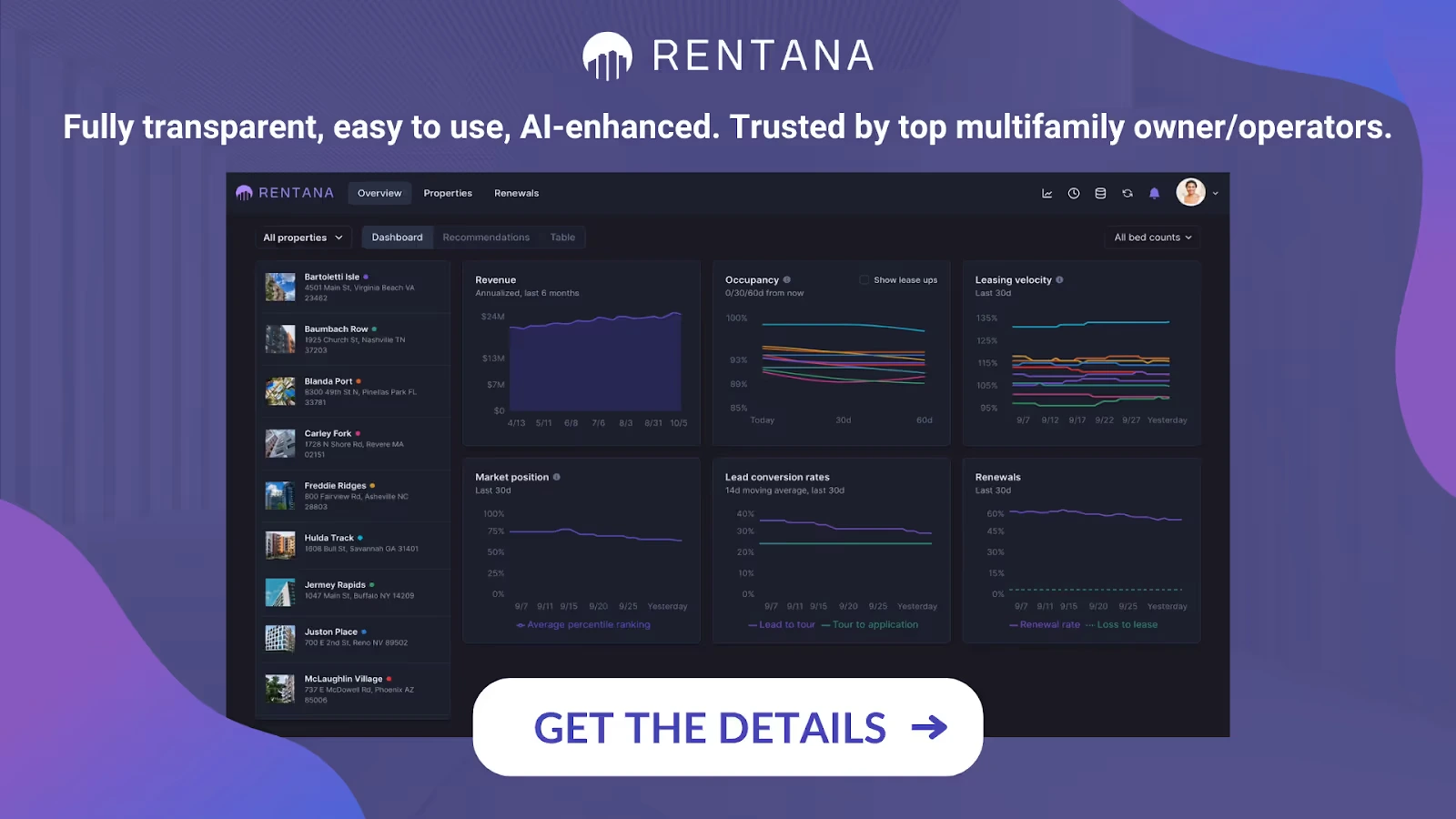
They bring everything into one place so you can quickly see where leasing is slowing, where renewals are shifting, and where availability is building. Instead of digging through multiple reports, you start with a clear view of what needs attention.
Platforms like Rentana provide this visibility by combining property-level performance with portfolio trends in a single view, helping you move from “what is happening” to “where should I focus” more quickly.
2. Prioritization Frameworks (Where to Focus)
The hardest part of asset management is not finding issues. It is deciding which ones matter most.
Every property will have something going on. Leasing could be slightly off. Renewals may be trending down. Exposure might be building. Without a way to prioritize, everything starts to feel urgent.
A strong framework helps narrow that down.
For example, if one property has slightly slower leasing but stable renewals, while another has declining renewals and rising future availability, the second one likely needs attention first.
By surfacing key signals like leasing velocity, renewal conversion, and exposure together, platforms like Rentana make it easier to identify which properties are moving out of alignment and require attention.
3. Continuous Monitoring vs Periodic Review
Waiting for weekly or monthly reviews creates a gap between what is happening and when you respond.
By the time something shows up in a report, it has already been unfolding for days or weeks. That delay makes it harder to adjust early.
Continuous monitoring closes that gap.
It allows you to stay close to how leasing, pricing, and renewals are evolving, without needing to wait for a formal review cycle.
Signals like leasing activity, renewal trends, and availability updates become visible as they change, making it easier to stay ahead of issues instead of reacting after they are fully visible.
4. Shared Metrics Across Teams
Asset managers, onsite teams, and marketing often look at different metrics.
Leasing teams focus on tours and conversions. Marketing looks at leads and traffic. Asset managers review occupancy and financials. Each view is useful, but when they are not connected, decisions become fragmented.
Shared metrics bring those views together.
When everyone is looking at leasing velocity, renewal conversion, and availability in the same way, conversations become more aligned. Teams understand not just their part, but how it fits into the bigger picture.
Shared dashboards and aligned reporting make these signals accessible across teams, helping ensure everyone is working from the same understanding of performance.
5. Connecting Signals Across the Portfolio
The most effective asset management comes from seeing how everything connects.
Leasing velocity shows how units are moving. Renewal tracking shows what is staying in place. Exposure forecasting shows what is coming next. Predicted occupancy brings it all together.
At the same time, floorplan-level performance adds another layer. It helps you understand which unit types are driving demand and which need attention.
Rentana brings these signals into a single view.
You can see leasing velocity alongside renewal trends, exposure across months, and predicted occupancy, all connected to how different unit types are performing. That makes it easier to understand not just what is happening, but how decisions in one area affect outcomes in another.
Don’t Miss:
- Best Multifamily Newsletters for Operators
- Multifamily AI Leasing Assistants: Use Cases & Benefits
Conclusion
Asset management today comes down to clarity and timing.
Across a portfolio, leasing activity, renewal behavior, pricing, and availability are all moving at once. The challenge is keeping a clear view of how those pieces connect and deciding where to focus as things change.
Small shifts matter.
Leasing slows in one property. Renewals soften in another. Exposure builds over a few months that were not closely watched. These are the signals that shape performance long before they show up in a report.
The role of the asset manager is to stay close to those signals and help teams respond in a coordinated way. Pricing, leasing, and operations all influence each other, so decisions need to be made with that full picture in mind.
Rentana brings these signals together across the portfolio. Leasing velocity, renewal tracking, exposure and predicted occupancy become visible in a single view, so teams are working from the same understanding of what is happening.
That clarity makes it easier to focus, adjust, and respond with the portfolio as conditions change.