In 2026, AI has become essential to multifamily real-estate. Markets move faster, renters have more choices, and small pricing or timing mistakes can quietly cost millions across a portfolio. The operators who win are no longer the ones with the most data, but the ones who can actually use it.
In fact, a recent industry survey found that 68% of multifamily operators have already integrated AI into their core business systems, highlighting how rapidly the technology has become foundational rather than experimental.
The best multifamily systems in 2026 are not flashy dashboards or complicated models. They are practical, transparent, and focused on helping owners and operators make better decisions every day.
Related:
- 7 Best AI Tools for Multifamily Property Management
- The Best AI Tools for Real Estate Investors
What a Multifamily Platform With the Best AI Features Should Look Like
By 2026, calling a multifamily platform “AI-powered” is no longer enough. Nearly every system claims some form of intelligence. What separates best-in-class AI from everything else is not complexity, but usefulness in operator workflows.
The strongest systems start with real-time data ingestion. Markets change daily, sometimes hourly. AI that relies on outdated snapshots or delayed reports cannot keep up. Best-in-class platforms continuously pull in leasing activity, demand signals, pricing movement, and market behavior so insights reflect what is actually happening right now, not what happened last month. This real-time awareness is what allows modern revenue intelligence platforms like Rentana to provide timely, confident decisions for multifamily operators.
Next comes explainable AI. In 2026, operators will not accept black-box recommendations. They want to understand why a price should change, why demand is shifting, or why a unit is at risk of sitting vacant. Top systems clearly show the data, trends, and assumptions behind every insight so teams can trust the output and act on it. Transparency is no longer optional. It is foundational.
Another critical standard is unit-level intelligence. Property averages hide important details. The best AI platforms operate not only at the bedroom and floor plan level but also at the unit level, recognizing that demand, pricing power, and leasing speed vary widely within the same building. This level of precision is provided by platforms like Rentana. Rentana’s precision leads to smarter pricing, better renewals, and fewer missed opportunities across portfolios.
Finally, best-in-class AI delivers actionable insights, not static dashboards. Charts and metrics alone do not drive performance. The best systems highlight what needs attention, prioritize risks, and guide next steps. Instead of asking users to interpret data, the AI connects the dots and supports faster, more confident decisions in daily operations.
In 2026, the most effective multifamily AI systems are not the ones that show the most data. They are the ones that make it easier for operators to know what matters, why it matters, and what to do next.
Top Picks:
- Will AI Replace Real Estate Agents? Or Transform Them?
- How To Calculate the Value of a Multifamily Property Easily
Choosing a Multifamily System with Best AI Features: What to Evaluate
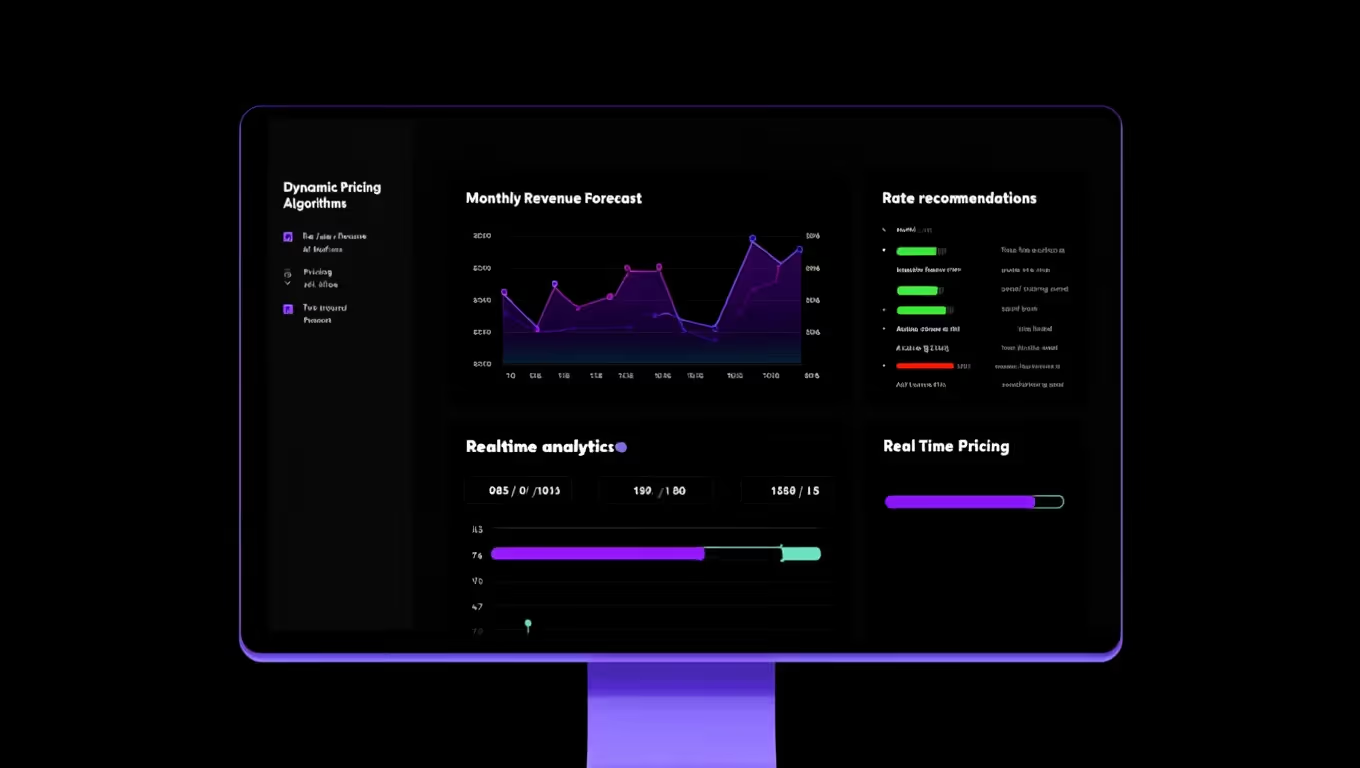
In 2026, the value of AI in multifamily comes down to whether it helps owners and operators make better decisions faster. The most effective systems focus on a small set of core capabilities that directly impact revenue, occupancy, and performance.
1. Demand Forecasting
Demand forecasting helps owners understand how renter interest is likely to change before occupancy is affected. Instead of reacting to vacancies after they appear, AI reads early signals such as lead activity, tours, market fluctuations, and conversion patterns to show where demand is rising or softening.
This allows operators to adjust pricing, marketing, or leasing strategy early. Rentana supports this by visualizing demand trends and highlighting shifts that signal future leasing performance.
2. Pricing Intelligence
Pricing intelligence ensures rents stay aligned with real market behavior. AI evaluates demand, leasing speed, and competitive pricing to recommend adjustments that maximize revenue without pushing renters away.
In practice, this means pricing decisions are no longer based on static increases or instinct. Platforms like Rentana provide pricing guidance with clear explanations so operators understand not just what to change, but why.
3. Occupancy and Availability Prediction
Occupancy prediction helps teams see what their property will look like weeks or months ahead. AI uses lease expirations, renewal patterns, and demand trends to forecast future availability.
This insight helps operators plan renewals, marketing, and staffing proactively. Rentana supports this by showing predicted occupancy and availability timelines from the property to the unit-type level.
4. Portfolio Health Monitoring
When managing multiple assets, it is easy to miss early warning signs. Portfolio health monitoring uses AI to track performance across properties and highlight which assets need attention.
Instead of digging through reports, operators see simple signals that show where performance is on track and where it is slipping. Rentana’s portfolio-level views help surface these risks quickly so teams know where to focus first.
Read Also:
- AI Adoption Challenges in Real Estate & How to Solve Them
- Is Multifamily Considered Commercial or Residential?
5. Competitive Analysis
Competitive analysis keeps pricing and positioning aligned with the market. AI compares rents, amenities, and leasing strategies across similar properties to show where a property stands.
This prevents overpricing in soft markets and underpricing in strong ones. Rentana supports this by providing transparent comp analysis, including normalized pricing and detailed competitor insights that inform smarter decisions.
Together, these features form the foundation of best-in-class multifamily AI in 2026. When they work in unison, AI becomes a practical decision-support system that helps owners and operators stay ahead of the market rather than chase it.
Related:
- AI Leasing Assistants for Multifamily Teams
- What is a Good Cap Rate for Multifamily Properties?
How the Right Multifamily AI System Drives Revenue and Performance
The real test of any AI system is not how advanced it sounds, but whether it improves results. In multifamily, the right AI directly influences revenue, occupancy, and day-to-day decision making in ways that add up over time.
1. Driving Effective Gross Income (EGI) Growth
AI helps grow EGI by aligning pricing with real demand instead of static assumptions. When pricing recommendations are made at the right time and units are priced appropriately, properties capture more revenue while reducing vacancy. Platforms like Rentana support this by surfacing pricing and demand signals that help operators protect revenue during strong markets and respond quickly when conditions soften.
2. Reducing Vacancy Before It Becomes Costly
Vacancy rarely appears without warning. AI systems detect early signs such as slowing demand, over exposure, or weakening leasing and renewal conversions. This allows teams to take action before units sit empty for long periods. Rentana helps highlight these early signals so adjustments can be made proactively rather than reactively.
3. Speeding Up Leasing Decisions
Leasing teams often face uncertainty when reviewing pricing change recommendations without clear context for the reason for those changes. AI has the ability to remove much of that friction by turning large amounts of data into clear guidance. With better visibility into demand and performance, decisions that once took days can happen in minutes.
4. Supporting Smarter Renewal Strategies
Renewals are one of the most critical revenue moments in multifamily. AI helps operators time renewal offers and price them appropriately by considering demand trends, unit performance, and market conditions.
5. Creating Consistent, Repeatable Performance
Over time, AI helps replace guesswork with data-driven discipline. When pricing, leasing, and renewal decisions follow clear signals instead of instinct, performance becomes more consistent. The right system does not just improve one decision, it improves the entire operating rhythm of a portfolio.
In 2026, AI-driven revenue and performance gains come from many small, well-timed decisions. Platforms like Rentana help ensure those decisions are informed, confident, and aligned with real market behavior.
Related:
Why Rentana Is the Multifamily Platform with the Best AI Features: Success Stories
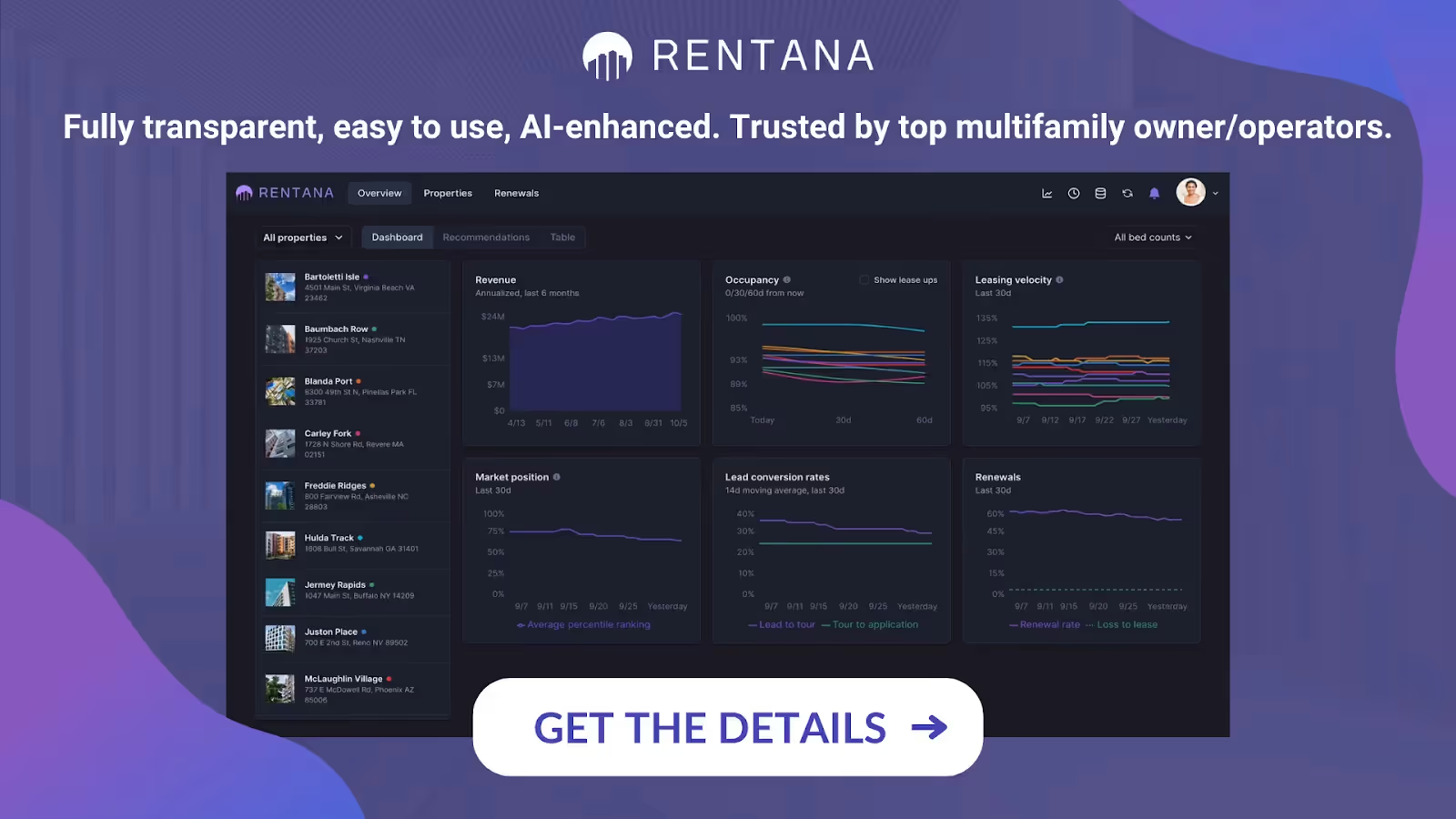
In 2026, the multifamily industry no longer needs more data. It needs clearer answers and faster action. What sets Rentana apart as the best multifamily AI platform is not just its technology, but how effectively that technology translates insight into real operator decisions that drive measurable results.
That difference shows up clearly in how customers use Rentana and what they achieve with it.
Here is why Rentana is the multifamily system with the best AI features.
Proven Results at Portfolio Scale
When URS Capital Partners made its first move into revenue management technology, it deployed Rentana across 12 properties totaling 2,500 units. The goal was simple: improve pricing decisions without slowing teams down. Within a year, the results spoke for themselves.
URS achieved a 414% ROI, driven by:
- 8.2% sequential NOI growth from Q1 to Q2
- 7.3% daily occupancy improvement from March to September 2025
- 5x faster rent reviews, cutting pricing analysis time from 90 minutes to just 15 minutes per property
Rather than replacing human judgment, Rentana freed teams to focus on strategy. As Heather Moore, Consultant at URS Capital Partners, put it, “Rentana is beyond BI. It’s an interactive dashboard where operators and asset managers can see not just if they can make more money, but exactly how to make more money.”
Winning in Head-to-Head Competition
Rentana’s advantage becomes even clearer in competitive environments. In a 90-day pilot, 29th Street Capital evaluated Rentana against an industry veteran’s new system across a 12,000+ unit portfolio. Rentana’s outperformance was clear.
Rentana delivered:
- $4.6 million in incremental property value
- 3.5% stronger net rental income growth compared to the control group
- Faster, more confident pricing decisions across the organization
Operationally, the contrast was just as stark. Rentana onboarded new properties in days instead of weeks, provided near-instant support, and shipped meaningful product updates throughout the pilot. As Robert Waz, VP at 29th Street Capital, noted, “The UI is miles ahead, and the platform gives us a strategic advantage to grow our assets.”
Revenue Intelligence, Not Black-Box Automation
What both customers highlight is the same theme: Rentana does not hide behind opaque models. It combines public market trends with each customer’s private rental data to deliver real-time, explainable pricing recommendations. Operators can see how demand, occupancy, comps, and leasing behavior influence every suggestion.
This transparency builds trust and drives adoption, which is often the biggest barrier to successful revenue management. Rentana’s intuitive workflows and guided onboarding help teams move quickly without disrupting existing processes.
Built for How Operators Actually Work
In 2026, the best AI platforms are not the most complex. They are the ones teams actually use. Rentana’s success with firms like URS and 29th Street Capital reflects its focus on real-world operator needs: speed, clarity, and actionable insight.
By helping teams anticipate lease turnover, identify revenue opportunities, and act decisively, Rentana enables a shift toward an NOI-first, insight-driven operating model.
As multifamily margins tighten and expectations rise, Rentana stands out not because it promises perfection, but because it consistently delivers outcomes that matter. That is what best-in-class multifamily AI looks like in 2026.
Don’t Miss: Top Real Estate Market Analysis Tools
Conclusion: What to Look for When Choosing a Multifamily AI Platform in 2026
When evaluating a multifamily AI platform in 2026, the focus should be on practicality, not hype. The best systems are transparent, clearly explaining how insights are generated so teams can trust and act on them. They are adaptable, adjusting quickly as market conditions change instead of relying on fixed rules.
Strong platforms also integrate smoothly with existing systems and scale easily across growing portfolios. Most importantly, they support real-world operator workflows by turning data into clear guidance rather than adding more dashboards to manage. An AI system should make daily decisions easier, faster, and more confident.