Imagine running a business where sales are steady, customers keep coming in, and the product is solid, yet revenue never seems to grow the way you expect. You raise prices and leasing velocity slows down. You offer discounts and net revenue shrinks. Every decision feels like a trade-off, and it is hard to tell which move will actually move the needle.
This is a challenge many businesses face. Growth does not always come from selling more, but from selling smarter. That is where revenue optimization comes in. Instead of relying on instinct, guesswork, or blanket discounts, revenue optimization focuses on using data, timing, and strategy to maximize profitability.
Now, let’s discuss what revenue optimization really means and the top strategies businesses use to increase revenue.
Related: The Best AI Tools for Real Estate Investors
What Is Revenue Optimization?
Revenue optimization is the process of finding the best strategy to maximize revenue under current and predicted market conditions. Instead of focusing only on selling more products or finding new customers, it looks at pricing, timing, market demand, and customer needs to improve revenue outcomes.
At its core, revenue optimization asks simple questions. Are prices set correctly? Are discounts being used at the right time? Are businesses leaving money on the table because offers are not matched to customer needs? When businesses answer these questions with data instead of guesswork, revenue becomes more predictable and sustainable. In fact, research from McKinsey has shown that improving pricing decisions alone can increase revenue by 2–7%, often with a much larger impact on profit than volume growth.
Why Revenue Optimization Matters
Revenue optimization matters because most businesses have limited time, budgets, and resources. Chasing sales without a revenue strategy can lead to over-discounting, stressed teams, and shrinking margins. Optimizing revenue helps businesses increase profitability without increasing workload at the same rate.
This applies to businesses of all sizes. A small business may use revenue optimization to stop underpricing its services. A larger company may use it to improve pricing across different customer segments or locations. No matter the industry, the goal is the same: maximize earnings from each opportunity.
Example
Imagine a coffee shop that sells the same number of drinks every day. Sales are steady, but profits are flat. Instead of trying to attract more customers, the owner reviews pricing and notices that popular drinks are underpriced during peak hours. By adjusting prices slightly and offering bundles during slow periods, the shop earns more without selling more cups of coffee.
That is revenue optimization. The business did not work harder or grow bigger. It simply made smarter decisions about how and when it earns revenue.
Top Pick: How To Calculate the Value of a Multifamily Property Easily
Top 6 Revenue Optimization Strategies Businesses Should Use
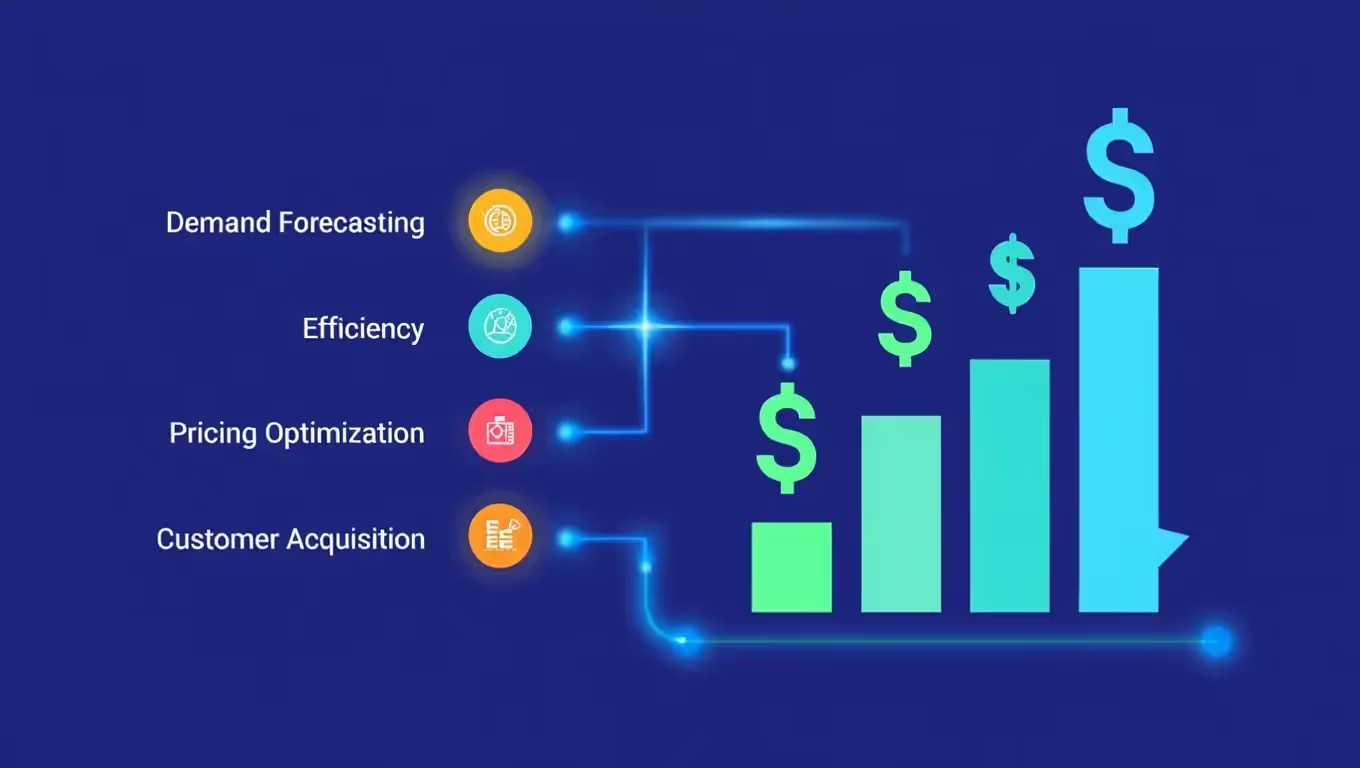
- Pricing optimization
- Demand forecasting
- Upselling and cross-selling
- Customer retention strategies
- Data-driven decision making
- Automation and AI-powered insights
1. Pricing Optimization
Pricing optimization is one of the top revenue optimization strategies. It is about charging the right price at the right time. Not the highest price possible, and not the lowest, but the price that makes sense based on supply, demand, competition, and customer behavior.
Many businesses set prices once and rarely revisit them. The problem is that markets change constantly. Demand goes up and down, competitors adjust prices, and customer expectations shift. The market isn’t static so when prices stay static, businesses either leave money on the table or price themselves out of demand.
In industries like real estate, pricing optimization happens at a more detailed level. Demand shifts by unit type, season, and location. Tools like Rentana help surface those demand signals and pricing patterns so decisions are based on real market behavior rather than assumptions.
2. Demand Forecasting
Demand forecasting is about understanding how interest in a product or service is likely to change in the future. Instead of reacting after demand rises or falls, businesses use data to anticipate what is coming and prepare ahead of time.
Many businesses rely on past performance or instinct to plan for demand. The issue is that demand rarely changes all at once. It usually shifts slowly, showing early signs before becoming obvious. Without forecasting, businesses often realize demand has dropped only after revenue is already affected.
One scenario is a business that notices fewer inquiries week over week but does not adjust until sales decline. With demand forecasting, those early signals prompt action sooner. The business can adjust pricing, marketing, or capacity before the slowdown becomes costly.
In industries like real estate, demand forecasting happens at a granular level. Platforms like Rentana help surface these demand trends early, allowing owners and operators to make informed decisions before performance starts to slip.
3. Upselling and Cross-Selling
Upselling and cross-selling focus is another revenue optimization strategy focused on increasing revenue from customers who are already engaged. Instead of finding new customers, businesses offer related products, upgrades, or add-ons that add value to the original purchase.
Many businesses miss this opportunity by treating every transaction as a one-time event. The issue is that customers are often most open to additional offers when they already trust the business. Ignoring this moment can mean leaving easy revenue behind.
In industries like real estate, upselling and cross-selling can show up through premium units, added amenities, or flexible lease options. Data on demand and renter behavior helps identify which offers make sense and when.
Read Also: What is a Good Cap Rate for a Multifamily Property?
4. Customer Retention Strategies
Retaining customers is often more cost-effective because acquiring new ones usually requires more time, effort, and marketing spend.
Many businesses put most of their energy into attracting new customers while overlooking existing ones. The problem is that losing customers creates hidden revenue gaps. Even a small increase in churn can have a big impact on long-term revenue.
In industries like real estate, retention shows up through lease renewals and tenant satisfaction. Understanding demand, pricing fairness, and timing plays a big role in keeping renters long term, which is where data-driven insights become valuable.
For example, with Rentana, strategic renewal offer pricing generation and renewal probability forecasting to help generate renewal offers that align with retention goals
5. Data-Driven Decision Making
Data-driven decision making is one of the most underrated. It means using real information instead of assumptions when choosing how to run a business. Rather than relying on gut instinct, businesses look at trends, performance metrics, and customer behavior to guide their decisions.
Many businesses collect data but either have no way to easily access it or cannot fully use it. The problem is that without turning data into insight, decisions stay reactive. By the time an issue becomes obvious, revenue may already be affected.
6. Automation and AI-Powered Insights
Automation and AI-powered insights help businesses move faster by handling repetitive analysis and highlighting what matters most. Instead of spending hours reviewing reports or spreadsheets, teams can focus on decisions and actions.
Many businesses rely on manual processes to track performance and spot issues. The problem is that humans are slow to catch small changes across large amounts of data. AI can scan patterns continuously and surface insights that might otherwise be missed.
AI systems today can send alerts when performance begins to shift instead of discovering problems weeks later. In industries like real estate, AI-powered platforms like Rentana help turn complex data into clear signals, making revenue decisions quicker and more confident.
Related: 9 Best AI Tools for Commercial Real Estate
Why Revenue Optimization Matters for Long-Term Growth
Revenue optimization strategies matter because growth does not always come from selling more or finding new customers. For many businesses, the biggest opportunity is improving how revenue is generated from what already exists. When pricing, timing, and strategy are aligned, businesses can increase revenue without increasing workload at the same pace.
Instead of relying on heavy discounts or chasing volume, businesses earn more from each transaction. Small improvements in pricing or retention often have a bigger impact than large increases in sales activity.
Revenue optimization also improves efficiency. Teams spend less time reacting to problems and more time acting on clear signals. Decisions become faster, more confident, and easier to explain because they are backed by data rather than instinct.
Most importantly, revenue optimization supports better decision-making over the long term. Businesses that understand demand, customer behavior, and market shifts can adapt earlier and avoid costly mistakes. This creates steadier growth that is sustainable, predictable, and less dependent on constant expansion.
How Data and Analytics Platforms Support Revenue Optimization
Modern data and analytics platforms play a critical role in turning revenue optimization from a concept into a repeatable strategy. By tracking performance in real time, forecasting demand, and testing pricing decisions, these tools help businesses understand what is working and what needs adjustment before revenue is affected.
Instead of reacting to changes after the fact, businesses can see patterns forming early. They gain clarity into demand shifts, customer behavior, and pricing effectiveness, which leads to faster and more confident decisions. Over time, this reduces guesswork and creates a more disciplined approach to growth.
A Platform like Rentana fit naturally into this workflow by organizing complex data into clear insights that support smarter pricing and demand-driven decisions. When businesses use analytics to guide revenue strategy, optimization becomes continuous rather than reactive, setting the foundation for sustainable long-term growth.
Don’t Miss: Top Real Estate Market Analysis Tools
Conclusion on Revenue Optimization Strategies
Revenue optimization is about making smarter decisions with the customers, pricing, and demand you already have.
When businesses move away from guesswork and rely on data to guide pricing, forecasting, and retention, revenue becomes more predictable and sustainable over time.
The most successful businesses focus on small, well-timed improvements that compound. By optimizing how and when revenue is earned, teams work more efficiently, protect margins, and adapt faster as markets change. With the right insights and tools in place, revenue optimization becomes a continuous strategy rather than a one-time effort.
Frequently Asked Questions on Revenue Optimization Strategies
How Do You Optimize Revenue?
Revenue is optimized by improving pricing strategies, increasing demand, reducing churn, and maximizing customer lifetime value. This often involves using data and analytics to adjust pricing, target the right customers, and improve operational efficiency.
What Is The Difference Between Revenue Management And Revenue Optimization?
Revenue management focuses on setting and adjusting prices based on demand and supply. Revenue optimization is broader and includes pricing, customer segmentation, sales strategy, retention, and operational improvements to maximize total revenue.
What Are The 4 Pillars Of Revenue Operations?
The four pillars of revenue operations are sales, marketing, customer success, and data analytics. Together, they align teams and systems to drive predictable and scalable revenue growth.
What Are Types Of Optimization Techniques?
Common optimization techniques include pricing optimization, demand forecasting, process automation, A/B testing, customer segmentation, and predictive analytics. These techniques help businesses make smarter, data-driven decisions.