
If you ask most real estate operators how they track performance, you’ll usually hear a familiar answer. Spreadsheets. Reports pulled from different systems. A lot of manual work to piece everything together.
But real estate has become far more complex. Market conditions shift quickly. Supply and demand move in cycles. Leasing activity can change week to week. Executives and asset managers need clear answers, not just more data.
That is where real estate business analytics comes in.
At its core, business analytics is about turning everyday operational data and publicly available market data into insight you can actually use. It helps owners and operators understand how their portfolios are performing, where attention is needed, and how to plan with more confidence.
We will break down what real estate business analytics really means, why it matters today, and what modern reporting and analytics tools should deliver for real estate teams.
Related: The Best AI Tools for Real Estate Investors
What Is Real Estate Business Analytics?
Real estate business analytics is the practice of turning data into clear, practical insight for owners and operators. It goes beyond collecting numbers. It connects operational performance with publicly available market context so teams can understand what is happening and decide what to do next.
In real estate, data comes from many places. Leasing activity, occupancy trends, availability, concessions, maintenance timelines, and portfolio performance all generate valuable information. At the same time, public market conditions such as supply levels, pricing trends, and demand shifts provide important context.
Business analytics brings these pieces together in a way that is structured, visual, and easy to interpret. Industry research shows that multifamily operators are increasingly integrating analytics, AI, and data tools into daily operations to improve efficiency, streamline decisions, and better understand performance across their portfolios. As technology becomes more embedded in property management workflows, analytics is shifting from a reporting function to a core operational capability.
Turning Data Into Actionable Insight
Having data is not the same as understanding it. Business analytics organizes data into meaningful metrics and trends. Instead of asking, “What happened last month?” teams can ask, “What patterns are forming?” and “Where should we focus next?”
For example, analytics can highlight changes in leasing velocity, shifts in availability by unit type, or differences in performance across properties. When these patterns are visible, teams can respond thoughtfully rather than reactively.
The goal is clarity. Good analytics does not overwhelm people with charts. It surfaces the signals that matter and explains them in a way that supports real decisions.
Tracking Performance Across Portfolios, Properties, and Units
Real estate performance happens at multiple layers, and each role needs a different lense.. Executives need a portfolio-level view to understand overall direction. Asset managers need property-level visibility to evaluate performance. . On-site teams benefit from understanding floorplan to unit-level patterns that affect daily execution.
Real estate business analytics connects these perspectives into one structured, navigable view rather than leaving them scattered across separate reports.
At the portfolio level, analytics helps highlight which assets are meeting expectations and which may need attention. At the property level, it surfaces operational patterns like changes in occupancy, leasing activity, and availability. At the unit level, it can reveal trends performance by floor plan, or recurring availability pressure.
When these layers are connected, teams can move from a broad overview to detailed insight quickly. This makes conversations more focused, decisions more aligned, and follow-up actions easier to prioritize.
A Strategic Intelligence Layer, Not Just Reporting
Traditional reporting often looks backward. It summarizes what has already happened. Real estate business analytics is different. It acts as a strategic intelligence layer that supports forward looking planning.
By combining operational data with publicly available market data, analytics helps teams evaluate market conditions, understand trends over time, and prepare for what may come next. It creates a shared source of truth that leadership teams can rely on.
In this way, business analytics is not just a reporting function. It becomes a core part of how real estate organizations plan, prioritize, and operate in an increasingly data driven environment.
Related: The Best Real Estate Dashboards for Decision Making
Why Real Estate Business Analytics Matters for Owners and Operators Today
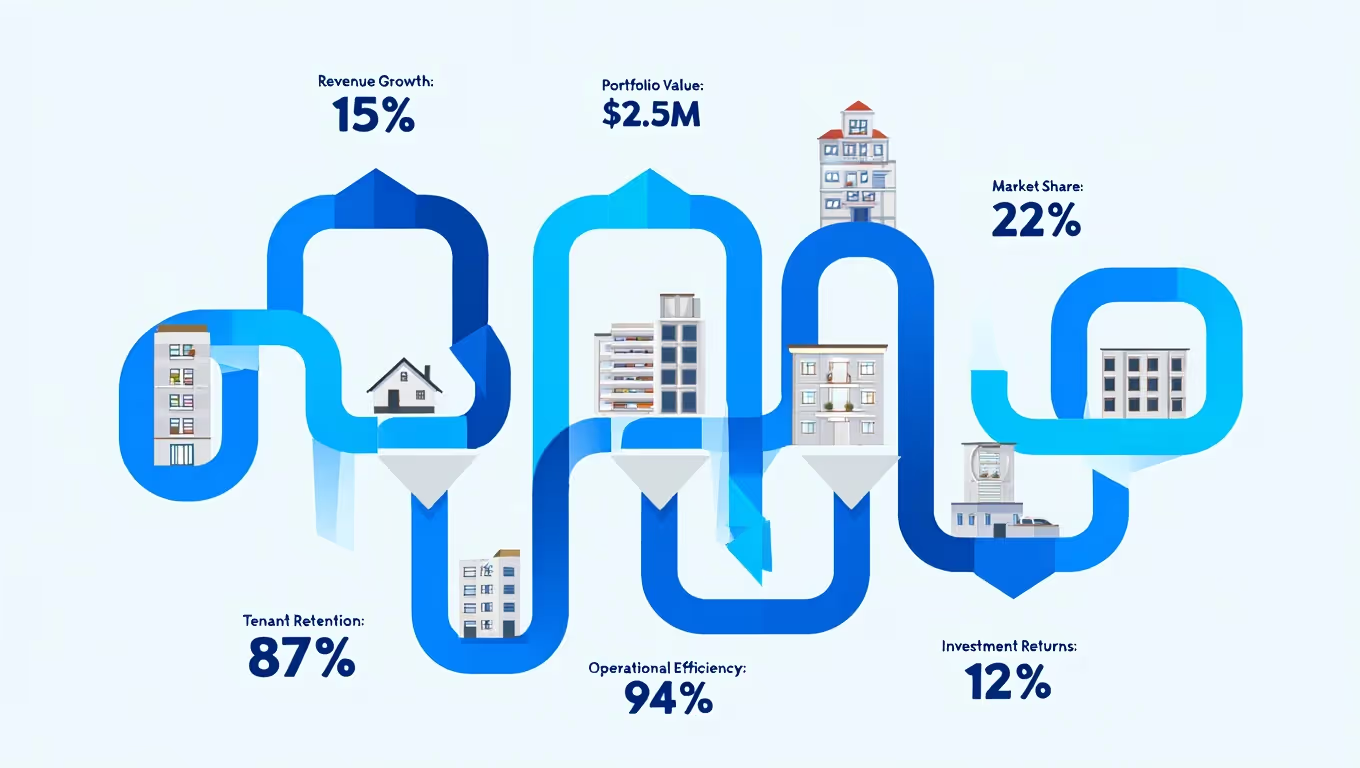
Real estate business analytics has always been built on long term strategy. But the day to day environment that owners and operators face today is moving faster than ever.
Market conditions change quickly. Leasing patterns shift. Operating costs fluctuate. And decisions that used to be made with plenty of time now often require faster answers and clearer visibility.
This is why analytics has become so important. Not as a buzzword, but as a practical tool for navigating a more complex landscape.
1. Housing Supply and Demand Are Constantly Shifting
One of the biggest challenges in multifamily today is how dynamic housing supply and demand has become.
New deliveries can change the competitive landscape in a submarket. Demand can rise or soften depending on broader economic trends. Conditions evolve throughout the year, and operators need to stay grounded in what is happening in real time.
Business analytics helps teams monitor these shifts using publicly available market data, so they are not relying solely on instinct or outdated assumptions.
2. Leasing and Operational Decisions Are More Complex
Leasing decisions are no longer just about occupancy. Operators are balancing availability, renewal activity, unit mix, leasing velocity, and operational constraints all at once.
At the same time, on site teams are managing day to day execution while leadership is focused on performance and planning.
Analytics helps connect these moving pieces. It gives teams a clearer understanding of what is happening inside the portfolio, and how those trends relate to operational realities and performance goals.
3. Visibility Across Assets and Portfolios Is Now Essential
As portfolios grow, it becomes harder to manage performance through disconnected reports or manual processes.
Owners and operators need to understand:
- Which properties are on track
- Where attention is needed
- How performance varies across assets
- What trends are emerging at the unit level
Without a connected analytics layer, it is easy for important signals to get lost.
Real estate business analytics creates a structured view across portfolios, properties, and units, helping teams stay aligned and proactive.
4. Executives Need Fast, Trustworthy Answers
Leadership teams are being asked to make decisions with less time and more complexity.
They need answers that are:
- Clear
- Consistent
- Transparent
- Grounded in reliable data
Analytics supports this by creating a shared source of truth. Instead of spending weeks assembling reports, teams can focus on interpreting trends and planning next steps.
In today’s environment, business analytics is not just helpful. It is becoming a core capability for owners and operators who want to operate with clarity, confidence, and alignment.
Top Pick: Real Estate Market Insights For Property Managers
Key Types of Real Estate Business Analytics
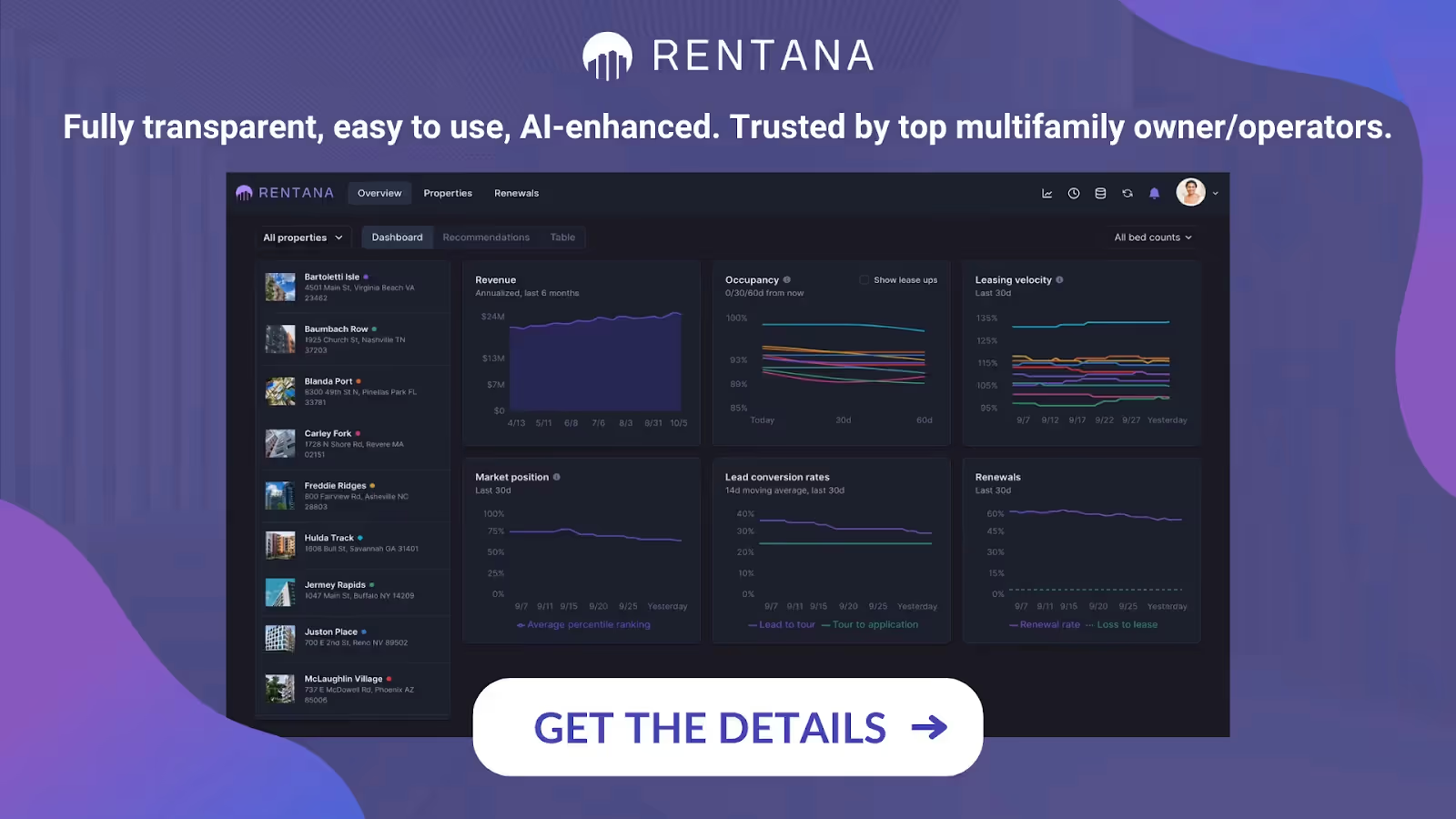
1. Portfolio → Property → Unit
Modern real estate teams need insight at multiple levels. A single report is not enough. Executives, asset managers, and on site teams all require different views of performance, but those views must connect to one another.
Strong business analytics platforms make it easy to move from a high level portfolio overview down to detailed property and unit insights. This structured drill down approach is where real estate analytics becomes truly powerful.
Here are the key layers that matter most.
Portfolio Health Monitoring
At the highest level, owners and operators need a clear snapshot of overall portfolio performance.
This includes understanding:
- Occupancy trends across assets
- Variations in leasing activity
- Changes in availability
- Properties that are on track versus those that need attention
Portfolio health monitoring should make it easy to see patterns across assets without digging through separate reports for each property.
With Rentana, teams can view portfolio performance in a structured, visual format and quickly identify where attention is needed. From there, they can move directly into individual properties with just a few clicks. This creates a connected experience between executive level oversight and operational follow up.
2. Property Level Performance Trends
Once a portfolio view highlights an area of focus, the next step is understanding what is happening at the property level.
Property analytics help answer questions such as:
- How has occupancy trended over time?
- What is happening with leasing activity this month compared to prior periods?
- How is availability changing across unit types?
- Are there noticeable shifts in demand?
These insights provide context. Instead of reacting to a single number, teams can evaluate trends and make informed adjustments.
Rentana allows users to drill from a portfolio overview directly into detailed property level metrics. Operational trends, performance patterns, and relevant market context are presented together so teams can evaluate property performance in a structured way.
3. Unit Level Operational Patterns
Real estate performance ultimately happens at the unit level.
Understanding operational patterns can reveal insights that are not visible at a higher level such as:
- Days vacant
- Performance by floor plan
- Differences in leasing timelines
- Availability by unit type
Unit level analytics help teams identify patterns that may influence planning and operations. For example, certain unit types may consistently lease faster, or certain configurations may experience longer vacancy periods.
Rentana’s flexible database architecture allows teams to view insights down to the unit level, including how specific features or configurations perform over time. This level of visibility supports more precise and thoughtful decision making without relying on assumptions.
Related: How to Create Multifamily Property Performance Dashboards
4. Leasing Velocity and Availability Forecasting
Leasing velocity and forward looking availability are critical for planning.
Operators need to understand:
- How quickly units are leasing
- What availability may look like in upcoming weeks or months
- How current trends may affect future occupancy
Analytics platforms that incorporate forecasting help teams plan with greater confidence. Instead of looking only at historical performance, they can evaluate how present trends may shape near term outcomes.
Rentana provides visibility into demand trends, conversion patterns, and future availability across different time frames. By combining operational data with publicly available public market data, the platform helps teams evaluate current conditions and prepare accordingly.
5. Public Market Conditions and Pricing Trends
No property operates in isolation. Public market conditions, new supply, and broader pricing trends all influence performance.
Modern real estate analytics should incorporate publicly available public market data to provide context around:
- Market rent trends
- Shifts in supply
- Changes in demand patterns
This context helps teams evaluate their own performance relative to broader conditions without relying on private or proprietary data sources.
Rentana integrates public market data directly into its analytics experience, offering transparency into how pricing trends and market conditions are evolving. Users can see the data that informs insights, along with AI generated explanations that clarify the reasoning behind recommendations.
The true value of real estate business analytics lies in connection.
When portfolio, property, and unit level insights are unified in a single platform, teams can move seamlessly from strategy to execution. Rentana’s drill down experience is designed to support exactly this workflow, turning complex data into structured, accessible intelligence for owners and operators.
Instead of disconnected reports, teams gain a clear, layered understanding of performance that supports better planning across the entire organization.
Related: How Real Estate Agents Can Use AI
6 Things to Look for in a Real Esate Business Analytics Platform
As real estate teams become more data driven, the tools they rely on matter more than ever. Not every analytics platform is built for the realities of multifamily operations, and not every system delivers insight in a way that is actually usable for owners and operators.
The best platforms go beyond reporting. They provide clarity, transparency, and a workflow that supports real decision making across the portfolio.
Here are a few key qualities to look for when evaluating a real estate analytics solution.
1. Easy Portfolio to Property Navigation
Real estate decisions happen at multiple levels. Executives need a portfolio wide view, while asset managers and operators need property level detail.
An effective analytics platform should make it simple to move from:
- A high level portfolio overview
- To individual property performance
- To unit level insights when needed
This drill down structure ensures teams can identify issues quickly and understand what is driving them.
Rentana is designed around this connected workflow, allowing users to move seamlessly from portfolio health monitoring into deeper property level context without jumping between disconnected reports.
2. AI Supported Explanations, Not Black Box Outputs
AI is becoming more common in real estate technology, but what matters is how it is applied.
Teams should look for platforms that use AI to support understanding, not obscure it.
The right system should provide:
- Clear reasoning behind insights
- Transparency into the factors being considered
- Explanations that help teams make informed decisions
Rentana emphasizes AI generated explanations alongside analytics, helping users see the context behind recommendations rather than relying on outputs that feel like a black box.
3. Built on Publicly Available Public Market Data
Market context is essential, but trust and transparency are just as important.
A real estate analytics platform should be grounded in publicly available market data, so users understand what is informing the analysis.
This ensures that market insights reflect generally available conditions, not private or proprietary datasets that may be unclear or difficult to validate.
Rentana’s approach is rooted in public market conditions, providing teams with visibility into trends while maintaining a clear and transparent data foundation.
4. Integration With PMS, BI Tools, and Workflows
Analytics only creates value when it fits into the way teams already work.
The best platforms connect smoothly with:
- Property management systems
- Internal databases
- Business intelligence tools
- Export and reporting workflows
Rentana supports this type of connectivity through structured exports and API access, helping ensure insights can move across systems and teams without friction.
5. Designed for Owners and Operators, Not Just Data Teams
Finally, real estate analytics should not be limited to analysts.
Owners, operators, and asset managers need tools that are:
- Intuitive
- Actionable
- Easy to interpret
- Built around real estate workflows
The most effective platforms make complex data accessible, so leadership teams can spend less time assembling reports and more time focusing on planning and performance.
Rentana is built with this audience in mind, offering an experience that supports decision making across portfolios, properties, and units.
6. A Platform That Supports Clarity and Confidence
Choosing an analytics platform is not just a technology decision. It is a strategic one.
The right solution should provide transparency, context, and connected insight across the organization. For owners and operators navigating a fast changing environment, analytics is becoming a foundational capability for operating with clarity and confidence.
Don’t Miss: 2026 Multifamily Outlook: A Full Guide
Conclusion
Real estate business analytics is no longer just about looking back at performance. It is about creating shared visibility across portfolios and turning data into direction.
As the industry becomes more data driven, the question is no longer whether analytics matters, but how consistently it is being used to guide daily decisions.
So the real question is: what would change in your organization if every decision started with clear, connected insight instead of disconnected reports?