
The multifamily market in 2026 is not defined by extremes. It is defined by precision. In this 2026 multifamily outlook, the theme shaping performance is not rapid growth or sharp decline, but disciplined execution and timing.
After years of record supply deliveries, shifting renter affordability, rising interest rates, and operational resets, the industry has moved into a phase where performance is no longer driven by momentum alone. Operators cannot rely on broad rent growth trends or favorable macro tailwinds. Success this year depends on execution, timing, and visibility. This multifamily market outlook reflects a transition from cycle-driven performance to operator-driven results.
Vacancy remains elevated in several metros as new units continue to lease up, while other markets are already showing signs of stabilization. Concessions persist in competitive submarkets. Rent growth has moderated from prior peaks. In this environment, averages can be misleading and static strategies fall short. Conditions are normalizing unevenly across regions, asset classes, and price points, making local execution more important than broad national trends.
The 2026 outlook is clear: multifamily remains resilient, but results will vary widely by market, asset class, and operational discipline. The operators and investors who win will be those who combine strategic planning with real-time insight, turning market signals into smarter, faster decisions. This multifamily outlook 2026 favors teams that prioritize visibility, adaptability, and consistent execution over reactive decision making.
Here’s what you need to know about where multifamily stands in 2026, and how to position your portfolio for the year ahead.
Related: Multifamily Rent Pricing Strategy: A Complete Guide for Investors
January: Lay the Foundation

January is the quiet month that separates reactive operators from prepared ones.
Leasing activity is usually slower. Tours are lighter. The market feels calm.
But that calm is exactly what makes January so valuable.
Because once demand ramps up in spring, you won’t have time to rebuild systems, reset goals, or catch up on strategy. The strongest multifamily operators use January to get ahead while there’s still breathing room.
Think of it as your portfolio’s “pre-season.”
In the context of the 2026 multifamily outlook, January is less about activity and more about alignment, planning, and setting the tone for execution.
Refresh Your Benchmarks and Performance Targets
Before you start chasing growth, you need clarity on what “good performance” actually looks like this year.
January is the right time to revisit your key benchmarks:
- Occupancy targets by property and unit type
- Rent growth expectations
- Renewal conversion goals
- Concession thresholds
- Expense ratios and NOI assumptions
These numbers become your operating compass.
And in 2026, benchmarking matters more than ever because market conditions are shifting unevenly. Some metros are tightening, others are still absorbing supply, and averages don’t tell the full story.
For example, CBRE forecasts the overall multifamily vacancy rate should continue to fall as more units are absorbed, but still a competitive environment where execution matters property by property.
The takeaway: the market isn’t doing the work for you. Your strategy has to. This is a defining theme in the 2026 multifamily outlook, performance will depend less on broad market lift and more on how clearly operators define targets and execute against them.
Related: The Best AI Tools for Real Estate Investors
Map Your Leasing Demand Timeline Before It Hits
Most teams know leasing season is coming.
Fewer teams actually prepare for how quickly it arrives.
January is when you should ask:
- When does lead volume typically rise in your submarket?
- When does leasing velocity accelerate?
- Which unit types lease first?
- When does pricing power usually peak?
Markets move faster now than they did a few years ago, and pricing windows can open and close in weeks, not quarters.
Best-in-class systems in 2026 focus heavily on real-time demand ingestion because delayed reports can’t keep up with daily market movement.
Getting ahead of your demand curve now prevents scrambling later. In a year shaped by tighter margins and uneven absorption, timing matters as much as pricing.
Review Lease Expirations and Occupancy Exposure
January is also the time to get brutally clear about risk.
Look across your portfolio and identify:
- Which months have the highest expiration concentration
- Where renewal exposure is highest
- Which floor plans are most vulnerable
- Where availability could spike unexpectedly
Vacancy doesn’t appear out of nowhere. It builds quietly through lease turnover, slower renewals, and softening demand signals.
AI-supported revenue intelligence platforms increasingly help operators forecast availability and highlight underpriced or at-risk assets before performance slips.
Even without a platform, the principle holds: visibility early is cheaper than vacancy later. This is especially important in the 2026 market outlook, where small gaps in occupancy can quickly compound into measurable NOI impact.
Align Leasing Strategy Before Spring Momentum
Once you know where exposure is, January becomes your strategy month.
This is where you and your leasing team can plan:
- How to prioritize high-risk unit types
- Where concessions may need to be used carefully
- How to pace availability during peak months
- What renewal messaging needs improvement
The goal isn’t just to “fill units.”
It’s to enter the year with intentional execution instead of reactive firefighting. Operators who use January to align leasing, pricing, and renewal strategy tend to enter peak season with a measurable advantage.
January Is Where Strong Years Begin
The operators who outperform in 2026 are not waiting for the market to improve.
They are building the foundation early.
PwC and ULI’s Emerging Trends in Real Estate 2026 report highlights that the year will reward firms combining speed, data-driven insight, and strategic discipline rather than relying on old cycle assumptions.
January is your chance to do exactly that.
Set the benchmarks. Map demand. Know your expirations. Build the systems now.
Because once momentum hits, the year moves fast.
Related: Which Multifamily Software Has the Best AI Features?
2026 Multifamily Outlook for February – March: Prepare for Momentum

By February and March, multifamily leasing starts to wake up.
Lead volume begins rising. Tour activity increases. Renters who waited out the holidays start making decisions. And operators can feel the market shifting from slow season into leasing season.
This is the transition window.
The teams who win spring are usually the ones who prepared in February.
Because once peak leasing hits, there is no time to fix broken systems, retrain staff, or rebuild marketing pipelines. These months are about operational readiness and momentum-building.
Make Sure Your Leasing Systems Are Ready Before Volume Spikes
As leasing activity picks up, even small operational gaps get exposed quickly.
February is the time to test everything that supports leasing execution:
- Lead response automations
- Tour scheduling workflows
- CRM handoffs between teams
- Follow-up sequences
- Application pipelines
If a prospect reaches out and doesn’t get a fast response, that lease is already at risk.
Centralized leasing models are becoming more common for this reason, helping operators respond faster and standardize leasing activity across multiple properties. According to Updater, centralized leasing is reshaping multifamily operations by improving speed, consistency, and efficiency.
The 2026 multifamily outlook shows that speed is not just a leasing advantage. It is a revenue advantage. The operators who respond first often set the tone for the entire leasing conversation.
Support and Re-Energize Your Leasing Team Early
Leasing teams are the front line of your NOI.
And February is the best time to invest in them before the busiest months arrive.
This is when operators should:
- Revisit leasing scripts and objection handling
- Reinforce renewal and concession policies
- Identify staffing gaps before April
- Run quick refresh trainings on systems and process
If you are adding seasonal support or restructuring leasing coverage, do it now.
A motivated, prepared team in March is worth far more than a stressed, reactive team in May. Early preparation reduces burnout later, when volume and expectations are highest.
Review Lease Compliance and Identify Training Gaps Early
February is also a good time to step back and review leasing compliance and process consistency across your portfolio.
As volume increases in spring, small documentation or process errors tend to multiply quickly.
Look for patterns in:
- Incorrect price entry during lease creation
- Quote hold timing and expiration consistency
- Concession accuracy
- Approval workflow adherence across teams
- Incomplete or inconsistent lease file records
This is not just about risk management. It is also a training opportunity.
Compliance and execution reviews often reveal where teams may need refreshers on pricing workflows, documentation standards, and day-to-day process execution.
Addressing these gaps early helps ensure:
- Cleaner execution during peak leasing
- More consistent resident experience
- Reduced operational risk
- Stronger accountability across teams
A short training refresh in March can prevent repeated issues in May.
Related: The Best Multifamily Software for Investors & Property Managers
Audit Marketing Performance Before Demand Peaks
Marketing is easy to overspend on when things feel slow.
It is also easy to underspend right before demand ramps up.
February is your window to audit marketing for both accuracy and efficiency:
- Are listings up to date?
- Are floor plans priced correctly?
- Are you attracting the right renter profile?
- Which channels are producing real tours, not just clicks?
Your goal is not just more leads.
Your goal is a qualified demand that converts.
As renter expectations rise and competition increases, operators who understand demand signals early gain an edge in pricing and leasing decisions. Real-time market awareness is becoming the standard for top multifamily systems.
Stress-Test Pricing Strategy Before Peak Leasing Season
Pricing decisions made in March shape your entire spring.
If pricing is too aggressive, you lose leasing velocity.
If pricing is too soft, you lose revenue during your strongest demand window.
This is why February and March are the right time to evaluate:
- Unit-level leasing pace
- Competitive supply pressure
- Concession trends in your submarket
- Renewal overlap with new lease-ups
Execution will matter more than the headline cycle. Small pricing adjustments made early often prevent larger corrections later.
Related: How to Manage Large Multifamily Portfolios
Align Property Operations With Leasing Reality
One overlooked part of February–March planning is operational coordination.
Because leasing momentum means nothing if units are not ready.
Now is the time to confirm:
- Turn schedules are realistic
- Maintenance capacity matches expected move-ins
- Vendor relationships are locked in
- Make-ready timelines are being tracked
Every extra day a unit sits offline in peak season is lost revenue you cannot recover.
The operators who perform best are the ones who treat leasing, maintenance, and revenue strategy as one connected system, not separate departments.
February and March Are the Momentum Months
These months are not about catching up.
They are about preparing to accelerate.
By March, your systems should be tested, your team should be aligned, your marketing should be clean, and your pricing strategy should be ready for the strongest demand window of the year.
Because once spring arrives, the market will not wait.
2026 Multifamily Outlook for April – May: Strengthen Your Support Systems
By April, leasing season is no longer approaching. It is here.
Tour traffic increases. Applications accelerate. Renewal conversations intensify. Your team feels the pace change.
This is when operational cracks either widen or disappear.
April and May are about strengthening the systems that support revenue before peak summer demand hits. Because once June arrives, execution speed becomes everything. This phase is less about planning and more about stability, consistency, and support under pressure.
Evaluate Leasing Staffing Before You Feel the Strain
Leasing volume can scale quickly in spring. If staffing is even slightly thin, response times slip. Tours get rushed. Follow-ups lag.
Now is the time to ask:
- Is tour coverage sufficient for peak days?
- Are leasing agents overloaded with administrative tasks?
- Do centralized teams need reinforcement?
- Is there cross-training between properties?
Multifamily markets remain competitive in 2026, especially in submarkets absorbing new supply. Operators who execute faster often outperform peers even when demand is similar.
In a tight leasing window, responsiveness directly affects occupancy and effective rent. Even small staffing gaps can quietly reduce conversion during the most valuable leasing months of the year.
Top Pick: How to Forecast Occupancy in Multifamily Real Estate
Align Maintenance With Leasing Pace
Leasing momentum is useless if units are not ready.
Turn timelines often become the silent bottleneck in spring. If maintenance teams are not aligned with projected move-ins, units sit offline during peak pricing windows.
In April and May, operators should:
- Review average make-ready time
- Identify high-turnover floor plans
- Confirm vendor availability for painting, cleaning, flooring
- Set realistic expectations for peak workload
Even a 3–5 day delay during a strong leasing season can materially impact NOI across a portfolio.
Remember, vacancy does not just reduce rent collection. It compresses your pricing power window. Operational readiness protects revenue just as much as leasing performance does.
Make Revenue and Operations Work Together
This is also when revenue strategy and property operations must operate as one system.
Leasing velocity, occupancy exposure, renewal timing, and maintenance capacity all intersect.
Operators who monitor these signals in real time can pace availability strategically. For example:
- Avoid stacking too many expirations in peak months
- Time renewals to reduce mid-summer vacancy risk
- Adjust pricing when leasing slows unexpectedly
Modern revenue intelligence platforms help connect these dots by surfacing demand shifts and unit-level performance changes early, allowing operators to react before occupancy is impacted.
The 2026 multifamily outlook shows that the most effective teams are not reacting to vacancy. They are managing availability before it spikes. This coordination becomes a major differentiator as operational complexity increases.
Prepare for Renewal Conversations Early
Renewals become especially important as summer approaches.
Retention protects occupancy during your strongest pricing window. Losing too many residents in May or June can force reactive pricing at the worst possible time.
April is when you should review:
- Renewal conversion rates by unit type
- Reasons for recent non-renewals
- Renewal pricing alignment with market demand
- Expiration concentration risks
According to the National Multifamily Housing Council, retention continues to be a critical lever for stabilizing occupancy and controlling turnover costs in competitive supply environments.
The goal is simple: protect income before it becomes vacancy loss. Strong renewal execution in late spring can stabilize summer performance.
Reduce Distractions and Prioritize Revenue Drivers
Spring is not the time for non-critical projects.
Operators often underestimate how much leadership attention the leasing season requires. April and May are when you:
- Pause lower-priority initiatives
- Increase availability for property teams
- Accelerate decision-making cycles
- Remove friction from approvals
Speed matters most when demand is strong.
The teams that win in peak season are the ones who simplified earlier.
Focus and responsiveness matter more now than at any other point in the year.
April and May Set the Tone for Summer
These months are about reinforcement.
If January was foundation and February was preparation, April and May are stabilization and acceleration.
By the time June arrives, your systems should be running smoothly. Staffing should be aligned. Maintenance should be synced. Renewal strategy should be clear.
Because summer does not forgive operational hesitation.
Related: 10+ Ways to Increase NOI for Multifamily
June – August: Capture High-Value Data

Summer is the peak leasing season.
Units move fast. Pricing power often peaks. Teams are busy from morning tours to evening applications.
And because everything is moving quickly, this is when operators collect some of the most valuable data of the entire year.
The mistake many teams make is focusing only on filling units. But summer is not just about execution. It is about insight. The data you collect now will shape your pricing, budgeting, staffing, and renewal strategy for the following year.
The 2026 multifamily market outlook indicates that multifamily performance depends less on macro trends and more on operational precision. That precision starts with tracking the right signals while demand is strong.
The busiest months often produce the clearest indicators of what is truly driving performance.
Track Leasing Velocity and Conversion Metrics Closely
During peak season, leasing velocity tells you more than rent comps ever will.
Are units leasing within days? Weeks? Are certain floor plans consistently outperforming others? Is pricing affecting closing ratios?
Focus on:
- Leasing velocity by unit type
- Lead-to-tour ratio
- Tour-to-application conversion
- Application approval timelines
- Lead volume by source
High lead volume means nothing if conversion is weak.
Strong operators monitor both quantity and quality of demand. If closing ratios decline while lead volume stays high, that may signal pricing misalignment or competitive pressure.
Real-time revenue intelligence tools increasingly help operators connect leasing velocity to pricing decisions, allowing faster adjustments when conversion softens.
These patterns are often easier to see in summer than at any other point in the year.
Monitor Make-Ready Timelines and Turn Efficiency
Summer is also when operational bottlenecks become visible.
If make-ready timelines stretch too long, you lose availability during peak demand. If units sit offline waiting for maintenance or vendors, you sacrifice pricing windows you cannot recover.
Track:
- Average days to turn
- Time from notice to market
- Work orders per move-in
- Repeat maintenance issues
Even a two-day delay across dozens of units compounds into measurable NOI impact.
Top-performing operators treat make-ready efficiency as a revenue metric, not just a maintenance KPI.
Speed of execution during peak months often determines how much value is captured from strong demand.
Deep-Dive Into Renewal Behavior
Summer renewals often overlap with peak new leasing.
That creates both opportunity and risk.
If renewals convert strongly, you stabilize occupancy during your most valuable pricing months. If renewal resistance increases, you may face unexpected availability during a competitive window.
Track:
- Retention rate by unit type
- Renewal offer acceptance timeline
- Average stay length
- Reasons for non-renewal
- Concession influence on renewal decisions
Understanding renewal patterns now helps you forecast occupancy risk later in the year.
With 2026 markets normalizing after recent supply waves in several metros, renewal strategy is becoming one of the most important levers for protecting effective rent.
Retention performance in summer often shapes stability heading into fall.
You Might Like: What is Multifamily Syndication in Real Estate?
Analyze Marketing Channel Performance in Real Time
Marketing data collected in summer is far more meaningful than off-season data.
This is when renter intent is strongest.
Evaluate:
- Cost per lease by source
- Lead quality by channel
- Tour conversion by marketing platform
- Message alignment with renter behavior
You may find that certain channels generate high traffic but low conversion. Others may produce fewer leads but stronger applicants.
Operators who monitor marketing ROI during peak season can reallocate spend quickly rather than waiting until budget season.
Small shifts in spend during summer can have outsized impact on performance.
Use Summer Data to Forecast Fall Risk
June through August performance is often predictive of September and October stability.
If leasing velocity begins slowing earlier than expected, it may indicate upcoming softening. If certain floor plans consistently struggle, you may need pricing or positioning adjustments before fall.
Advanced analytics platforms help surface these shifts in real time by connecting demand, occupancy, and pricing signals across the portfolio.
In 2026, operators who can interpret mid-season trends gain an advantage heading into Q4.
Early interpretation allows teams to respond before pressure becomes visible in occupancy.
Summer Is Not Just About Volume. It Is About Visibility.
The busiest months generate the clearest signals.
Leasing patterns. Pricing elasticity. Turn performance. Renewal behavior. Marketing ROI.
If you track them well, you enter budget season well-informed.
If you ignore them, you enter budget season guessing.
And in a competitive multifamily landscape shaped by supply variation and demand normalization, guessing is expensive.
You Might Like: 25 Interesting Multifamily Housing Statistics You Didn't Know
2026 Multifamily Outlook for September – November: Analyze and Plan Ahead

By early fall, the pace finally begins to slow.
Leasing season eases. Summer demand fades. Teams can breathe again.
And that is exactly why September through November is one of the most important phases of the year.
This is when strong operators stop running and start learning.
Because the difference between a good year and a repeatable year is analysis. Fall is when you take the data you captured during peak season and turn it into next year’s advantage.
This is the window where execution turns into strategy.
Audit Performance Against Budget While There Is Still Time to Adjust
Many teams wait until December to evaluate the year.
But by then, most decisions are already locked.
September is the right time to ask:
- Are we pacing above or below budgeted occupancy?
- Did rent growth match expectations?
- Where did concessions rise unexpectedly?
- Which properties outperformed, and why?
This mid-Q4 window gives you time to adjust before year-end, especially if vacancy risk or renewal exposure is building.
Early review allows for course correction while results can still be influenced.
Identify What Worked and What Didn’t During Leasing Season
This is the honest review phase.
You are no longer guessing. You have a full season of data.
Look back and evaluate:
- Did certain floor plans consistently lease slower?
- Were pricing decisions too aggressive or too conservative?
- Did marketing channels produce real leases or just traffic?
- Were renewal outcomes stronger or weaker than expected?
- Did operational bottlenecks increase vacancy days?
This is where you find the real drivers behind performance.
Most NOI swings are not caused by one big event. They come from dozens of small operational decisions compounding over time.
Fall is when you uncover those patterns. Clear patterns now lead to stronger decisions next year.
Review Technology and Process Friction
Every leasing season exposes inefficiencies.
Maybe reporting was too manual. Maybe pricing reviews took too long. Maybe your leasing handoffs were inconsistent.
Now is the time to ask:
- Did PropTech tools support the team or slow them down?
- Were systems integrated or siloed?
- Did onsite teams have clear guidance or too many dashboards?
In 2026, operators are increasingly moving toward platforms that deliver actionable insight rather than static reporting.
Technology should reduce decision friction, not create more. The goal is not more tools. It is to make clearer decisions.
Related: What is a Good Cap Rate for Multifamily Properties?
Start Budget Planning With Real Operational Evidence
By October, the budget season begins.
But the best budgets are not built from assumptions. They are built from what actually happened.
Use fall to ground next year’s planning in reality:
- True turn costs and make-ready timelines
- Actual renewal conversion rates
- Marketing ROI by channel
- Seasonal demand curves
- Staffing needs during peak months
This is how you avoid repeating the same surprises.
Budgets built on operational evidence are more resilient than those built on averages.
Review Contracts and Vendor ROI Before Renewal Deadlines
Fall is also contract season.
Many service agreements renew automatically if not addressed early.
Start reviewing:
- Revenue management tools
- Marketing platforms
- Maintenance vendors
- Centralized leasing services
- Utility and staffing partners
Ask one simple question:
Did this product or service produce measurable ROI?
If not, renegotiate or replace it before 2027 rates are locked in. This is one of the few windows in the year where you can reset long-term cost structures.
Build a Clear Plan for Next Year Before December Arrives
By November, you want the outline of next year to be forming:
- Updated benchmarks
- Renewal strategy improvements
- Pricing process upgrades
- Staffing adjustments
- Tech stack alignment
- Budget confidence
Operators who wait until January to plan are already behind.
Fall is where next year is won.
September Through November Is Where Good Operators Become Great
Summer is about execution.
Fall is about learning.
This phase is when you turn performance into process, data into strategy, and one strong year into repeatable results.
Because in multifamily, the goal is not just surviving the leasing season.
It is getting better every cycle.
Related: How To Calculate the Value of a Multifamily Property Easily
2026 Multifamily Outlook for December: Reflect and Reset
December is quiet again.
Tours slow down. Leasing volume dips. The market takes a breath.
And for multifamily operators, that pause is not downtime. It is an opportunity.
December is when you step back from the urgency of the year and look at the full picture. It is the reset month, the moment to align what actually happened with what you want next year to look like.
Strong annual planning does not start in January.
It starts with reflection in December.
This is the point where activity slows and clarity increases.
Audit Full-Year Performance With Clear Eyes
Before setting new goals, you need an honest understanding of the year you just lived through.
December is the time to run a true year-end performance audit:
- Occupancy trends across all months
- Rent growth versus budget assumptions
- Concession usage and effective rent impact
- Renewal conversion rates and turnover costs
- Unit types that consistently underperformed
- Unexpected operational bottlenecks
The goal is not just to measure outcomes.
It is to understand drivers.
What decisions created strong results? What patterns created friction? Where did revenue slip quietly?
Those answers shape next year’s strategy.
A clear review now prevents guesswork later.
Top Pick: Is Multifamily Considered Commercial?
Align Q1 Expectations With Real Market Conditions
It is tempting to treat January like a clean slate.
But portfolios do not reset overnight.
December is when you align next year’s expectations with current reality:
- What does demand look like entering Q1?
- Where is availability already building?
- Which markets are tightening or softening?
- What renewal exposure is coming early in the year?
The 2026 multifamily outlook proves that operators are navigating a market shaped by uneven supply absorption and shifting renter behavior, making early-year clarity more valuable than ever.
The best teams enter January with direction, not guesswork. Clarity entering Q1 often determines how quickly teams can act once leasing activity begins again.
Reset Processes Before the Cycle Starts Again
December is also when you fix what leasing season exposed.
This is your window to improve:
- Pricing workflows
- Reporting cadence
- Leasing handoffs
- Renewal tracking systems
- Turn and make-ready coordination
- Communication between onsite and asset teams
Small operational upgrades made in December prevent large performance issues in spring.
If you wait until March, it is already too late. The quiet season is when operational improvements are easiest to implement.
Set the Portfolio Up for a Stronger Year
By the end of December, you should be walking into the new year with:
- Updated benchmarks
- Clear performance targets
- Better renewal and pricing strategy
- Cleaner operational systems
- Stronger visibility into risk and opportunity
Annual planning is not about perfection.
It is about preparedness.
The operators who outperform are not the ones who avoid surprises entirely.
They are the ones who see them early and respond with confidence.
Set Your Multifamily Portfolio Up for Success
When you break the year into phases, you stop managing multifamily reactively.
You manage it intentionally.
A year led by structured annual planning comes with steadier execution, fewer surprises, and stronger results across occupancy, NOI, and long-term asset value. Instead of reacting to pressure points, teams begin anticipating them.
Because strong performance does not happen by accident.
It happens when the right decisions are made early, consistently, and with clarity.
Related: 9 Ways to use AI for Multifamily Investing & Reporting
2026 Multifamily Market Outlook: Why Annual Planning Matters More This Year
2026 is not a “business as usual” year for multifamily operators.
The market is entering a new phase, shaped by the aftermath of record deliveries, shifting rent affordability, and a more competitive leasing environment across many metros. Operators are no longer operating in a rising-tide cycle where performance comes easily. Instead, results in 2026 will depend on execution, timing, and how quickly teams can respond to market movement.
One of the biggest forces defining this year is supply.
After several years of heavy development, vacancy has risen in many markets as new units continue to lease up. Operators cannot rely on national averages or last year’s assumptions. Performance will be won at the unit level, the renewal level, and the operational level.
Outcomes will vary more widely property by property than in prior years.
At the same time, renters have more options. Concessions remain present in competitive areas, and small pricing missteps can quickly translate into longer vacancy or lost effective rent. In this environment, the operators who win are not the ones with the most data, but the ones who can turn market signals into action faster than everyone else.
That is why annual planning matters so much in 2026.
This is a year where proactive strategy, real-time visibility, and disciplined execution will separate stable portfolios from underperforming ones.
Where Rentana Fits Into the Annual Planning Workflow
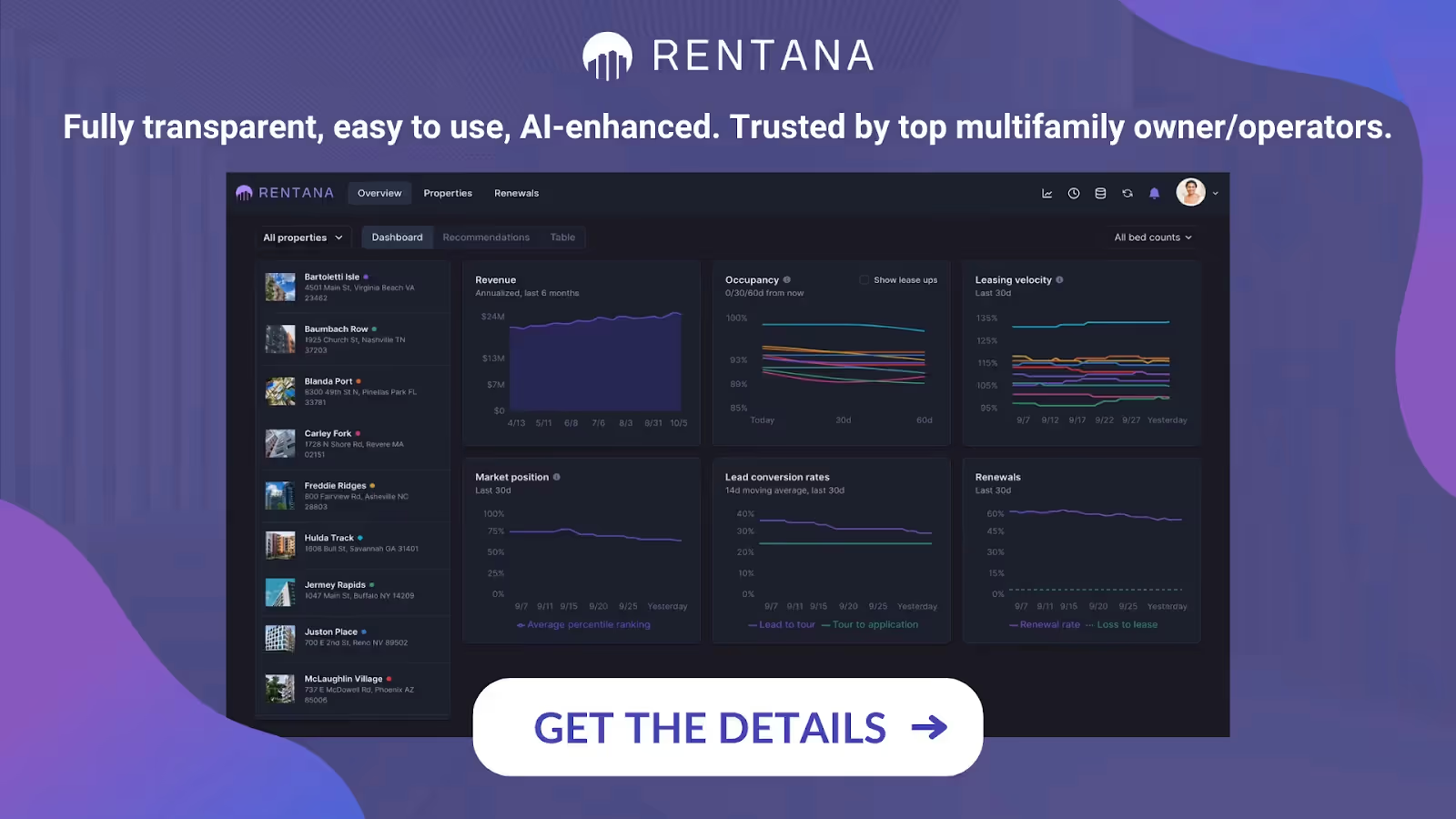
Annual planning is only as strong as the insight behind it.
The challenge for many multifamily teams is that the most important signals, demand shifts, pricing pressure, renewal risk, unit performance, are often scattered across reports, systems, and spreadsheets. By the time they are pulled together, the market has already moved.
This is where revenue intelligence platforms like Rentana play an increasingly important role in modern multifamily planning.
Rentana helps operators stay ahead throughout the year by surfacing real-time pricing and demand signals, highlighting unit-level performance differences, and bringing clarity to the decisions that shape NOI.
For example:
- Rentana supports benchmarking by showing where unit types are outperforming or softening early.
- During spring leasing season, it helps teams respond faster to demand changes with clear pricing guidance.
- In summer, it helps capture high-value performance data without relying on manual reporting.
- In renewal-heavy months, it provides insight into timing and pricing decisions as leases approach expiration.
- Rentana has a preconfigured Lease Compliance report that operators can pull weekly to identify execution gaps early, monitor pricing and concession accuracy on both new leases and renewals, and quickly spot training opportunities before issues scale.
- And in fall budgeting season, it helps teams evaluate what actually drove performance, not just what the averages suggest.
In a 2026 market defined by faster shifts and tighter margins, planning requires more than historical reports. It requires live insight and actionable clarity.
Rentana fits naturally into that workflow by helping multifamily teams move from static dashboards to confident, real-time decision-making across the full operating cycle.