
Occupancy rate is one of the most tracked numbers in multifamily real estate. It appears in every ownership report, lender package, and asset review. It is essential for understanding current performance, but it is limited as a standalone indicator of where performance may be heading.
Current occupancy tells operators where they stand today. It does not show whether that number is stable, beginning to drift, or approaching a period of pressure that has been developing in the operational data for weeks. By the time occupancy moves enough to warrant attention, the leasing decisions, renewal outcomes, and expiration dynamics influencing that change may already be well underway, leaving teams with a narrower response window.
Understanding future occupancy trends in multifamily is not about forecasting a precise number with certainty. Market conditions shift, resident behavior varies, and numerous factors influence occupancy. What forward visibility provides is something more operationally useful: earlier context around what is anticipated to happen under current conditions, based on the signals that often precede occupancy changes before they appear in traditional reporting.
According to CBRE's U.S. Real Estate Market Outlook 2026, operators remain focused on preserving occupancy while elevated supply continues to influence leasing and concession activity in many markets. In that environment, teams that understand how leasing activity, renewal trends, and future availability are developing have more time to evaluate their options before occupancy pressure intensifies.
This article covers the leading indicators that provide forward context into future occupancy trends, how to evaluate those signals together rather than in isolation, and how greater visibility can support decisions across leasing, renewals, pricing, and exposure management.
Related:
- Multifamily Occupancy Management: 7 Best Practices
- How to Forecast Occupancy in Multifamily Real Estate
Why Occupancy Is a Lagging Indicator and What to Monitor Instead
Occupancy rate reports what has already happened. A property at 94% occupancy today reflects leasing decisions, renewal outcomes, and expiration timing from the past several weeks. The conditions that will influence where occupancy stands 30, 60, or 90 days from now may already be developing, even if they have not yet affected the reported number.
This is the limitation of managing multifamily performance from occupancy alone. By the time the metric changes materially, the available response window may have narrowed. Operators that stay ahead of occupancy shifts are not simply watching the number more closely. They are also monitoring the operational signals that often precede it.
The leading indicators worth monitoring:
- Leasing velocity: How quickly available units are absorbing relative to the property’s targets, expected demand, and anticipated availability. A sustained slowdown within a specific unit group may provide early context that occupancy pressure is developing in that segment.
- Renewal conversion trends: The percentage of residents choosing to renew when their leases expire. A decline in conversion can increase the amount of inventory returning to market, especially when it occurs alongside a concentrated expiration period.
- Notices to vacate: Notices reflected in the property data provide more direct visibility into units expected to return to market. They can add earlier context beyond the scheduled expiration calendar when reviewed accurately and without double-counting.
- Lease expiration concentration: The number of leases ending within a specific period relative to what the property is expected to absorb. Concentration during a seasonally slower leasing period may create more occupancy pressure than the same number of expirations during stronger demand.
- Seasonality patterns: Historical leasing and occupancy performance by month or quarter. Seasonality provides a baseline for evaluating whether current activity is within a typical range or whether conditions may be changing beyond the property’s usual pattern.
- Forward availability conditions: The combination of scheduled expirations, notices to vacate, month-to-month behavior, and anticipated unplanned availability. Some inputs are known and others may be modeled estimates, but together they provide a broader view of the inventory that may require attention.
No single indicator provides a complete picture on its own. A slowdown in leasing velocity alongside strong renewal conversion and limited future exposure is different from the same slowdown occurring while renewals are softening and availability is becoming concentrated.
Evaluating these signals together provides more meaningful context into what is anticipated under current conditions and where closer review may be warranted.
Related:
- How to Calculate Occupancy Rate
- Economic Occupancy: How to Calculate It
How to Read Future Occupancy Trends: The Signals That Matter Most
Understanding future occupancy trends requires evaluating leading indicators together rather than reviewing each one in isolation. The same leasing velocity number can point to very different conditions depending on what the rest of the operating picture shows.
1. Leasing velocity in the Context of Forward Availability
Leasing velocity is most useful when it is evaluated against the amount of inventory the property expects to absorb within a given period. Eight units leased in a month means something different when 12 units may return to market in the next 30 days than when only four are anticipated.
The question is not whether leasing velocity is healthy in absolute terms. It is whether the current pace appears sufficient to support the property’s configured occupancy target and timeframe given the anticipated availability picture.
When leasing activity is running below that pace, the gap may warrant closer review before it becomes visible in reported occupancy. Rentana connects renewal trends, current leasing activity, and future availability to show what is anticipated under current conditions, giving teams additional context for evaluating whether current leasing pace remains aligned with the asset’s occupancy and revenue objectives.
2. Renewal Conversion Alongside Expiration Concentration
Renewal conversion and expiration concentration interact in ways that can materially affect future occupancy. Stronger renewal conversion during a period with high expiration volume reduces the amount of inventory that must be absorbed through new leasing. Softer renewal conversion increases the number of units returning to market during the same period.
Example: Assume a property has 20 leases expiring in February, historically one of its slower leasing months. If 65% of those residents renew, seven units return to market. If renewal conversion is 45%, 11 units return instead. Those four additional vacancies may create a meaningfully different leasing requirement during the same demand period.
This example is illustrative, and actual results will vary. The important point is that expiration volume alone does not show how much inventory will ultimately need to be re-leased. Rentana's exposure forecasting incorporates scheduled expirations alongside additional forward availability inputs, such as notices to vacate, month-to-month behavior, and anticipated unplanned availability, to provide a more complete view of what may return to market.
3. Seasonality as Context, Not an Explanation for Every Change
Most multifamily properties experience seasonal demand patterns. Spring and summer often produce stronger leasing activity than fall and winter, although the timing and strength of those patterns vary by market and asset.
Historical seasonality helps teams evaluate whether current activity is within the property’s expected range. A leasing slowdown in November may be consistent with prior years, while the same slowdown during a historically stronger period may warrant closer attention.
Seasonality should provide context, not automatically explain away a concerning trend. Teams should still evaluate whether current leasing velocity, renewal conversion, and future availability appear consistent with the property’s occupancy goals and expected demand environment.
4. Asset Strategy Shapes What the Signals Mean
The same occupancy level can represent a different outcome depending on the asset’s strategy and current stage. A lease-up property may intentionally operate below stabilized occupancy while building its initial rent roll and managing future expiration distribution. A stabilized property with the same occupancy level may be operating below its target range.
Forward occupancy visibility is therefore most useful when it is evaluated within the context of what the asset is trying to achieve. Occupancy targets, target timeframes, leasing expectations, and acceptable tradeoffs between occupancy and effective rent should all influence how the signals are interpreted.
Rentana’s property-level configuration allows these goals and parameters to be established by asset. Predicted Occupancy can then be reviewed within the context of the property’s independently defined strategy rather than against a single benchmark applied uniformly across the portfolio.
Read Also:
- What is Vacancy Loss & How to Calculate It?
- How to Calculate Vacancy Rate: Formula & Examples
How Forward Occupancy Visibility Supports Better Decisions in Multifamily
Forward occupancy visibility is most useful when it helps teams evaluate what, if anything, should change before pressure appears in reported results.
1. Leasing and Marketing Focus
If a specific bedroom type or custom unit group is expected to face higher availability, teams can review whether leasing activity is keeping pace with the amount of inventory expected to return to market.
That may include evaluating lead volume, tour activity, applications, conversion, follow-up, and product positioning. The appropriate response may be stronger marketing support, a change in leasing focus, improved follow-up, or clearer positioning rather than an immediate pricing adjustment.
2. Renewal Strategy
When future availability is building, renewal conversion becomes more important because each retained resident reduces the amount of inventory that must be re-leased.
Teams may evaluate renewal timing, offer strategy, resident rent position, and the cost of potential turnover within the context of the upcoming exposure window. Earlier visibility creates more time to make those decisions thoughtfully rather than reacting after availability has already increased.
3. Pricing and Specials
A change in the occupancy outlook may prompt a review of pricing, but it does not automatically mean rents should change.
Teams should consider current leasing velocity, effective rent, achieved rents, concessions, unit-group performance, and the asset’s occupancy and revenue objectives. In some cases, a pricing adjustment or strategic special may support demand. In others, the stronger decision may be to hold pricing, narrow the offer to specific inventory, or take no immediate action.
4. Amenity Adjustments
When the same units repeatedly underperform because of lasting features, a temporary special may not address the underlying issue.
A persistent amenity adjustment may create a more sustainable rent position for units with structural differences in value or demand. This can reduce the cycle of offering a concession to lease the unit, increasing the rent when the concession expires, and facing the same leasing challenge again after turnover.
5. Lease-Term and Exposure Strategy
Lease-term decisions can affect how expirations are distributed across future months. When exposure is building in a particular period, teams may evaluate whether different lease-term options could support a more balanced expiration schedule.
The appropriate approach depends on resident demand, local requirements, seasonality, current availability, and the asset’s broader strategy.
6. Occupancy Recovery Timeframe
Not every projected occupancy decline requires the fastest possible recovery.
When restoring occupancy quickly would require broad concessions across many leases, teams should compare that effective-rent loss with the cost of tolerating a modest occupancy shortfall for a longer period. A slightly longer recovery timeframe may better protect the rent roll and NOI, depending on the asset’s strategy and operating conditions.
Forward occupancy visibility gives teams more time to evaluate these tradeoffs. It does not prescribe the response, but it creates a stronger basis for deciding whether action is needed and which option best supports the property’s objectives.
How Rentana Supports Future Occupancy Evaluation in Multifamily
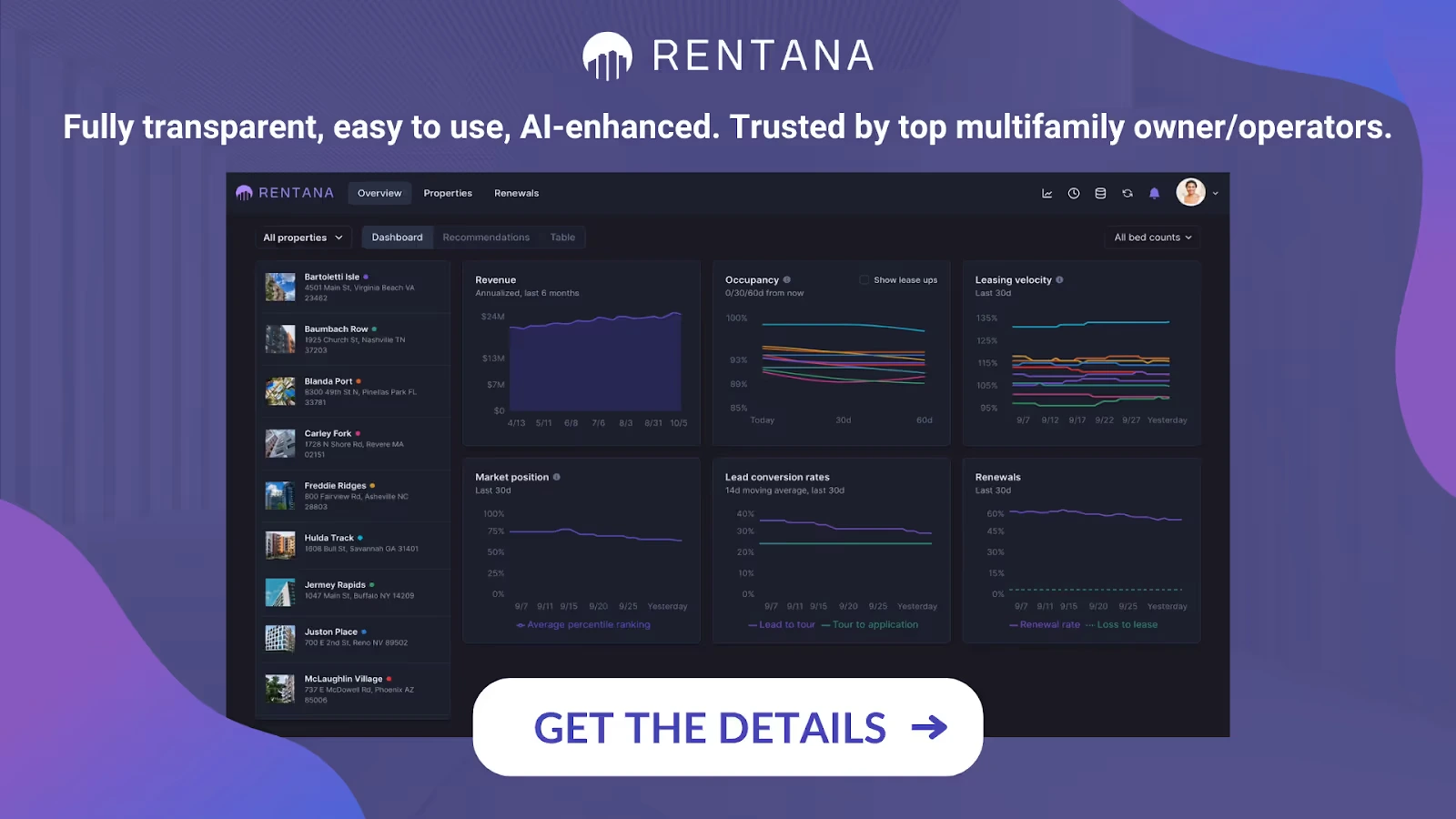
Rentana brings leasing activity, renewal trends, future availability, exposure, and asset-level goals into a connected operating view.
Predicted Occupancy shows what is anticipated to happen under current conditions by connecting current leasing activity, renewal trends, and future availability. This helps teams evaluate whether the property appears on track to support its configured occupancy target and timeframe.
Exposure and availability views add context around where inventory may be concentrating by property, bedroom type, or custom unit group. Leasing-funnel insights help teams understand whether changes in leads, tours, applications, or conversion may be contributing to the outlook.
AI-generated property insights help explain what is changing, why it may matter operationally, and which factors may be contributing. Teams can then evaluate whether pricing, renewals, leasing focus, specials, amenity adjustments, lease terms, or the occupancy recovery timeframe warrant closer review.
Rentana provides forward context and transparent explanations. The operator remains responsible for interpreting the information and making the final decision.
Conclusion
Understanding future occupancy trends in multifamily is not about arriving at a precise number. It is about creating enough forward visibility into the conditions influencing occupancy that leasing, renewal, pricing, exposure, and occupancy-timing decisions can be evaluated before the outcome is fully reflected in reported performance.
The leading indicators covered in this article are already present in the operational data of most multifamily properties. The value comes from reviewing them consistently and together rather than relying on current occupancy alone or interpreting each signal in isolation.
Occupancy is the result. Leasing activity, renewal behavior, future availability, expiration concentration, seasonality, and asset strategy provide the context for understanding how that result may change.
When teams can see those conditions earlier, they have more time to determine whether action is needed and which response best supports the property’s occupancy, effective-rent, and revenue objectives.