Managing a multifamily portfolio well requires two different kinds of visibility. Asset managers need to see how the portfolio is performing as a whole, where attention is needed, and which properties are drifting from targets. Property managers need to see what is happening at the asset level, what is driving conditions at each property, and what decisions are needed to keep performance on track.
These are related but distinct needs, and most reporting infrastructure serves one better than the other. The platform that closes both gaps is the one that supports how multifamily teams actually work: at multiple levels of detail, from the same connected data source, without requiring a report to be built before any analysis can begin.
Related:
- The Best Lease Management Software for Multifamily Real Estate
- Real Estate Market Insights For Property Managers
What Is a Multifamily Portfolio Performance Solution?
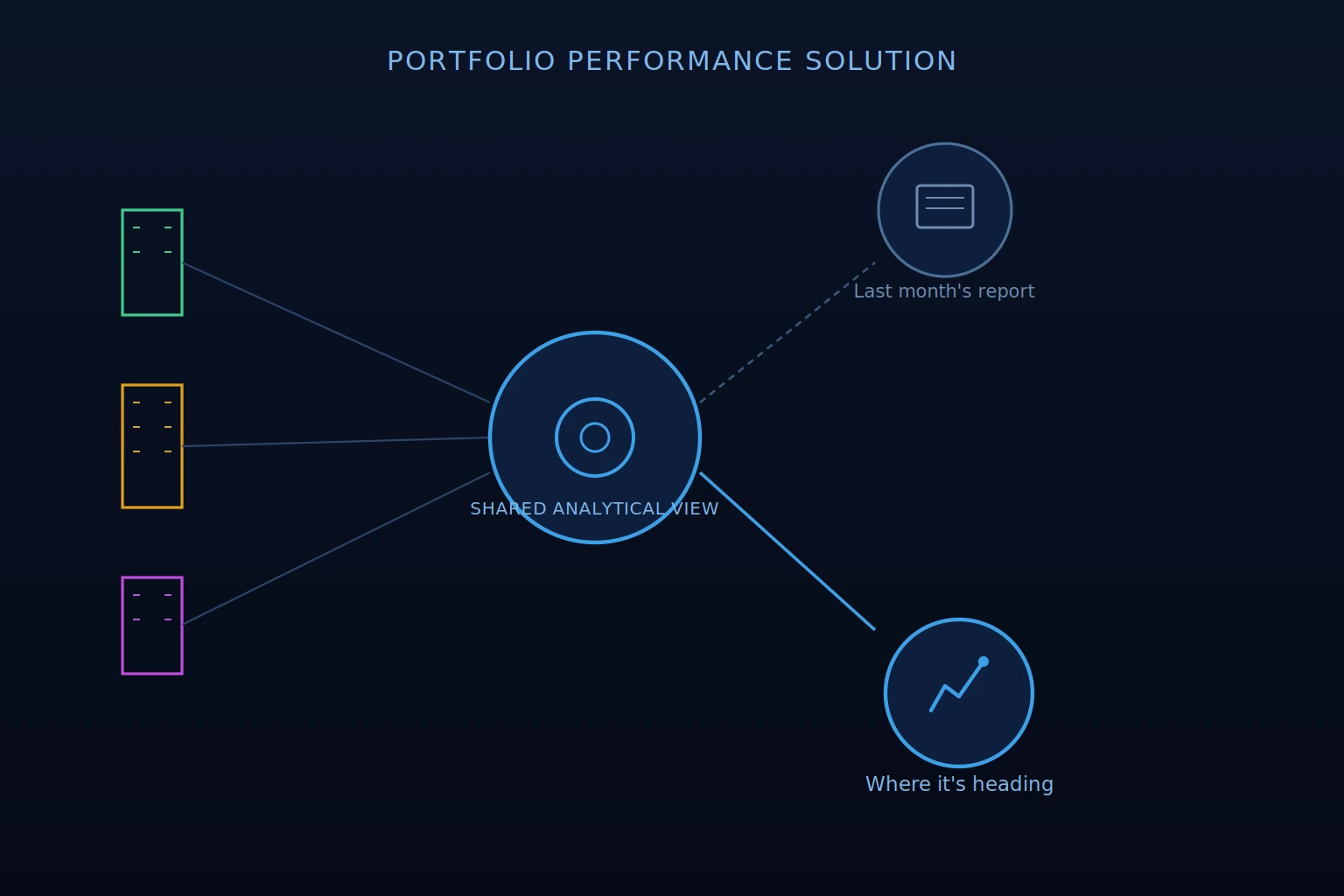
A multifamily portfolio performance solution is a platform that connects property-level operational data across multiple assets into a shared analytical view that supports decision-making at both the property and portfolio levels.
The term covers a range of capabilities, from basic reporting aggregation to AI-supported performance intelligence that surfaces where conditions are changing before they reach financial reporting. What distinguishes a genuine performance solution from a reporting tool is forward visibility: the ability to show where occupancy, leasing, and revenue are heading based on current operational signals, not just what they were last month.
Rentana is a revenue intelligence platform, not a broad portfolio management system. It connects PMS-sourced operational data into pricing, leasing, renewal, and exposure analysis that supports the revenue and performance decisions asset managers and property managers make across the portfolio.
Why Portfolio Visibility Becomes More Difficult at Scale
As portfolios grow, the information problem compounds. More assets mean more data sources, more reporting cycles, more manual reconciliation before any cross-portfolio comparison is possible. A team managing twelve properties reviewing each one sequentially is always working from a partially stale picture of the portfolio.
According to Multifamily Dive's 2026 multifamily operational outlook, true operational transformation hinges on the centralization of technology and operations across the portfolio, with operators who unify data across systems gaining clearer visibility into revenue performance, operational inefficiencies, and new opportunities, giving leadership the strategic foresight needed for long-term portfolio growth. multifamilydive
The operators managing portfolio complexity most effectively are the ones whose platforms surface where multiple conditions are shifting simultaneously across all assets, so prioritization is based on where conditions are actually changing rather than where attention happened to land.
What Asset Managers Need to See Across the Portfolio
Asset managers need a portfolio-level view that surfaces which properties need attention without requiring a full property-by-property review to find them. The specific signals worth tracking across the portfolio:
- Occupancy: Physical occupancy by property and layout, compared against configured targets and prior period performance, with properties trending below target clearly visible without sequential review
- Leasing performance: Leasing velocity by property and layout, evaluated against forward availability and occupancy targets so the gap between current pace and what the occupancy timeline requires is visible at the portfolio level
- Renewals: Renewal conversion trends by property and unit type, trade-out between expiring and renewed rates, and outreach coverage on upcoming expirations across the full portfolio
- Exposure: Forward lease expiration concentration across properties, by unit type and time window, incorporating notices, month-to-month behavior, and early terminations into a complete forward availability picture
- Revenue performance: Effective rent by property and layout, new lease and renewal trade-out, in-place rent and scheduled rental revenue trends, loss to lease, concession usage, value, and prevalence, and pricing performance relative to leasing velocity.
Related:
- Multifamily Asset Management: A Complete Guide for Asset Managers
- Multifamily Asset Performance: Complete Guide
What Property Managers Need at the Asset Level
Property managers need granular operational visibility at the asset level that supports day-to-day decisions about leasing, maintenance, resident communication, and renewal outreach. Their analytical needs are different from asset management in both depth and time horizon.
These broader operational needs span multiple systems. Rentana supports the revenue and performance analysis within that workflow, including leasing demand and conversion, pricing, renewals, occupancy, and exposure.
At the property level, the most operationally useful information includes leasing funnel conversion by stage, outstanding maintenance and work order status, renewal outreach coverage on upcoming expirations, unit-type availability with days on market by layout, and current pricing performance against leasing velocity at the bedroom or unit group level.
The most useful property-level analytics surface the same connections that matter at the portfolio level, occupancy, leasing, renewals, and exposure evaluated together rather than in isolation, but at the granularity that points toward specific decisions at the asset rather than toward portfolio-wide prioritization.
How Shared Data Improves Alignment Across Teams
Asset management and property management often work from different data sources on different timelines. Asset managers review monthly reports. Property managers work from daily operational systems. Revenue managers pull leasing data from the CRM. The result is a team that is making connected decisions from disconnected information.
Shared data infrastructure changes this. When leasing, revenue management, and asset management are all working from the same PMS-connected operational view simultaneously, the coordination that portfolio management requires starts from a shared understanding of current conditions rather than from reconciling different versions of the same data before any conversation can happen.
According to the National Multifamily Housing Council, the multifamily industry generates significant volumes of operational data across leasing, financial reporting, and resident communication, and operators who invest in the systems to work with that data effectively across teams are better positioned to make consistent, informed decisions. Shared visibility is what makes those consistent decisions possible at scale.
What to Look for in a Portfolio Performance Software
Not all portfolio performance platforms deliver what multi-asset decision-making actually requires. These criteria help evaluate whether a platform will support portfolio and property management effectively.
PMS-connected data. A platform that requires manual data exports is working from information that is always partially stale. Direct PMS integration keeps the operational picture current before any analysis begins, which is the baseline requirement for performance software that supports timely decisions across a growing portfolio.
Portfolio comparison. The ability to compare performance across properties using consistent metrics and methodology is what makes portfolio-level prioritization possible. A platform that only supports property-by-property review does not enable the cross-portfolio pattern recognition that asset managers at scale need.
Flexible views. Operational questions change depending on the planning horizon and the audience. A platform that supports daily operational views, weekly revenue management reviews, and monthly asset management reporting within the same interface reduces the fragmentation that comes from maintaining separate tools for each level.
Forward-looking indicators. Historical reporting describes what happened. The most useful portfolio performance platforms surface where performance appears to be heading, connecting current leasing activity, renewal trends, and forward availability into a view that supports decisions while there is still time to change outcomes.
Actionable insights rather than static reporting. A platform that presents data without context adds to what teams need to interpret rather than reducing it. The platforms that produce the most operational value surface what is changing, explain why it may matter, and point toward where attention is needed, organized around the decisions that need to follow rather than the data that exists.
How Rentana Supports Asset and Property Management Teams
Rentana connects PMS-sourced operational data into a revenue and performance intelligence view that supports both asset managers and property managers across the portfolio.
For asset managers:
- Portfolio dashboards provide a color-coded view of asset health across every property simultaneously, surfacing where multiple conditions are shifting without sequential manual review
- AI-generated Insights surface what is changing at specific assets, explain why it may matter operationally, and connect to a supported next step, helping teams identify patterns and prioritize further review.
- Predicted occupancy connects current leasing activity, renewal trends, and future availability to provide forward visibility into where occupancy is heading at each asset
- The Metrics Browser enables cross-portfolio analysis across more than 175 metrics by unit type, layout, property group, and time period, so specific performance questions can be answered without building a custom report
For property managers and revenue managers:
- Pricing recommendations at the bedroom or custom unit group level, with the full reasoning attached, support pricing decisions using current leasing performance, forward availability, and asset strategy configuration
- Exposure forecasting surfaces upcoming availability concentration by unit type and time window, incorporating notices, month-to-month behavior, and early terminations into a complete forward picture
- Renewal batch management and configurable renewal recommendations help teams apply company-defined renewal settings consistently across upcoming expirations, in alignment with the property’s asset strategy
- Reports consolidate operational data into structured formats for ownership communication and asset review without manual assembly from separate systems
Rentana is not a broad portfolio management system. It is a revenue intelligence platform that supports the pricing, leasing, renewal, and exposure decisions that determine how revenue and occupancy perform across the hold period, with the shared visibility that keeps asset management and property management working from the same operational picture at the same time.
Don’t Miss:
- Multifamily Asset Valuation: Top 5 Methods to Use
- Multifamily Analysis Spreadsheet: Connected Alternatives for Portfolio Operations
Conclusion on Portfolio Performance Solutions for Multifamily
Portfolio performance solutions for multifamily work best when they connect the two levels of visibility that asset and property managers actually need: a portfolio-wide view that surfaces where attention is required, and property-level detail that explains what is driving conditions and what decisions are needed.
The platform that supports both, from the same PMS-connected data source, with forward-looking signals that show where performance is heading rather than only where it has been, is the one that changes how decisions get made across the portfolio rather than just organizing the data that already existed.