Marketing is becoming a larger and more accountable part of multifamily operations.
Many operators now allocate a meaningful portion of their operating budgets to marketing efforts, reinforcing its growing role in leasing performance and revenue outcomes. As these marketing budgets grow so does the expectation that they directly impact leasing outcomes.
Yet even within the same market, some properties generate consistent leasing momentum while others struggle to convert demand into leases.
The difference is rarely marketing alone.
In multifamily, marketing is often measured by leads. How many were generated, which channels performed, how campaigns are tracked. But leads do not determine performance. What matters is how those leads move through the funnel, how pricing aligns with demand, how the asset is presented, and how onsite teams convert interest into leases.
That is where most strategies break down.
Marketing is often treated as a standalone function, separate from pricing decisions, onsite execution, and the actual condition of the asset. Campaigns are optimized without visibility into leasing velocity.
Listings drive traffic without reflecting real-time availability or demand. Onsite teams work leads without context on how marketing and pricing are shaping outcomes.
The result is misalignment across the system.
Strong traffic but low conversion. High demand but slow leasing. Marketing that performs on paper but does not translate into occupancy.
The properties that outperform take a different approach.
They treat multifamily marketing as part of a broader revenue system, where people, product, pricing, and promotion are aligned. Marketing, pricing, and onsite teams operate from the same signals, using data to guide decisions across the entire leasing process.
Because in multifamily, marketing does not stop at generating interest.
It plays a direct role in whether that interest turns into leases.
Related:
- Multifamily Performance Reporting: 9 Key Metrics That Matter
- 25 Interesting Multifamily Housing Statistics You Didn't Know
What Is Multifamily Marketing?
Multifamily marketing is the process of attracting, engaging, and converting prospective residents into signed leases across a property or portfolio.
It includes everything that influences how a property is discovered and evaluated. Listings, digital campaigns, property websites, lead response, tour experience, and follow-up all fall under marketing. But it does not stop at generating interest.
It shapes how that interest turns into leasing activity.
In multifamily, marketing is closely tied to what is actually available and how units are priced. If demand is high for certain floorplans, marketing needs to reflect that. If availability is building, marketing needs to help drive traffic to those units. This connection is what makes multifamily marketing different from traditional marketing.
It operates within the leasing process, not outside of it.
Multifamily Marketing Is Not a Channel, It’s a System
It’s easy to think of marketing as a set of channels.
Listings, ILSs, paid ads, email campaigns. Each with its own performance metrics, budgets, and optimization strategies. But in multifamily, marketing doesn’t operate in isolation. It is directly tied to how the property performs.
Marketing is part of the revenue system.
The leads it generates are only valuable if they convert. And conversion depends on factors outside of marketing alone. Pricing needs to reflect demand. Availability needs to match what prospects are searching for. The onsite experience needs to support the interest marketing creates.
When those elements are aligned, marketing performs better. When they are not, results become inconsistent.
This is where many strategies break down.
Marketing is often optimized for lead volume without full visibility into what happens after. Campaigns drive traffic, but pricing may be out of sync with demand. Listings may attract interest, but availability may not match what prospects want. Onsite teams may receive leads that are harder to convert.
The result is activity without conversion.
Example
A property increases its marketing spend and sees a 25% increase in leads.
On the surface, this looks like success.
But leasing velocity does not improve. Tours increase, but conversions stay flat. Units remain on the market longer than expected.
Why?
Because the system behind the marketing was not aligned. Pricing was slightly above where demand was strongest for key floorplans. Available units did not filly match what prospects were searching for. And onsite follow-up was inconsistent, slowing response times and reducing conversion and consumer trust.
Marketing did its job. It generated interest. But the rest of the system did not support turning that interest into leases.
In many cases, this is where marketing gets misdiagnosed.
A campaign may be viewed as underperforming because it did not drive leases, when in reality it generated the right demand, but the system behind it was not set up to convert.
Without visibility into leasing velocity, pricing alignment, and conversion performance, it becomes difficult to identify where the breakdown is actually happening.
Top Pick:
Understanding the Full Leasing Funnel in Multifamily Marketing (Beyond Leads)
This is where visibility across the system becomes critical.
If marketing performance is often misdiagnosed, it is because most teams are only looking at the top of the funnel.
Most multifamily marketing strategies focus heavily on lead generation.
How many leads were generated. Which channels performed best. How campaigns are trending.
But leasing performance is not determined at the top of the funnel, as renter behavior continues to evolve across search, touring, and decision-making stages.
It is shaped across the entire leasing process. Marketing does not just influence demand.
It influences how that demand moves, converts, and ultimately impacts occupancy.
1. Lead Generation
This is where marketing is most visible.
Listings, paid campaigns, SEO, and ILS performance all drive traffic and inquiries. But generating leads is only the starting point. The quality of those leads depends on how well pricing, availability, and messaging reflect actual demand.
Prospects are evaluating multiple properties at once. Clear positioning, accurate pricing, and relevant availability determine whether a lead is qualified or just browsing.
If listings are misaligned with what prospects want, volume may increase, but conversion will suffer.
2. Lead Response and Follow-Up
Speed and consistency of response play a major role in conversion.
A strong marketing strategy considers what happens after the lead comes in. Are prospects contacted quickly? Is follow-up consistent? Are responses aligned with current pricing and availability?
Prospects rarely reach out to just one property. The speed and quality of response often determine which property they tour first.
Delays or inconsistent communication can reduce the value of even the best-performing campaigns.
3. Tour Conversion
Tours are where interest becomes intent.
Marketing influences this stage through how expectations are set. Pricing transparency, accurate unit availability, and clear messaging all affect whether prospects move forward after a tour.
The onsite experience must match what was marketed. Property condition, tour path, amenities, and team professionalism all influence conversion.
If there is a disconnect between what was marketed and what is presented onsite, conversion drops.
4. Lease Execution
At this stage, the decision is made.
Pricing alignment, incentives, and timing all play a role in whether a prospect signs. Marketing still matters here, particularly in how urgency and value are communicated throughout the process.
Friction at this stage can delay or lose leases. Clear expectations, simple application processes, and digital ease all influence whether a prospect completes the process.
Strong alignment between marketing and onsite teams helps ensure prospects move smoothly from tour to lease.
5. Renewal and Retention
The funnel does not end at move-in.
Retention is a continuation of the same system. How residents experience pricing, communication, and leasing influences whether they choose to stay.
Renewal decisions can be shaped long before the renewal offer is delivered. The resident experience, pricing alignment, and ongoing communication all influence retention.
Marketing supports this through ongoing communication, renewal messaging, and how value is positioned at renewal.
The Bigger Picture
When the full funnel is considered, a pattern becomes clear.
Leads alone do not drive leasing performance. Conversion across each stage of the funnel does.
And marketing plays a role in all of them., not just at the top.The most effective multifamily marketing strategies are built with this full funnel in mind, ensuring that every stage is aligned and working toward the same outcome: turning demand into sustained occupancy.
Related:
- AI Adoption in Multifamily: Why it's Accelerating So Fast
- Multifamily Property Data: What Operators Should Actually Track
How Do You Market a Multifamily Property? 7 Strategies That Actually Drive Leasing

- Listing Optimization
- Response Time and Follow-Up Workflows
- Tour Experience and Asset Alignment
- Floorplan-Level Marketing
- Pricing and Marketing Alignment
- Retention and Renewal Strategy
- Data-Driven Decisioning Across the Portfolio
1. Listing Optimization (Accuracy Over Volume)
Listings are often treated as traffic drivers, but their real job is to set expectations correctly and qualify demand.
If pricing, availability, or unit details are outdated or unclear, lead volume may increase, but conversions will decline. The highest-performing listings reflect what is actually available and how those units are performing in real time
Effective listing strategy prioritizes alignment over volume. It ensures that what prospects see matches what they will experience, reducing friction later in the funnel.
How to Execute this Multifamily Marketing Strategy:
- Keep pricing and availability updated in real time
- Highlight floorplans that are actively leasing or need demand
- Align messaging with current demand, not generic positioning
- Remove ambiguity by making unit details clear and specific
2. Response Time and Follow-Up Workflows
Speed is one of the biggest drivers of conversion, but consistency is just as important.
A strong marketing strategy extends beyond lead generation to ensure that demand is captured and acted on quickly. Prospects are evaluating multiple properties at once, making it critical that marketing is aligned with how renters search, compare, and engage with listings.
Response workflows should be treated as part of the marketing system, not just onsite operations.
Delays, inconsistent follow-up, or responses that do not reflect current pricing and availability can reduce conversion, regardless of how strong the campaign performance is.
How to Execute this Multifamily Marketing Strategy:
- Respond to leads within minutes, not hours
- Standardize follow-up sequences across teams
- Ensure responses reflect current pricing and availability
- Track response-to-tour conversion rates, not just lead volume
3. Tour Experience and Asset Alignment
Tours are where marketing promises are validated.
Marketing sets expectations, but the onsite experience determines whether those expectations convert into intent. If there is a disconnect between how the property is positioned and what prospects experience, conversion will decline.
The asset itself is part of the marketing strategy.
Property condition, tour path, unit readiness, and team professionalism all influence how prospects perceive value. Alignment between marketing and onsite execution is critical to maintaining momentum through the funnel.
How to Execute this Multifamily Marketing Strategy:
- Align your messaging with listing positioning and pricing
- Focus tours on available, high-demand units
- Ensure the physical asset reflects marketed expectations
- Train onsite teams to communicate value, not just features
- Track tour-to-lease conversion by floorplan and adjust accordingly
For You:
- The Best AI Tools for Real Estate Investors
- Multifamily AI Leasing Assistants: Use Cases & Benefits
4. Floorplan-Level Marketing (Not Property-Level)
Not all units perform the same, and marketing should reflect those differences.
Applying a uniform marketing strategy across all floorplans ignores variations in demand, leasing velocity, and exposure. Some layouts may require additional demand, while others may already be leasing efficiently.
Marketing should be directed where it is needed, not applied evenly.
Floorplan-level visibility allows teams to focus efforts on underperforming units while avoiding unnecessary spend on units already aligned with demand.
How to Execute this Multifamily Marketing Strategy:
- Prioritize marketing for underperforming or high-exposure unit types
- Adjust messaging based on demand for each layout
- Align pricing and promotion strategies with floorplan performance
- Track leasing velocity and demand at the layout level
5. Pricing and Marketing Alignment
Marketing performance is directly influenced by how well pricing aligns with demand.
If pricing is out of sync, marketing may generate traffic, but conversion will suffer. High lead volume with slow leasing is often a signal that pricing, not marketing, needs adjustment.
Pricing and marketing should operate from the same signals.
Leasing velocity, availability, and demand patterns should inform both pricing decisions and marketing strategy. When these elements move together, marketing becomes more effective and more predictable.
How to Execute this Multifamily Marketing Strategy:
- Regularly review leasing velocity alongside campaign performance
- Adjust pricing based on how quickly units are leasing
- Ensure marketing reflects current pricing strategy
6. Retention and Renewal Strategy
Leasing performance is not just driven by new demand. It is shaped by retention.
Every renewal reduces pressure on marketing and leasing. When retention is strong, fewer units return to the market, stabilizing occupancy and reducing the need for incremental demand.
Retention should be viewed as part of the marketing system, not a separate function.
The way renewal offers are communicated, how value is positioned, and how residents experience the property all influence whether they choose to stay.
How to Execute this Multifamily Marketing Strategy:
- Start renewal communication early
- Align renewal messaging with current market conditions
- Clearly communicate value, not just price changes
- Track renewal conversion alongside leasing performance
7. Data-Driven Decisioning Across the Portfolio
The most effective marketing strategies are guided by real-time performance signals, not assumptions.
Leasing velocity, conversion rates, demand patterns, and availability should inform where marketing efforts are focused. Without this visibility, decisions become reactive and disconnected across teams.
Data acts as the connective layer between marketing, pricing, and onsite execution.
This is where platforms like Rentana provide value. By bringing together leasing velocity, demand by floorplan, conversion performance, and availability signals, teams can understand not just where leads are coming from, but how those leads are progressing through the funnel.
Instead of relying on isolated metrics, teams can identify:
- Where demand is strongest
- Where leasing is slowing
- How pricing aligns with performance
- And where action is needed
How to Execute this Multifamily Marketing Strategy:
- Monitor leasing velocity as a feedback loop for marketing
- Track lead-to-tour and tour-to-lease conversion rates
- Use demand signals to guide where to focus campaigns
- Align marketing decisions with pricing and availability across teams
These strategies are most effective when they operate as part of a connected system.
In multifamily, marketing does not just generate demand. It influences how that demand converts, how quickly units lease, and how performance evolves across the portfolio.
But alignment does not happen on its own. It requires visibility.
Without a clear view of leasing velocity, conversion performance, pricing alignment, and demand patterns, even well-executed strategies can produce inconsistent results.
This is where data changes the role of marketing.
Related:
- Which Multifamily Software Has the Best AI Features?
- Rental Pricing Software for Multifamily Real Estate
How Data Improves Multifamily Marketing Outcomes
At a certain point, marketing performance stops being about effort and starts being about visibility.
Without data, teams are guessing. Campaigns are adjusted based on lead volume. Messaging is updated based on intuition. Pricing and marketing move independently. It becomes difficult to know what is actually driving leasing performance.
Data shifts marketing from intuition to feedback.
Leasing velocity becomes one of the most important signals, especially as supply and demand conditions shift across markets and directly impact occupancy and rent performance. It shows whether demand is translating into leases and whether current pricing and marketing are aligned. If units are not moving as expected, it is not just a marketing problem or a pricing problem. It is a signal that something in the system needs to adjust.
Conversion tracking adds another layer.
Understanding how leads move from inquiry to tour to lease reveals where friction exists. High lead volume with low tour conversion points to follow-up issues. Strong tours with low lease conversion often point to pricing or availability misalignment. These are not assumptions. They are patterns that can be measured and acted on.
Demand signals at the floorplan level bring even more precision.
Instead of treating a property as a single unit, teams can see which layouts are driving interest and which are lagging. This allows marketing to focus efforts where they are needed most and align campaigns with actual demand.
But this only works when data is shared.
Marketing, onsite, and revenue teams need to be working from the same view of performance. Otherwise, each team optimizes for its own metrics, and the system becomes disconnected again.
This is where platforms like Rentana act as the connective layer.
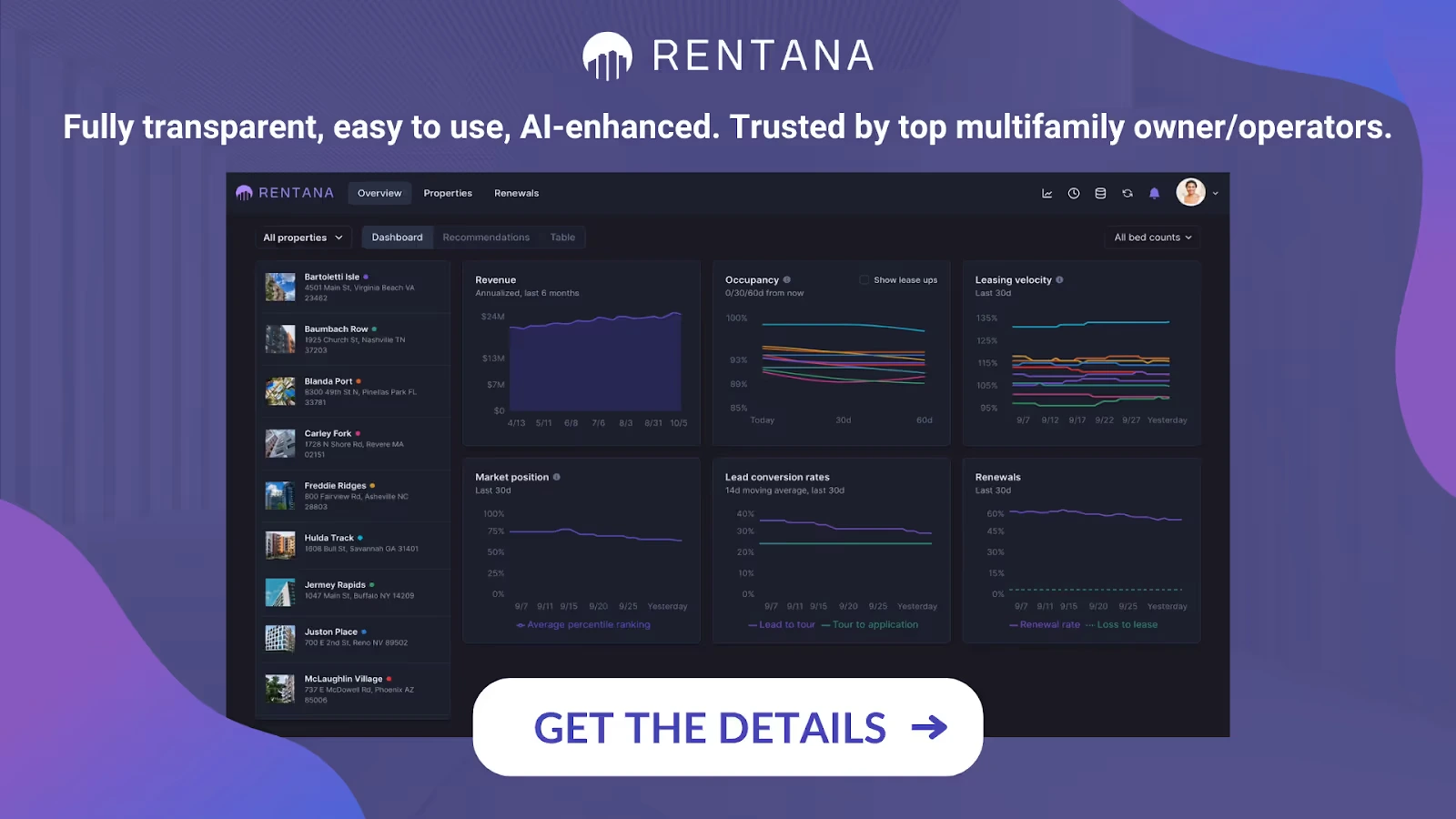
Rentana brings together leasing velocity and property performance into a single system. Marketing teams can see not just where leads are coming from, but how those leads are progressing through the leasing funnel. Demand signals by floorplan help guide where campaigns should be focused, while pricing alignment ensures that marketing is driving traffic to units that are positioned in line with current demand.
At the same time, shared dashboards give every team visibility into the same signals. Marketing understands how campaigns impact leasing. Onsite teams see how demand is shifting. Revenue teams can align pricing with real-time performance.
Instead of reacting to isolated metrics, decisions become connected.
Marketing becomes more targeted. Pricing becomes more responsive. Leasing becomes more efficient.
And most importantly, performance becomes more predictable.
Because in multifamily, better marketing does not come from doing more.
It comes from seeing the system clearly and acting on it early.
Don’t Miss:
- Best Multifamily Newsletters for Operators
- The Best Rent Analysis Tool for Multifamily Pricing Strategy
Conclusion on Multifamily Marketing: Why Marketing, Pricing, and Onsite Teams Must Be Aligned
Multifamily marketing is a major and growing investment category, reinforcing how critical it is to align marketing with actual leasing outcomes. Performance is rarely limited by effort. It is often limited by alignment.
Marketing, pricing, and onsite teams are all working toward the same outcome: leasing units and maintaining occupancy. But when they operate in silos, even strong execution in one area can be offset by disconnects in another.
Marketing may drive high-quality traffic, but if pricing is out of sync with demand, conversion slows. Onsite teams may be working leads effectively, but if availability or messaging doesn’t match what was marketed, prospects lose confidence. Revenue teams may adjust pricing, but without visibility into lead flow or conversion trends, those decisions can miss the mark.
The result is friction across the leasing funnel.
The issue is not effort or strategy. It is visibility.
This is why shared data becomes critical.
When all teams are working from the same signals; leasing velocity, conversion rates, availability, pricing performance, decisions become more connected. Onsite teams understand how pricing is positioned. Revenue teams see how changes impact leasing in real time.
Instead of reacting separately, teams begin to move together. Marketing becomes more targeted. Pricing becomes more responsive. Onsite execution becomes more consistent.
At that point, marketing is no longer a standalone function. It becomes part of a unified decision system where every team is contributing to the same outcome, using the same signals to drive performance.