
Most multifamily operators know when their leases are scheduled to expire. What is harder to see is the broader forward availability picture: how much inventory may return to market, when it may arrive, whether it is concentrated in particular unit groups or time periods, and how that volume compares with the property’s expected leasing demand.
That is the role of exposure forecasting. It extends beyond a standard lease expiration report by helping teams evaluate where future availability may become concentrated before the impact is fully reflected in occupancy, leasing velocity, or financial reporting.
Building that picture manually can be difficult. Scheduled expirations are only one part of future availability. Notices to vacate, month-to-month lease behavior, anticipated early terminations, and planned offline inventory may also affect how much inventory needs to be absorbed within a given period. When those inputs are spread across reports or reviewed separately, teams may not recognize the full concentration until the operating window has already narrowed.
Earlier visibility creates more time to evaluate options. Depending on the asset strategy and the conditions involved, teams may review renewal outreach, lease-term strategy, leasing focus, pricing, concessions, amenity adjustments, or the timeframe allowed for occupancy to recover. Exposure forecasting does not determine which response is appropriate. It provides additional context for making that decision before availability pressure becomes more difficult or expensive to manage.
According to CBRE's U.S. Real Estate Market Outlook 2026, operators remain focused on preserving occupancy while elevated supply continues to influence leasing and concession activity in many markets. In that environment, understanding where future availability may concentrate can help teams assess potential occupancy pressure before broader pricing or incentive responses are considered.
This article explains what exposure forecasting means in multifamily real estate, the known and modeled inputs that contribute to a forward availability view, and how that visibility can support renewal, lease-term, pricing, concession, and occupancy decisions.
Related:
- The Best Lease Management Software for Multifamily Real Estate
- The Best Lease Renewal Software for Multifamily Real Estate
What Is Exposure Forecasting in Multifamily Real Estate?
Exposure forecasting is the practice of evaluating how much availability may return to market, when it may arrive, and whether that volume is concentrated beyond what the property is expected to absorb within its target timeframe.
It is not the same as a standard lease expiration report. An expiration report shows leases with scheduled end dates. Exposure forecasting adds context by comparing those expirations with the property’s configured exposure targets and, when additional forward-looking inputs are available, incorporating other factors that may affect future inventory.
A complete forward availability view may include:
- Scheduled lease expirations
- Notices to vacate reflected in the property data
- Month-to-month lease behavior based on historical patterns
- Anticipated unplanned availability, such as early terminations, skips, and evictions
- Planned offline or renovation inventory, when relevant
Some of these inputs are known, while others are modeled estimates. Scheduled expirations and confirmed notices provide direct visibility into units expected to return to market. Month-to-month behavior and anticipated early terminations provide additional context based on historical patterns and current conditions.
Example: Consider a 200-unit stabilized property with 18 leases scheduled to expire in February. The standard expiration report shows those 18 leases, but the broader forward availability picture may also include:
- Six additional notices to vacate that do not overlap with the scheduled expirations
- An estimated three month-to-month vacancies based on the property’s historical behavior
- Two units expected to be unavailable because of planned renovations
The property is not guaranteed to face 29 available units. Some inputs are known and others are estimates. However, the broader view indicates that the amount of inventory requiring attention may be meaningfully higher than the expiration schedule alone suggests.
That difference matters operationally. A leasing and renewal strategy that may be sufficient for 18 scheduled expirations may need to be reevaluated when the anticipated availability picture is closer to 29 units. Seeing that possibility earlier gives the team more time to assess renewal strategy, lease terms, leasing focus, pricing, and the timeframe allowed for occupancy to recover.
Exposure forecasting becomes valuable when it moves beyond counting expirations and helps teams understand where future availability may create pressure relative to the property’s demand, performance targets, and asset strategy.
What Goes Into a Complete Exposure Forecast
A standard lease expiration report is the starting point for exposure forecasting, not the complete picture. A more useful forward availability view combines known lease events with modeled assumptions that help teams understand how much inventory may require attention within a specific period.
1. Scheduled Lease Expirations
Scheduled lease expirations provide the foundation of the forecast. They show which leases are set to end and when, allowing teams to identify periods where expiration volume may exceed the property’s configured exposure targets.
This information represents known lease events, but it does not indicate which residents will renew or capture every source of future availability. Expiration volume should therefore be evaluated alongside renewal activity, leasing demand, and other forward-looking inputs.
2. Notices to Vacate
Notices to vacate provide more direct visibility into units expected to return to market. When those notices are reflected in the property data, they can help teams refine the forward availability picture before the units become physically vacant.
Teams should also account for potential overlap between notices and scheduled expirations so the same unit is not counted twice. The goal is to create a clearer view of expected availability, not simply add every forward-looking data point together.
3. Month-to-Month Lease Behavior
Month-to-month residents do not have a scheduled lease end date, but their future decisions can still affect availability. Historical property-level behavior may provide an estimate of how much month-to-month inventory is likely to return to market within a given seasonal or planning window.
This input is modeled rather than confirmed. It should be treated as additional planning context, not as a guaranteed number of future vacancies.
4. Anticipated Unplanned Availability
Early terminations and other unplanned move-outs may also contribute to future availability. These events are less predictable, but historical patterns can help teams estimate how much unplanned inventory may reasonably be expected over time.
When current early-termination activity differs meaningfully from prior patterns, teams may need to reconsider whether historical assumptions still provide an appropriate basis for the forecast.
5. Planned Offline or Renovation Inventory
Units scheduled to come offline for renovation, maintenance, or another planned reason may affect the amount of inventory available for leasing and the property’s occupancy trajectory.
These units should be distinguished from resident-driven exposure because they represent a planned operational decision. Even so, they remain relevant when evaluating how much inventory will be available, unavailable, or returning to market within the same period.
Read Also:
- The Best Lease Renewal Optimization Software for Multifamily
- Types of Commercial Real Estate Leases Explained
How These Inputs Work Together
Known and modeled inputs serve different purposes. Scheduled expirations and notices provide stronger visibility into specific lease events. Month-to-month behavior and anticipated unplanned availability help teams account for additional uncertainty that may not appear in a standard expiration report.
Viewed together, these inputs provide a more complete anticipated availability picture by property, unit group, and time period. That context helps teams evaluate whether expected leasing demand appears sufficient, where concentration may be developing, and whether the asset’s current renewal, lease-term, pricing, and occupancy strategies remain appropriate.
How Exposure Forecasting Supports Better Operational Decisions
Exposure forecasting is most valuable when it informs the decisions teams are already making across renewals, lease terms, pricing, concessions, and occupancy strategy. The goal is not to eliminate uncertainty. It is to create more time to evaluate the available options before concentrated availability begins affecting performance.
1. Renewal Strategy Timing
When future availability appears concentrated in a specific unit group or time period, renewal strategy may warrant earlier and more deliberate review.
Earlier outreach within the property’s approved renewal timeline gives teams more opportunity to evaluate retention goals, resident rent position, upcoming exposure, and the cost of potential turnover before the availability window arrives.
The appropriate response may differ by asset. One property may prioritize retaining more residents within the affected unit group, while another may accept additional turnover because current demand and leasing velocity are strong enough to absorb it.
Exposure forecasting provides the context for making that evaluation earlier rather than waiting until the expirations are already affecting occupancy.
2. Lease-Term Strategy
Lease terms can influence how future expirations are distributed across the calendar. When exposure is building in a particular month or season, teams may evaluate differentiated lease-term options that encourage future expirations to fall within periods that better align with the property’s operating objectives.
This does not mean there is one correct lease term or pricing formula. The appropriate structure depends on resident demand, local requirements, current availability, seasonality, and the asset’s strategy.
Exposure forecasting helps teams understand where concentration may be developing so lease-term decisions can be reviewed within a broader forward-looking context.
3. Concessions and Occupancy Tradeoffs
A future exposure concentration does not automatically mean a concession is necessary. Teams should compare the expected vacancy cost with the effective-rent and rent-roll impact of any proposed incentive.
In some situations, a strategic concession may help support demand on a specific unit group during a temporary leasing gap. In others, accepting a longer occupancy recovery timeframe may better protect NOI than placing concessions across a large number of future leases.
Exposure forecasting gives teams more time to evaluate that tradeoff. It also helps distinguish between temporary availability pressure and persistent unit-level demand differences that may be better addressed through an amenity adjustment.
Related:
- Rent Concession Meaning: 7 Examples & Use Cases
- Best Leasing Solutions for Managing Multiple Multifamily Assets
4. Pricing Evaluation
Forward availability provides important context when reviewing pricing. A unit group with limited current vacancy may still have substantial exposure approaching, while another with current availability may have little additional inventory expected to return to market.
That distinction can affect how teams evaluate whether current pricing remains appropriate for the asset’s occupancy and revenue objectives.
Forward availability is considered within Rentana’s broader recommendation framework and configured asset strategy. It does not independently determine the pricing response. Teams remain responsible for reviewing the recommendation, understanding the contributing factors, and deciding whether a pricing change, special amenity adjustment, revised timeframe, or no immediate action is appropriate.
5. Leasing and Marketing Focus
Exposure forecasting can also help teams prepare leasing and marketing activity before inventory arrives. If a specific bedroom type or custom unit group is expected to face higher availability, teams can evaluate whether lead generation, prospect follow-up, unit positioning, or leasing-funnel performance needs closer attention.
This can be especially useful when the expected issue is not purely pricing-related. A unit group may need stronger marketing support, clearer product positioning, or improved conversion at a particular stage of the leasing funnel.
Seeing the exposure earlier allows teams to prepare the operating response before the units have accumulated as vacancy.
How Rentana Supports Exposure Forecasting
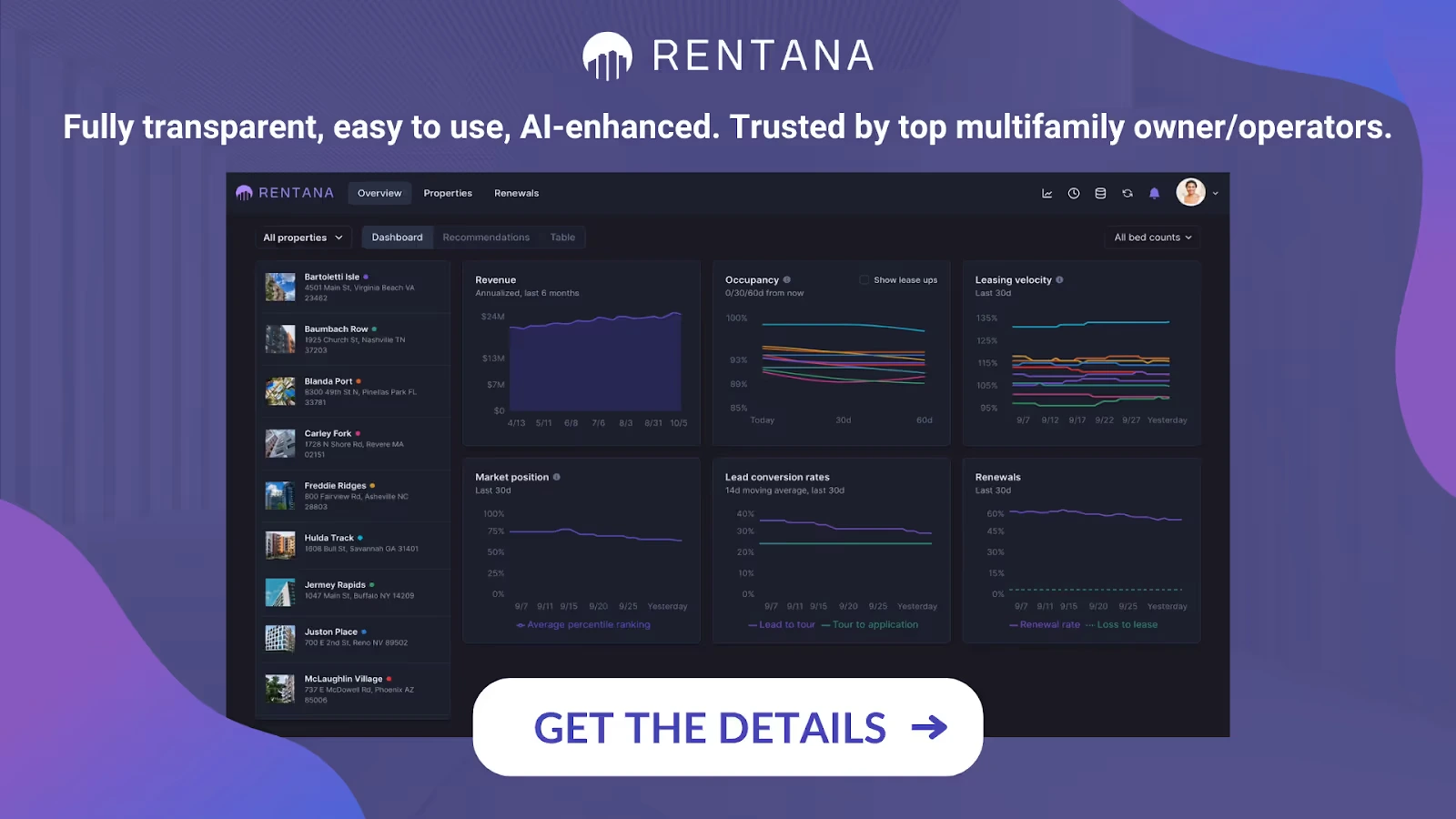
Rentana connects scheduled lease expirations, anticipated availability, leasing activity, renewal trends, and asset-level goals within one operating view.
The lease expiration chart compares scheduled expirations with configured exposure targets, helping teams identify where concentration may be built by property or unit group. When predicted availability is enabled, the forward view may also include modeled inputs such as notices to vacate, month-to-month behavior, and anticipated early terminations.
Predicted occupancy connects current leasing activity, renewal trends, and future availability to show what is anticipated under current conditions. AI-generated property insights add context around what is changing and which factors may be contributing.
Forward availability is also considered within Rentana’s broader recommendation framework. Transparent explanations help teams evaluate pricing, renewals, lease terms, concessions, amenity adjustments, and occupancy timing while keeping the final decision with the operator.
You Might Like:
- How to Improve Leasing Speed in Multifamily
- Centralized Leasing: What It Is & How Does it Work?
Conclusion on Exposure Forecasting
Exposure forecasting helps multifamily teams understand where future availability may become concentrated before the impact is fully reflected in occupancy or financial reporting.
By combining scheduled expirations with notices to vacate, month-to-month behavior, anticipated unplanned availability, and leasing and renewal trends, teams gain a more complete view of what may require attention in the months ahead.
That visibility creates more time to evaluate renewal strategy, lease terms, pricing, concessions, amenity adjustments, leasing focus, and the timeframe allowed for occupancy to recover. It does not eliminate uncertainty or determine the response, but it gives operators better context for making those decisions earlier.
The value of exposure forecasting is not simply knowing when leases end. It is understanding how future availability may interact with demand, asset strategy, and operating objectives while there is still time to respond thoughtfully.