What does your rent reporting tool actually tell you about how your portfolio is performing?
For many multifamily operators, the answer is surprisingly limited.
Traditional rent reports show what has already happened. How much rent was collected. What was billed. What is outstanding. Useful, but incomplete. They rarely explain why performance is changing, how leasing activity is evolving, or what may happen next.
At the same time, the role of data in real estate has expanded rapidly. Industry research shows that 92% of leading real estate firms have already integrated data analytics platforms into their operations, reflecting how central data has become to decision-making and portfolio management.
But more data has not automatically led to better insight.
The gap is in interpretation.
Modern rent reporting tools are starting to close that gap by connecting revenue performance with leasing activity, renewal behavior, and lease expiration patterns across the portfolio.
Instead of acting as static reports, the best rent reporting tools help operators understand how their properties are actually performing and where performance may be changing.
Because today, the goal goes beyond tracking rent. It is about understanding what that rent is signaling and what actions to take next.
Related:
- Multifamily Property Data: What Operators Should Actually Track
- How to Manage a Multifamily Portfolio Smarter
Traditional Rent Reports Are No Longer Enough for Multifamily Operators
Most rent reports were designed for a different kind of operating environment.
They provide a snapshot. What was billed. What was collected. What is outstanding. These are important numbers, but they describe outcomes, not the conditions that produced them.
The issue is that multifamily performance is not static.
Leasing activity changes week to week. Renewal decisions reshape future availability. Lease expirations can concentrate risk in specific months. Pricing decisions influence how quickly units move. All of these factors are in motion at the same time, yet traditional reports isolate revenue from the rest of the operating picture.
That separation creates blind spots.
A property may show strong collections while leasing momentum is slowing underneath. Another may appear stable while a large portion of leases is set to expire in the same period.
These signals are often missed in standard rent reporting tools because they are not designed to capture how performance is evolving. For operators and asset managers, the limitation is not the data itself. It is the lack of context.
Without visibility into leasing trends, renewal activity, and exposure patterns, it becomes difficult to understand whether current performance is sustainable or likely to change. Rent collection alone does not explain how a property is positioned for the next quarter or the next leasing cycle.
This is where modern rent reporting tools are evolving. Instead of simply tracking revenue, they connect revenue to the underlying signals that drive performance.
Read Also:
- Rental Pricing Software for Multifamily Real Estate
- The Best Lease Renewal Software for Multifamily Real Estate
How Operators Use Rent Reporting Tools in Practice

Start With Portfolio-Level Trends
Operators don’t look at revenue in isolation. They look at how it’s moving across the portfolio.
When one asset begins to trend differently from others, it’s often the first signal that something has changed. This is where modern rent reporting tools help surface early differences in performance across properties.
Evaluating Renewal Performance and Stability
Renewals indicate how much of your revenue base is retained. Strong conversion means fewer units returning to market, while declining renewals signal future availability. But renewal performance is not just about retention.
It is also about revenue trade-offs. In some cases, lower renewal conversion may be acceptable if it leads to higher trade-outs on new leases. In others, especially when demand is softer, preserving occupancy through stronger renewals may be the better strategy. Tracking both renewal conversion and trade-outs together helps operators understand not just stability, but whether revenue is being carried forward or reset.
Monitoring Leasing Momentum
Revenue may appear stable, but leasing activity reveals what is happening underneath. If units begin taking longer to lease, it can signal a change in demand or pricing alignment. Leasing velocity is often one of the earliest indicators that performance is beginning to change.
Identifying Exposure Risk Early
Lease expirations rarely occur evenly across the year or by unit type. Without intentional strategy, they tend to cluster, creating periods of increased availability. Over time lease term timing can shift. New leases may start during high-demand periods but with turnover timing and move-in delays, those expirations can gradually “creep” forward and concentrate in the same months.
Modern rent reporting tools help operators visualize where this exposure is building across months and layouts, so they can take action before it impacts occupancy trends.
Compare Floorplan Performance Across the Portfolio
Not all units perform the same, even within the same property. Across a portfolio, patterns begin to emerge.
Some layouts consistently lease faster or maintain stronger pricing. In a well-aligned multifamily pricing strategy, units should lease at a relatively consistent pace. When certain floorplans or unit types take longer to lease, it often signals a mismatch between pricing and demand.
By analyzing metrics like average days on market or days vacant, operators can identify where performance is lagging and investigate the underlying drivers. These comparisons help operators understand how demand and exposure are interacting across unit types and apply pricing adjustments that bring leasing performance back into alignment.
Go Deeper With Flexible Reporting and Custom Analysis
Beyond standard reports, many operators need to answer more specific questions. For example, “How are one-bedroom units performing?” across multiple properties, or “How is leasing trending by unit type?” within a single asset.
Advanced rent reporting tools allow teams to build custom views using a wide range of metrics and filters, making it possible to analyze performance across bedroom types, unit characteristics or groups of properties.
This level of flexibility helps operators move beyond static reports and investigate the exact drivers behind performance changes.
Top Pick:
- Lease Management Software for Real Estate: 7 Use Cases & Tools
- How AI Impacts Returns in Multifamily
The Key Signals Modern Rent Reporting Tools Track
1. Leasing Performance
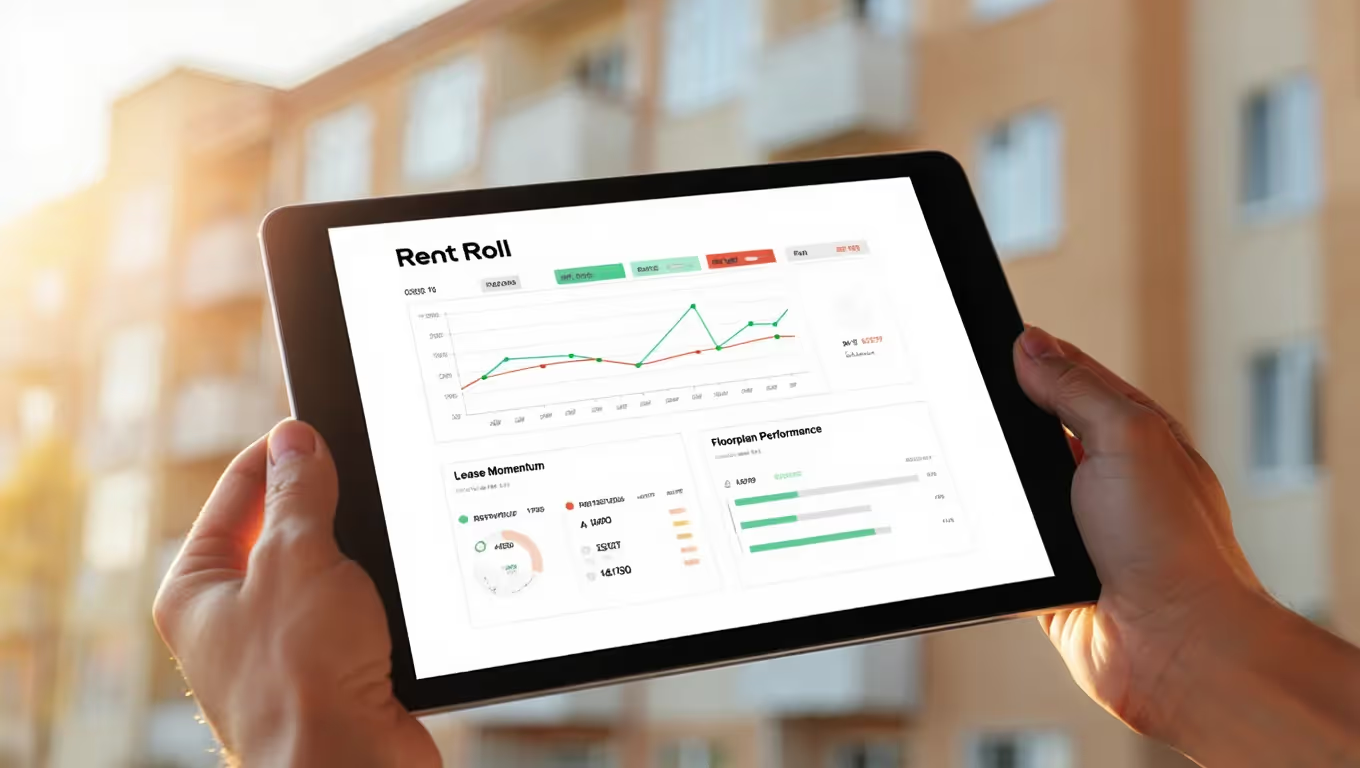
Leasing activity shows how units are actually moving, not just how they performed last month. Metrics like leasing velocity and days vacant help investors see whether demand is holding or starting to soften. It’s often the first signal that something is changing.
In a well-aligned pricing strategy, units should lease at a relatively consistent pace. When certain unit types begin to lag, it often signals a mismatch between pricing and demand.
Leasing performance is typically the first signal that something is changing.
2. Renewal Performance and Trade-Outs
Renewals determine how much of your revenue base is retained, while trade-outs show how new lease terms compare to previous ones. Together, these signals help operators understand how renewal decisions are shaping both future availability and revenue trajectory.
3. Exposure and Predicted Availability
Future availability matters as much as current occupancy. Lease expirations, renewal behavior, and upcoming move-outs all shape how supply will build over time.
Without intentional strategy, lease expirations rarely distribute evenly across the year or by unit type. Over time, lease timing can shift and cluster, creating periods of concentrated exposure.
Predicted availability helps operators see where this pressure is building before it impacts occupancy, allowing them to adjust pricing or leasing strategy in advance.
4. Floorplan and Unit-Level Performance
Not all units perform the same. Across a portfolio, certain floorplans or unit types may consistently lease faster or slower than others.
By analyzing performance at the unit type level, operators can identify where demand is strongest and where pricing may be misaligned.
Metrics like days on market or days vacant help highlight underperforming segments, while deeper analysis can reveal whether specific amenities or features are not being priced appropriately.
Related: How to Improve Leasing Speed in Multifamily
5. Pricing Performance
Pricing is not a standalone signal. It is the primary lever operators use to respond to demand, exposure, and renewal dynamics.
Effective pricing reflects how units are performing, how availability is expected to change, and how asset-level strategy is defined.
When these signals are evaluated together, pricing decisions become more consistent, proactive, and aligned with portfolio performance goals.
6. Market Context
Market conditions provide important context, but they are not the primary driver of pricing decisions.
Changes in supply, demand, and competitive positioning help validate internal performance signals, ensuring pricing remains aligned with broader market trends.
When these signals are viewed together, rent reporting tools move beyond static reporting and become a way to understand what is changing, why it is changing, and what to do next.
Related: Multifamily Performance Reporting: Metrics That Drive Performance
How Rentana Works as a Rent Reporting Tool for Multifamily Investors
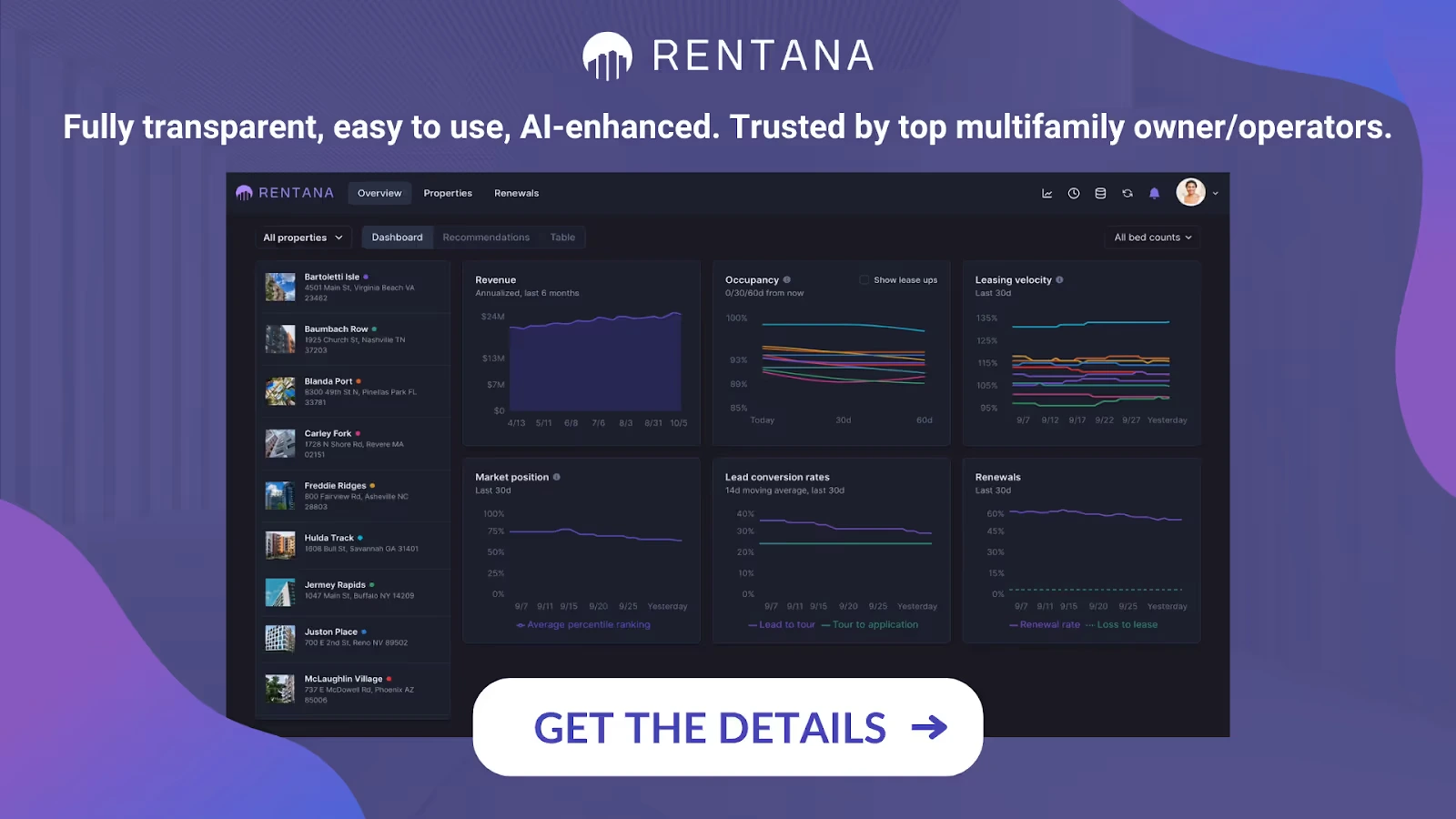
1. Portfolio Dashboards and Performance Visibility
At the portfolio level, the first step is knowing where to focus. Rentana provides a centralized view of performance across assets, allowing operators to quickly identify which properties are on track and which are beginning to diverge.
Instead of reviewing each property individually, teams can prioritize attention based on where performance signals are changing.
2. Leasing Velocity and Pricing Signals
Leasing performance is one of the earliest indicators of change. Rentana connects leasing velocity with pricing signals, helping operators identify when demand begins to shift.
This allows teams to evaluate whether pricing remains aligned with demand and take action before slower leasing impacts occupancy.
3. Renewal Conversion and Exposure Tracking
Renewals and exposure are closely connected. Rentana provides visibility into renewal conversion alongside lease expirations, helping operators understand how today’s decisions are shaping future availability.
This makes it easier to anticipate periods of increased availability and adjust strategy in advance.
4. Predicted Availability Insights
Strong portfolio management is forward-looking. Rentana provides predicted availability insights that show how occupancy and supply are likely to develop over time.
This allows operators to guide leasing and pricing decisions earlier, reducing the impact of future exposure.
5. Floorplan Performance Analysis Across Properties
Performance differences often exist at the unit type level. Rentana allows operators to analyze floorplan performance across properties, helping identify where demand is strongest and where adjustments may be needed.
This helps ensure pricing reflects how different unit types are actually performing.
6. Custom Reporting Through Metrics Browser
Standard reports provide a starting point, but they do not answer every question. Rentana’s metrics browser allows operators to build custom reports and visualizations across more than 175 metrics.
Teams can analyze performance across unit types, property groups, or specific characteristics such as bedroom count or square footage. This makes it possible to answer targeted questions, such as how one-bedroom units are performing across multiple properties or how leasing trends differ within a single asset.
This level of flexibility allows operators to move beyond static rent reporting tools and investigate the exact drivers behind performance.
7. AI-Generated Insights Explaining Performance and Trends
The real advantage is not just having data, but understanding it quickly. Rentana provides AI-generated insights that summarize what is changing across the portfolio and why.
These insights highlight key drivers, identify where performance is shifting, and provide context for what actions to consider next.
By connecting portfolio visibility, leasing signals, renewal behavior, and forward-looking insights, Rentana functions as more than a rent reporting tool. It helps operators understand performance, identify change early, and make more informed decisions across the portfolio.
Don’t Miss: Which Multifamily Software Has the Best AI Features?
Conclusion
What if your rent reporting tool could show you where your portfolio is going, not just where it has been?
That is the shift multifamily operators are starting to make.
Rent reporting tools are no longer just about tracking collections. They are about understanding performance.Leasing momentum, renewal behavior, pricing signals, and exposure patterns all shape how assets perform over time. When these signals are disconnected, decisions are reactive and delayed. When they are connected, operators can respond earlier and with greater confidence.
Modern rent reporting tools are evolving around this idea.
They give operators the ability to see what is changing across their portfolio, understand why it is happening, and act before those changes impact performance. Instead of reviewing reports after the fact, teams can guide outcomes as they develop.
Platforms like Rentana bring this into a single workflow. By combining portfolio visibility, leasing and pricing signals, and forward-looking insights, operators can move from tracking performance to actively shaping it. The value of a rent reporting tool is not in the numbers it shows. It is in how quickly it helps you understand change and decide what to do next.