Pricing apartments has never really been about a single number.
Across most multifamily portfolios, pricing decisions sit at the center of several moving pieces. Leasing velocity. Upcoming lease expirations. Renewal conversions. Predicted availability. Shifts in public market conditions. All of these signals influence how pricing should move across a property and across a portfolio. For asset managers, pricing is not just about maximizing rent on a single unit. It is about balancing demand, lease exposure, and revenue stability across the entire portfolio.
For years, many operators relied on static rent grids to guide these decisions. Teams would review pricing trends, look at a handful of nearby properties, and adjust rents manually based on experience. That approach worked when leasing conditions were relatively stable and portfolios were smaller.
Today the environment is more dynamic.
Demand signals shift quickly. Leasing velocity can change week to week. Renewal behavior may shift if pricing moves too aggressively. Lease expirations can cluster unexpectedly, increasing exposure risk in future months. Asset Managers increasingly need visibility into how pricing decisions today influence occupancy, leasing momentum, and availability months ahead. That is why pricing optimization software has become an important part of the modern multifamily operating stack.
Modern pricing systems do far more than suggest rent levels. With AI, they analyze leasing activity, monitor floorplan demand, evaluate renewal strategy, and forecast upcoming availability.
According to CBRE, data and analytics are now considered critical to real estate strategy by the vast majority of C-suite industry leaders, reflecting the growing role of analytical software in guiding portfolio decisions, pricing strategies, and operational planning.
The goal is not simply to set rents. The goal is to help operators understand how pricing decisions interact with supply, demand, and lease timing across an entire portfolio.
Related: The Best Rent Analysis Tool for Multifamily Pricing Strategy
What Is Pricing Optimization in Multifamily Real Estate?

Pricing optimization in multifamily is the process of setting rents based on real time signals across leasing, exposure forecasts, and market conditions rather than relying on static rent schedules or periodic comp review.
In practice, pricing is tied to several operational factors that change constantly across a property and across a portfolio. Leasing velocity may accelerate for a certain floorplan. A cluster of leases may be scheduled to expire within the same month. Predicted availability may increase because of upcoming move outs. Public market conditions may shift as new supply enters the area.
Each of these signals affects how rents should be set.
Traditional approaches often relied on periodic comp checks and manual rent adjustments. Leasing teams or asset managers would review pricing trends in the market, update rent grids, and revisit those decisions weeks or months later. That method worked when portfolios were smaller and leasing cycles were more predictable.
Modern multifamily operations require a more responsive approach.
Pricing optimization software continuously evaluates leasing performance, upcoming availability, and public market data to generate pricing recommendations that reflect current conditions. Instead of reviewing rents property by property, operators can evaluate pricing signals across the entire portfolio and adjust strategy with greater visibility.
For example, a property experiencing strong leasing velocity on one floorplan may support higher rent levels, while a unit type with slower leasing activity may require a different pricing approach to maintain leasing momentum. At the same time, upcoming lease expirations and renewal activity must be considered to avoid creating large exposure periods in future months.
The goal is not simply to determine a rent number. It is to help operators understand how pricing decisions interact with demand, lease timing, and occupancy planning.
Read Also: The Best Lease Management Software for Multifamily Real Estate
Key Features of Modern Pricing Optimization Platforms
Modern pricing systems help operators understand what is happening across their properties and translate those signals into clear pricing guidance. The goal is to connect leasing activity, lease exposure, and market conditions into one operational view.
Key capabilities typically include:
- Dynamic pricing recommendations (+by layout, specific)
Pricing platforms analyze leasing velocity, predicted availability, and public market conditions to suggest rent levels that reflect current demand. Recommendations are typically generated at the unit group or floorplan level, allowing operators to price specific layouts and renovations differently based on demand signals, availability, and leasing momentum. Instead of updating rent grids periodically, operators receive ongoing recommendations that can be reviewed, adjusted, and applied directly to leasing workflows. - Exposure management (2 times you can fix exposure new lease and renewal)
Lease expiration timing has a major impact on occupancy stability. Modern platforms help operators visualize upcoming lease exposure and understand how pricing decisions today influence availability months ahead. This allows teams to smooth expiration clusters and reduce periods where too many units become available at the same time. Operators typically influence exposure through two levers: renewal strategy and new lease term pricing. By adjusting lease terms or pricing incentives, teams can encourage leases that align expirations with stronger demand periods and reduce clustering in slower months. - Renewal pricing strategy (+ granular and specific renewal generation to align with asset strategy)
Renewal pricing is closely tied to overall portfolio strategy. Pricing platforms allow operators to generate renewal offers and align renewal terms with leasing performance, predicted availability, and public market conditions. This helps ensure renewal decisions support long term occupancy planning. - Floorplan level performance analysis
Demand rarely moves evenly across all unit types. Pricing tools evaluate leasing velocity and availability at the floorplan level so operators can see which layouts are leasing quickly and which ones may need pricing adjustments. This level of visibility helps teams understand demand signals more clearly. - Portfolio level pricing dashboards (+insights)
Asset managers and operators need visibility beyond individual properties. Portfolio dashboards provide a broader view of leasing performance, pricing trends, exposure forecasts, and demand signals across multiple assets. Many platforms also surface key insights and alerts that highlight meaningful changes in demand or exposure so asset managers can quickly identify where pricing strategy may need adjustment. This helps leadership teams evaluate portfolio health and guide pricing strategy with consistent data.
Related: Multifamily Performance Reporting: Metrics That Drive Performance
How Operators Use Pricing Optimization Software in Practice

Pricing optimization software becomes most valuable when it connects everyday leasing activity with broader portfolio strategy. Operators are not simply adjusting rents. They are interpreting demand signals, managing lease timing, and guiding how availability moves across their assets over time.
This is where a platform like Rentana becomes part of the operating workflow. Rather than reviewing spreadsheets or static rent grids, teams can see leasing signals across the portfolio and understand how pricing decisions affect future availability, renewal activity, and floorplan performance.
Below are several ways operators apply pricing optimization in practice.
1. Adjusting Pricing Based on Leasing Velocity
Leasing velocity is one of the clearest indicators of demand at a property. When units lease quickly, it signals that current pricing may be below the level supported by the market. When units sit vacant longer than expected, it may indicate that demand has softened for that floorplan or lease term.
In many portfolios, this signal is difficult to track consistently. Leasing teams may notice patterns locally, but asset managers often lack a clear portfolio level view.
Rentana monitors leasing velocity across properties and unit types so operators can quickly identify where demand is accelerating or slowing. AI supported pricing recommendations incorporate this leasing activity along with public market data to suggest rent adjustments that reflect current conditions.
Because the platform presents the underlying signals behind each recommendation, operators can review the context, evaluate the data, and decide how to apply pricing changes across the property or portfolio.
2. Smoothing Lease Expiration Exposure
Lease exposure is one of the most overlooked drivers of operational stability. When too many leases expire in the same month, properties can face sudden swings in availability that make leasing performance harder to manage.
Pricing optimization helps address this challenge by connecting pricing decisions with predicted availability and future lease expirations.
Rentana provides exposure forecasting so operators can see upcoming lease expiration clusters and understand how availability may shift over time. Teams can evaluate predicted availability months ahead and use pricing adjustments or lease term strategies to smooth exposure across the calendar.
Instead of reacting to availability after it appears, operators gain visibility into how the pipeline of leases is developing and can guide leasing activity accordingly.
Related: How Do Companies Keep Track of Lease Expiration Dates?
3. Aligning Renewal Pricing With Asset Strategy
Renewal decisions are often handled separately from new lease pricing, yet they influence the same factors that drive portfolio performance.
If renewal offers are not aligned with the broader pricing strategy, properties can create unexpected availability or lose stability in key leasing periods.
Rentana connects renewal pricing with overall pricing strategy. Operators can generate renewal offers that reflect current leasing performance, predicted availability, and public market conditions. Asset managers can also track renewal activity across the portfolio to understand how retention patterns are affecting future exposure.
This allows renewal pricing to function as part of the broader operating strategy rather than as a separate workflow handled property by property.
4. Evaluating Floorplan Demand Signals
Demand rarely moves evenly across every unit type within a property. One floorplan may lease quickly while another sees slower activity. Without clear visibility, these signals can be difficult to identify until vacancy begins to appear.
Modern pricing systems allow operators to evaluate performance at the floorplan level.
Rentana analyzes floorplan level leasing activity and availability so teams can see where demand is strongest and where leasing activity may be slowing. Operators can review how each unit type is performing, monitor leasing velocity and days vacant trends, and evaluate predicted availability at the floorplan level. This allows teams to forecast demand and exposure independently for each layout and adjust pricing strategies to maximize revenue.
This level of analysis helps operators make more informed pricing decisions while maintaining consistency across the portfolio.
Read Also: Multifamily Rent Pricing Strategy: A Complete Guide for Investors
5. Viewing Pricing Strategy Across the Portfolio
Asset managers and executives need visibility beyond individual properties. Pricing strategy must be evaluated across multiple assets to understand how leasing performance, demand signals, and exposure trends are evolving at the portfolio level.
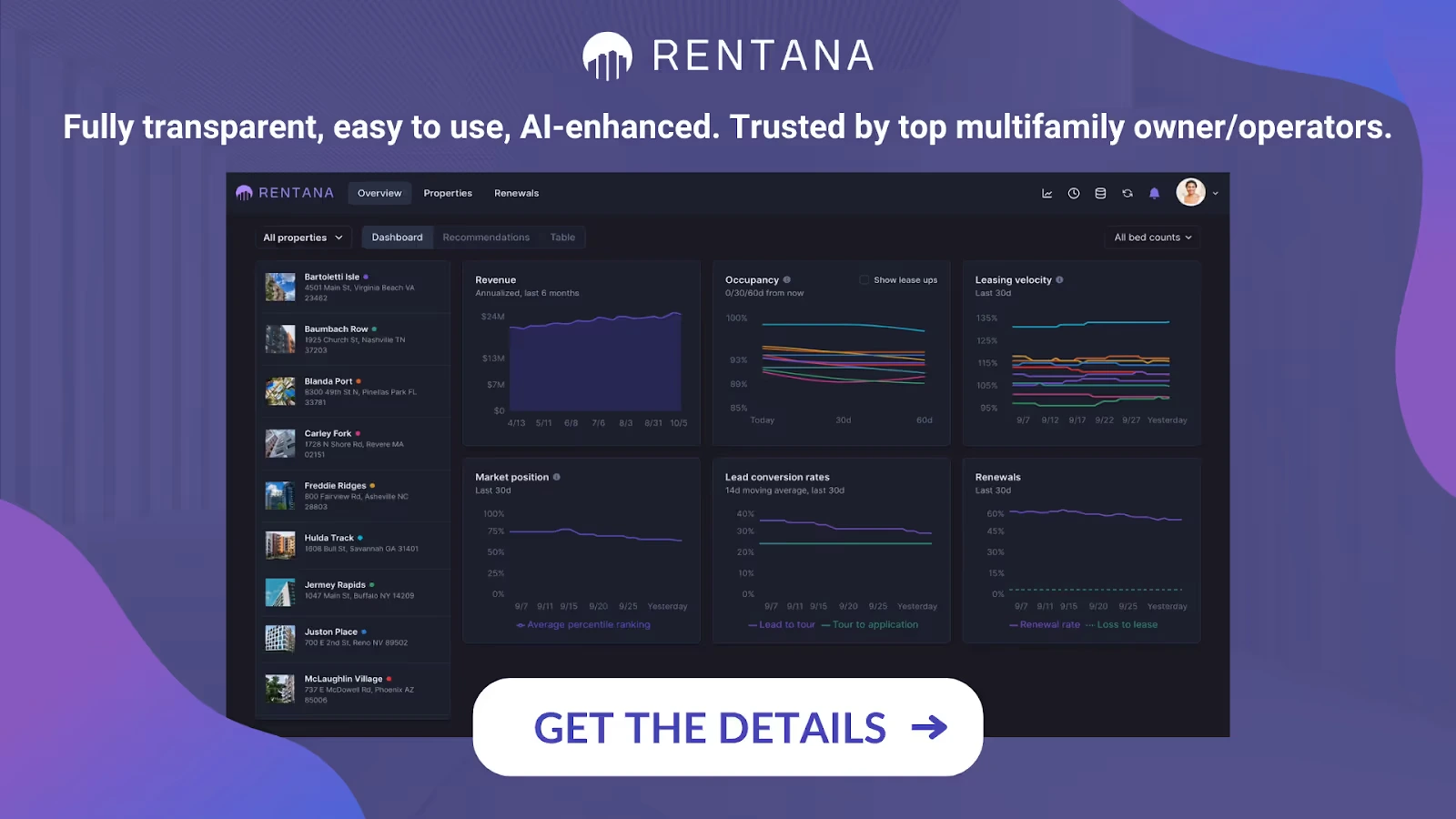
Rentana provides portfolio pricing dashboards that give operators a clear view of portfolio health. Teams can move from a portfolio overview into individual properties and even down to unit level data, allowing them to evaluate performance from a high level while still having access to detailed operational insight.
This type of visibility allows pricing decisions to be guided by data across the entire portfolio rather than isolated property level observations.
Top Pick: The Best Lease Renewal Software for Real Estate
Why Rentana is the Best Pricing Optimization Software for Multifamily Real Estate
Pricing decisions in multifamily are rarely isolated to one unit or one property. They affect leasing momentum, renewal outcomes, and how availability moves across the portfolio over time. The challenge for operators is not simply generating pricing suggestions. The real challenge is seeing the signals behind those decisions and understanding how they connect to broader asset strategy.
Rentana approaches pricing optimization as part of a larger revenue intelligence workflow. The platform helps operators interpret leasing activity, availability trends, and public market conditions so pricing decisions can be made with clearer context. Instead of relying on static rent grids or manual reviews, teams gain a structured view of the portfolio that connects demand signals, lease exposure, and renewal strategy.
What makes Rentana particularly useful for asset managers and operators is the transparency of the system. Pricing recommendations are supported by AI analysis and accompanied by explanations that show the factors influencing the suggestion. Teams can review the data, evaluate performance at the property or floorplan level, and apply decisions with confidence while maintaining full control over their pricing strategy.
Here’s why Rentana is a best-in-class example of a pricing optimization software for multifamily (+this section is missing concession tracking, amenity insights, the property performance insights with actions and transparent logic for the recommendations. )
AI Pricing Recommendations with Transparent Insights
Rentana analyzes leasing activity, predicted availability, and public market data to generate pricing recommendations that reflect current operating conditions. Each recommendation is accompanied by clear explanations that show the signals influencing the recommendation, such as leasing velocity ,floorplan demand, exposure risk, and market conditions.
The platform also surfaces property performance insights that explain why pricing conditions may be changing and what operators may want to evaluate. These insights summarize key signals, provide supporting data, and suggested actions teams can consider. This transparency allows asset managers to review system logic, validate recommendations, and apply pricing decisions with confidence rather than relying on opaque algorithms.
Renewal Pricing Strategy Alignment
Renewal offers can be generated and evaluated alongside new lease pricing so retention decisions support overall portfolio strategy. This helps operators align renewal activity with predicted availability and leasing performance.
Exposure Forecasting
Rentana visualizes upcoming lease expirations and availability patterns across properties. Operators can see potential exposure months ahead and make pricing or lease term adjustments to smooth availability.
Floorplan Performance Analysis
The platform evaluates leasing activity and availability at the floorplan level, helping operators identify where demand is strongest and where adjustments may be needed.
Top Pick: The Best AI Tool for Rental Market Analysis by Zip Code
Amenity Performance Insights
Rentana also evaluates how amenities influence leasing performance by analyzing days on market and leasing velocity across units with different features. This helps operators identify amenity premiums and detect when certain features may be underperforming relative to expectations.
Predicted Availability Insights
Rentana forecasts future availability based on current leases, renewals, and leasing activity. This allows teams to understand how today’s decisions may affect occupancy and availability in future months.
Leasing Velocity Monitoring
Operators can track how quickly units are leasing across properties and unit types. This signal helps guide pricing adjustments and highlights changes in demand early.
Concession and Special Tracking
Rentana tracks rent concession activity and publicly advertised specials across competing properties while also monitoring the timing and insights to the effectiveness of concessions used at the property. By overlaying specials with leasing performance, operators can evaluate whether incentives are actually improving leasing momentum or simply reducing revenue unnecessarily.
Portfolio Pricing Dashboards
Asset managers can move from a portfolio level view down to individual properties and unit level insights. These dashboards provide a clear picture of portfolio health, helping teams evaluate pricing strategy across multiple assets.
Don’t Miss: Real Estate Predictive Analytics Software: Best Tools & Use cases
Conclusion on Pricing Optimization Software for Real Estate
What if pricing decisions across your portfolio were not driven by periodic reviews or static rent grids, but by a continuous understanding of leasing activity, availability, and market signals?
That is the shift taking place across multifamily operations.
Pricing optimization is no longer just about updating rents. It is about managing demand signals, lease exposure, and revenue performance across the portfolio. Operators who can see these patterns clearly are better positioned to guide leasing activity, maintain stable occupancy, and make consistent pricing decisions across their assets.
The challenge has always been visibility. Leasing velocity, predicted availability, renewal behavior, and floorplan demand are often scattered across different systems and reports. When those signals are brought together in one place, pricing strategy becomes much easier to manage.
This is where platforms like Rentana are changing the workflow for operators and asset managers. By combining AI supported pricing recommendations, exposure forecasting, floorplan performance analysis, and portfolio level visibility, Rentana helps teams understand the signals shaping pricing decisions and act on them with confidence.
Because in multifamily operations, pricing is not just a number.
It is a reflection of how well you understand the demand signals, exposure risks, and revenue opportunities across your portfolio.