What if the biggest challenge in multifamily real estate today is not the properties themselves but the amount of information surrounding them?
Investors and property managers are now swimming in data from dozens of sources. Leasing activity, public market trends, unit-level performance, regional shifts, and historical patterns all move at once. Yet most teams still rely on spreadsheets, disconnected systems, or time-consuming manual reports to make decisions that affect millions of dollars.
The volume of multifamily data has grown faster than traditional workflows can keep up. Only 13% of real-estate companies report having access to up-to-date business intelligence or real-time analytics tools, while 60% still rely on spreadsheets for reporting.
With so much information scattered across different tools, it becomes difficult to see what matters most. Which properties need attention? Which units are signaling a change in demand? How are public market conditions shifting? And how do you make clear decisions when the signals feel buried under the noise?
This new landscape requires Multifamily analytics software that does more than store data. It needs to simplify complexity, surface insights instantly, and give investors and operators a clear, shared understanding of what is happening across their portfolios.
That expectation is what led to modern platforms like Rentana. By bringing portfolio, property, and unit-level visibility together and layering intelligent analysis on top of public market information, Rentana supports teams in making confident, data-informed decisions without getting lost in the details.
Related: Is Multifamily Considered Commercial?
Why Multifamily Market Analytics Software Matter More Than Ever

The multifamily landscape is changing quickly, and both investors and property managers are feeling the impact. Public market conditions shift faster, residents make decisions differently, and data is coming from more places than most teams can comfortably track. This is exactly why tools like Rentana have become essential.
Here are five reasons multifamily analytics matter now more than ever:
1. There is more Data than People can Process Manually
Every property generates thousands of data points each month. When you add public market trends, demand signals, and unit-level performance, it becomes too much to manage with spreadsheets.
2. Early Signals Prevent Costly Surprises
Demand and occupancy do not shift overnight. They show early signs. Multifamily market analytics software help you see those changes before they turn into larger issues. This helps you stay ahead rather than react at the last minute.
3. Investors and Operators need a Shared Source of Truth
When everyone works from different reports or interpretations, varied opinions can be formulated leading to diverging ideas on how best to move forward and slowing decisions down. A Multifamily market analytics software is needed to bring portfolio, property, public market, and unit-level data together so all teams stay aligned.
4. Transparent Insights Support Confident Pricing Conversations
With visible data and easy-to-explain trends, property managers can approach pricing and renewal discussions with confidence backed by facts, not assumptions.
5. Efficient Communication Saves Time and Reduces Stress
Creating reports manually is draining and time-consuming. Automated reporting tools turn complex metrics into simple, shareable insights, helping investors and onsite teams stay informed without extra work.
Top Pick: 2026 Real Estate Market Forecast and Predictions
Rentana: Best Multifamily Market Analytics Software for Investors and Property Managers
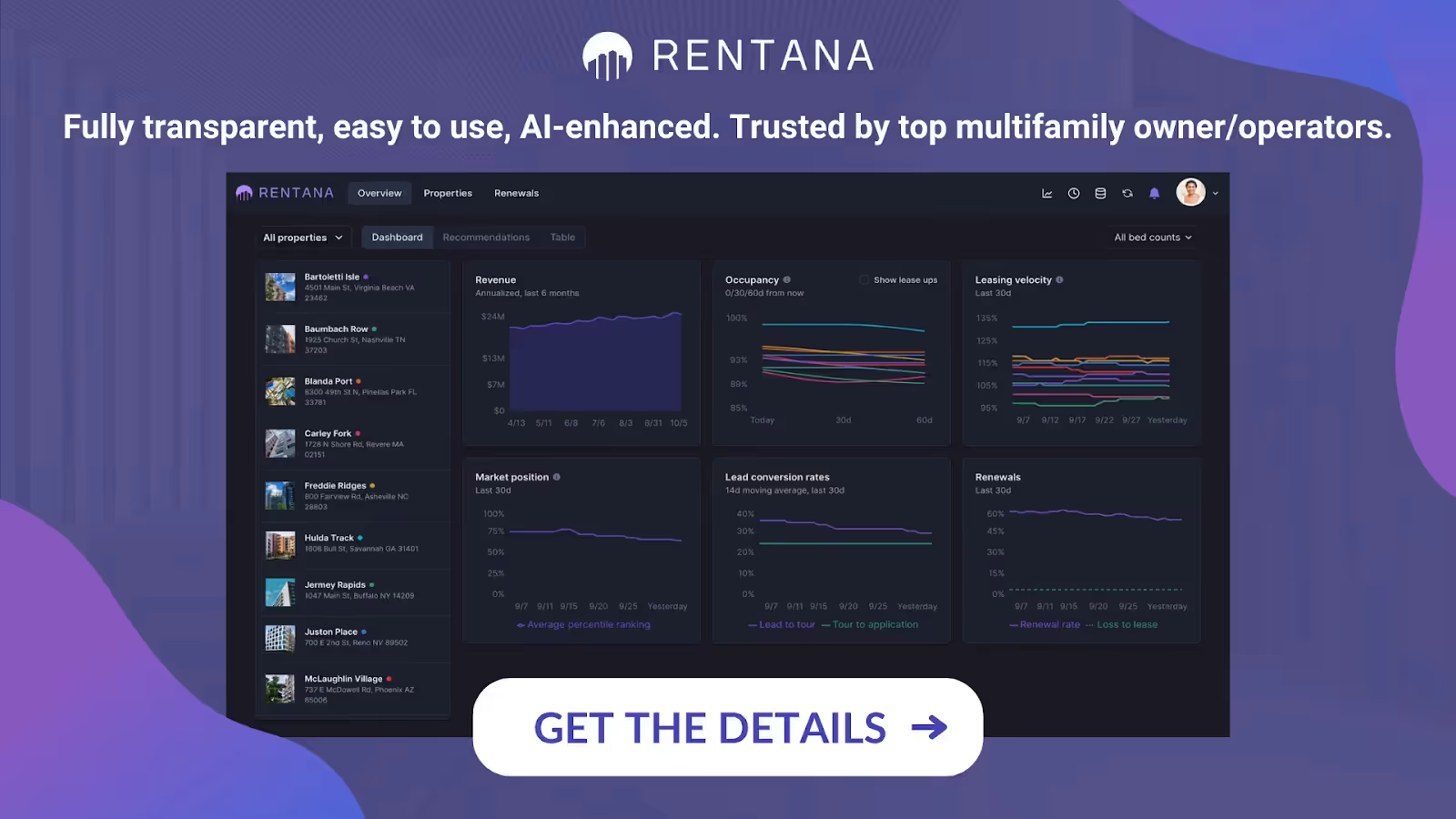
A consolidated multfamily analytics and BI platform has become a strategic advantage for operators in this era of information overload.
So, what makes Rentana the best multifamily analytics software for you as an investor, property or asset manager?
1. Portfolio-Level Intelligence That Shows What Really Matters
For investors and property managers, clarity at the portfolio level is everything. When information is scattered across spreadsheets, emails, and disconnected tools, it becomes almost impossible to understand where attention is needed or why certain properties are performing differently. A modern analytics platform should act as the central hub that brings all of this together in one place.
Rentana was designed with this exact challenge in mind. Instead of forcing teams to dig for answers, Rentana organizes portfolios in a way that makes the most important signals stand out immediately.
Rentana was designed with this exact challenge in mind. Instead of forcing teams to dig for answers, Rentana organizes portfolios in a way that makes the most important signals stand out immediately. Key benefits include:
- Red, yellow, and green health indicators that clearly show which properties are on track and which may need attention
- Instant drilldowns from portfolio to property to unit, helping teams trace performance changes with full transparency
- Early visibility into demand and occupancy shifts so investors and operators can respond before issues grow
- Flexible portfolio grouping by client, partner, region, or asset type to highlight patterns across different segments
This level of visibility is especially valuable for teams managing multiple clients, partners, or regions. Rentana allows users to group their portfolios however they need, which helps identify patterns and differences across segments.
If occupancy begins to shift in one geographic area or demand strengthens for certain unit types, the system surfaces those signals early so teams can respond thoughtfully.
By consolidating everything into a single source of truth, Rentana gives you a clear understanding of what is happening across their entire operation. It removes the guesswork, reduces manual tracking, and replaces information overload with a simple, organized view of what truly matters.
Related: What is a Good Cap Rate for a Multifamily Property?
2. Predictive Analytics That Turn Public Market Data Into Actionable Insight
Understanding what happened yesterday is helpful, but as an investor or property manager, what you truly need is a clear picture of what is likely to happen next. Modern multifamily market analytics software should not stop at reporting historical numbers. It should help you anticipate upcoming shifts, plan ahead, and make confident decisions based on early signals rather than reactive guesswork.
This is where predictive analytics become essential. You need tools that can:
- Forecast demand and occupancy so you know when interest may rise or soften
- Predict availability windows for different unit types to support better staffing and planning
- Interpret changes in public market conditions and show how those shifts might influence your assets
- Identify patterns that could affect pricing conversations or operational decisions
Rentana supports this type of forward-looking decision-making by reviewing publicly available market data alongside your property’s activity. Its predictive models help you understand how demand is trending, when occupancy may adjust, and which unit types might require early attention.
You gain visibility into emerging patterns without having to dig for the signals yourself. Whether you manage one property or an entire portfolio, Rentana gives you the foresight to plan proactively, communicate clearly with your teams, and approach each decision with greater confidence.
3. Transparent, Data-Backed Pricing and Comp Analysis
As an investor or property manager, you need clarity when evaluating pricing decisions. You should always be able to see why a number is being suggested, which factors influenced it, and how public market conditions or on-site activity contributed to the recommendation. Modern analytics software should remove guesswork and replace it with transparent, easy-to-understand insight.
This is where clarity matters most. You deserve tools that provide:
- Transparent AI explanations that clearly outline the reasoning behind a pricing suggestion with no black-box behavior
- Supporting graphs and KPIs that show how demand, occupancy trends, and other metrics are moving
- Unit-level and square-foot normalization that helps you understand how different units compare without relying on inconsistent data
- Consistent tracking of on-site performance signals so you can spot meaningful changes early
Rentana’s approach fits naturally into this need for visibility. When the platform offers a pricing recommendation, you can immediately see the data behind it. You can review the trends, examine the historical performance, and understand how publicly available market information contributed to the analysis.
For investors, this means you can evaluate property performance with complete transparency. For property managers, it means you can approach pricing conversations with clear, data-backed information that feels fair, balanced, and easy to communicate.
The result is a more confident and informed pricing process rooted in facts rather than assumptions.
4. Custom Reporting and Communication Tools Built for Teams and Investors
Seeing insights is only half the job. As an investor or property manager, you also need to share those insights clearly with your team, your partners, and sometimes your clients. The best multifamily market analytics software does more than organize data. It helps you communicate it in a way that is simple, consistent, and easy for anyone to understand.
Effective reporting tools allow you to:
- Generate cross-property and portfolio-level reports that highlight trends across your entire operation
- Browse metrics and compare properties side by side to understand how performance varies across segments
- Turn raw numbers into clear narratives that explain what is happening and why it matters
- Ensure that everyone stays aligned by working from the same transparent, shared source of truth
This is where Rentana’s reporting features make a meaningful difference. Its metrics browser gives you the ability to pull from hundreds of metrics across any property and instantly compare them. Detailed reporting views help you assemble concise summaries, and export or API capabilities allow you to bring that information into your preferred workflows or presentations.
Whether you are preparing an investor update, aligning with regional teams, or reviewing performance with partners, Rentana gives you the clarity and communication tools you need. Instead of spending hours stitching together spreadsheets, you can focus on making decisions and keeping everyone informed with reliable, well-organized data.
Related: The Best AI Tools for Real Estate Investors
Success Story: How URS Capital Partners Transformed Portfolio Visibility With Rentana's Multifamily Analytics Software
Real-world results show how powerful clear data and strong analytics can be. URS Capital Partners, a national real estate investment firm, recently adopted Rentana to improve how its teams reviewed performance, understood public market conditions, and made informed decisions across its portfolio.
URS rolled out Rentana across 12 properties and 2,500 units in only two weeks, giving both operators and asset managers immediate access to organized portfolio insights. With Rentana’s transparent explanations, predictive analytics, and easy-to-navigate dashboards, the firm saw meaningful operational improvements within the first quarter.
Key outcomes included:
- 8.2 percent NOI growth from Q1 to Q2, supported by stronger clarity around unit performance and timing
- 7.3 percent daily occupancy improvement from March through September 2025
- 5x faster pricing review workflows, reducing analysis time from 90 minutes to 15 minutes per property
By centralizing information and simplifying decision-making, Rentana helped URS shift from manual, time-consuming processes to a more informed and insight-driven approach.
URS evaluated several tools before choosing Rentana, ultimately selecting it for its speed, intuitive interface, and hands-on support. Teams were able to adopt it quickly because the platform fit naturally into existing workflows rather than disrupting them.
In the words of URS consultant Heather Moore, Rentana became “a tool that helps teams focus on what matters,” offering clear visibility into performance signals and helping both operators and asset managers understand why certain patterns were happening.
Rentana’s approach combines publicly available market trends with property-level activity to deliver transparent, data-backed recommendations. By giving teams a clear view of upcoming turnover, shifting demand patterns, and unit performance, Rentana allows owners and operators to act with confidence and stay ahead of changing conditions.
This success story reflects what many investors and property managers are experiencing today. When data is organized, visible, and easy to use, teams can respond faster, work more efficiently, and support portfolio performance with clarity instead of uncertainty.