What actually happens to a lease after it is signed?
For many multifamily portfolios, the answer is less straightforward than it might seem.
Once a lease is executed, it becomes part of the property management system (PMS), which serves as the system of record for the property. But the decisions surrounding that lease, pricing, renewals, exposure management, and portfolio performance, often extend beyond the PMS itself.
Leasing activity touches multiple layers of multifamily technology stack. Prospect activity may begin in a marketing or CRM platform. Lease records ultimately live in the PMS. Pricing and renewal decisions may be supported by revenue intelligence platforms. Portfolio reporting often exists in a separate analytics layer.
Each system plays an important role. What is often missing is a unified view of how leasing activity is performing across the portfolio.
That fragmentation makes it harder to interpret leasing performance in context. Asset managers want to understand how leasing momentum is trending across properties. On-site teams need clear visibility into upcoming expirations, exposure, and renewal timing. Ownership groups want reporting that explains not just where performance stands, but what operational signals are influencing it. That shift is why many operators are reevaluating what they expect from lease management software.
Modern lease management software helps organize these signals into a clearer operational view.
Today’s platforms do far more than store lease documents. They help operators connect leasing activity with renewal planning, pricing strategy, portfolio visibility, and operational performance. In an environment where supply cycles, demand patterns, and operating costs are shifting quickly, that visibility is becoming essential.
In this guide, we will look at the best lease management software for multifamily real estate, how these platforms fit into the broader technology stack, and what owners and operators should consider when evaluating modern leasing tools.
Related: Multifamily AI Leasing Assistants: Use Cases & Benefits
Why Lease Management Software Has Become Essential for Multifamily

Leasing used to be relatively straightforward from a systems perspective. Most of the activity lived inside the property management system. Leasing teams tracked availability, executed leases, , and managed renewals within the same platform.
That core structure still exists today. The property management system remains the system of record for leases, residents, and financial activity. What has changed is the complexity of operating multifamily portfolios at scale.
Leasing decisions today influence far more than individual units. They affect portfolio occupancy targets, renewal pipelines, exposure planning, and revenue performance across multiple assets.
As portfolios grow larger and more geographically diverse, operators need clearer visibility into how leasing activity is trending across properties, not just within a single building.
A single lease now touches several operational layers before and after it is signed. Prospect activity may begin in a marketing or CRM platform. Lease records ultimately live in the property management system. Pricing and renewal strategy may be informed by revenue intelligence platforms. Portfolio reporting often sits in a separate analytics environment. Each of these systems plays an important role. The challenge is interpreting how leasing activity across those systems translates into portfolio performance.
1. Portfolio Scale and Operational Complexity
Multifamily portfolios have grown significantly in both size and geographic spread. Ownership groups may operate across multiple markets, asset classes, and operating partners.
What happens at the property level rarely stays isolated for long. Leasing performance at one property can affect portfolio occupancy targets, revenue projections, and investor reporting.
A property may appear stable in isolation while another asset is quietly falling behind pace. A cluster of lease expiration may begin building several months ahead without immediately appearing in the standard reports. Without clear visibility across assets these signals can be difficult to identify early. Software that organizes leasing activity across properties helps asset managers and operators understand how leasing performance is evolving across the portfolio rather than property by property.
2. The Operational Risk of Limited Visibility
When leasing performance is reviewed only through static reports, important signals can be missed.
Asset managers may see occupancy numbers after the fact, while the operational drivers behind those numbers remain less visible. On-site teams may focus on the day-to-day leasing activity without a clear view of how upcoming expirations or exposure levels affect future occupancy.
Small visibility gaps can compound over time. Exposure may build quietly several months ahead. Renewal timing may cluster within a short window. Leasing velocity may begin to slow before occupancy reflects the change.
When these signals are difficult to see early, decisions become reactive rather than planned.
Top Pick: Centralized Leasing in Multifamily: A Complete Guide
3. Why Centralized Lease Visibility Matters
Modern lease management software helps organize leasing signals into a clearer operational view. Rather than focusing only on lease records, modern platforms provide visibility into:
- Upcoming lease expirations
- Renewal timing across properties
- Leasing velocity and availability trends
- Exposure levels in future months
- Portfolio-wide leasing performance
This type of visibility allows teams to understand where leasing stands today, what is developing over the next several months, and how performance compares across assets.
In that sense, lease management software is evolving from a record-keeping system, into a coordination layer for leasing performance. Instead of reacting to issues once they appear in financial results, operators gain earlier insight into the operational signals that shape occupancy and revenue outcomes.
What a Lease Management Software Should Actually Do
Not all lease management software serves the same purpose. Some platforms store lease documents. Others focus on prospect management or accounting workflows. For multifamily operators, however, the most valuable systems are the ones that help teams manage the operational lifecycle of leases, from leasing activity and exposure planning to renewal execution and portfolio reporting.
Rather than focusing only on features, it is more helpful to think about the core operational workflows that real estate teams rely on every day. TStrong lease management software should support the following:
1. Provide Visibility Across the Full Lease Lifecycle
Operators need to see how leases move through the entire lifecycle, from prospect activity and signed leases to renewal planning and future availability.
A lease is not just a document. It influences future exposure, renewal pipelines, and occupancy stability across the property.
2. Support Expiration Management and Renewal Planning
One of the most important operational workflows in multifamily is expiration management. Lease expirations determine future exposure. If too many leases expire within the same period, operators face increased vacancy risk and reduced pricing flexibility.
Strong systems make expiration clusters easy to identify so teams can plan renewal outreach, pricing strategy, and leasing execution well before those leases reach maturity. This allows operators to smooth expiration schedules over time and maintain more stable occupancy.
3. Create Centralized Visibility Across Properties
Owners and operators rarely manage a single asset. Most portfolios span multiple properties, markets, and operating teams. Lease management systems should allow asset managers to view leasing performance across the portfolio rather than relying on isolated property reports.
This includes visibility into:
- Occupancy and availability trends
- Renewal pipelines
- Upcoming expiration clusters
- Leasing velocity across properties
Portfolio visibility helps leadership understand where performance is strong and where additional attention may be required.
4. Connect Leasing Activity with Operational Performance
Leasing activity cannot be evaluated in isolation. Teams need to see leasing performance alongside operational signals such as:
- Exposure and upcoming availability
- Leasing velocity
- Days vacant between residents
- Renewal conversion trends
When leasing activity is connected to these operational metrics, teams gain a clearer understanding of what is driving performance.
5. Provide Portfolio-level Insight for Asset Managers
Asset managers and ownership groups need visibility that goes beyond individual leasing events Leadership teams should be able to understand:
- How leasing performance varies across properties
- Which assets are building exposure in upcoming months
- Where renewal timing may create operational pressure
- How leasing momentum is trending across the portfolio
This type of insight allows asset managers to coordinate leasing strategy across assets rather than reacting property by property. patterns vary across properties, markets, and asset types without manually compiling reports.
When these capabilities come together, lease management software becomes more than a record-keeping system. It becomes an operational layer that helps teams manage leasing performance, renewal pipelines, and exposure across the portfolio.
Related: How to Centralize Leasing Without Losing Resident Experience
The Categories of Modern Lease Management Software

Lease management software does not exist in a single category. In most real estate portfolios, several types of systems work together to support leasing.
Some platforms manage leases as records. Others focus on prospect activity. Others provide analytics that help teams understand how leasing decisions influence portfolio performance.
In practice, modern multifamily operations rely on a technology stack where each system plays a distinct role in the leasing lifecycle.
Understanding how these categories fit together helps owners and operators evaluate where each tool fits in their broader operating stack.
1. Revenue Intelligence and Pricing Platforms
Revenue intelligence platforms sit closest to the decision-making layer of leasing.
Rather than simply storing lease information, these systems help teams interpret performance and manage leasing strategy across the portfolio. They organize leasing activity, availability, renewal timing, and operational signals such as leasing velocity and exposure into a structured view that supports pricing and renewal decisions.
For example, an asset manager may want to understand how leasing velocity has changed across multiple properties, whether certain floor plans are taking longer to lease, or whether renewal timing is clustering within a specific period. A revenue intelligence platform can surface these patterns and present them alongside current availability and demand trends.
These platforms can also support lease renewal management, which is one of the most important drivers of portfolio stability. Instead of discovering expiring leases at the last minute, teams can view upcoming expirations across defined time horizons and plan renewal outreach accordingly.
Rentana is an example of this category.
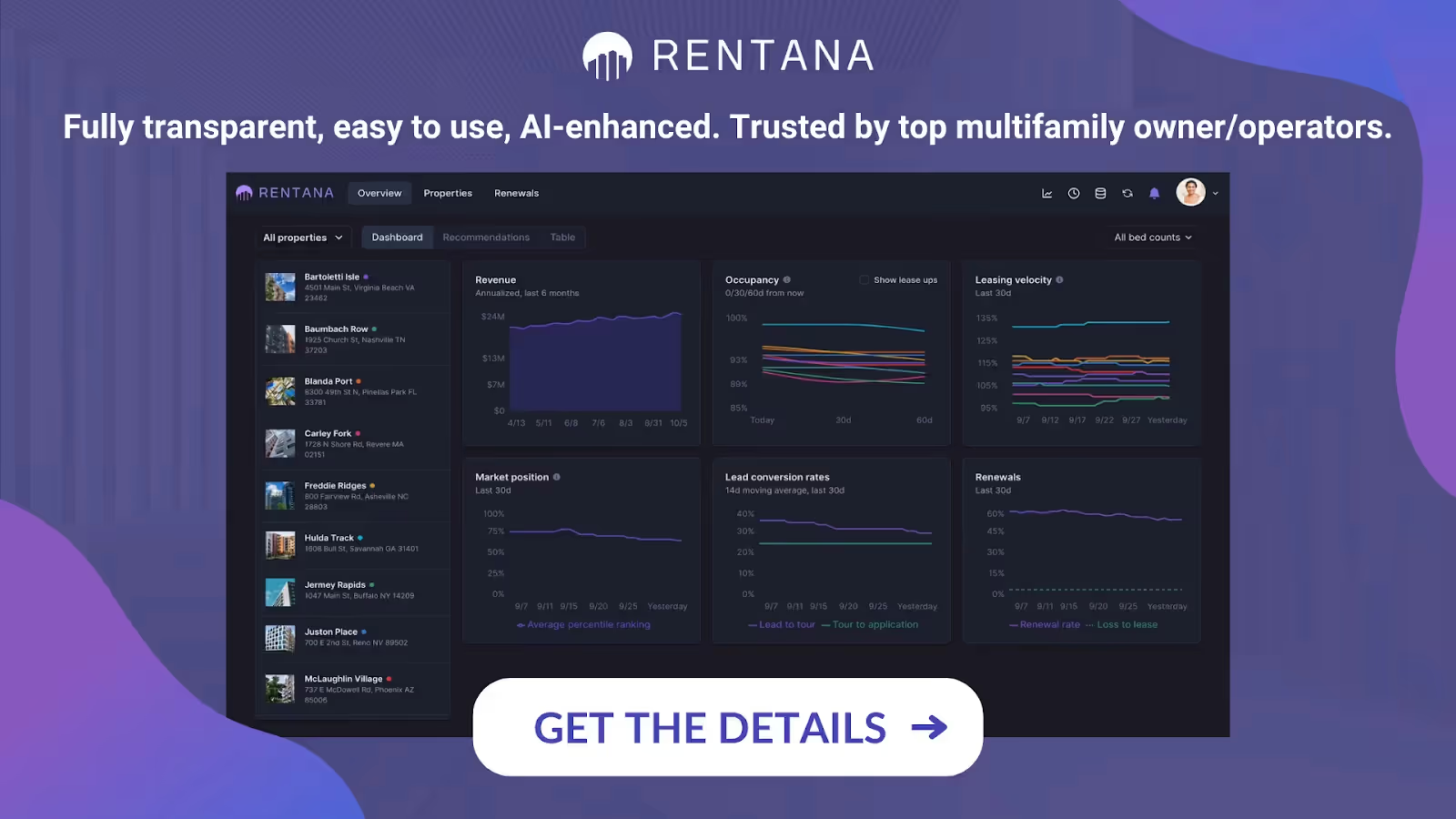
Rentana is an AI-powered revenue intelligence platform designed for real estate owners and operators. Rather than functioning as a system of record, it operates as an intelligence layer that connects leasing activity, performance signals, and portfolio visibility. Teams can see portfolio health through structured indicators, drill down from portfolio to property to unit-level performance, and review transparent explanations behind pricing and leasing insights.
In practice, this allows asset managers and on-site teams to move from static reporting to a more structured understanding of how leasing activity is influencing performance.
2. Property Management Systems (PMS)
Property management systems serve as the system of record for real estate operations.
They track leases, residents, payments, maintenance activity, and financial accounting. When a lease is signed, it typically becomes part of the PMS record for that property.
For example, the PMS will store lease documents, record lease start and end dates, track rent charges, and support resident portals and service requests. t
While PMS platforms are essential to day-to-day operations, they are primarily designed to record transactions rather than interpret leasing performance across portfolios. Instead, they function as the foundation that other systems connect to.
3. Leasing CRM and Prospect Management Platforms
Leasing customer relationship management systems focus on the front end of the leasing process.
These platforms help teams manage prospect inquiries, schedule tours, track communication, and monitor conversion activity from inquiry to signed lease.
For example, when a prospective resident submits an inquiry online, that information may enter a CRM platform. Leasing teams can track the inquiry, follow up with the prospect, schedule a tour, and record whether that prospect eventually signs a lease.
This layer is important for understanding leasing pipeline activity. If a property receives strong traffic but conversion rates are declining, CRM data can help identify where prospects may be dropping out of the process.
CRM platforms provide visibility into leasing pipeline activity, but they typically do not analyze how those leasing outcomes affect broader portfolio performance.
4. Portfolio Analytics and Reporting Platforms
Portfolio analytics tools help owners and asset managers understand performance across multiple properties.
These systems aggregate metrics from various sources and present them in dashboards or reports. They may track occupancy trends, revenue performance, expense patterns, or leasing velocity across the portfolio.
For example, an asset manager may want to compare occupancy trends across different regions, analyze how leasing velocity has changed over time, or review performance by asset type.
These platforms provide reporting and benchmarking capabilities but typically rely on other systems for underlying operational data.
Related: How to Manage Large Multifamily Portfolios
How These Systems Work Together
In most portfolios, these categories are not replacements for each other. They work together.
A property management system stores lease records. A CRM platform manages prospect activity. A reporting platform aggregates portfolio metrics. Revenue intelligence platforms connect these signals and help teams interpret how leasing decisions influence portfolio performance.
Understanding these roles helps owners and operators evaluate where each system fits and how the broader leasing technology stack supports both day-to-day operations and long-term portfolio strategy.
How Platforms Like Rentana Bring Intelligence Into Lease Management
As leasing becomes more data-driven, the role of software is shifting. Systems are no longer used only to record leases or track payments. Increasingly, they are expected to help teams interpret performance and plan ahead. For multifamily operators, the real value of modern leasing technology is not simply storing lease records. It is understanding how leasing activity today influences occupancy, exposure, and revenue performance in the months ahead.
This is where revenue intelligence platforms play a growing role.
Rentana is designed to bring structure and clarity to leasing activity by organizing operational leasing signals into a portfolio-wide view that supports pricing, renewal planning, and performance monitoring. Instead of looking at individual reports in isolation, teams can view leasing performance in the context of exposure, leasing momentum, and renewal pipelines across the portfolio.
1. Connecting Leasing Activity With Portfolio Performance
In many portfolios, leasing activity and performance reporting are still separated.
Leasing teams track tours, applications, and renewals. Asset managers review occupancy reports, lease trade-outs, and financial statements. Without a shared system connecting these signals, it can be difficult to see how day-to-day leasing activity is influencing overall performance.
Revenue intelligence platforms help bridge this gap by organizing leasing metrics alongside operational performance indicators such as exposure leasing velocity, and renewal timing.
For example, an asset manager might see that occupancy is trending slightly below expectations at one property. With a structured analytics layer, they can quickly drill down to see whether the issue is related to slower leasing velocity, longer days vacant between residents, or a concentration of upcoming lease expirations that may increase exposure in the coming months.
This type of visibility allows teams to move beyond surface-level reporting and understand what is driving the numbers.
2. Bringing Transparency to Pricing and Leasing Insights
One of the concerns many operators have about technology in leasing is transparency. Systems that produce recommendations without showing the underlying reasoning often create skepticism.
Modern revenue intelligence platforms are designed with explainability in mind.
When pricing insights or leasing signals are presented, the supporting trends are visible as well. Teams can see the operational drivers influencing those insights, such as leasing velocity, floorplan performance, renewal activity, or exposure levels, rather than receiving an unexplained output.
This transparency allows asset managers and on-site teams to evaluate the information and apply their own judgment. In practice, the goal is not to replace operator expertise but to provide clearer visibility into the factors shaping leasing performance.
Top Pick: How Real Estate Uses Data Analytics
3. Supporting Lease Renewal Planning
Lease renewal management is one of the most important drivers of stability in a real estate portfolio.
Rather than reacting to expiring leases as they approach, intelligence platforms help teams view upcoming expiration timelines across properties. This visibility allows operators to identify renewal clusters, plan outreach earlier, and evaluate renewal performance trends over time.
For example, a portfolio might discover that a large percentage of leases expire within the same two-month window. With early visibility, teams can prepare renewal strategies and leasing plans well before those leases reach their expiration dates.
Managing renewal pipelines proactively helps stabilize occupancy and reduces the risk of sudden exposure increases. This approach turns renewal management into a structured process rather than a last-minute scramble.
4. Portfolio Visibility in a Single System
Another key benefit of revenue intelligence platforms is portfolio-wide visibility.
Instead of reviewing reports property by property, teams can view leasing performance across the portfolio and identify where attention may be needed. Structured indicators can help highlight properties where leasing activity, availability, or renewals may require closer review.
From there, teams can drill down from the portfolio level to individual properties and even to unit-level patterns.
This layered visibility allows owners, asset managers, and on-site teams to operate from the same performance view and coordinate leasing strategy across assets..
5. Bringing Structure to a Complex Operating Environment
Leasing today involves many moving parts. Availability changes daily. Renewal timing influences future occupancy. Leasing momentum shifts as market conditions evolve.
Platforms like Rentana are designed to bring these signals together into a structured intelligence layer.
By organizing leasing activity, performance, and portfolio-level leasing signals in one place, teams gain a clearer understanding of what is happening across their properties and how leasing decisions influence broader portfolio outcomes.
In an operating environment where exposure, renewal timing, and pricing strategy must constantly be balanced, that clarity helps operators make faster and more informed decisions.
Read Also: Why Investors Are Turning to AI-Assisted Real Estate Advice
How AI Is Changing Lease Management
Artificial intelligence is beginning to reshape how leasing activity is analyzed and managed. The shift is not about replacing leasing teams or automating decisions. Instead, AI helps operators interpret large volumes of leasing data more quickly and identify patterns that would otherwise require significant manual analysis.
For multifamily operators managing multiple properties, hundreds of units, and thousands of lease records, the ability to surface these insights early can significantly improve decision-making.
Below are several ways AI is influencing modern lease management software. .
1. Analyzing Leasing Activity Across Large Portfolios
AI can organize leasing metrics such as occupancy trends, leasing velocity, exposure levels and renewal timing across multiple properties. Instead of reviewing reports asset by asset, operators can quickly identify which properties are performing ahead of pace and which may require attention.
For example, an asset manager may see that one property’s leasing velocity has slowed relatively to the rest of the portfolio. AI-driven analysis can highlight that change immediately rather than requiring manual comparisons across multiple reports.
2. Identifying Patterns in Lease Expirations and Renewal Pipelines
AI can analyze historical leasing activity to identify patterns in lease expirations and renewal behavior at both the property and bedroom level.
For example, a portfolio may discover that a large number of leases consistently expire within the same season window. AI tools can surface these patterns and help teams anticipate upcoming exposure levels and recommend varying renewal lease terms to help smooth future exposure. This visibility allows operators to plan renewal outreach and leasing strategy earlier rather than reacting when expiration clusters appear in the near term.
3. Analyzing Amenity Performance and Leasing Demand
Modern platforms can analyze how specific amenities influence leasing performance. For example, modern platforms can also analyze how specific amenities influence leasing performance. For Example, AI Tools may track how long units with particular amenity combinations remain on the market compared with similar units across the portfolio.
When units with a certain amenity consistently experience longer days on market, the system can flag those outliers. These insights help operators understand which amenities are driving leasing demand and which may require pricing adjustments or marketing repositioning.
Related: How AI is Changing Real Estate in the USA
4. Evaluating Specials and Concession Effectiveness
Specials and concessions are common tools for managing leasing momentum, but their effectiveness can be difficult to measure across multiple properties. AI-driven platforms can track how specials are deployed and overlay those promotions with leasing performance to evaluate their impact.
For example, teams can analyze whether a concession campaign improved leasing demand, how long promotions remained active, and whether certain specials are correlated with stronger conversion activity. This type of analysis allows operators to evaluate concessions as a strategic tool rather than relying on intuition.
5. Understanding marketing source conversion performance
AI can help operators evaluate which marketing channels are producing the strongest leasing results. For example, leasing teams may receive leads from multiple marketing sources such as internet listing services, paid advertising campaigns, or referral programs. By analyzing lead-to-tour and tour-to-lease conversion patterns by marketing sources, operators can identify which channels are producing the highest quality traffic.
These insights help teams allocate marketing budgets more effectively and focus leasing resources where conversion is strongest. Surfacing insights across properties and unit types
6. Performance Analysis at a Granular Level
Another advantage of AI-driven platforms is the ability to analyze performance at a granular level. Systems can surface differences in leasing momentum between floorplans, bedroom types, or individual buildings within a portfolio.
For example, a portfolio may discover that two-bedroom units are leasing significantly faster than studios in certain markets, or that a specific building is experiencing longer vacancy periods than the rest of the property. These insights help operators identify where pricing, marketing, or leasing strategy may need adjustment,
7. Supporting Deeper Analysis Through Custom Reporting
Modern platforms increasingly allow teams to explore performance metrics in greater detail. Some systems provide metrics browsers or custom reporting tools that allow operators to analyze leasing and operational performance across properties, bedroom types, and revenue metrics.
For example, an asset manager may want to examine leasing velocity and trade out for two-bedroom units across an entire portfolio, or compare exposure trends across multiple regions. These tools allow teams to move beyond standard reports and analyze performance patterns in a way that supports more informed decision making.
Don’t Miss: The Best Lease Renewal Optimization Software for Multifamily
Conclusion on Lease Management Software: A New Layer of Visibility for Leasing
Leasing has always required experience, intuition, and strong on-site execution. AI does not replace those strengths. Instead, it provides a clearer view of the information that supports them.
The role of lease management software is evolving. Historically, these systems functioned primarily as record-keeping tools, storing leases, tracking residents, and maintaining property-level data.
Today, the expectation is different. Operators increasingly rely on software not only to record leasing activity, but to understand how that activity influences occupancy, exposure, and revenue performance across the portfolio.
As real estate portfolios grow and market conditions evolve more quickly, the ability to interpret leasing performance with clarity becomes increasingly valuable. Operators must monitor signals such as leasing velocity, renewal pipelines, floorplan demand, and upcoming exposure while there is still time to act. Waiting until performance appears in month end financials often means reacting after conditions have already shifted.
AI is helping transform lease management software from a record-keeping system into an operational intelligence layer that helps teams interpret those signals earlier.
Rather than relying solely on static reports, owners and operators can now evaluate leasing activity within the broader context of portfolio performance. That visibility allows teams to coordinate pricing strategy, renewal planning,and leasing execution across properties with greater confidence.
In a market where supply cycles shift, operating costs fluctuate, and leasing momentum can change quickly, clarity becomes a competitive advantage. Lease management software is no longer simply about tracking leases. It is becoming the framework through which operators understand leasing performance and guide portfolio strategy.