Length
Fixed-Term
Fixed, typically 12 months
Month-to-Month
Renews automatically each month


Most people use "lease" and "rent" like they mean the same thing. Sign the papers, pay every month, live there. Simple enough. But the difference between the two shows up at the worst possible times: when a landlord wants to raise the rent mid-year, when a tenant needs to move out early, or when either side wants to end the arrangement and suddenly nobody agrees on the terms.
The legal distinction is real and it has practical consequences. A lease locks both parties into specific terms for a set period of time. A rental agreement is more flexible but offers less protection. Which one you're operating under determines what you can do, what you can't, and what it costs you to change your mind.
If you're renting a property or leasing one out, understanding exactly what you signed, and what it means, is one of the more important things you can do before something goes wrong.
Read Also:
The words are often used interchangeably, but they describe two different things. Rent is the payment. A lease is the agreement that governs it.
Rent refers to the amount of money a tenant pays a landlord in exchange for the right to occupy a property. It's a financial transaction. You pay rent whether you're on a formal lease, a month-to-month agreement, or any other arrangement. The word itself doesn't tell you anything about the terms, the duration, or the legal protections attached to the arrangement.
A lease is a legally binding contract between a landlord and a tenant that spells out the specific terms of the tenancy. It defines how long the tenant can occupy the property, how much rent is due and when, what the tenant is and isn't allowed to do in the unit, and what happens if either party breaks the agreement. Once both parties sign, those terms are locked in for the duration of the lease period, which is typically 12 months but can be shorter or longer depending on what's negotiated.
A rental agreement, sometimes called a month-to-month agreement, is a shorter and more flexible arrangement. It covers the same basic ground as a lease but renews automatically each month rather than locking either party into a fixed term. Either the landlord or the tenant can end it with proper notice, usually 30 days, without the penalties that come with breaking a fixed-term lease.
The simplest way to think about it: rent is what you pay, a lease is what you sign, and a rental agreement is a looser version of a lease that gives both sides more flexibility at the cost of less certainty.
The distinction between leasing and renting goes deeper than just the length of the commitment. The two arrangements carry different legal weight, different protections, and different implications for both the tenant and the landlord. Here's how they compare across the factors that matter most.
A lease runs for a fixed term, most commonly 12 months, though six-month and two-year leases exist depending on the market and the landlord's preference. During that term, both parties are bound to the agreement. The tenant is committed to paying rent for the full duration, and the landlord is committed to honoring the terms, including the rent amount, for the same period.
A month-to-month rental agreement has no fixed end date. It continues rolling forward automatically each month until one party gives notice to terminate. That flexibility is the whole point, but it comes with less predictability for both sides.
One of the most practical differences between a lease and a month-to-month rental is what happens to the rent. Under a fixed-term lease, the rent is locked in for the duration of the agreement. A landlord cannot raise the rent mid-lease unless the lease specifically allows for it. What you sign is what you pay until the lease expires.
Under a month-to-month rental agreement, the landlord can adjust the rent with proper notice, typically 30 days in most states. That means your housing cost can change relatively quickly, which matters a lot in markets where rents are rising fast.
A fixed-term lease ties you to the property for the full term. If you need to leave before the lease expires, you're generally on the hook for the remaining rent unless you can find a replacement tenant, negotiate an early termination with the landlord, or invoke a lease break clause if one exists. Breaking a lease early can be expensive and can affect your rental history.
A month-to-month rental gives you the ability to move on relatively short notice. Give your 30 days, pay your last month, and you're done. For tenants whose circumstances change frequently, that flexibility is worth a lot.
Under a fixed-term lease, a landlord generally cannot ask a tenant to leave before the lease expires unless the tenant has violated the terms of the agreement. The tenant has the right to stay for the full lease term as long as they're holding up their end of the deal.
Under a month-to-month arrangement, the landlord can end the tenancy with proper notice without needing a specific reason in most states. That's a meaningful difference in terms of housing stability, particularly for tenants in markets with limited rental options.
A well-written lease gives both parties a clear framework for resolving disputes. The terms are defined, the obligations are spelled out, and there's a written record of what both sides agreed to. That documentation is valuable if a disagreement ends up in front of a judge.
A month-to-month rental agreement offers the same basic legal protections but with less specificity around long-term terms. Because the arrangement resets each month, there's less written framework to fall back on if something goes wrong beyond the basics of rent amount, notice period, and property condition.
Related:
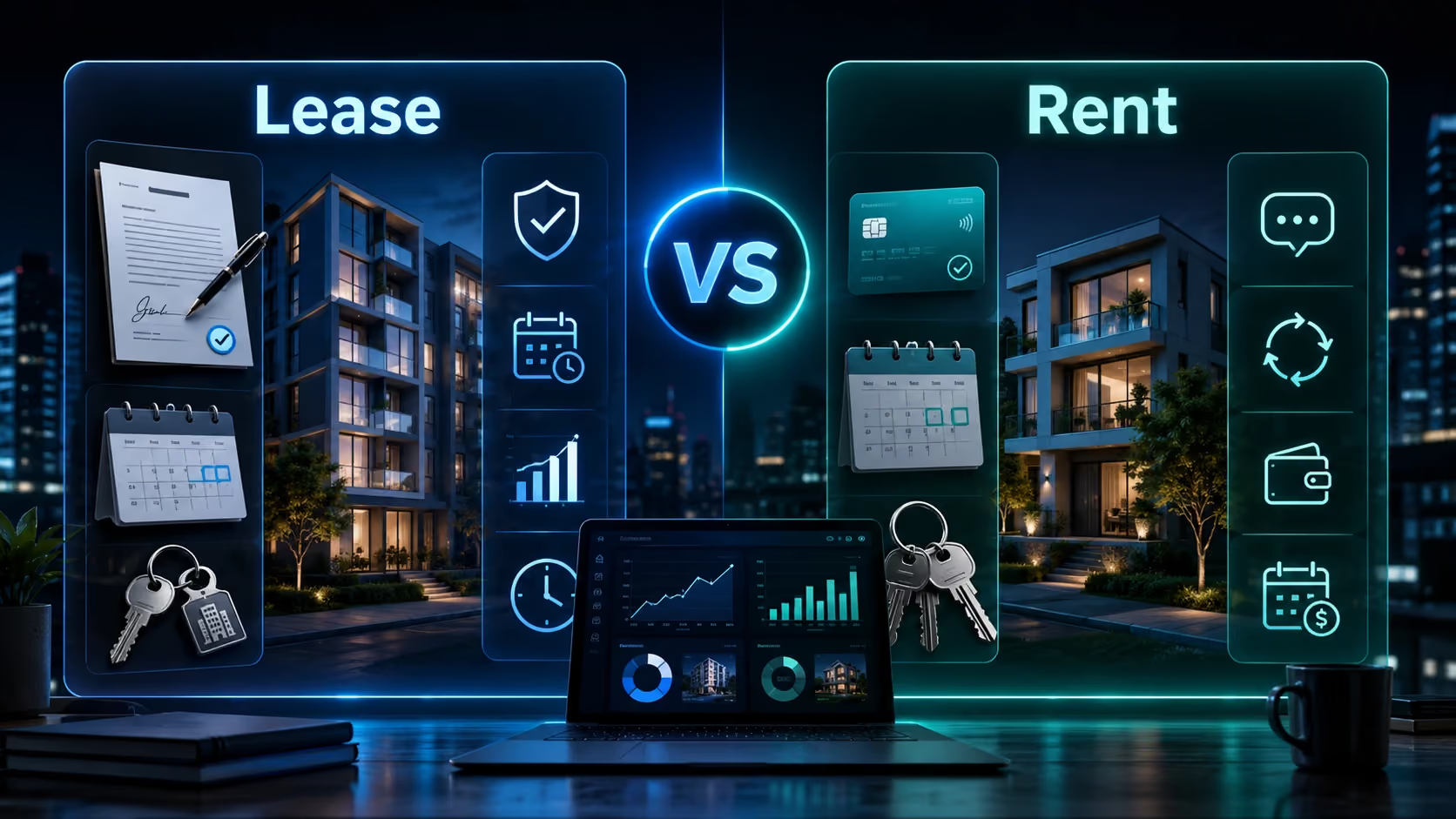
To make this as clear as possible, here's a direct side by side comparison of how a fixed-term lease and a month-to-month rental agreement differ across the most important factors:
Read Also:
It depends entirely on your situation. Neither arrangement is objectively better than the other. What matters is how well the structure matches where you are in your life right now and what you need from your housing over the next 12 to 24 months.
You're staying put. If you're settled in a city, happy with the neighborhood, and not planning any major life changes in the next year, a fixed-term lease works in your favor. You lock in your rent, secure your housing, and don't have to worry about the landlord raising rates or deciding to sell the property while you're living there.
Rents are rising in your market. In a market where rents are climbing quickly, locking in today's rate for 12 months is a genuine financial advantage. Every month you're on a fixed lease while the market moves up is a month you're paying less than what a new tenant would pay for the same unit.
You want housing stability. A fixed-term lease gives you legal protection against being asked to leave without cause for the duration of the agreement. If housing security matters to you, whether because of kids in a local school, a job you're not planning to leave, or simply the stress of moving, a lease provides a level of certainty that a month-to-month arrangement can't match.
You're negotiating from a position of commitment. Landlords generally prefer tenants who commit to a full term over ones who might leave in 60 days. That preference can sometimes be used to negotiate better terms at signing, a lower rent, a reduced deposit, or a unit upgrade in exchange for signing a longer lease.
Your situation is in flux. If you're between jobs, waiting on a relocation, going through a major life transition, or simply not sure where you'll be in six months, a month-to-month arrangement gives you the freedom to move when you need to without financial penalties. That flexibility has real value when your circumstances are uncertain.
You're new to a city. Moving to a new city on a fixed-term lease means committing to a neighborhood before you know it well. A month-to-month arrangement lets you get a feel for the city, figure out where you actually want to live, and move to a better-suited neighborhood once you've had time to explore without being locked into a 12-month commitment in the wrong part of town.
Rents are falling in your market. In a softening rental market, a month-to-month arrangement lets you take advantage of declining rents by moving to a better unit at a lower price as the market adjusts. A fixed-term lease in a falling market locks you into a rate that may be above market before the lease even expires.
You're planning to buy. If homeownership is on your near-term horizon but the timing isn't certain, a month-to-month rental keeps your options open. You can move when the right property comes along without having to break a lease or wait out a remaining term before you can close.
Don’t Miss:
The difference between a lease and a month-to-month rental isn't just a technicality. It shapes how much flexibility you have, how protected you are, and how much certainty both sides can count on throughout the tenancy.
For most tenants in stable situations, a fixed-term lease is the better deal. It locks in your rent, secures your housing, and gives you a clear legal framework to stand on if something goes wrong. For tenants whose lives are in transition, the flexibility of a month-to-month arrangement is often worth the trade-off in stability.
For landlords, the calculus is similar. Fixed-term leases mean predictable income and lower turnover. Month-to-month agreements mean more control over the unit but less certainty about what next month looks like.
Neither arrangement is inherently better than the other. The right choice comes down to what you need from your housing right now, how much certainty you can offer the other party, and how well the structure of the agreement matches the reality of both sides' situations. Read what you're signing, know what it means, and make sure it actually fits before you put your name on it.


