Most real estate operators and managers think they understand the market because they follow the headlines. Interest rates, supply numbers, migration trends. All important, but rarely the full story.
The most valuable real estate market insights come from performance patterns, not headlines. Pricing positioning over time, lease velocity, conversion trends, occupancy exposure, and renewal timing all help paint a clearer picture of what is actually happening at the property level. Seeing the signals early allows operators to adjust strategy with confidence instead of reacting after performance has already shifted.
This article focuses on the real estate market insights that actually move operational performance. The kinds of signals operators, property managers, and asset managers use to stay ahead of demand shifts, preserve revenue, and spot risk before it becomes obvious.
Related: How AI is Changing Real Estate in the USA
9 Real Estate Market Insights Every Manager Should Know
- Demand Can Shift Quickly
- Occupancy Trends Signals Market Strength
- Unit Performance Beats Averages
- Pricing Power Depends on Timing
- Concessions Reveal Market Softness
- Renewal Trends Drive Income Stability
- Vacancy Quietly Reduces NOI
- Supply Impacts Local Pricing
- Data Turns Insight Into Competitive Advantage
Why Do Real Estate Market Insights Matter in Today’s Real Estate Cycle

Real estate never stands still. Demand, supply, interest rates, and investor sentiment shift constantly, and the markets we thought we knew a few months ago can look very different today. That’s why relying on broad headlines or lagging reports is no longer enough. Operators and asset managers need sharper, real time signals to guide leasing, marketing, pricing, and renewal strategy at the property level.
For example, many real estate professionals see 2026 not as a return to easy growth but as a reset phase where fundamentals like supply dynamics, economic conditions, and execution will play a defining role in shaping performance across markets, even as interest rates and cost environments remain complex and unpredictable.
Understanding these forces and how they interact helps operators make better day to day decisions around pricing, leasing urgency, and renewal positioning rather than reacting to performance after it has already shifted. Market insights give operators clarity. They help identify whether rising vacancy is a local operational issue or part of a wider trend, whether rent growth is sustainable or slowing, and how broader economic shifts could affect leasing momentum.
With better insight, site teams and asset managers can act sooner, manage risk more effectively, and position assets for stronger performance within the current cycle. Not having that clarity often means reacting too late instead of shaping outcomes.
1. Demand Can Shift Quickly
Renter demand can change much faster than most operators expect. A neighborhood that feels hot one season can cool off the next because of new supply, shifting renter preferences, or broader economic changes. The challenge is that demand rarely drops overnight. It usually fades gradually through slower leasing, fewer inquiries, and longer decision cycles.
That is why tracking demand signals matters. Operators who understand demand early can adjust pricing, leasing urgency, and renewal strategies before performance slips. Waiting until occupancy falls often means reacting after revenue has already been lost.
Platforms like Rentana help surface these demand shifts by monitoring leasing velocity, application activity, conversion patterns and unit level performance in real time. Instead of relying on lagging reports, operators can see when demand is strengthening or softening and respond with more confidence.
2. Occupancy Trends Signals Market Strength
Occupancy is often one of the earliest indicators of how strong a market really is. Before rent growth slows or concessions appear, occupancy usually tells the story first. When units start taking longer to fill or availability creeps up, it is often a sign that demand is softening, even if headline numbers still look fine.
For operators, watching occupancy trends closely helps separate short-term noise from real market movement. A small dip across similar unit types or properties can point to a broader shift that deserves attention. On the flip side, consistently high occupancy often signals pricing power and healthy demand.
Tools like Rentana help make these signals easier to spot by tracking occupancy alongside leasing velocity and demand patterns at the unit and property level. This context allows operators and asset managers to understand not just whether occupancy is changing, but how it connects to leasing activity and exposure over time
Top Pick: The Best AI Tools for Real Estate Investors
3. Unit Performance Beats Averages
Property averages can be misleading. A building may look healthy on paper while certain unit types quietly underperform. Some units lease quickly at higher rents, while others sit vacant longer or require concessions. When investors rely only on averages, these differences get overlooked.
Understanding unit-level performance reveals where demand is truly strong and where pricing or positioning may be off. It also helps asset managers identify which layouts are driving income and which ones are creating drag. These details matter in real estate market insights because small gaps at the unit level can compound into meaningful NOI loss.
Rentana supports this level of insight by breaking performance down by unit and unit type. Instead of guessing, operators can see exactly where leasing momentum is strongest, where availability is building, and where adjustments may be needed to improve overall performance.
4. Pricing Power Depends on Timing
Pricing is not just about location or asset quality. Timing plays a huge role. The same unit can support different rent levels depending on seasonality, demand cycles, competing supply, and leasing momentum. Operators who price based only on historical comp data often miss what the market is doing right now.
Strong pricing power comes from understanding when demand is rising and when it is starting to soften. Adjusting too late can lead to longer vacancies, while holding pricing too low during strong demand leaves revenue on the table.
Platforms like Rentana help operators align pricing decisions with real-time market conditions by analyzing leasing activity, demand patterns, and unit level trends. This allows pricing strategy to stay responsive and grounded in current renter behavior rather than static assumptions.
5. Concessions Reveal Market Softness
Concessions are one of the clearest signals that a market is cooling. When properties begin offering free rent, waived fees, or move-in specials, it often means demand is no longer strong enough to support previous pricing. Concessions usually appear before broader rent declines show up in reports.
For operators and asset managers, tracking concessions is important for real estate market insights because they directly affect effective rent and NOI, even if asking rents remain unchanged. A market can look stable on the surface while net revenue is quietly slipping through incentives.
Rentana helps operators evaluate concession activity alongside leasing velocity, occupancy movement, and unit performance. This makes it easier to understand when incentives may be needed to support absorption and when existing pricing may still be supported by current demand.
Related: Rent Concession Meaning: 7 Examples & Use Cases
6. Renewals Trends Drive Income Stability
Lease renewals are one of the most important drivers of long-term income stability in multifamily. Retaining residents reduces turnover costs, limits vacancy exposure, and helps keep cash flow predictable. Even in strong markets, losing good residents unnecessarily can create avoidable revenue disruption.
Renewal patterns also reveal how renters feel about pricing and value. If renewals begin to slow or resistance increases, it can be an early signal that pricing is misaligned or competition is rising nearby.
Rentana supports renewal decision-making by providing visibility into upcoming expirations, exposure patterns, and performance trends as leases approach renewal windows. This helps managers time renewal offers more thoughtfully and structure pricing in a way that supports retention while protecting income.
7. Vacancy Quietly Reduces NOI
Vacancy does not always feel urgent at first. One or two empty units may not raise alarms, but over time, vacancy quietly chips away at NOI. Lost rent, added marketing costs, and longer turn times add up faster than most investors expect.
What makes vacancy especially risky is that it often follows subtle demand changes. Units may take slightly longer to lease, or only certain floor plans struggle, making the issue easy to overlook if you are only watching high-level metrics.
Tools like Rentana help bring visibility to vacancy risk by highlighting units with rising days vacant, softening leasing velocity, and changing exposure patterns. By catching these signals early, operators can respond before vacancy becomes a larger drag on portfolio performance.
8. Supply Impacts Local Pricing
New supply rarely affects an entire market at once. Its impact is usually felt first at the neighborhood or submarket level. When new properties deliver nearby, pricing pressure often shows up quickly through slower leasing, increased concessions, or stalled rent growth.
For operators, understanding local supply dynamics is critical. Two properties in the same metro can perform very differently depending on what is being built around them. Watching supply closely helps teams separate portfolio-wide issues from location-specific challenges.
Rentana helps provide this context by surfacing performance trends within the property, including leasing velocity, conversion movement, and exposure patterns. This helps operators understand when demand conditions may be shifting and adjusting strategy in real time.
9. Data Turns Insight Into Competitive Advantage
In today’s real estate market, access to data is no longer the differentiator. How operators and asset managers use that data is. The most successful investors are the ones who can turn information into timely decisions rather than static reports.
Data becomes a competitive advantage when it helps teams see changes early, understand what is driving performance, and act with confidence. This includes knowing when to adjust pricing, where demand is shifting, and which assets need attention before problems surface.
Platforms like Rentana help turn operational data into clear, actionable real estate market insights. By connecting leasing activity, unit performance, renewal exposure, and occupancy movement, operators gain visibility that slows them to stay ahead of shifts instead of reacting after the fact.
For You: AI for Commercial Real Estate: Top 9 Tools
How to Use Data and Analytics for Real Estate Market Insights
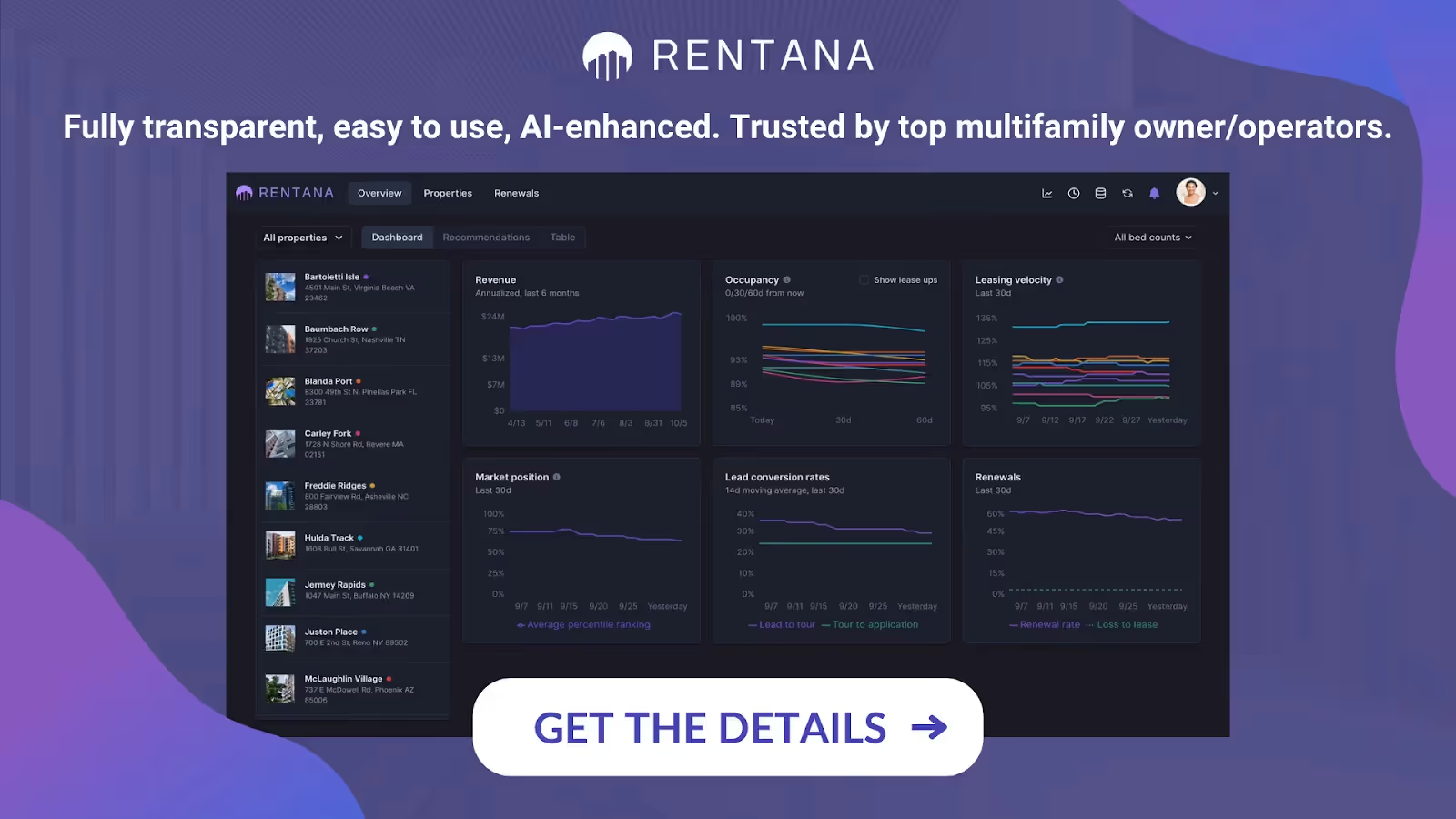
The best operators and asset managers are not the ones who react fastest after the market changes. They are the ones who see the change coming early enough to act before performance is impacted. That is where data and analytics have become essential.
Predictive analytics helps operators move from hindsight to foresight. Instead of only tracking what happened last month, teams can forecast demand shifts, occupancy pressure, renewal risk, and pricing support before performance is affected. This allows for smarter timing, fewer surprises, and more proactive decision-making at the property level.
Revenue intelligence tools take this a step further by connecting performance signals directly to operating decisions. Rather than looking at dashboards in isolation, these platforms help investors understand what is driving results at the unit, property, and portfolio level, and where attention should be focused next.
Rentana brings these capabilities into daily multifamily workflows by surfacing real-time demand patterns, pricing context, renewal insights, and portfolio health indicators. The result is not just better reporting, but clearer direction for the teams responsible for performance. In today's cycle, operators who can turn real estate market insights into timely action are the ones more likely to stay ahead of demand shifts.
Don’t Miss: 21+ Ways Real Estate Agents Can Use AI Easily
Conclusion on Real Estate Market Insights
Real estate markets will always move in cycles, but the operators and asset managers who perform best are the ones who pay attention to the right signals early. Demand shifts, occupancy trends, concessions, renewals, and unit-level performance often tell the story long before headlines do.
These real estate market insights are not just interesting. They shape revenue, stability, and long-term asset value. In 2026, staying competitive means going beyond averages and relying on data-driven clarity to guide decisions in real time.
With platforms like Rentana helping teams translate performance patterns into actionable real estate market insights, the advantage belongs to those who can spot change early and respond with confidence. The question is not whether the market will shift again, but whether your teams will see it coming early enough to act.