If you manage multifamily assets in 2026, you’re not short on data.
You have occupancy reports. Lease trade-out summaries. Leasing dashboards. Investor updates. Market reports. Lender packages. Investor decks.
Spreadsheets that get forwarded three times before anyone opens them.
And yet, one question keeps coming up:
What is actually happening at this property, and what should we do about it?
Multifamily performance reporting has always been centered around core financial indicators like NOI, occupancy, rent, and expenses. Those metrics remain the foundation of property performance.
What has changed is the environment around those numbers.
Rent growth has narrowed in many markets. Large waves of supply delivered in 2024 and 2025 are still being absorbed in some markets. Insurance and operating costs remain elevated. Regional performance has diverged significantly across the country. Regional performance has diverged significantly across the country.
A portfolio that appears stable at a high level can tell a very different story once performance is examined property by property, floorplan by floorplan.
In this environment, reporting cannot simply document the past. It must provide clarity. It must connect financial outcomes to operational drivers. And it must help teams understand why performance is changing and what actions may be required next.
The goal is no longer producing more reports.. The goal is producing reporting that actually informs decisions.
In this guide, we will break down the metrics that matter most in multifamily performance reporting today, the signals operators should be watching closely in 2026, and how reporting is evolving from static documentation into a framework for revenue intelligence and operational decision making.
Related: The Best Multifamily Software for Investors & Property Managers
Why Multifamily Performance Reporting Is Evolving in 2026
Not long ago, multifamily reporting followed a predictable rhythm.
At the end of the month, financials were finalized. Occupancy numbers were reviewed. Rent roll data was compared to the prior quarter. Performance discussions focused largely on what had already happened. That process still exists, but it is no longer sufficient.
In today’s operating environment, performance can shift faster than the traditional reporting cycle. Leasing momentum can soften within weeks. Exposure can build quietly several months ahead of time. Pricing power can erode before the next financial package is reviewed.
If teams are only reacting to what last month’s report show, they are already behind.
Put simply, if operators are not running ahead of the data, they are falling behind it. Effective reporting must surface signals early enough for teams to adjust pricing strategy, leasing execution, and renewal planning before those shifts show up in financial results.
This shift has changed what operators expect from reporting.
Historically, most performance reports focused on lagging indicators such as occupancy, NOI, and rent levels. Those metrics remain important, but they explain what has already happened. Modern multifamily reporting increasingly incorporates leading indicators such as leasing velocity, exposure, conversion performance, and loss to lease. These signals help operators understand where performance may be heading before financial outcomes fully materialize.
This shift became particularly clear over the past two years.
After a period of extraordinary rent growth earlier in the decade, rent trends moderated across many U.S. markets in 2025. In several regions, average advertised rents remained relatively flat year-over-year while operating costs continued to rise.
At the same time, new supply deliveries reshaped competitive dynamics in certain submarkets, creating localized pressure on occupancy and pricing even when national fundamentals remained stable.
In this environment, the most valuable reporting is no longer backward-looking accounting. It is operational insight.
Reporting is where financial outcomes connect to leasing performance, renewal behavior, exposure levels, and pricing strategy. Clear, timely reporting has become the connective tissue between asset strategy, revenue optimization, and day-to-day property operations.
Related: The Best Lease Renewal Optimization Software for Multifamily
The Core Financial and Operational Metrics That Define Property Performance
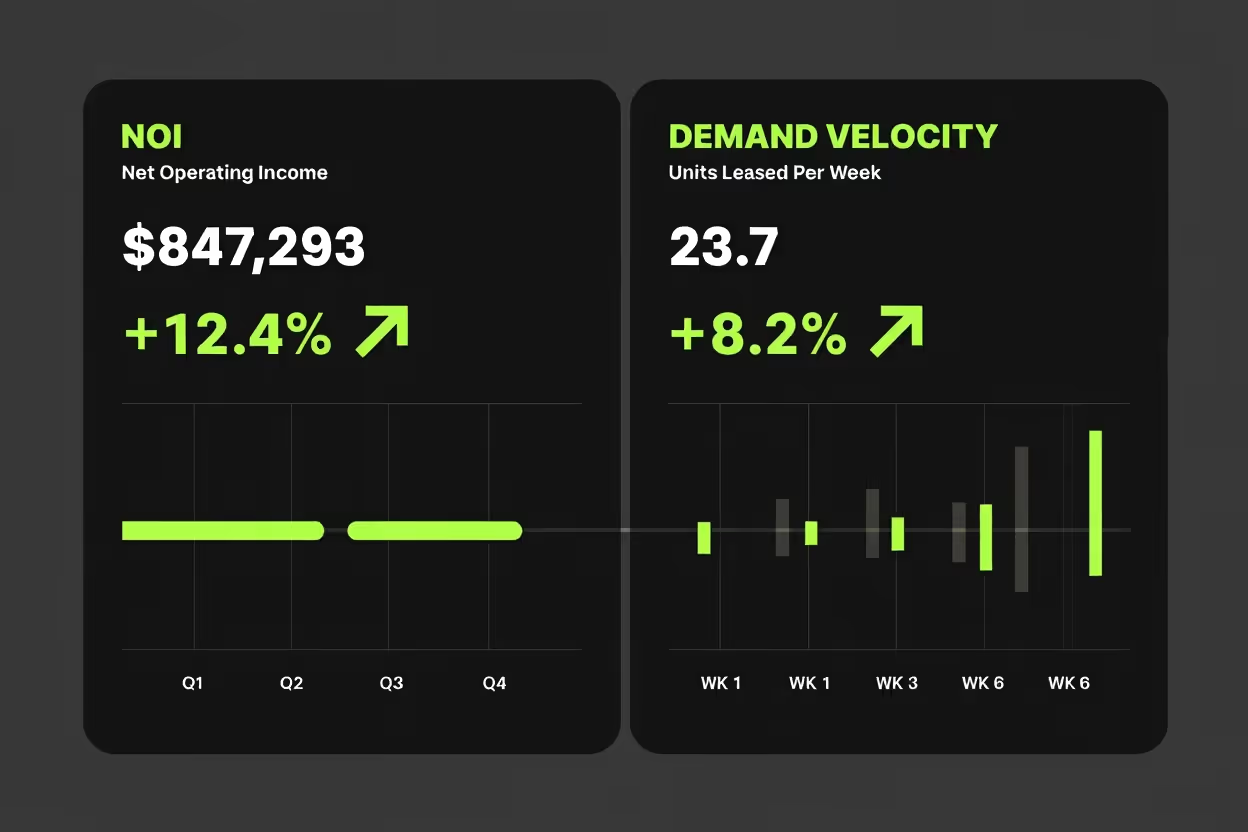
If the past few years exposed anything, it is that a single headline number rarely tells the full story. NOI might appear stable while margins compress. Occupancy might remain high while leasing velocity slows. Revenue might increase while exposure builds several months ahead.
Strong multifamily performance reporting separates lagging financial results from the operational signals that drive them. Financial metrics explain what has already happened. Operational metrics often reveal what may happen next. Below are the financial and operational indicators that deserve consistent attention in multifamily performance reporting in 2026.
Multifamily Performance Reporting: Key Financial Metrics to Track
1. Net Operating Income (NOI)
NOI remains the anchor metric for asset performance. It reflects total revenue less operating expenses, excluding debt service and capital expenditures.
For example, a property may show flat NOI year over year. On the surface, that appears stable. But if revenue increased 2 percent while expenses increased 5 percent, maintaining NOI may have required aggressive cost containment or non-recurring savings.
Why it matters: NOI drives valuation and lender metrics. Without understanding what is influencing NOI, the number alone can obscure underlying shifts in revenue performance or expense pressure.
Related to NOI: How to Improve NOI for Multifamily
2. Revenue vs. Expense Growth
Revenue and expenses rarely move in perfect alignment. In many markets today, rent growth has moderated while insurance premiums, payroll costs, and utilities have continued to rise. If revenue increases 1% while insurance premiums increase 12% and payroll increases 6%, margin compression is inevitable even if occupancy remains strong.
Why it matters: Tracking revenue and expense growth together reveals whether performance improvements are structural or temporary. Revenue growth alone does not necessarily indicate strength.
3. Operating Margin Trends
Operating margin measures the percentage of revenue remaining after operating expenses. Even modest changes in margin can materially affect long-term property value.
For example, a margin decline from 42 percent to 39 percent may not seem dramatic in one quarter.Across a 300-unit property, however, that difference can represent hundreds of thousands of dollars annually.
Why it matters: Operating margin trends often reveal cost pressure or pricing misalignment earlier than NOI alone.
Top Pick: Multifamily Investment Portfolio: A Complete Guide
Operational Revenue Metrics for Multifamily Performance Reporting
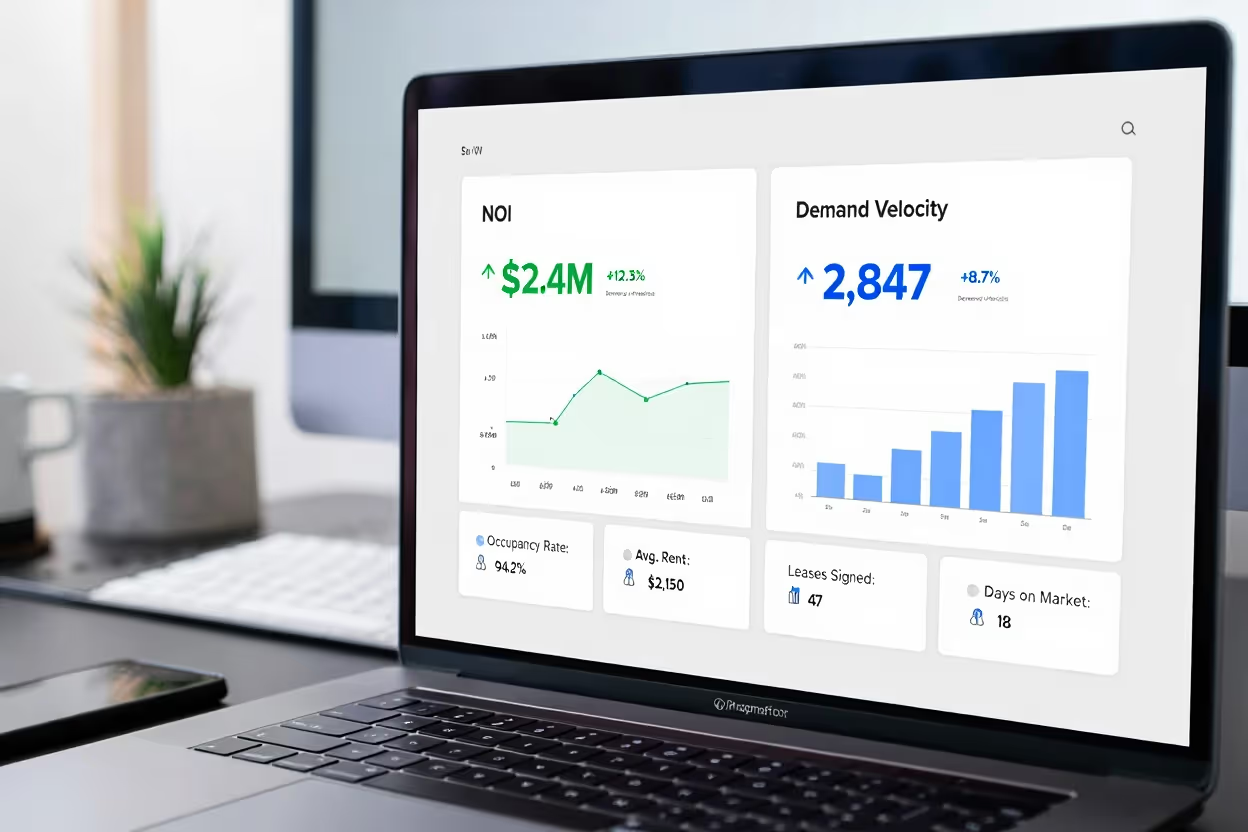
4. Lease Trade-Outs
Lease trade-outs compare expiring lease rates to new lease rates.
In stable markets, positive trade-outs typically indicate healthy pricing power. In more competitive environments, negative trade-outs may signal increased competition, pricing friction, or shifting demand.
For example, if new leases are signing 2% below expiring rents while renewals remain stable, the issue may lie with exposure patterns and leasing demand rather than retention.
Why it matters: Trade-outs reveal pricing momentum at the unit level and show whether revenue trends are being driven by new leases, renewals, or concessions.
5. Loss to Lease
Loss to lease measures the difference between in-place rents and current achievable market rents across a property.
For example, a property may have an average in-place rent of $1,650 while new leases within the same property are signing closer to $1,790. That gap represents unrealized revenue potential embedded within the existing rent roll.
Loss to lease becomes particularly important in changing markets, where pricing may move faster than renewal cycles.
Why it matters: Loss to lease highlights embedded revenue opportunities and helps asset managers understand where future rent growth may come from.
6. Leasing Velocity
Leasing velocity measures how quickly available units are leased at current pricing levels.
A property may maintain high occupancy while leasing velocity quietly slows, indicating that demand is softening or pricing may be approaching market limits.
For example, if average time to lease increases from 12 days to 21 days over several weeks, that signal may appear before occupancy begins to decline.
Why it matters: Leasing velocity often reveals demand changes earlier than occupancy metrics alone.
Related to Leasing:
- Multifamily AI Leasing Assistants: Use Cases & Benefits
- Centralized Leasing: What It Is & How Does it work?
7. Exposure (Predicted Availability)
Exposure reflects the number of units expected to become available over a future period based on scheduled lease expirations and projected turnover.
A property may appear stable today at 96% occupancy, but if 18% of the lease base expires in the next 90 days, the asset may face meaningful occupancy pressure unless retention and leasing strategies are adjusted.
Exposure is one of the most important, forward-looking indicators in multifamily revenue management because it represents inventory that will soon need to be leased.
Why it matters: Exposure provides early visibility into potential occupancy and revenue risk. When exposure begins to build several months ahead, operators have time to adjust pricing strategy, increase marketing focus, or strengthen renewal efforts before vacancies materialize.
8. Conversion performance
Conversion measures how effectively leasing traffic turns into signed leases.
A property may continue generating strong lead volume and tours, but if conversion drops from 35% to 24%, that gap may indicate pricing friction, increased competition, or operational gaps in follow up and closing.
For example, a property experiencing declining conversion may not have a demand problem, it may have a leasing execution or pricing alignment issue.
Why it matters: Declining conversion often appears before occupancy begins to fall, making it a valuable early signal of potential performance pressure.
Related:
- Real Estate Predictive Analytics Software: Best Tools & Use cases
- The Best Real Estate Forecasting Software for Investors
9. Days Vacant
Days vacant tracks the time between a resident moving out and the next lease being executed.
For example, a property with 95% occupancy but an average of 28 days vacant per turnover may be losing significantly more revenue than a comparable property averaging 14 days.
Small increases in vacancy duration compound quickly across large portfolios and can materially reduce realized revenue even when headline occupancy remains strong.
Why it matters: Days vacant reveals operational efficiency and turnover performance, helping operators identify where revenue loss may be occurring between leases.
Why These Metrics Must Be Viewed Together
In modern multifamily performance reporting, these metrics are most powerful when viewed together rather than in isolation.
A decline in trade-outs combined with rising exposure may signal increasing competitive pressure. Stable occupancy combined with slowing leasing velocity may indicate weakening demand. Strong traffic paired with falling conversion may point to pricing misalignment or operational friction in the leasing process
Financial outcomes are the result of operational signals interacting over time.
NOI reflects the result of these dynamics, but the signals that drive those results often appear earlier in leasing performance, exposure levels, and pricing behavior. Reporting that connects these indicators provides clarity. Reporting that connects these indicators provides clarity. Reporting that isolates them simply produces more numbers. When these metrics are viewed collectively, operators gain a clearer understanding of what is influencing performance today and what may influence it next.
But internal performance metrics are only part of the picture. To fully interpret property performance, operators must also understand how demand conditions, supply pressure, and leasing momentum interact with these internal signals. This is where occupancy reporting often falls short.
Occupancy, Demand, and Supply: Reading the Full Market Picture
Occupancy is the most familiar performance metric in multifamily reporting. But in 2026, headlining occupancy alone rarely explains how a property is actually performing.
Tracking occupancy in isolation can encourage reactive responses such as blanket price reductions or concession strategies. What matters more is understanding what is driving that occupancy level, leasing velocity, renewal behavior, exposure, and pricing power.
When reporting connects occupancy to these underlying drivers, it becomes easier to interpret performance rather than simply react to it. To understand performance contextually, owners and operators must evaluate occupancy alongside leasing demand, absorption pace, exposure from upcoming lease expirations, and broader market supply conditions based on publicly available information.
1. Physical vs. Economic Occupancy
Physical occupancy tells you how many units are leased. Economic occupancy tells you how much of the billed rent is actually collected.
A property reporting 95 percent leased might only collect 90 percent of expected rent because of concessions, delayed move-ins, or higher delinquency. This gap can dull the accuracy of reporting if not explicitly tracked.
In moderate rent growth environments, this distinction becomes important. A property may appear full while effective revenue weakens due to concessions, delayed move-ins, or collection gaps.
Economic occupancy gets closer to real revenue realization. It also helps distinguish between booked occupancy and realized cash flow.
Related to Occupancy:
2. Demand Velocity and Absorption
Demand is more than just showing units are filled. Demand velocity measures how quickly available units are leasing at current price levels. Absorption rates measure how well a market is taking on new units relative to supply delivered.
Public market data from Cushman & Wakefield shows that net absorption in 2025 remained firmly positive, with roughly 355,000 units absorbed nationally, the third-highest annual total in the last 25 years, despite significant delivery volumes. This suggests that strong renter household formation and demand fundamentals supported occupancy even as development slowed.
Looked at without context, occupancy might appear stable. But when demand velocity begins to soften or leasing timelines lengthen, it can signal that pricing, positioning, or market competition may be shifting.
Demand metrics often move before occupancy changes appear, making them an important early signal in performance reporting.
3. Public Supply Pipeline Data
Public information on deliveries and construction starts is now foundational in performance reporting.
CBRE research noted that developers were expected to add more multifamily units to the U.S. housing market in the mid-2020s than in any period since the 1970s. It’s not surprising that 2025 brought the highest level of new multifamily supply additions in decades, even as annual rent growth stayed moderate. A record pipeline of units affects absorption timelines and lease pricing power in ways that vary by submarket.
Understanding where a property sits relative to recent deliveries helps differentiate broader market pressure from property-specific operational issues. For example, two properties with identical occupancy but very different outlooks depending on local demand velocity, nearby lease-ups, and pricing competition within the submarket.
From Reporting to Revenue Intelligence: The New Standard for Multifamily Performance Reporting
As portfolios grow more complex and public market conditions shift more quickly, static reporting tools often fall short.
A monthly PDF cannot explain why conversion slipped in one submarket but improved in another. A spreadsheet cannot easily connect lease trade-outs, days vacant, and expense pressure across 25 properties. And backward-looking reports rarely help teams decide what to do next.
This is where revenue intelligence begins to matter.
AI, when applied responsibly and transparently, can analyze operational performance data alongside broader market context. It can surface patterns across portfolios that would otherwise take hours to identify manually. It can connect leasing velocity, exposure, pricing trends, and expense pressure into a clearer picture of how revenue performance is evolving. Importantly, AI does not replace judgment. It organizes complexity.
It can highlight where predicted occupancy may be at risk due to upcoming exposure. It can detect shifts in demand velocity or conversion performances across floorplans. It can generate clear explanations behind pricing or revenue recommendations so asset managers understand the reasoning, not just the output. And it can make portfolio-level visibility accessible in seconds rather than after a reporting cycle closes.
That is the shift from reporting to revenue intelligence.
Rentana was built around this idea.
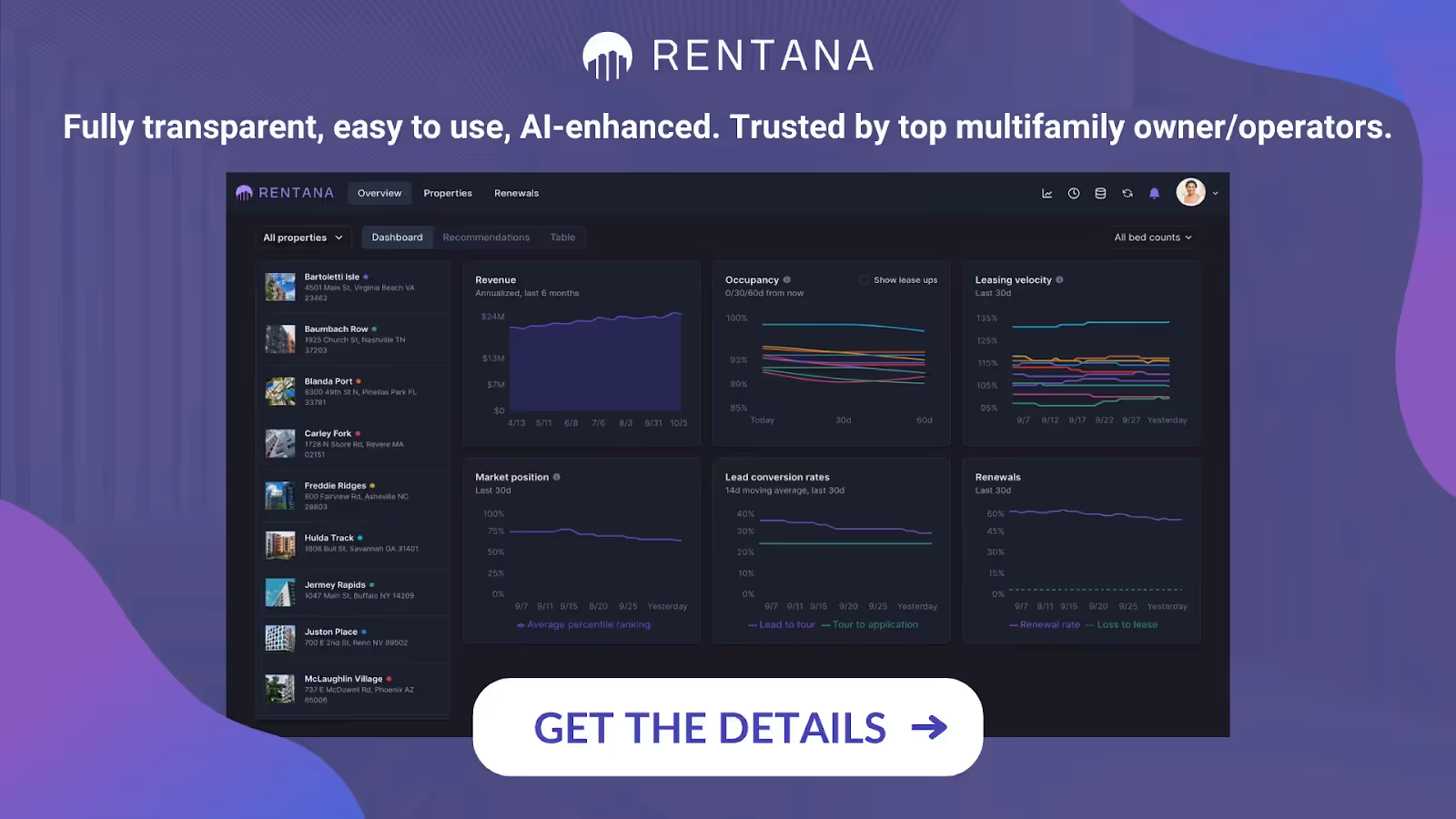
Rentana is an AI-powered revenue intelligence platform designed for real estate owners and operators. It integrates property-level performance data with relevant market context to provide structured, transparent insight into revenue performance. At the portfolio level, teams can view performance across visual indicators that highlight where attention is needed most. From there, they can drill down from portfolio to property in two clicks, moving from a 10,000-foot view to floorplan or unit-level detail without switching systems.
When pricing recommendations are presented, they are accompanied by AI-generated insights, supporting data visualizations, and recommended actions for teams to consider. The goal is not to present a black box answer, but to show the variables and trends influencing that recommendation so teams can make informed decisions.
Rentana also connects directly to PMS platforms and business intelligence systems through API integrations, ensuring that insights do not live in isolation. Data can be exported, shared, and incorporated into broader reporting workflows.
The result is not a tool that promises to outperform the market or automatically improve results. It is a system designed to bring clarity, transparency, and actionable insight to multifamily performance reporting.
In 2026 and beyond, complexity is not going away. Supply cycles will continue to shift. Expense structures will evolve. Regional performance will diverge.
The owners who see clearly will be the ones who move confidently.
Related:
- AI in Revenue Management: Top 7 Use Cases
The Purpose of Modern Multifamily Reporting: Clarity, Alignment, and Action
At its best, performance reporting does more than document results. It guides decisions.
In 2026, reporting is no longer just a monthly recap for lenders and investors. It has become an operational framework that connects asset strategy to day-to-day execution.
1. Portfolio-Level Visibility
Modern reporting starts at the portfolio level.
Asset managers need to see performance grouped by geography, capital partner, asset type, or vintage. A Sun Belt value-add portfolio may be operating under very different public market conditions than a stabilized Midwest core portfolio. Looking at them together without segmentation can blur the signal.
When reporting allows teams to group and filter performance intelligently, it becomes easier to see where trends are structural and where they are property-specific.
Portfolio-level visibility creates context. It allows teams to quickly identify which properties require attention and where performance remains stable. Without it, decisions are made in isolation.
2. Red, Yellow, and Green Signals
Clear performance signals reduce noise.
Instead of scanning dozens of spreadsheets, teams benefit from structured indicators that show where revenue performance, leasing velocity or renewal conversions may be moving off track.
For example, on Rentana, a property flagged “yellow” on leasing velocity but “green” on occupancy may signal that demand is beginning to soften even though the asset still appears stable today. Conversely, a property flagged “red” on exposure and leasing velocity indicates that upcoming availability may require immediate attention to maintain occupancy and revenue targets. The nuance matters.
These signals do not replace analysis. They help teams quickly prioritize where deeper investigation and action may be needed.
3. Aligning Asset Managers and Operators
One of the quiet challenges in multifamily is alignment.
Asset managers focus on NOI, capital strategy, and investor reporting. On-site teams focus on traffic, tours, and lease execution. If reporting frameworks differ between those groups, misalignment follows.
When both teams are working from the same structured performance view, conversations shift from “What are the numbers?” to “What are driving these results and how should we respond?”
Drilling from portfolio to property to unit level is critical here. An occupancy dip at the portfolio level may trace back to one submarket or even one floor plan type. Without that visibility, the response can be too broad or too late.
4. Informed Decisions Around Lease Pricing and Concessions
Lease pricing decisions in 2026 require context.
Public supply conditions, local demand velocity, lease trade-outs, and days vacant all influence pricing strategy. A single occupancy percentage does not tell you whether a pricing adjustment is warranted or whether the issue lies in conversion or exposure.
Reporting that connects these drivers allows teams to evaluate lease pricing and concession strategies based on data rather than pressure.
It moves the conversation from reactive adjustments to structured revenue decisions.
5. Communicating Clearly With Investors
Investors expect transparency.
They want to understand not just where performance stands, but why. When reporting connects drivers to financial outcomes, it strengthens credibility.
For example, explaining that NOI compression is tied to documented regional insurance increases provides clarity. Showing that occupancy shifts correlate with elevated public supply deliveries provides context.
Clear reporting builds confidence. It demonstrates owners and operators understand the drivers behind performance, not just the results.
Don’t Miss:
Conclusion on Multifamily Performance Reporting: From Static Report to Strategic Operating System
A static PDF captures a moment in time. A strategic reporting framework captures movement.
Understanding trends over time, rather than single snapshots, allows teams to see whether conversion is gradually softening, whether days vacant are lengthening, or whether margin pressure is accelerating. More importantly, it allows operators to see these shifts early enough to respond.
Modern reporting is not about producing more documents. It is about creating a shared system of visibility that supports faster, more confident decisions. The most effective multifamily operators are no longer waiting for performance to appear in month-end reports. They are monitoring the signals that drive that performance, leasing velocity, exposure, pricing momentum, and renewal behaviors, while there is still time to act.
In an environment where market conditions, operating costs, and leasing demand can shift quickly, clarity becomes a competitive advantage.
In that sense, reporting is no longer ordinary documentation. It is the operating system for how modern multifamily portfolios are managed.