Lease renewals are one of the most important moments in the lifecycle of a multifamily property.
They influence occupancy stability, revenue durability, and the operational cadence of a portfolio. According to CBRE’s U.S. Real Estate Market Outlook, lease renewals accounted for approximately 57% of all leasing activity in professionally managed multifamily communities, a historically high share that underscores their importance in supporting income stability.
Yet for many teams, renewal management remains reactive. Expirations approach quickly, decisions are made under time pressure, and visibility across properties can be fragmented.
As portfolios scale and leasing cycles become more dynamic, that reactive model becomes increasingly difficult to sustain.
This is where lease renewal optimization software becomes relevant.
The right tools go beyond tracking expiration dates. They help owners and operators evaluate renewal timing, retention behavior, pricing alignment, and portfolio wide exposure in a more structured way.
In this guide, we explore what lease renewal optimization software actually does, the capabilities that distinguish effective platforms, and how structured renewal analytics support more disciplined, forward looking renewal strategy across multifamily portfolios.
Related: Lease Renewal Agreement: How to Manage The Entire Process Easily
What Lease Renewal Optimization Software Is (and What It Isn’t)
Lease renewal optimization software is designed to bring structure and visibility to one of the most important parts of multifamily operations: the renewal cycle.
In simple terms, it helps owners and operators manage renewals in a more informed, coordinated, and forward looking way. Instead of approaching each expiration as an isolated event, renewal optimization looks at patterns, timing, pricing alignment, and portfolio-wide trends to support better planning.
What “Lease Renewal Optimization” Really Means
In a multifamily context, lease renewal optimization is about:
- Understanding when leases are set to expire
- Evaluating renewal timing patterns
- Reviewing historical renewal trends
- Assessing renewal conversion performance against asset goals
- Aligning renewal pricing strategy with broader portfolio conditions
- Managing expiration exposure to support occupancy stability and pricing discipline
It is not about making bold promises to operators. It helps create clarity around retention activity so teams can plan ahead with confidence.
For example, if a property has a heavy concentration of expirations in a single quarter, renewal optimization software can surface that early. That visibility allows teams to prepare outreach strategies, staffing plans, pricing strategy, and availability management well in advance.
Renewal optimization also recognizes that expiration timing can only be influenced at two moments: at new lease singing and at renewal. Having visibility into upcoming exposure allows teams to make deliberate decisions during those windows rather than reacting after concentration risk has already formed.
Read Also: How Property Managers Can Easily Upgrade Lease Expiration
How Lease Optimization Differs From Basic Renewal Tracking
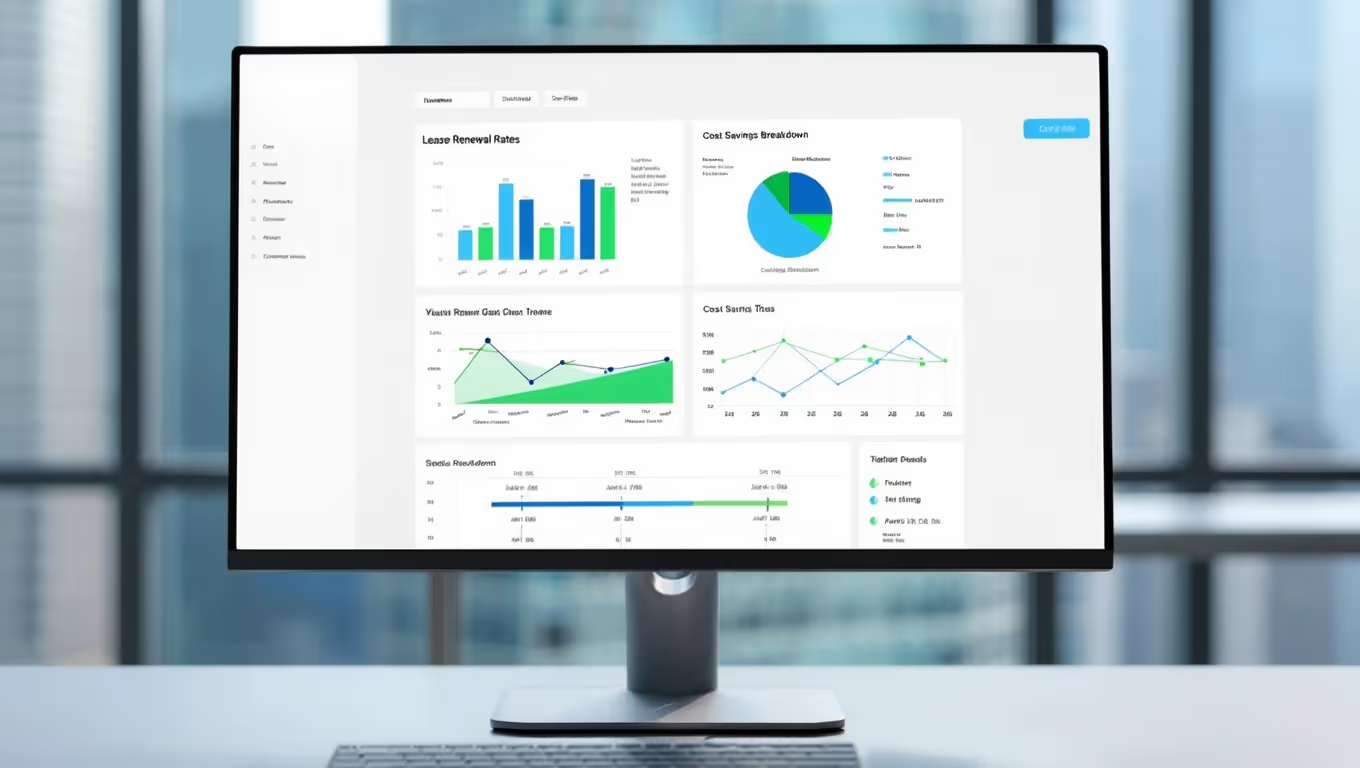
Many properties already track expiration dates in their property management system. That is helpful, but it is only the starting point.
Basic tracking answers the question: “When do leases expire?”
Renewal optimization goes further and asks:
- How are renewal rates trending over time?
- Are certain unit types renewing more consistently than others?
- Are renewal conversions meeting defined performance targets?
- Is renewal timing concentrated in specific months?
- How might upcoming expirations affect occupancy and pricing flexibility?
Instead of functioning like a digital calendar, renewal optimization software analyzes data patterns, measures performance against goals, and connects them across properties.
A multifamily analytics platform like Rentana brings this structure together, organizing expiration timelines, renewal activity, configurable targets, and related performance signals in one connected system.
Why It Matters for Stability and Planning
Renewals play a significant role in portfolio stability. Consistent renewal patterns can support predictable occupancy, smoother operations, and sustained pricing power. Sudden shifts in retention or expiration concentration can introduce pressure on leasing teams, availability projections, and revenue performance.
When renewal data is centralized and analyzed over time, teams gain clearer insight into:
- Portfolio-wide retention trends
- Properties that may require additional focus
- Upcoming expiration concentrations
- Alignment between renewal timing, leasing velocity, and asset goals
Lease renewal optimization software does not replace judgment. It supports it. By turning renewal activity into a structured, transparent process, it helps owners and operators move from reactive management to coordinated strategy.
That clarity is what makes renewal optimization a strategic discipline rather than just an operational feature.
Top Pick: 7 Types of Commercial Real Estate Leases, Explained
Key Renewal Challenges Teams Face Today
Renewals may seem straightforward on the surface, but in practice they involve timing, coordination, pricing strategy, and careful interpretation of trends. As portfolios grow, the complexity increases.
Here are some of the most common friction points multifamily teams face.
1. Identifying Renewal Opportunities Early
One of the biggest challenges is timing.
Leases do not expire all at once, and without clear visibility into upcoming expirations, renewal conversations can start too late. When teams are focused on daily operations, it is easy for early outreach opportunities to slip through the cracks.
Without structured renewal visibility, decisions often happen under time pressure rather than with proactive planning. Late outreach can compress decision windows, limit pricing flexibility, and increase the likelihood of avoidable turnover.
2. Balancing Renewal Timing With Upcoming Availability
Renewals directly influence future availability and pricing power.
If a large number of leases are set to expire in the same period, teams need to understand how that may affect occupancy, leasing workflow, and maintenance capacity. Without forward visibility,, it can be difficult to balance renewal discussions with broader availability planning.
For example, a property might appear stable today but face a heavy expiration cycle in the next quarter. If renewal conversions soften during that window, occupancy can drop quickly and pricing discipline often follows. In slower leasing seasons, this pressure can compound, creating a cycle of reactive pricing and increased vacancy exposure or rent roll inversions.
3. Interpreting Renewal Patterns Across Portfolios
Looking at renewal data at a single property is one thing. Interpreting patterns across multiple assets is another.
Ownership groups and asset managers often struggle to answer questions like:
- Are renewal rates consistent across properties?
- Are certain assets experiencing shifts in retention?
- Are renewal cycles concentrated in specific time frames?
- Are renewal conversions meeting portfolio targets?
Without centralized analytics, renewal trends can remain fragmented and difficult to compare, making coordinated strategy harder to execute.
Related: How Companies Keep Track of Lease Expiration Dates
Coordinating Retention Strategy Across Teams

Renewal management requires alignment between leadership, asset managers, and on site teams.
If data is scattered across systems or interpreted differently at each property, retention strategies can become inconsistent. Some teams may approach renewals proactively, while others operate reactively.
Structured renewal analytics help create a shared view of timing, exposure, and performance targets, making coordination across teams more consistent and more deliberate.
These challenges are not unusual. They are inherent to managing a dynamic multifamily portfolio. The role of renewal optimization software is to bring visibility and structure to these friction points, allowing teams to act earlier, plan more deliberately, and protect occupancy stability and pricing strength over time.
How Renewal Optimization Tools Support Different Roles
Renewal optimization is not just a feature set. It affects how different roles across a multifamily organization plan, communicate, and execute.
From executives to onsite teams, structured renewal visibility supports better alignment, clearer accountability, and more consistent decision making.
1. For Owners and Executives: Portfolio-Level Clarity
Executives are not looking for individual expiration dates. They need a clear understanding of portfolio stability, exposure risk, and renewal performance against targets.
Renewal optimization tools provide:
- Portfolio-wide renewal rates and trends
- Visibility into upcoming expiration concentrations
- Comparisons across assets
- Early signals of potential retention shifts
- Clear performance indicators highlighting properties that require attention
These insights support higher-level planning and reporting. For example, during quarterly reviews, leadership can reference renewal trends alongside occupancy and leasing performance to assess overall stability.
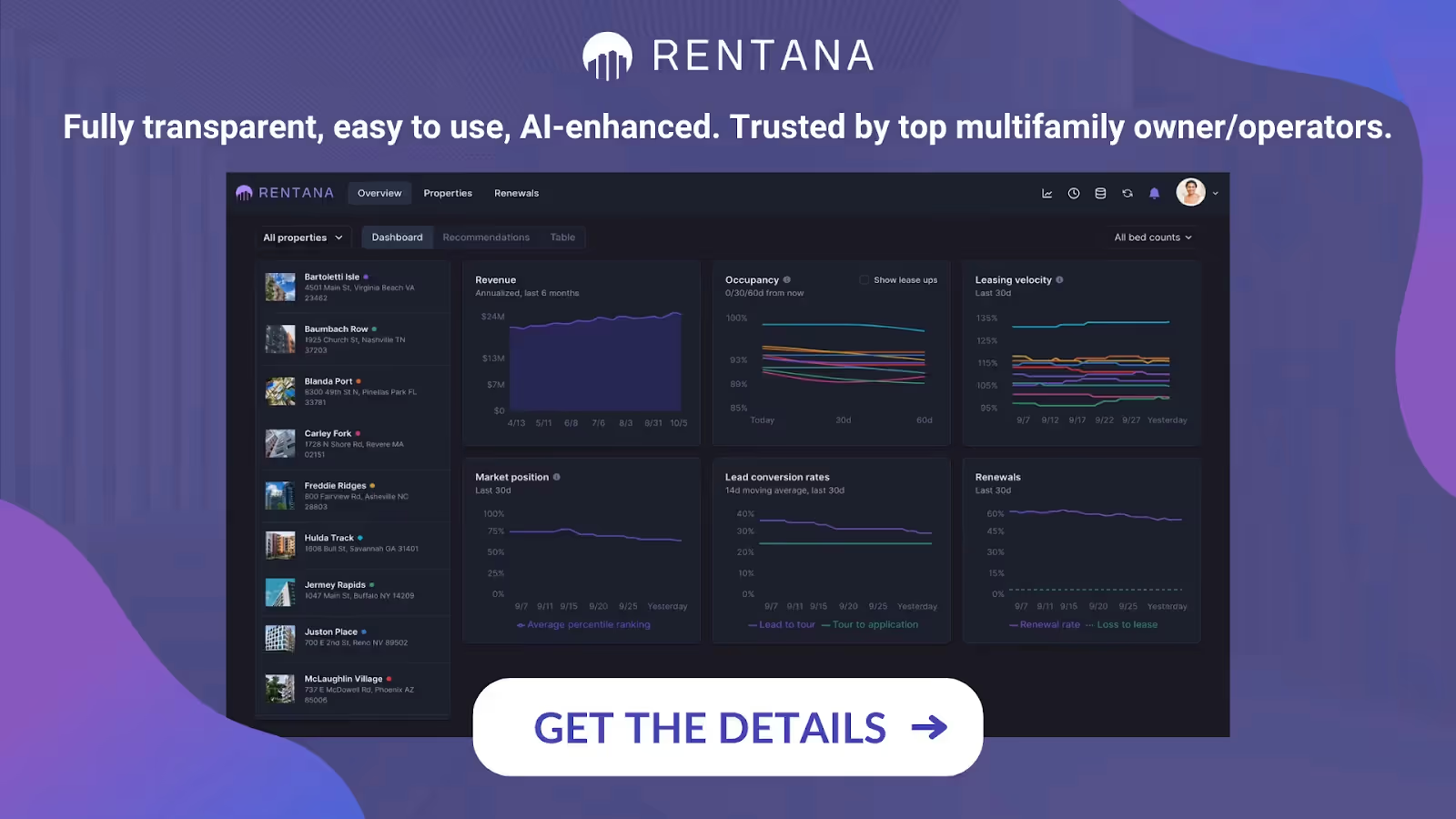
Modern dashboards surface high-level renewal summaries visually, allowing executives to quickly see where residents are in their renewal journey, by batch, month, or across future exposure windows.
An analytics platform like Rentana supports this visibility, allowing executives to assess renewal health without digging into fragmented property level reports.
2. For Asset Managers: Property-Level Oversight and Coordination
Asset managers sit between strategy and operations.
They are responsible for ensuring renewal performance aligns with asset goals while balancing exposure risk, pricing discipline, and portfolio stability. Renewal optimization tools help them:
- Monitor renewal timing at the property level
- Evaluate lease trade-out and embedded rent positioning
- Identify properties with heavier upcoming expiration cycles
- Track renewal conversion performance against customizable portfolio targets
- Approve renewal batches at the property or portfolio level
- Adjust renewal pricing strategy through configurable settings tied to dynamic market rent movements
- Anticipate exposure windows and coordinate marketing or budget adjustments accordingly
Read Also: Real Estate Predictive Analytics Software: Best Tools & Use cases
If one property is entering a heavy renewal quarter while another remains balanced, asset managers can allocate attention and resources accordingly. That may include modifying renewal offer structures, diversifying lease terms to smooth expiration concentration, or increasing marketing spend ahead of anticipated availability pressure.
Renewal optimization tools also allow strategy to be executed at multiple levels, property floorplan or unit type, while remaining compliant with fair housing requirements. This flexibility ensures renewal pricing strategies are intention and aligned with asset objectives rather than reactive to short-term occupancy fluctuations.
Because expiration timing can only be influenced at new lease signing or renewal, asset managers must use these windows deliberately. Structured renewal analytics help them identify when those inflection points are approaching and make adjustments before exposure risk compounds.
Rentana supports this workflow by connecting portfolio-level summaries to property level drill down views, allowing asset managers to move seamlessly from oversight into action.
3. For Onsite Teams: Structured, Flexible Renewal Execution
Onsite leasing teams are responsible for executing renewal conversations. For them, clarity and efficiency matter most, especially during peak renewal periods.
Renewal optimization tools support execution by:
- Organizing upcoming expirations in defined time frames
- Showing where residents are in the renewal journey
- Highlighting which offers are generated, sent, accepted, or pending
- Allowing teams to review, adjust, and route renewal offers internally without external dependency
During high-volume renewal cycles, execution velocity becomes critical. Teams must be able to regenerate offers, adjust terms, or update pricign settings quickly when conditions or strategy shift.
Effective tools also provide:
- Visibility into how current pricing compares to previously sent offers
- Built-in accommodations for month-to-month structures and regulated pricing environments
Automated guardrails reduce manual overrides and minimize compliance risk.
By combining configurable batch generation, transparent tracking, and clear visual summaries, platforms like Rentana help onsite teams execute renewal efficiently while staying aligned with portfolio strategy.
4. Informing Planning, Forecasting, and Retros
Renewal analytics play a direct role in quarterly and annual planning, not just operational review. In retrospectives, teams evaluate:
- How renewal conversions performed against targets
- Whether expiration concentration created unexpected vacancy pressure
- How renewal outcomes affected revenue variance and vacancy loss
- How retention patterns influenced turn costs and maintenance workloads
These insights inform forward-looking decisions.
For example, if a heavy expiration quarter results in increased vacancy loss and maintenance strain, leadership can adjust future renewal term strategies to smooth exposure. If renewal conversions softened ahead of lower leasing seasons, marketing budgets or outreach timing can be recalibrated in advance of the next cycle. Renewal analytics also support:
- Budget planning for projected turn costs and staffing needs
- Marketing spend adjustments ahead of anticipated availability spikes
- More accurate occupancy and revenue forecasting during annual planning cycles
By connecting renewal timing, conversion performance, and availability projects in one system, platforms like Rentana help teams reduce forecasting volatility and plan with greater financial precision.
Related: AI Leasing Assistants: 9 Use Cases & Benefits
Real-Life Examples: How Renewal Analytics Is Used in Practice
It helps to move from theory to practice. Renewal analytics becomes most valuable when it influences real conversations and real decisions across a portfolio.
Here is what that can look like in action.
1. Portfolio-Level Exposure Risk Identified Before it Materializes
An ownership group reviewing quarterly performance sees stable protected occupancy across a ten-property portfolio. On the surface, everything appears balanced.
Renewal analytics, however, reveal that three properties share a concentrated 60-day expiration window representing nearly 28% of portfolio units. Renewal conversion has also declined by 4 percentage points over the prior quarter.
If that trend continues during the exposure window, the portfolio could face temporary occupancy compression, increased vacancy loss, and pricing pressure.
Leadership identifies the risk early because Rentana surfaces expiration concentration, renewal conversion trends, and target insights to performance in one portfolio dashboard,
Asset managers respond by adjusting renewal terms structures on new leases, increasing proactive outreach for upcoming expirations, and aligning marketing spend to prepare for potential turnover in the affected layouts.
2. Unit-Level Renewal Performance & Pricing Sensitivity
At a 220 unit property, overall renewal rates appear stable. However, floorplan level analytics reveal a more nuanced pattern.
Two-bedroom units show rising turnover following recent renewal increases, with negative lease tradeout on new leases, suggesting pricing may be pushing beyond demand tolerance. In contrast, one-bedroom units demonstrate strong renewal conversion despite moderate increases,and positive tradeout on new leases, indicating stronger demand and embedded pricing upside. Without unit-type visibility, the blended renewal rate would mask these differences.
With Rentana, asset managers can evaluate renewal performance and lease trade-out to at the floorplan level, and adjust strategy accordingly:
- Renewal increases on two bedrooms are moderated to stabilize retention
- One-bedroom renewal pricing is maintained or slightly increased
- Future lease term structures are adjusted at a floorplan level to balance exposure seasonally
Rather than applying uniform pricing across the property, renewal strategy becomes targeted, preserving occupancy where sensitivity exists and capturing revenue where demand supports it.
For You: The Best Real Estate Dashboards for Decision Making
3. Predicted Availability Used to Prevent Vacancy
At a 180-unit property, occupancy sits at 96% and appears stable. However, predicted availability settings show rising exposure over the next 60-90 days driven by upcoming expirations, TBD notices, and MTM residents.
When forecasted together, projected availability exceeds seasonal norms.
Rentana incorporates predicted notices, MTM, and unplanned vacancy projection based on historical property performance into forward-looking availability, thereby helping asset managers identify the risk before vacancy materializes.
The team responds by:
- Adjusting new lease pricing to support absorption ahead of projected exposure
- Initiating earlier renewal outreach in high-risk windows and layouts
- Diversifying renewal terms and increase new lease short term premiums to reduce further clustering
By aligning renewal strategy and pricing with predicted availability, the property absorbs exposure without material occupancy compression.
4. Transparent Insights That Show the “Why” Behind Recommendations
Renewal analytics only drive action when teams understand the logic behind the recommendation.
At one property, renewal insights flagged significant expiration clustering in March and October, which historically have been transitional demand months where leasing velocity is typically more moderate. Nearly 20% of the property was scheduled to expire in each period, well above the ideal distribution targets.
Rather than simply generating renewal pricing, Renewal surfaced:
- Expiration concentration relative to target distribution
- Recent renewal conversion teams
- Projected availability impact if retention softened
Because the underlying data is visible, teams can quickly confirm that the concentration reflects true exposure, not data entry error or reporting inconsistency.
With that confidence the team proactively:
- Offers flexible renewal terms to smooth lease maturities
- Adjusts outreach timing for residents in the high-risk windows
- Aligns renewal strategy with seasonal demand patterns
The recommendation is not a black box. It shows both the exposure and the reasoning behind the action, allowing teams to execute deliberately rather than reactively.
When renewal analytics connect seasonality, expiration clustering, and conversion performance transparently, they become a decision support tool for teams to confidently determine their renewal pricing strategy.
Don’t Miss: 9 Real Estate Market Insights Managers Can’t Ignore
Conclusion on Multifamily Lease Renewal Optimization Software
Lease renewals are not administrative checkpoints. They are inflection points that influence occupancy, stability, pricing flexibility, operational workload and long-term revenue durability. Lease renewal optimization software brings structure to those inflection points. It connects expiration timing, renewal conversion performance, pricing alignment, and projected availability into one transparent system.
When renewal strategy is supported by clear visibility, not guesswork, teams can:
- Identify exposure before it compounds
- Adjust pricing with intention rather than urgency
- Smooth expiration concentration across cycles
- Align marketing, staffing, and budgeting decisions with projected demand
The value of renewal optimization is not automation alone. It is clarity.
Platforms like Rentana demonstrate how transparent insights, configurable strategy settings, and forward looking availability projects can transform the renewal process from a reactive task into a coordinated, portfolio level discipline.
In multifamily operations, stability is rarely accidental. It is planned. And renewal optimization software provides the structure that makes that planning possible.