Did you know that small improvements in pricing, occupancy, and renewals can improve a multifamily property’s NOI far more than large one-time cost cuts? In many cases, owners see bigger gains from tightening revenue strategy by optimizing pricing and vacancy vacancy than from renegotiating vendors or deferring expenses.
That is because NOI is shaped by dozens of daily decisions, not just one big move. How rents are priced, how fast units lease, when renewals are offered, and how demand is handled all quietly compound over time. Miss a few of those signals, and NOI slips. Catch them early, and performance improves without adding risk. And because property value is directly tied to NOI, even modest increases, for example, an extra $50/month per unit at a 150 unit property, can add roughly $1.8M in value under typical valuation methods
In this guide, we break down 11 proven ways to increase NOI for multifamily properties. These are practical strategies that work in real operating environments and focus on smarter revenue, stronger occupancy, and better decision-making rather than guesswork.
Related: What Makes a Good AI Assistant for Multifamily Analytics?
How to Increase NOI: 10+ Ways for Multifamily (That Work)
- Demand Responsive Pricing Reduced Days Vacant and Protects NOI
- Align Pricing by Unit Type and Identify Underperformance Earlier
- Reduce Vacancy by Identifying Demand Slowdowns Early
- Apply Rent Concessions More Selectively
- Use Variable Lease Terms to Balance Exposure and Recover Revenue
- Reduce Turnover by Strengthening Lease Renewal Outcomes
- Support Occupancy Planning With Demand Forecasting
- Control Operating Expenses Through Better Benchmarking
- Optimize Marketing Spend with Performance-Based Analysis
- Use Data and AI to Support Revenue-Related Decisions
1. Demand Responsive Pricing Reduced Days Vacant and Protects NOI
Fixed Rent increases assume market conditions remain stable year over year. In Reality, demand shifts constantly due to seasonality, supply changes, and broader market conditions. Applying the same increase across all units and time periods can create misalignment between pricing and leasing activity, leading to longer days vacant and unnecessary NOI erosion
Demand responsive pricing replaces preset schedules with pricing decisions informed by real-time signals such as leasing velocity, availability, and public market trends. When teams can see how demand is evolving as units come available they can adjust pricing earlier, reducing delays that cause units to sit vacant longer than necessary.
Rentana supports this approach by consolidating property performance data and market context into clear, easy to read views. Instead of spending time pulling reports from multiple systems, teams can quickly understand whether pricing is support by demand or requires adjustment. This enables faster, more confident leasing decisions, helping units turn sooner and protecting revenue across the portfolio.
2. Align Pricing by Unit Type and Identify Underperformance Earlier
Identifying underperforming units early and acting on it, is one of the best ways to increase NOI
Not all units perform the same, even within the same property. Different floorplans, bedroom counts, and unit features can lease at different speeds and respond differently to market conditions. When rents are set uniformly across unit types, these performance differences are often overlooked, leading to missed income opportunities or avoidable vacancy.
Aligning pricing by unit type starts with understanding leasing pace, days vacant, and demand patterns for each layout. Some unit types consistently lease quickly while others require more time or pricing flexibility. Treating these units differently helps pricing better reflect actual leasing behaviour rather than relying on property-wide averages.
Rentana supports this by surfacing performance differences at the unit, unit-type, and property levels, informed by both market conditions and on-site performance data. This visibility makes it easier to identify underperforming units and assets early, while there is still time to adjust pricing or strategy. This helps operators prioritize attention, intervene sooner, and protect NOI across the portfolio.
Read Also: AI in Revenue Management: Top 7 Use Cases
3. Reduce Vacancy by Identifying Demand Slowdowns Early
Vacancy rarely appears out of nowhere. In most cases, there are early signs that demand is starting to soften, such as fewer inquiries, slower leasing velocity, or certain layouts taking longer to lease. When these signals go unnoticed, vacancy grows quietly and NOI takes a hit.
Reducing vacancy starts with spotting these slowdowns as early as possible. When teams can see changes in demand before units sit empty, they have more options. Pricing can be adjusted thoughtfully, marketing can be refocused, and leasing strategies can be refined without rushing or overcorrecting.
Rentana helps surface these early demand signals by monitoring leasing activity and performance trends at the unit and property level. This visibility allows operators to respond sooner and more deliberately, helping limit vacancy exposure and support steadier income across the portfolio.
4. Apply Rent Concessions More Selectively
Rent concessions can help increase NOI, but only when used selectively.
Rent concessions can be useful, but when they are applied too broadly or too quickly, they often do more harm than good. Blanket discounts may fill units in the short term, but they can quietly reduce income, accelerate the leasing of already high-demand units, and leave operators disproportionately exposed to harder-to-rent inventory, making vacancy more difficult to resolve over time.
Using concessions more selectively means understanding where they are actually needed and when they are likely to influence leasing outcomes. Not every unit, floor plan, or market condition requires an incentive. In many cases, demand may still support current pricing, and concessions only mask the real performance picture.
Rentana helps support disciplined concession strategies by providing visibility into leasing velocity overlaid with concession timing and usage.
By comparing how quickly units lease before, during, and after concessions are offered, teams can see whether incentives are meaningfully accelerating absorption or simply eroding revenue. This insight allows operators to target concessions where they are effective, avoid unnecessary discounting, and better balance occupancy goals with long term revenue performance.
Related: Rent Concession Meaning: 7 Examples & Use Cases
5. Use Variable Lease Terms to Balance Exposure and Recover Revenue
Relying on static lease terms often leads to uneven expiration patterns, creating periods of overexposure that increase vacancy risk and limit pricing flexibility. Offering a wider variety of lease terms that are priced dynamically based on desirability, helps distribute expirations more evenly across the year and better align exposure with market demand patterns.
Variable lease term strategies use higher rent premiums for less desirable expiration months, and more competitive pricing where demand is stronger. This approach not only gives prospects more choice at the point of lease selection, but also helps recover revenue that would otherwise be lost during period of overexposure. Instead of forcing demand into a single term structure, pricing adjusts to guide lease flow more intentionally.
Rentana supports this by analyzing historical seasonal market demand patters and allowing operations to set customer expiration targets by month and unit groupings. Based on these targets, the platform automatically generates dynamic lease-term pricing that encourages a healthy spread of expirations while accounting for current market conditions. This enables teams to offer flexible lease options, reduce future concentration risk, and offset exposure driven revenue loss through appropriately priced premiums.
6. Reduce Turnover by Strengthening Lease Renewal Outcomes
Turnover is expensive. Beyond lost rent, move-outs trigger marketing costs, unit preparations, and longer vacancy periods that quickly add up. Reducing turnover starts with renewal strategies that are intentional, consistent, and aligned with market conditions, rather than reactive or formulaic.
Strengthening renewal outcomes means approaching renewals early and with context. Instead of applying the same increase across all leases, more effective strategies define a target rent position and adjust renewal offers relative to that target.
Leases that are meaningfully below market may support stronger increases, helping lift the bottom of the rent roll, while leases already at or above target may warrant smaller increases (possibly even flat or reduced pricing) to protect retention and avoid unnecessary vacancy.
Rentana supports this approach by allowing teams to set clear renewal strategy parameters that define how renewal offers should relate to market rents and asset-level goals. Based on these settings, the platform generates renewal offers that align with the intended strategy, informed by demand trends, unit performance, and market context as leases approach expiration.
This helps operators balance retention and income stability, reduce unnecessary turnover, and support steadier NOI over time.
Related: Lease Renewal Agreement for Landlords: Complete Guide
7. Support Occupancy Planning With Demand Forecasting
Planning for occupancy is much harder when decisions are based only on what has already happened. Looking backward tells you where performance has been, but it does not always show where it is headed. Demand forecasting helps fill that gap by providing a forward-looking view of leasing activity.
Supporting occupancy planning with demand forecasting means paying attention to trends in inquiries, tours, applications, and lease expirations and predicted exposure before they translate into vacancies.
When teams understand how demand is likely to change, they can plan pricing, marketing, and renewal strategies with more confidence.
Rentana supports this by analyzing demand patterns alongside market conditions to help teams anticipate future availability and pressure points. With better visibility into what is coming next, operators can plan proactively, reduce surprises, and maintain more consistent occupancy levels that support NOI stability.
8. Control Operating Expenses Through Better Benchmarking
Increasing NOI is not only about growing revenue. Controlling expenses plays an equally important role. The challenge is knowing which costs are reasonable and which ones are quietly running too high. This is where benchmarking becomes essential.
Better benchmarking means comparing operating expenses against similar properties, markets, and asset types instead of relying on internal history alone. An expense that looks normal on its own may be high when viewed against comparable assets.
Without that context, cost issues often go unnoticed.
When operators benchmark expenses regularly, they can identify outliers early, renegotiate vendor contracts, adjust maintenance strategies, and plan budgets more accurately. This helps control costs without cutting corners or sacrificing property quality, protecting NOI in a sustainable way.
Read Also: 9 Tenant Retention Strategies that Improve Multifamily NOI
9. Optimize Marketing Spend with Performance-Based Analysis
Marketing is one of the largest and most adjustable operating expenses, yet it is often evaluated in aggregate rather than by results. Without clear visibility into performance, spend can continue flowing to channels that generate activity but fail to convert, while higher performing sources remain underfunded.
Analyzing marketing effectiveness means looking beyond total spend to metrics such as cost per lead, cost per tour, cost per application, and cost per move in. When these metrics are viewed together operators can see which channels are driving qualified demand and which are adding noise without delivering results.
This makes it possible to reduce or eliminate spend that is not contributing to leasing outcomes and reallocate budget toward sources that consistently perform.
Rentana supports this analysis by providing clear, standardized visibility into leads, tours,and applications by marketing source. With consistent performance metrics across channels teams can quickly assess return on spend, identify inefficiencies, and adjust marketing strategies to better support occupancy and revenue goals, without increasing overall budget.
10. Use Data and AI to Support Revenue-Related Decisions
To increase NOI, you need timely data.
Many NOI decisions are still made with partial information. Teams may rely on experience, past performance, or delayed reports to guide pricing, renewals, and leasing actions. While intuition matters, it is most effective when paired with timely data.
Using data and AI to support revenue-related decisions means grounding actions in observable signals like demand trends, leasing velocity, and market context. This reduces guesswork and helps teams act with greater confidence, especially in fast-changing conditions.
Rentana supports this decision-making process by translating complex data into clear, actionable insight. When pricing, leasing, and renewal decisions are informed by real-time intelligence, NOI improvements become more consistent and sustainable rather than dependent on one-off adjustments.
Read Also: How To Calculate the Value of a Multifamily Property Easily
Conclusion on Improving NOI
Improving NOI does not come from one big move. It comes from a series of small, well-timed decisions made every day across pricing, leasing, renewals, and operations. When those decisions are aligned with real demand and market behavior, the results compound in powerful ways.
The challenge is seeing those opportunities clearly and early enough to act on them. That is where platforms like Rentana fit naturally into the picture, helping operators turn market signals into confident decisions instead of last-minute fixes.
At the end of the day, the question is not whether NOI can be improved, but whether you have the insight to recognize where it is being left on the table and the tools to do something about it.
Frequently Asked Questions on How to Improve NOI
What Is A Healthy NOI?
A healthy NOI is one that comfortably covers operating expenses and supports positive cash flow and a competitive cap rate. What’s considered healthy varies by market and property type, but consistency and growth over time are key indicators.
Is A Higher NOI Better?
Yes, a higher NOI is generally better because it means the property is generating more income after expenses. A higher NOI also increases property value and improves financing and refinancing options.
How Do I Figure Out My NOI?
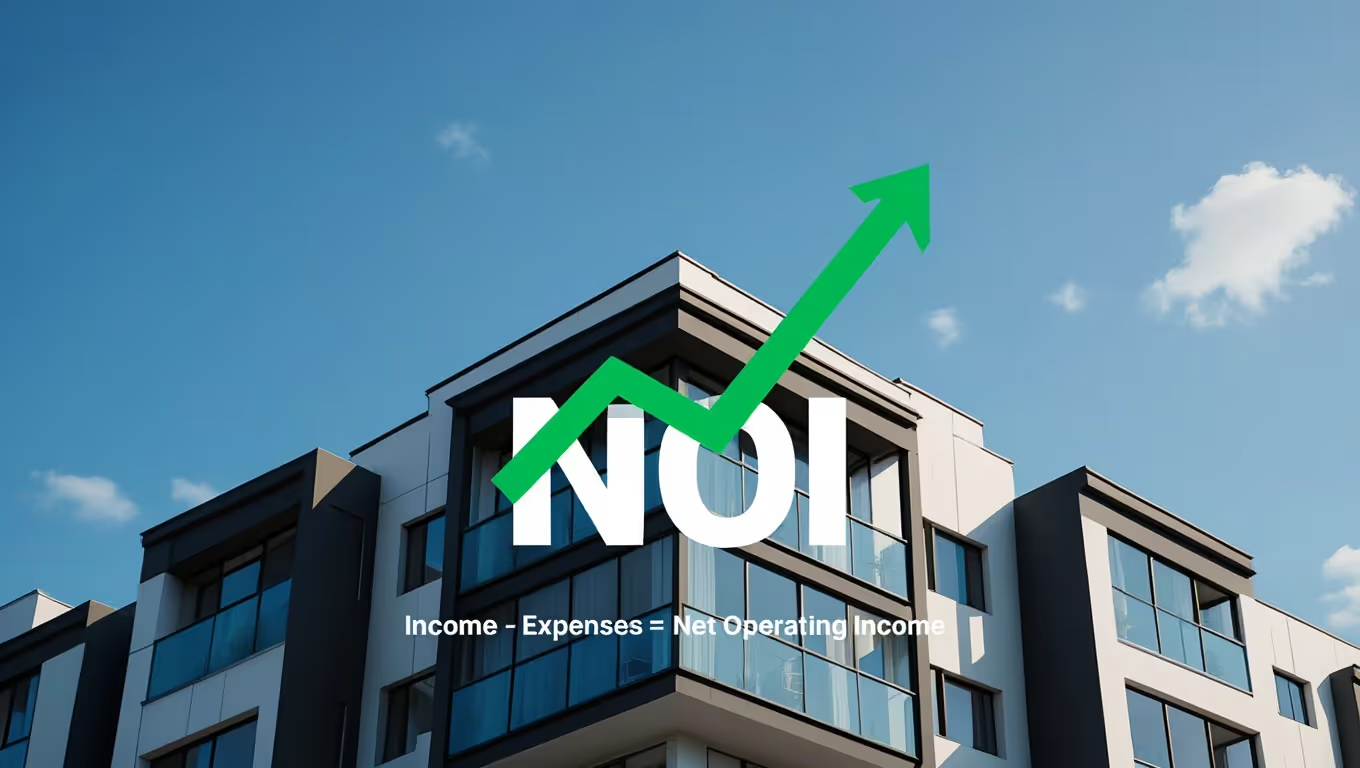
You calculate NOI by subtracting operating expenses from gross operating income. Operating expenses include maintenance, management, insurance, utilities, and taxes, but exclude mortgage payments and capital expenditures.
What’s A Good NOI Margin?
A good NOI margin for real estate is often between 50% and 70%, depending on the property type and market. Higher margins indicate stronger operational efficiency and better income performance.
What Is The NOI Formula?
The NOI formula is:
NOI = Gross Operating Income − Operating Expenses
Is A 20% Operating Margin Good?
A 20% operating margin is generally considered low for real estate. Most income-producing properties aim for higher margins, though acceptable levels depend on asset class, location, and growth strategy.