How quickly a prospect moves from inquiry to signed lease has a direct impact on how a multifamily property performs. When units lease quickly, availability remains stable and occupancy is easier to maintain. When leasing slows down, even small delays can create gaps in the leasing pipeline that ripple through future availability.
Leasing conversion speed is often viewed as a function of the leasing team’s responsiveness. While follow-up and prospect communication matter, conversion speed is also shaped by underlying operation and pricing signals that influence how prospects respond to available units.
Pricing alignment plays a major role. If pricing does not reflect current demand conditions, units may sit longer on the market. Visibility into availability also matters. When asset managers and property teams lack a clear view of upcoming move-outs or exposure patterns, leasing activity can slow simply because supply and demand are not aligned.
Demand signals across different floorplans can also influence conversion. Some unit types may attract strong interest while others experience slower leasing momentum. In many cases, the issue is not demand generation but demand conversion, where pricing, positioning, or timing creates friction in the leasing funnel.
For this reason, improving leasing conversion speed requires more than operational efficiency. It requires visibility into pricing performance, predicted availability, and leasing trends across the portfolio.
Modern analytics platforms help operators bring these signals together. By monitoring leasing velocity, forecasting predicted occupancy, and analyzing floorplan demand patterns, asset managers can identify where leasing activity is slowing and determine whether the constraint is pricing alignment, demand levels, or conversion friction within the leasing process.
Platforms like Rentana provide this type of visibility through portfolio leasing dashboards and insights.
Related:
- The Best Lease Renewal Software for Real Estate
- Lease Renewal Agreement: How to Manage The Entire Process Easily
Operational Factors That Slow Leasing Conversions
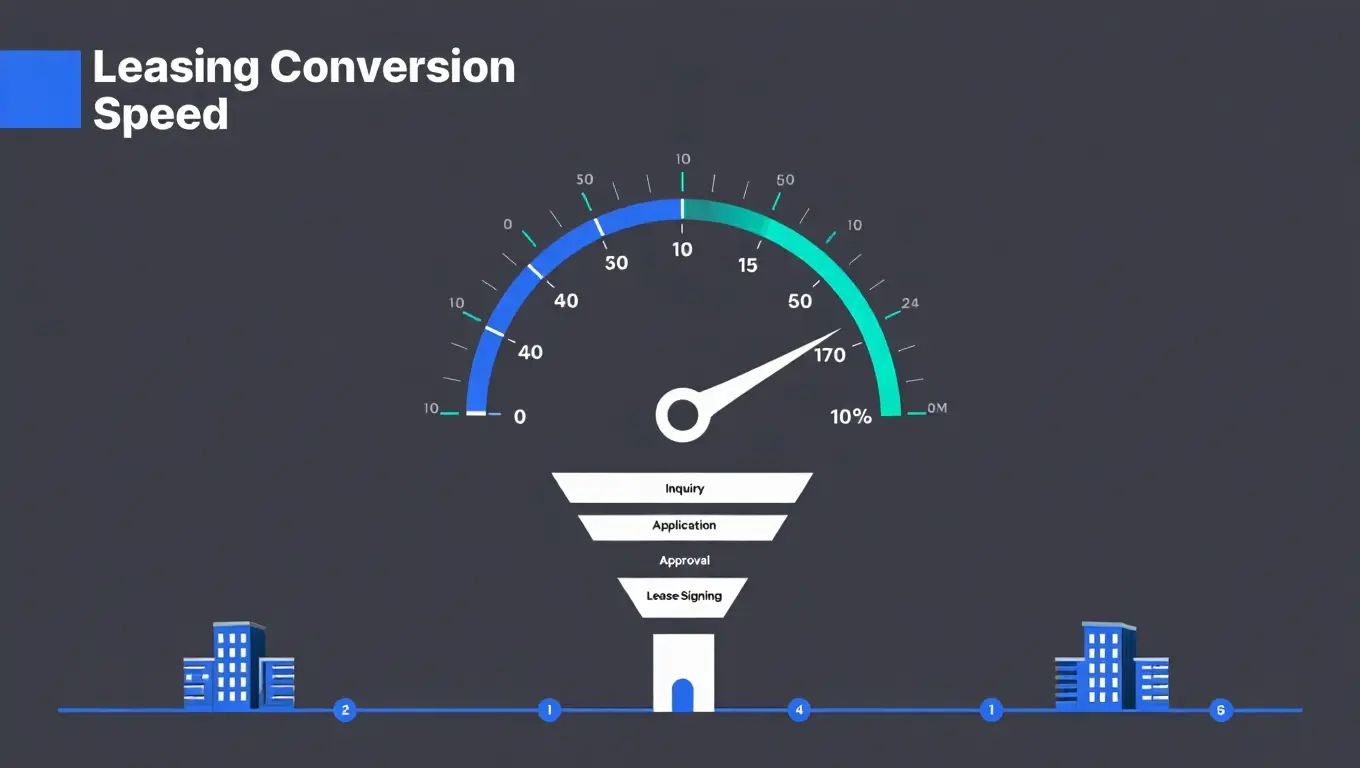
When leasing conversions slow down, the cause is rarely a single issue. In most multifamily properties, delays occur when operational signals are misaligned. Pricing may not reflect current demand, follow-up with prospects may take too long, or leasing teams may not have a clear picture of upcoming availability.
Importantly, not all of these factors are controllable through pricing. Some reflect operational inefficiencies in the leasing funnel, while others indicate misalignment between demand and pricing strategy.
Several factors tend to influence leasing speed the most.
1. Pricing Misalignment
Pricing plays a central role in how quickly units convert. When pricing does not reflect current demand conditions, prospects may hesitate or continue shopping before committing.
If rents are out of step with leasing activity, units may attract interest but fail to convert. This often shows up as strong lead volume with weak application or lease conversion rates, indicating that demand exists but pricing or positioning is not aligned.
Pricing that aligns with leasing velocity and demand conditions helps prospects make decisions more quickly because expectations match perceived value.
Pricing platforms help operators monitor these signals by analyzing leasing velocity, demand patterns, and floorplan performance. Rentana provides pricing recommendations supported by operational data and public market inputs, allowing operators to evaluate how pricing may be influencing leasing momentum.
Related:
- The Best AI Leasing Assistants for Multifamily Teams
- The Best Pricing Optimization Software for Multifamily Real Estate
2. Slow Follow-Up With Prospects
Leasing conversions often depend on how quickly leasing teams respond to inquiries. Prospects evaluating multiple options may move forward with the property that responds first and provides clear information.
When follow-up workflows are inconsistent, leads may go cold before the leasing team can convert them. Faster response times and structured follow-up processes help keep prospects engaged.
Operational dashboards that track leasing activity can help operators identify where leasing pipelines are slowing and where additional attention may be needed.
3. Unclear Availability Visibility
Another common cause of slower conversions is limited visibility into upcoming availability. If leasing teams do not have a clear picture of which units will become available or when they will be ready for move-in, it becomes harder to guide prospects toward the right options.
Predicting future availability requires visibility into upcoming move-outs, renewal activity, and exposure patterns. When operators can forecast availability more accurately, leasing teams are able to communicate clearer timelines and convert prospects more efficiently.
Rentana helps address this through predicted occupancy insights and exposure forecasting. Asset managers and property teams can see how availability may develop across upcoming months, allowing them to align leasing activity with expected supply.
When pricing, follow-up workflows, and availability visibility are aligned, leasing conversions tend to move much more quickly.
Read Also:
- Multifamily Rent Pricing Strategy: A Complete Guide for Investors
- 7 Types of Commercial Real Estate Leases
How Analytics and Pricing Tools Influence Leasing Speed in Multifamily
Leasing speed is often thought of as a front-office function driven by leasing teams and marketing efforts. In reality, much of what influences conversion happens earlier in the decision chain through pricing strategy, availability visibility, and demand alignment.
Analytics and pricing platforms help operators interpret these signals and make adjustments before leasing activity slows down.
One of the most important signals is leasing velocity. When units begin leasing more slowly, it often indicates that pricing, floorplan demand, or exposure conditions have shifted. Equally important is understanding where conversion friction exists.
Strong lead volume combined with weak application or lease conversion can indicate that demand is present but not translating into leases. Pricing tools also help align rents with current demand conditions. When pricing reflects leasing activity, prospects are more likely to move forward quickly. If pricing becomes disconnected from demand signals, leasing pipelines may fill with inquiries that do not convert.
Availability visibility also plays a role. Analytics platforms help forecast upcoming availability by analyzing leases, renewals, and exposure patterns, allowing leasing teams to guide prospects toward near-term options.
Rentana brings these elements together through its portfolio analytics and pricing tools. The platform monitors leasing velocity, highlights changes in leasing momentum, and provides pricing recommendations aligned with demand signals.
In addition, Rentana surfaces insights that identify the primary drivers impacting leasing performance, including pricing alignment, demand strength, and conversion funnel friction points. These insights help operators distinguish between issues that can be solved through pricing and those that require operational changes.
By connecting pricing signals, leasing velocity, and availability forecasts in one system, analytics platforms help operators respond earlier. Instead of assuming conversion issues are purely operational, asset managers can isolate whether pricing strategy is supporting constraining leasing performance.
Related to Analytics:
- Top Real Estate Market Analysis Tools
- The Best AI Tool for Rental Market Analysis by Zip Code
5 Key Strategies to Improve Leasing Conversion Speed in Multifamily
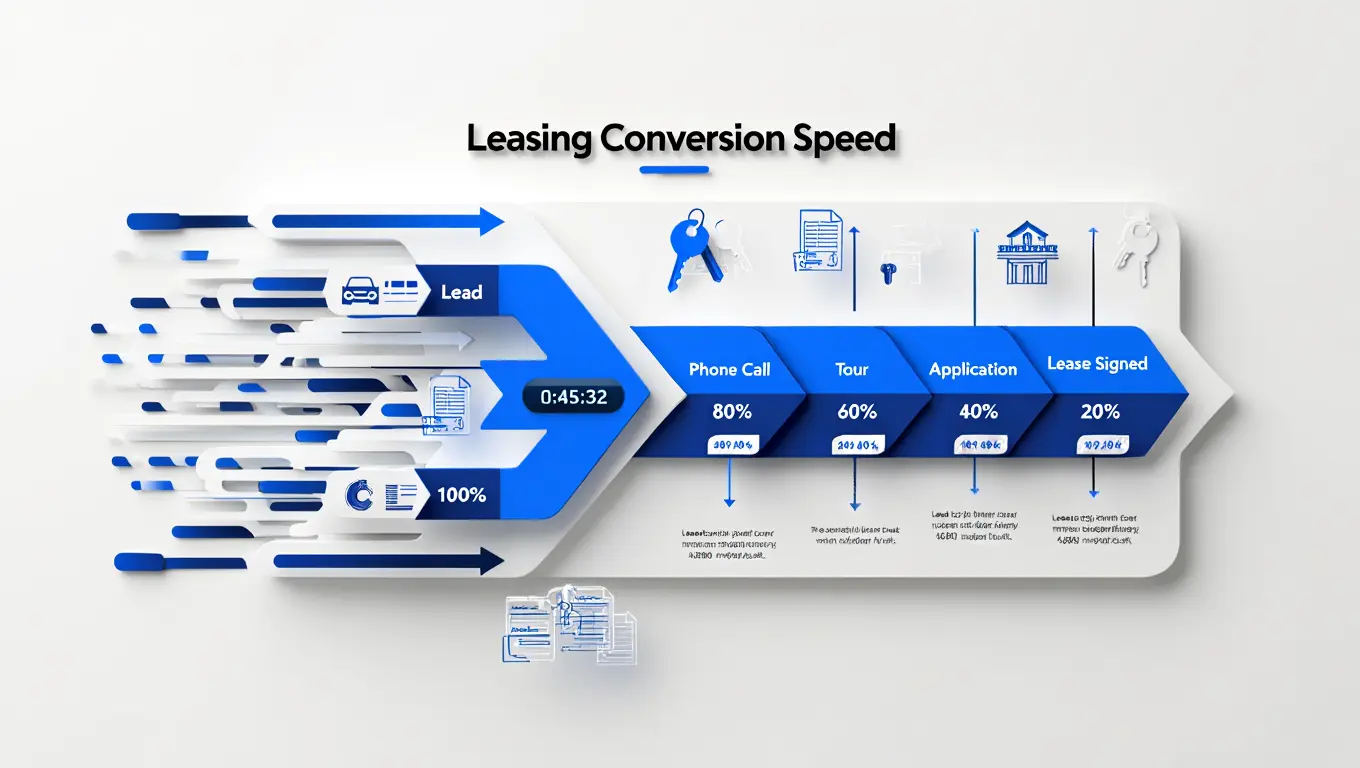
Improving leasing conversion speed requires more than faster prospect communication. Asset managers and operators need visibility into the operational signals that influence how quickly units move through the leasing pipeline. The goal is not only to increase conversion, but to remove friction between demand and decision-making.
Below are several strategies operators use to improve conversion speed.
1. Align Pricing With Leasing Demand
Pricing is one of the most immediate factors influencing whether prospects move forward with a lease. When rents reflect current demand signals and leasing activity, prospects are more likely to make quicker decisions.
If pricing becomes misaligned with market conditions or leasing velocity, units may attract interest but fail to convert into signed leases. This creates artificial demand that does not translate into leases and slows overall leasing velocity.
With Rentana, operators maintain pricing alignment by monitoring leasing velocity and applying pricing recommendations supported by operational data.
2. Forecast Exposure and Upcoming Availability
Clear visibility into upcoming availability helps leasing teams guide prospects toward units that will become available soon. Without this visibility, leasing teams may struggle to provide clear move-in timelines, which can slow the conversion process.
Exposure forecasting allows operators to understand how supply will develop across upcoming months.
Rentana provides predicted occupancy and exposure insights that allow teams to anticipate availability and align learning and marketing activity accordingly.
Related:
- The Best Lease Management Software for Multifamily Real Estate
3. Improve Response Workflows and Leasing Coordination
Operational responsiveness remains an important factor in leasing conversions. Prospects evaluating multiple options often move forward with the property that responds quickly.
While this is primarily an operational function, analytics can highlight where response gaps or conversion breakdowns may be occurring. When leasing teams have access to clear availability and pricing context, they can respond more effectively and guide prospects toward available units that fit the customer’s needs.
4. Monitor Leasing Velocity Across the Portfolio
Leasing performance rarely changes evenly across properties. Some assets may maintain strong leasing momentum while others begin to slow.
By analyzing leasing velocity across the portfolio, asset managers can identify where conversions are slowing and investigate the operational signals driving the change.
Rentana provides portfolio leasing dashboards that highlight leasing velocity across properties and floorplans. When velocity slows, the platform helps identify whether the cause is pricing pressure, reduced demand, or conversion inefficiencies within the leasing funnel.
5. Analyze Floorplan Demand and Conversion Trends
Conversion speed is often influenced by how different unit types perform within a property. Certain floorplans may attract strong demand but fail to convert efficiently, while others lease more consistently.
Floorplan level analysis allows asset managers to evaluate leasing performance across unit types and identify patterns in both demand and conversion. Rentana provides this analysis through floorplan performance insights and portfolio analytics. By combining demand signals with conversion metrics, operators can determine whether pricing adjustments or operational improvements are needed to improve leasing outcomes.
Don’t Miss:
- How Lease Rent Optimizers Help You Set The Right Rental Price
- How Companies Keep Track of Lease Expiration Dates
Conclusion on Leasing Conversion Speed in Multifamily
When leasing slows down, the effects ripple across the portfolio. Availability builds, exposure increases, and pricing decisions become more constrained. When leasing moves efficiently, occupancy remains stable and leasing pipelines stay balanced.
Improving leasing conversion speed requires more than stronger leasing teams. It requires visibility into the signals that influence leasing performance. Pricing alignment, exposure forecasting, floorplan demand, and predicted availability all play a role.
This is why more operators are relying on analytics platforms to interpret leasing performance across their portfolios.
With tools like Rentana, asset managers can monitor leasing velocity, analyze demand patterns, evaluate conversion signals, and apply pricing strategies that align with current conditions. This allows teams to improve leasing outcomes by addressing the right constraint, rather than assuming all conversion challenges stem from the same cause.