
Occupancy forecasting rarely happens overnight, but the decisions that shape future occupancy happen every day. Pricing adjustments, lease renewals, marketing pushes, and shifts in demand all shape where occupancy is headed long before it shows up in a report.
For multifamily teams, the challenge is not knowing today’s occupancy, but predicting future occupancy and understanding what an occupancy forecast will look like weeks or months from now.
Spreadsheets and static reports can only tell you what already happened. Accurate occupancy forecasting requires connecting live data, market signals, and leasing activity in one place.
Here is how to forecast occupancy in multifamily real estate, why manual approaches fall short, and how modern software like Rentana helps teams forecast occupancy with more accuracy and confidence.
Related: How to Calculate Occupancy Rate (Formula + Examples)
What Occupancy Forecasting Means in Multifamily Real Estate
Occupancy forecasting is the process of predicting future occupancy levels based on leasing activity, lease expirations, demand signals, and market conditions. Occupancy forecasting in multifamily is the process of estimating how occupied a property or portfolio will be in the future, not just today.
Instead of looking at a single snapshot of current occupancy, forecasting focuses on where occupancy is headed over the coming weeks or months. It takes into account upcoming lease expirations, expected move-outs, leasing velocity, and anticipated demand to estimate future performance.
For example, a property may be 96 percent occupied today, but if several leases are set to expire next month and demand has slowed, occupancy could drop quickly. Occupancy forecasting helps teams see that risk ahead of time, rather than reacting after vacancies appear. This is why occupancy forecasting matters, it gives teams time to act before vacancies affect revenue.
What teams are really trying to predict is stability. Forecasting answers questions like how many units are likely to be occupied next month, how leasing activity may offset expected move-outs, and whether occupancy will stay on track with revenue goals.
This is very different from simply tracking current occupancy. Current occupancy tells you what has already happened. Occupancy forecasting helps you understand what is likely to happen next, giving property managers and owners time to adjust pricing, marketing, leasing strategy, or renewal decisions before performance changes. Accurate occupancy forecasting is one of the strongest predictors of future revenue stability in multifamily.
Top Pick: How AI is Changing Real Estate in the USA
What You Need to Forecast Occupancy Accurately for Multifamily

Forecasting occupancy works best when several signals are viewed together. Each one plays a different role in shaping where occupancy is headed. In simple terms, occupancy forecasting combines past performance with upcoming expirations and current demand to predict future occupancy levels.
1. Past Occupancy Performance
Looking at how a property has performed over time helps establish a baseline.
Past occupancy shows typical leasing patterns, average vacancy periods, and how quickly units usually fill. It also highlights recurring trends, such as stronger summer leasing or slower winter months, which are critical for setting realistic expectations and helping teams forecast occupancy trends more accurately.
2. Upcoming Lease Expirations
Future move-outs often start with lease expirations.
Knowing how many leases are ending in the next 60, 90 and 120+ days out, helps teams estimate potential vacancy before it happens. A cluster of expirations in a short window can create occupancy risk if leasing activity does not keep pace and helps predict occupancy 30-60 days in advance.
3. Leasing and Demand Signals
Leasing activity provides early clues about future occupancy.
Inquiry volume, tour scheduling, and application flow help indicate whether demand is increasing or slowing. When interest drops, occupancy often follows weeks later. When activity rises, it can offset upcoming vacancies and help forecast occupancy changes before they appear in reports.
4. Pricing Changes and Market Movement
Pricing decisions directly affect how quickly units lease and whether residents choose to stay.
Rent increases, concessions, and competitor pricing shifts can all influence future occupancy. Forecasts that ignore pricing movement often miss changes in leasing velocity and renewal behavior and reduce occupancy forecast accuracy.
5. Seasonal Patterns
Seasonality influences all of the above.
Many multifamily markets follow predictable cycles where certain months perform better than others. Forecasting occupancy accurately means recognizing these seasonal shifts rather than assuming consistent performance throughout the year. Multifamily occupancy forecasting is strongest when seasonal patterns are factored into expected demand cycles.
Related: The Best Multifamily Software for Investors & Property Managers
How Rentana Helps Forecast Occupancy in Multifamily With AI
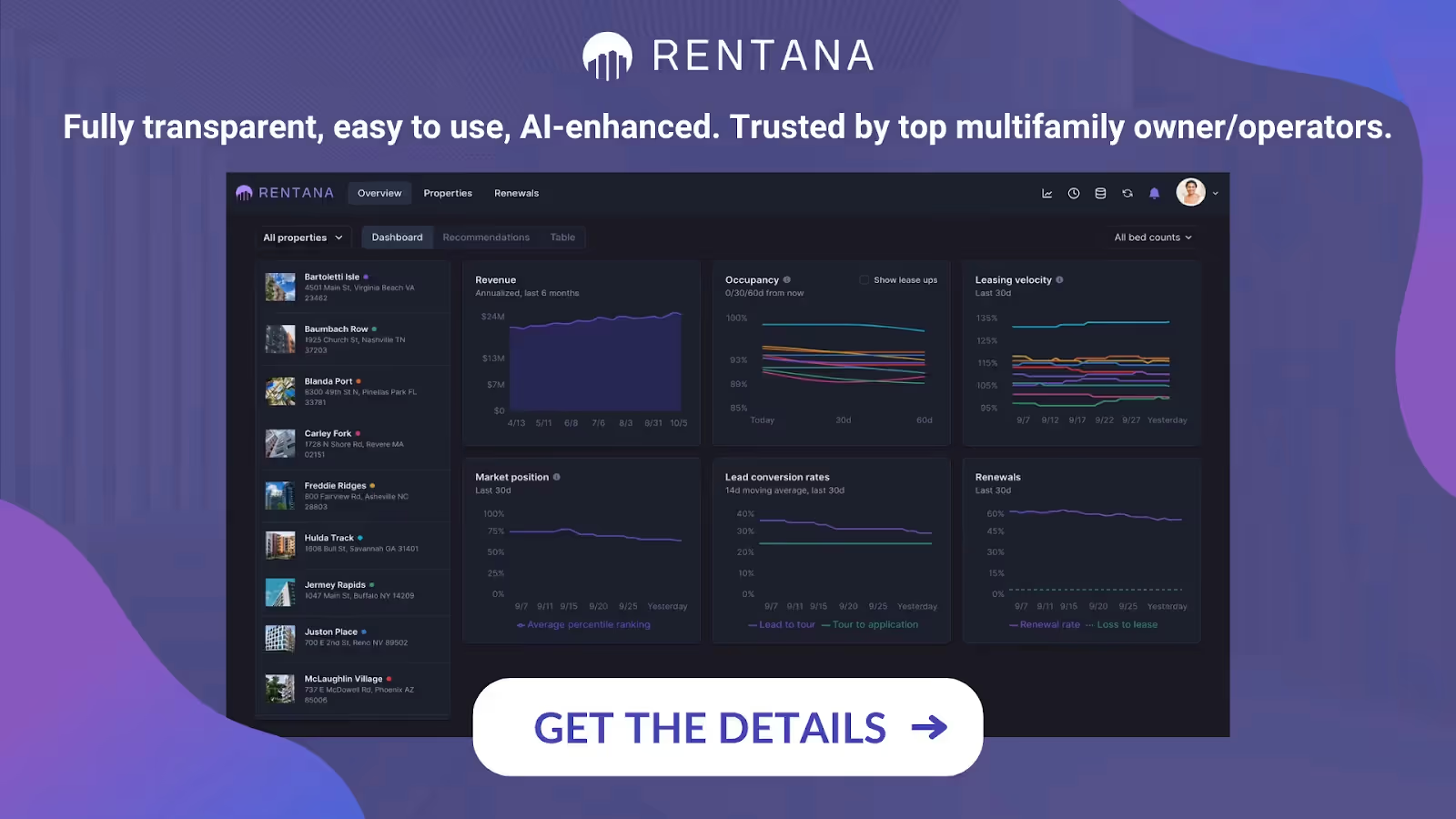
Forecasting occupancy accurately requires bringing multiple signals together and understanding how they influence one another. Rentana does this by using AI to connect these signals into a single, forward-looking view, helping multifamily teams move from reactive reporting to proactive planning.
Below is how Rentana supports each part of the occupancy forecasting process.
1. Historical Occupancy Trends That Improve Forecast Accuracy
Rentana helps forecast occupancy in multifamily by analyzing how occupancy has changed over time at the portfolio, property, and unit level to establish a reliable baseline for future projections. Instead of relying on a single point in time, teams can see how quickly units typically lease, how often vacancies occur, and how performance shifts throughout the year.
This historical perspective helps teams separate normal fluctuations from real performance issues, making forecasts more accurate and easier to trust. It also provides context for evaluating whether upcoming occupancy changes are expected or require intervention.
2. Forward Visibility Into Lease Expirations That Reduces Vacancy Risk
Lease expirations are one of the biggest drivers of future occupancy changes in multifamily. Rentana brings upcoming expirations into view and incorporates them directly into occupancy forecasts.
By seeing how many leases are ending and when, teams can anticipate where occupancy may soften before it happens. This allows leasing and revenue teams to plan ahead, whether that means adjusting renewal strategy, increasing leasing activity, or preparing for seasonal slowdowns.
3. Demand Signals That Shape Proactive Leasing Strategy
Rentana also connects occupancy forecasts with real-time leasing activity, including inquiries, tours, and conversion trends. These signals help teams understand whether current interest is strong enough to offset expected move-outs.
When demand begins to slow, occupancy forecasts reflect that change early, giving teams time to respond. When interest increases, teams can lease more confidently without overcorrecting. This connection turns forecasting into an active tool for guiding leasing strategy, not just reporting future risk.
4. Pricing Context That Balances Occupancy and Revenue
Pricing decisions play a critical role in future occupancy. Rentana incorporates pricing movement and market rent trends into its occupancy forecasts so teams can see how rent changes may affect leasing velocity and renewal behavior.
This helps teams avoid common tradeoffs, such as pushing rents too aggressively and risking occupancy loss or discounting unnecessarily when demand is strong. By tying pricing context directly to occupancy forecasts, Rentana supports decisions that protect both occupancy and revenue.
5. Seasonal Awareness That Creates Realistic Occupancy Expectations
Seasonality influences leasing performance across most multifamily markets. Rentana recognizes recurring seasonal patterns and reflects them in occupancy forecasts.
This prevents teams from overreacting to predictable slow periods or underestimating the impact of high-demand seasons. Forecasts grounded in seasonal behavior provide a more realistic view of what is achievable throughout the year and help teams plan accordingly.
6. Portfolio-Level Views for Smarter Decisions
Rentana provides portfolio-level views that allow multifamily teams to see occupancy forecasts across all properties in one place.
Instead of reviewing forecasts property by property, operators can quickly identify which assets are on track and which ones show potential risk. These views make it easier for regional managers and ownership teams to prioritize attention, allocate resources, and align strategy across markets.
By comparing forecasted occupancy across the portfolio, teams can forecast occupancy trends, predict vacancy risk, and anticipate occupancy changes earlier.
Related: How To Calculate the Value of a Multifamily Property Easily
7. Turning Occupancy Forecasts Into Leasing Decisions
Occupancy forecasts are most valuable when they guide day-to-day leasing decisions.
Rentana helps teams use forecasted occupancy to adjust leasing strategy in real time. When forecasts show potential softening, teams can respond by increasing leasing activity, adjusting pricing, or accelerating marketing efforts. When forecasts indicate strong demand and stable occupancy, teams can lease more confidently without unnecessary concessions. The earlier occupancy can be forecasted, the more options teams have to influence outcomes.
By connecting occupancy forecasts directly to leasing activity, Rentana helps multifamily teams move from hindsight-based reporting to proactive leasing decisions that protect occupancy and revenue.
Read Also: Is Multifamily Considered Commercial?
Why Manual Occupancy Forecasting Breaks Down at Scale
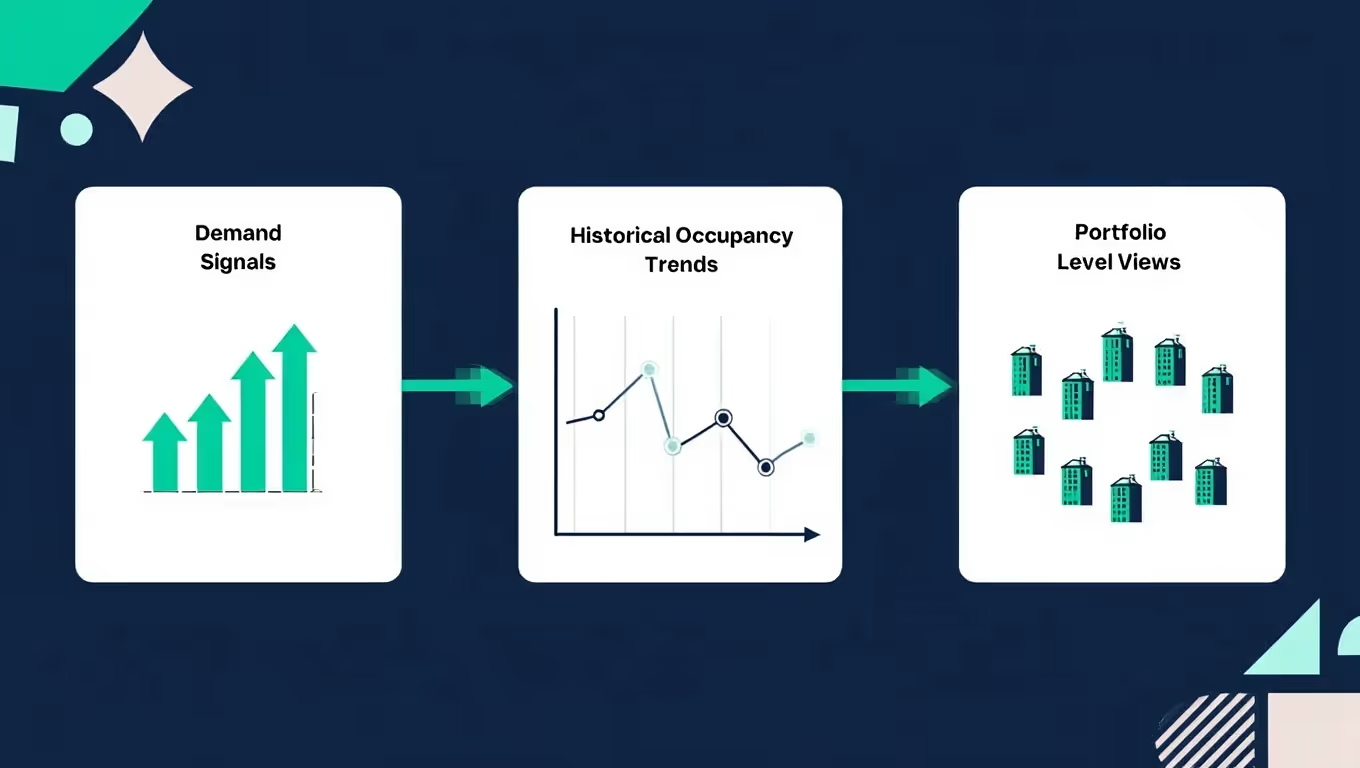
Manual forecasting may work for a single property, but it quickly becomes unreliable as portfolios grow. The more properties, units, and moving parts involved, the harder it is to keep forecasts accurate and actionable.
1. Spreadsheets Struggle to Keep Up
Tracking all of these factors manually becomes difficult as portfolios grow.
Spreadsheets require constant updates and often treat each signal separately. This makes it hard to see how upcoming expirations, leasing activity, pricing changes, and seasonality interact. As a result, occupancy forecasts can quickly fall out of sync with reality.
2. Gut Instinct Does Not Scale
Experience matters in multifamily, but relying on instinct alone becomes risky across multiple properties.
What feels right at one community may not apply to another with different demand patterns, lease expirations, or pricing pressure. As portfolios expand, it becomes harder to mentally track all the factors influencing occupancy, leading to decisions based on incomplete information.
Gut instinct can support decisions, but it cannot replace a structured, portfolio-wide view of future occupancy.
3. Static Reports Are Always One Step Behind
Static reports show what has already happened, not what is likely to happen next.
Monthly or weekly reports often reflect occupancy after changes have already occurred. By the time a drop appears on a report, the opportunity to prevent it may have passed. This lag makes it difficult to adjust pricing, leasing strategy, or renewals in time.
For teams managing multiple communities, static reporting limits visibility and slows response.
4. Disconnected Systems Create Blind Spots
Occupancy forecasting relies on signals that often live in different systems.
Leasing activity, pricing changes, and lease expirations are frequently tracked in separate tools that do not talk to each other. When these signals are not connected, teams are forced to piece together forecasts manually.
This creates blind spots, increases the risk of errors, and makes it harder to understand how one decision affects future occupancy across the portfolio.
5. Manual Updates Do Not Keep Up With Change
Multifamily markets change quickly.
New competitors, pricing adjustments, and shifts in demand can impact leasing velocity within days. Manually updating forecasts across multiple properties takes time, and by the time updates are complete, conditions may already be different.
This delay turns forecasting into a reactive exercise rather than a proactive one.
6. Portfolio-Level Decisions Become Harder to Align
At scale, decisions are rarely made at a single property level.
Regional managers, revenue teams, and ownership groups need a shared view of future occupancy. Manual forecasting makes alignment difficult because different teams may be working from different assumptions, versions, or reports.
Without a centralized view, forecasting becomes fragmented and less effective.
You Might Like: What is the 2 Rule in Real Estate?
Conclusion on How to Forecast Occupancy in Multifamily Real Estate
Forecasting occupancy in multifamily is no longer just about knowing where a property stands today. It is about understanding where performance is headed and having the time and clarity to act before outcomes are locked in. As portfolios grow and market conditions shift faster, relying on static reports or intuition alone becomes harder to sustain.
Modern forecasting brings together occupancy trends, leasing activity, pricing movement, and renewals into a single forward-looking view. When these signals are connected, teams can move with intention, adjusting strategy early instead of reacting after vacancies appear. Occupancy forecasting is quickly becoming a core capability in multifamily operations.
Tools like Rentana help make this shift possible by turning occupancy forecasting into an ongoing, portfolio-wide practice rather than a one-time exercise. The real question is no longer whether occupancy can be forecasted, but whether your team has the visibility to act on what the forecast is telling you.